Quick Answer: Choosing a Garage Wall Cabinet
A garage wall cabinet is an enclosed, elevated storage unit engineered to organize hand tools, automotive fluids, chemical sprays, and hardware while keeping floor space unobstructed. The primary types include welded 18-gauge to 20-gauge cold-rolled steel cabinets, modular flat-pack steel units, marine-grade plywood boxes, and extruded aluminum cleat systems. Safe installation requires anchoring into at least two solid wood wall studs using 5/16-inch or 3/8-inch lag bolts or heavy extruded aluminum French cleats capable of holding 150 to 300 pounds total load.
Key Takeaways for Homeowners
- Steel Gauge Thresholds: Choose 18-gauge or 20-gauge steel for heavy tool storage; avoid thin 24-gauge sheet metal that buckles under heavy aerosol cans or fluid jugs.
- Mounting Engineering: Heavy-duty French cleat systems distribute cabinet weight evenly across multiple studs and simplify one-person leveling.
- Security Locking: Three-point cremone locking rods secure both top, bottom, and center door edges to keep dangerous automotive chemicals away from children.
- Depth Restrictions: Standard 12-inch to 14-inch deep wall cabinets maintain clear headroom above workbenches; 18-inch deep units require bottom angle braces.
Every homeowner who attempts to organize a cluttered garage eventually faces the floor space wall. You park two vehicles, position a lawnmower, roll in a garbage bin, and suddenly your walking paths vanish. Piling plastic storage boxes on the concrete floor invites moisture absorption, rodent nesting, and accidental vehicle door dings.
Installing a dedicated garage wall cabinet solves this square footage dilemma by capitalizing on unused vertical wall space. Instead of letting aerosol cans, motor oil jugs, and cordless power tools scatter across your workbench surface, you lock them inside a rigid, wall-mounted steel enclosure. Your garage floor remains totally clear, toxic chemicals stay safely locked out of reach of children, and your equipment stays protected from ambient workshop dust.
However, hanging a loaded cabinet on drywall involves serious structural forces. Storing heavy gallon paint cans, power tool batteries, and steel socket sets adds substantial weight to cantilevered brackets. Let us examine cabinet construction types, steel gauge tolerances, French cleat mounting mechanics, and security hardware.
The 4 Primary Types of Garage Wall Cabinets
Wall cabinets vary dramatically in their manufacturing techniques, load limits, and assembly requirements. Understanding these four core types ensures you select the right build quality for your tools.
1. Fully Welded Heavy-Gauge Steel Cabinets
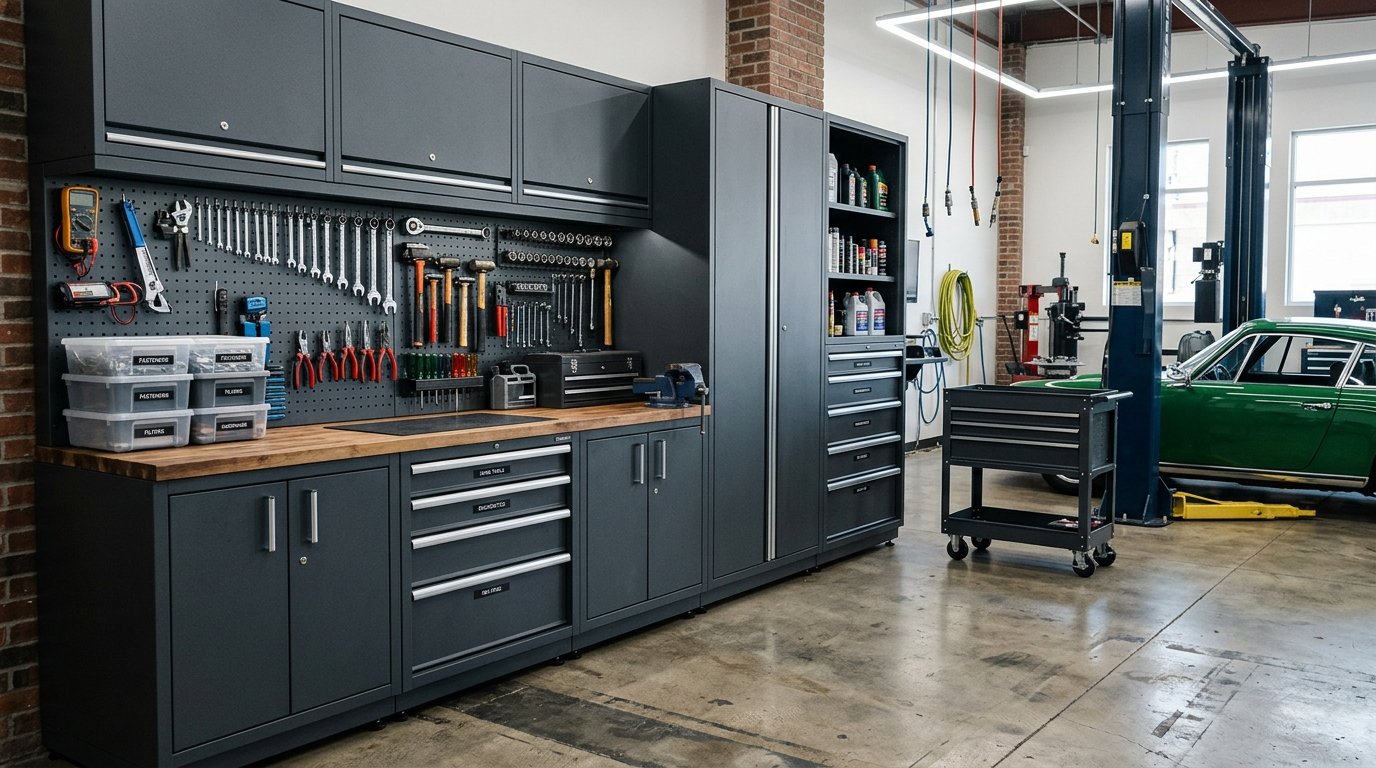
Fully welded steel cabinets arrive from the factory as a single rigid unibody box. Fabricators bend and spot-weld 18-gauge or 20-gauge cold-rolled steel sheet into a continuous structural shell with reinforced box-channel corners. The cabinet doors feature double-walled construction with internal steel hat channels that prevent door twisting.
The major benefit of welded cabinets is absolute structural rigidity. There are zero assembly bolts that can vibrate loose over time. You pull the unit out of the shipping crate and mount it directly to your wall studs. These cabinets support 200 to 300 pounds total load and withstand the harsh temperature swings of unheated garages.
2. Knockdown Flat-Pack Steel Cabinets
Flat-pack metal cabinets ship disassembled in flat cardboard cartons, requiring complete mechanical assembly at home. They utilize lighter 22-gauge or 24-gauge sheet steel panels joined together with machine screws, sheet metal tabs, or plastic snap rivets. Doors hang on removable slip hinges or simple pin pivots.
Flat-pack cabinets cost significantly less to manufacture and ship, making them budget-friendly for light household storage. However, they lack the torsional stiffness of welded units. If you load upper shelves with heavy gallon jugs of antifreeze or automotive fluids, thin side panels can bow and cause doors to bind. Compare metal cabinet types in our metal storage cabinets guide.
3. Custom Hardwood & Baltic Birch Plywood Cabinets
Wooden garage wall cabinets built from 3/4-inch CDX plywood or multi-ply Baltic birch plywood offer custom dimension flexibility. Woodworkers frequently build these units to fit awkward wall alcoves around electrical panels or central vacuum drops. The cabinet carcass joins with glued dadoes, pocket screws, and solid wood face frames.
Plywood cabinets hold heavy screws securely and provide a warm workshop appearance. However, unsealed wood absorbs seasonal humidity, causing door alignment issues and mold growth in damp basements or coastal garages. Never use particleboard or MDF in a garage environment, as even minor moisture causes immediate core swelling and fastener failure.
4. Heavy-Duty Industrial Polypropylene & Resin Cabinets
Molded resin cabinets utilize heavy-density polypropylene or blow-molded PVC plastic. These units feature interlocking double-wall hollow panels with internal honeycomb reinforcement. Doors pivot on molded hinge pins and snap shut with flexible latches.
Resin cabinets are 100% impervious to moisture, rust, motor oil, and battery acid spills. They wash down easily with a garden hose, making them excellent choices for outdoor carports or wet wash bays. However, plastic shelves will sag under sustained heavy point loads, restricting these cabinets to lightweight cleaning supplies and automotive rags.
Comparison of Garage Wall Cabinet Types
Review this side-by-side technical breakdown to compare structural materials, weight capacities, and hardware specifications:
| Cabinet Type | Steel / Material Spec | Shelf Capacity | Mounting Method | Typical Price |
|---|---|---|---|---|
| Welded Heavy-Gauge Steel | 18 to 20 Gauge Cold-Rolled | 100 to 150 lbs | Heavy French cleat or direct lag | $180 to $350 |
| Flat-Pack Knockdown Steel | 22 to 24 Gauge Sheet Metal | 40 to 60 lbs | Keyhole slots onto wall screws | $80 to $150 |
| Baltic Birch Plywood | 3/4″ 13-Ply Hardwood | 75 to 100 lbs | Beveled 3/4″ wood French cleat | $120 to $250 |
| Reinforced Resin / PVC | Double-Wall Polypropylene | 30 to 45 lbs | Direct wall screws with washers | $60 to $110 |
| Modular Slatwall Cabinet | 20-Gauge Steel + Bracket | 60 to 90 lbs | Extruded PVC/aluminum slatwall rail | $150 to $280 |
Mounting Systems: French Cleats vs. Direct-to-Stud
Securing a cabinet containing 200 pounds of tools high on a wall requires understanding mechanical shear and tension. Wall storage systems must meet structural integrity guidelines published by the ANSI/BIFMA X5.9 storage safety standards.
There are two primary methods for hanging a garage wall cabinet:
1. Extruded Aluminum French Cleats
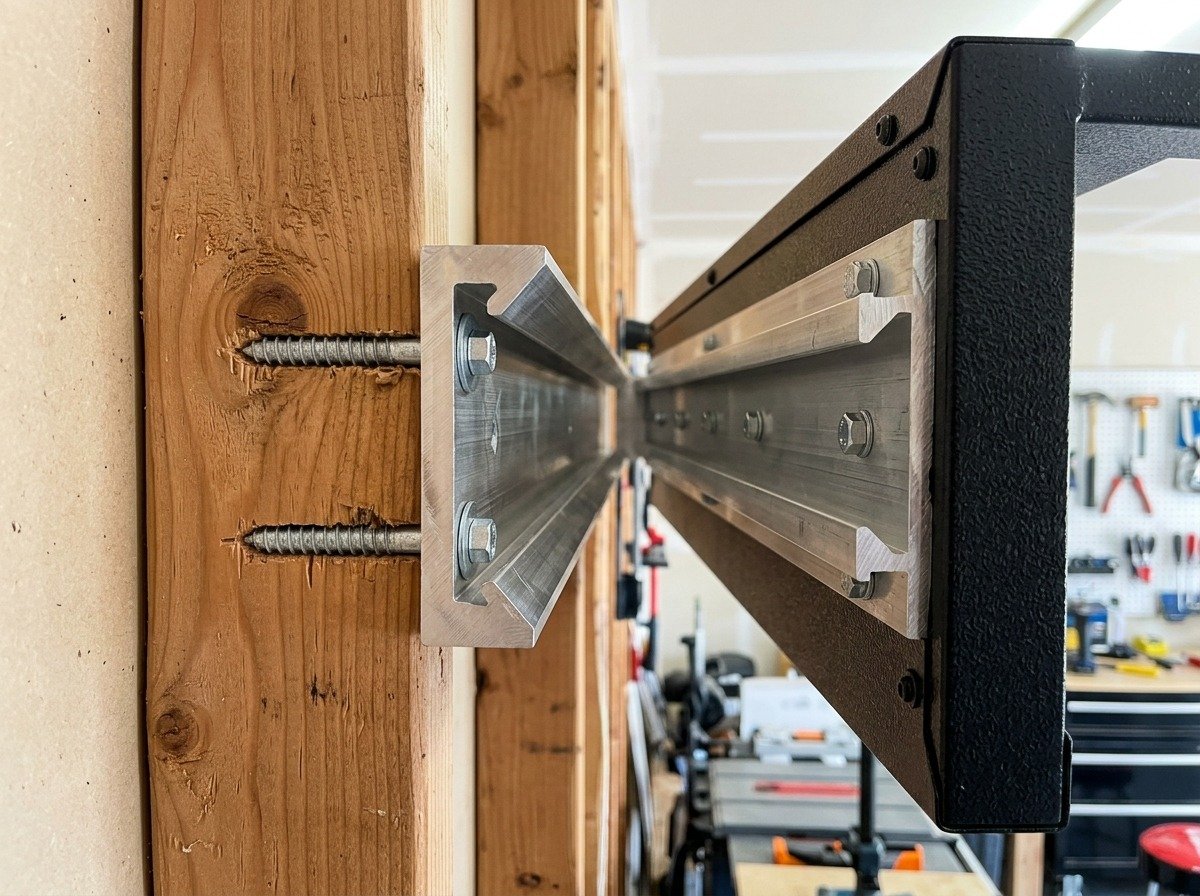
An aluminum French cleat consists of two matching interlocking extrusion bars cut at opposing 45-degree angles. You level and screw the lower cleat bar into multiple wall studs across your installation zone. You then attach the upper cleat bar horizontally across the top rear edge of the cabinet.
To mount the cabinet, one person simply lifts the unit and drops the top cleat over the wall cleat. Gravity draws the two beveled profiles tightly together, locking the cabinet flush against the drywall. This system distributes downward shear weight smoothly across three or four studs while allowing you to slide the cabinet left or right for centering.
2. Direct-to-Stud Lag Bolting
Direct stud mounting involves driving heavy lag bolts through pre-punched holes in the internal cabinet hang rail directly into wall studs. While this method creates an immovable mechanical connection, it requires two people during installation: one person to hold the heavy 40-pound metal box overhead, and a second person to drill and drive bolts.
Always insert heavy 5/16-inch or 3/8-inch flat fender washers behind the bolt heads. Without washers, the small head of a lag bolt can pull directly through thin sheet metal under heavy shock loads. For open shelving comparisons, check our garage wall shelves stud mounting guide.
Hardware Standards: Cremone Locks, Hinges & Safety
Cabinet doors in active workshop environments undergo constant opening, closing, and accidental bumping. The Consumer Product Safety Commission (CPSC) cabinet safety guidelines emphasize locking security to protect curious children from toxic chemicals.
Look for these three critical hardware components:
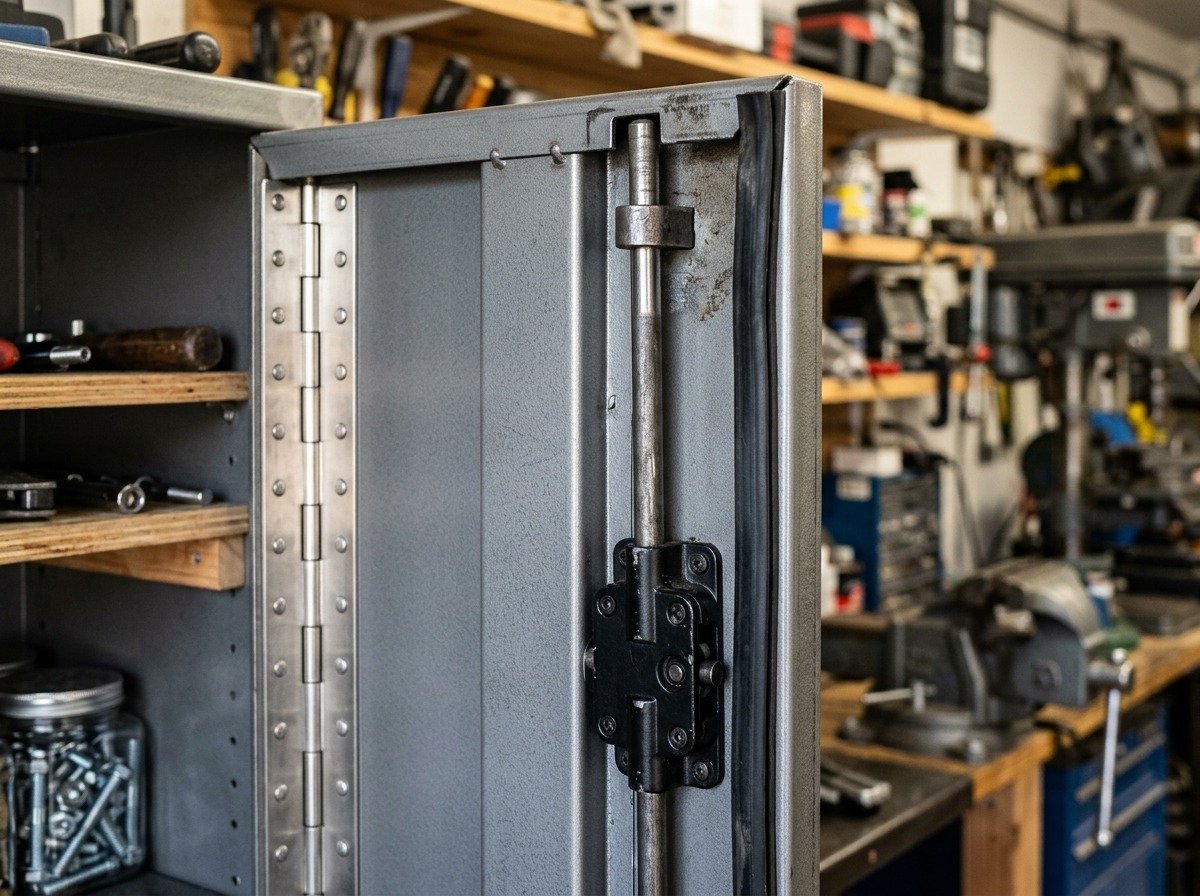
- Three-Point Cremone Locking Rods: Cheap cabinets feature a single center cam latch that easily bends when pried. Professional storage cabinets utilize a cremone lock mechanism with internal steel rods that shoot upward into the top frame and downward into the bottom sill simultaneously. This three-point engagement resists forced entry and prevents doors from popping open during earthquakes.
- Full-Length Continuous Piano Hinges: Standard two-point European butt hinges put extreme localized stress on thin sheet metal. Continuous stainless steel piano hinges run the full vertical height of the door, distributing door weight along dozens of spot-welded rivets for lifetime swing alignment.
- Magnetic Door Catches & Rubber Bumpers: Dual magnetic catches hold doors firmly shut even when unlocked. Full-perimeter rubber bulb gaskets stop metal-on-metal rattling when garage doors open or vehicles idle nearby.
For high-security storage needs, review our dedicated lockable storage cabinet security guide.
Sizing, Clearance and Workbench Ergonomics
Choosing cabinet dimensions requires careful consideration of what sits beneath the unit. Mounting cabinets directly above a garage workbench requires balancing tool access with personal comfort:
Cabinet Depth Rules
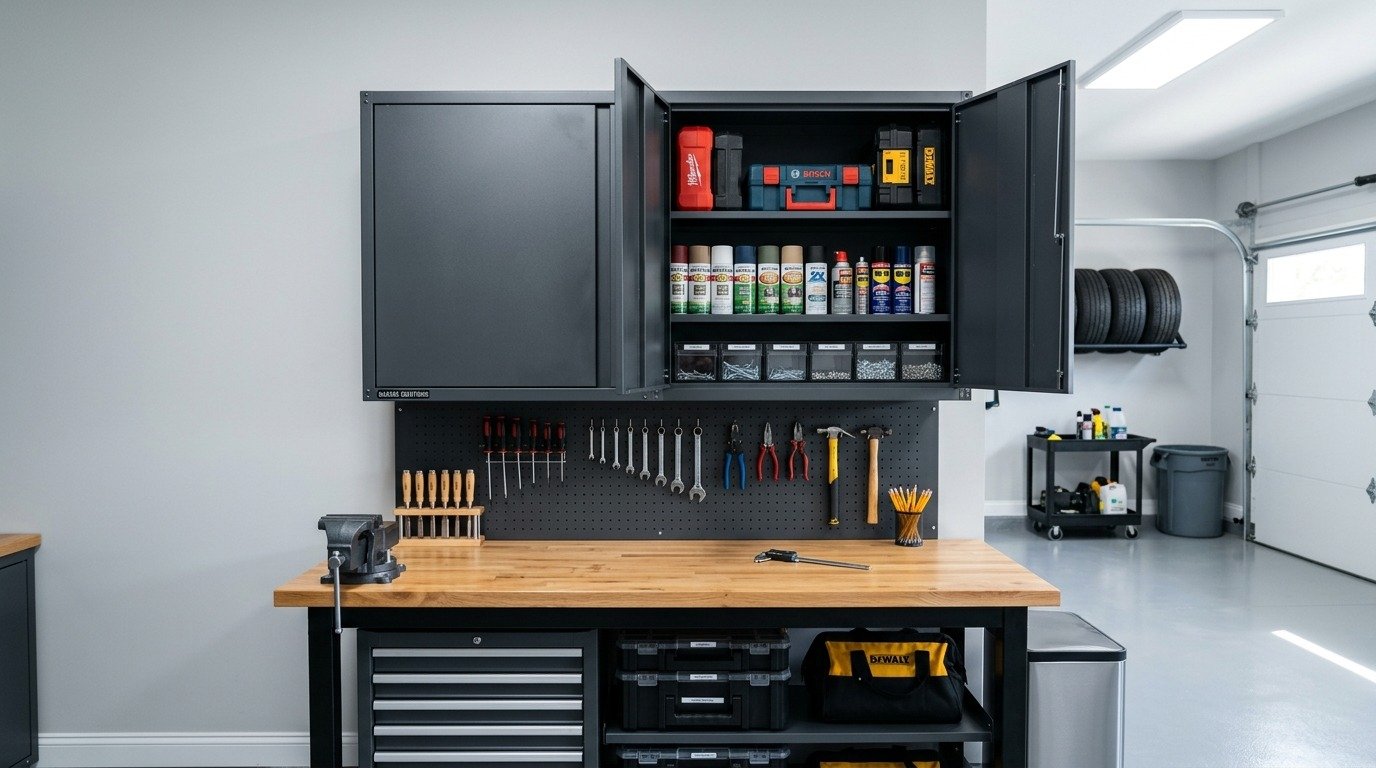
Standard garage wall cabinets measure 12 inches to 14 inches in internal depth. This depth comfortably holds two rows of standard spray paint cans, gallon fluid containers, and drill bit index boxes. More importantly, a 12-inch deep cabinet leaves ample headroom so you do not hit your forehead when leaning over a 24-inch or 30-inch deep workbench.
If you purchase deep 18-inch cabinets, mount them at least 22 inches above the workbench surface, or install heavy diagonal bottom brackets underneath to transfer cantilevered pullout force down the wall. For floor-to-ceiling sizing rules, explore our garage cabinets buying guide.
Mounting Height Guidelines
The bottom edge of your wall cabinet should typically sit 54 inches to 56 inches above the finished garage floor. This puts the bottom shelf right at elbow height for effortless daily access, while keeping the top shelf within easy reach without requiring a step stool. Always verify that open cabinet doors do not swing into the travel arc of overhead garage door tracks or lift mechanisms like those in our garage storage lift setup guide.
Step-by-Step Installation Protocol
Proper installation ensures compliance with OSHA 1910.176 materials storage rules. Follow this four-step mounting sequence:
Step 1: Locate and Mark Stud Centers
Use an electronic stud finder to locate the edges of each wood stud along your mounting line. Mark the exact center of each stud with a vertical line. Verify stud spacing (typically 16 inches on center).
Step 2: Level and Anchor the French Cleat
Hold your aluminum or wood French cleat against the wall at the desired height. Place a four-foot spirit level on top of the cleat. Drill 3/16-inch pilot holes through the cleat slots directly into the center of each marked stud, then drive 5/16 x 3-inch lag screws with flat washers.
Step 3: Hang the Cabinet Carcass
With assistance, lift the cabinet up and set the upper cabinet cleat over the wall cleat. Verify that the interlocking beveled profiles seat fully without gaps. Slide the cabinet laterally to center it above your workbench or tool station.
Step 4: Drive Safety Locking Screws
Once seated on the cleat, drive two additional 5/16 x 2 to 1/2-inch lag screws through the lower internal hang rail into the wall studs. These bottom locking screws prevent the cabinet from ever lifting off the French cleat if accidentally bumped from below.
5 Costly Garage Wall Cabinet Mistakes to Avoid
Avoid these five common pitfalls when planning your wall storage:
- 1. Trusting Drywall Anchors: Never use plastic screw anchors or butterfly toggle bolts to support wall cabinets. A loaded cabinet will pull drywall paper right off the studs.
- 2. Buying 24-Gauge Sheet Metal: Ultra-thin 24-gauge steel feels flimsy and flexes under moderate weight. Insist on 18-gauge or 20-gauge cold-rolled steel for workshop durability.
- 3. Installing Cabinets Too Close to Vehicle Doors: Ensure at least 36 inches of clearance between the face of your wall cabinets and parked vehicles so car doors swing open freely without hitting metal corners.
- 4. Overloading Upper Shelves: Place heavy items like socket sets and gallon fluids on the bottom shelf. Storing excessive weight on upper shelves creates high rotational pullout stress on top wall lag bolts.
- 5. Ignoring Garage Humidity: In unheated garages, bare unfinished steel rusts and raw particleboard rots. Choose powder-coated steel with textured finishes and rust-resistant hardware.
Frequently Asked Questions
How much weight can a garage wall cabinet safely hold?
A heavy-duty welded 18-gauge steel wall cabinet properly anchored into two solid wood wall studs can hold 150 to 250 pounds total weight, with individual shelves rated for 50 to 75 pounds each. Lighter flat-pack 22-gauge steel cabinets are typically rated for 100 to 120 pounds total.
Can you mount a garage wall cabinet on cinder block or poured concrete?
Yes, but you must replace wood lag screws with heavy masonry fasteners. Use 5/16 x 3-inch masonry sleeve anchors or 1/4-inch hex-head Tapcon screws drilled at least 2 inches into solid concrete or solid mortar joints. Never anchor into the hollow core of lightweight cinder blocks without specialized toggle hardware.
What is the best steel gauge for garage wall cabinets?
The lower the gauge number, the thicker and stronger the steel. For professional garage cabinets, 18-gauge (0.048 inches thick) or 20-gauge (0.036 inches thick) provides the best balance of stiffness, impact resistance, and weight. Thin 24-gauge steel (0.024 inches thick) is too flexible for heavy automotive tools.
How far above a workbench should a garage wall cabinet be installed?
The ideal clearance between the top of your workbench surface and the bottom of a 12-inch deep wall cabinet is 18 to 22 inches. This gives you sufficient space to operate benchtop power tools, bench vises, and task lighting without striking your head when leaning over workpieces.

Callum Langham
Founder & Technical Storage Editor
Callum Langham is the founder and technical editor of Rack System. With over 12 years of hands-on field experience in warehouse logistics, garage organization, and industrial storage installations, Callum specializes in engineering safety standards, beam load calculations, and OSHA/RMI compliance. Every guide on Rack System is audited against verified steel gauge tolerances and municipal building codes.