The best racking system for garage storage depends on your wall space, ceiling height, load needs,. And the way you use the room. A home gym, workshop, family garage, and small business storage area all need different layouts.
For most homes, a freestanding steel rack offers the best mix of strength, capacity, and easy access. Ceiling racks work well for seasonal items, while wall panels suit hand tools and small equipment. The right setup keeps heavy items safe, clears the floor, and makes it easier to find what you need.

What Makes a Garage Rack the Best Choice?
A good garage rack must do more than hold boxes. It should fit the available space, carry the weight of your stored items, and stay stable during daily use. It also needs shelves that are easy to adjust, clean, and reach without moving half the garage.
Start by listing what you need to store. Common garage items include power tools, paint, sports gear, camping equipment, car parts, garden supplies, coolers, and storage bins. Group these items by weight and how often you use them.
Heavy items belong on low shelves. Items used every week should sit at chest height. Seasonal goods can go on high shelves or an overhead platform.
Check the rack’s load rating before you buy. A shelf rating applies to a specific shelf, while a unit rating may cover the whole rack. Look for a uniform distributed load, often shortened to UDL.
This rating assumes the weight is spread across the shelf. A few heavy items placed in one small area can create more stress than the listed rating suggests.
You’ll also need to check the floor and walls. An uneven concrete floor can make a tall rack wobble. Drywall alone can’t support a wall-mounted rack, so wall panels and brackets must attach to studs or suitable masonry anchors.
Measure around garage doors, windows, vehicles, and electrical panels before choosing a rack size.
Best Garage Racking Systems Compared
| System Name | Frame Material | UDL Shelf Rating | Key Features |
|---|---|---|---|
| Freestanding Steel Rack | Powder-coated steel | 1,000 to 2,000 lb per unit | Boltless rivet locking beams |
| Ceiling Overhead Rack | Heavy-gauge wire grid | 300 to 600 lb per unit | Clears floor space completely |
| Wall Slatwall Panel | Heavy-duty PVC panels | 50 to 75 lb per foot | Modular hooks and organizers |
The figures in this table are common capacity ranges, not a promise for every product. Always check the manufacturer’s instructions for the exact model. The floor, anchors, shelf decking, and beam connections can change the safe working load.
1. Freestanding Steel Garage Racks
A freestanding steel rack is the best racking system for garage storage when you need high capacity. And flexible shelf placement. These units usually have upright posts, horizontal beams, and particleboard, wire, or steel shelf decking.
Many use boltless rivet connections. So the rack can be assembled with a rubber mallet instead of a large set of tools.
Steel shelving works well for storage bins, tool cases, heavy boxes, car fluids, and workshop equipment. Most models have several adjustable shelf levels. That lets you set one tall opening for a cooler or shop vacuum, then use shorter openings for boxes.
And parts bins.
Benefits of Freestanding Steel Racks
- High weight capacity for bulky or heavy items
- Adjustable shelf heights
- Good use of vertical floor space
- Easy access from the front
- No need to drill into every wall section
- Can be moved if the garage layout changes
The main drawback is that a freestanding rack uses floor space. You need a clear aisle in front of it,. And tall units should be secured to the wall when the manufacturer recommends it.
A rack that’s overloaded at the top can become unstable, especially on an uneven floor.
Best Uses for Steel Racks
Use steel racks for items that are heavy, boxed, or stored in large groups. They work well along a side wall or at the back of a deep garage. Keep the heaviest load on the bottom shelf.
Store medium-weight boxes in the middle, and keep light items at the top.
Choose a unit with a depth that matches your containers. A shelf that’s too deep can hide small boxes at the back. A shelf that’s too shallow may let bins hang over the edge.
For many homes, a depth between 18 and 24 inches gives a useful balance between capacity and access.
2. Ceiling Overhead Garage Racks
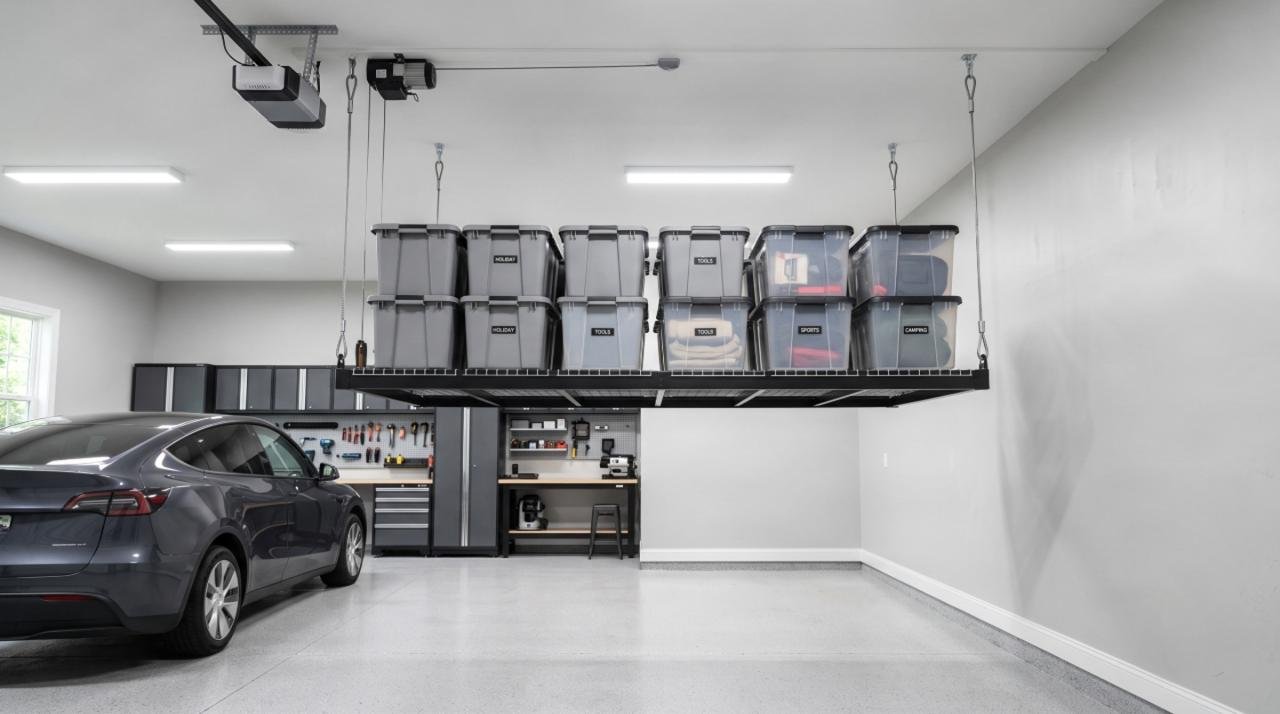
Ceiling racks are useful when the garage floor is already full. They attach to ceiling joists and create a storage platform above vehicles, work areas, or open floor sections. This system keeps seasonal decorations, luggage, spare furniture, and rarely used equipment out of the way.
An overhead rack can clear floor space completely, but it needs careful planning. Measure the distance from the ceiling to the garage door tracks, opener, lights, and the tallest vehicle. Leave enough clearance so the door can open without touching the rack or its contents.
When Ceiling Storage Works Best
Ceiling storage suits items you use a few times per year. Holiday decorations, camping bins, spare tires, and empty luggage are good examples. Use strong containers with lids so dust and moisture don’t settle on the contents.
Don’t use a ceiling rack for items you need every day. Pulling a heavy box down from above can cause strain or injury. Keep loads light enough for safe handling, and use a step ladder that sits firmly on the floor.
Ceiling Rack Installation Tips
- Locate the ceiling joists before drilling.
- Use the supplied hardware or approved hardware of equal strength.
- Check the rack’s total load rating, including the platform and brackets.
- Keep the load spread across the full rack.
- Test the garage door and opener after installation.
- Mark the rack’s height so tall items don’t get placed below it.
Never attach a ceiling rack to drywall, thin paneling, or a weak trim board. If joist spacing doesn’t match the mounting points, use a properly designed support method. When in doubt, ask a qualified installer to check the structure.
3. Wall Slatwall Panels and Hooks
Wall slatwall panels turn unused wall space into a storage area for tools, sports equipment, hoses, and cleaning supplies. The panels accept hooks, baskets, shelves, and holders that can be moved as your needs change.
This system has a lower weight rating than a steel floor rack, but it gives fast access to small items. A shovel, rake, bicycle helmet, extension cord, or garden hose can hang where you can see it. That helps keep the floor clear and reduces clutter on workbenches.
Best Items for Slatwall Storage
- Hand tools and cordless tool batteries
- Garden tools and hoses
- Sports balls, helmets, and bats
- Extension cords and air hoses
- Cleaning brushes and car care items
- Small parts stored in baskets or bins
Install the panel system into wall studs or a properly prepared backing surface. Each hook has its own load limit, so don’t assume the full panel rating applies to one hook. Put heavy tools on lower hooks and keep sharp objects away from walking paths.
Freestanding Racks vs Wall and Ceiling Storage
Freestanding racks hold the largest loads and make a strong choice for bins, boxes, and equipment. Wall panels are better for visible tools and items you grab often. Ceiling racks preserve floor space, but they need more care during installation and loading.
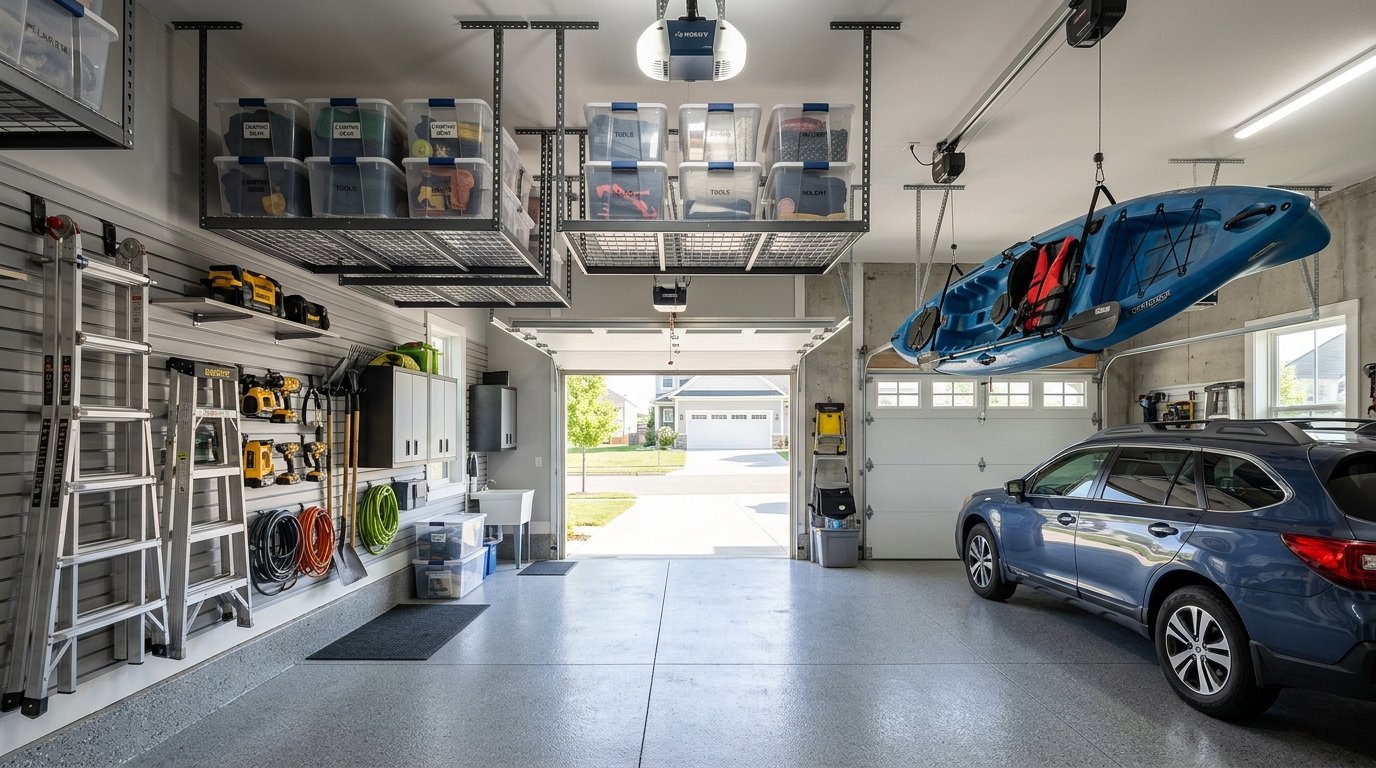
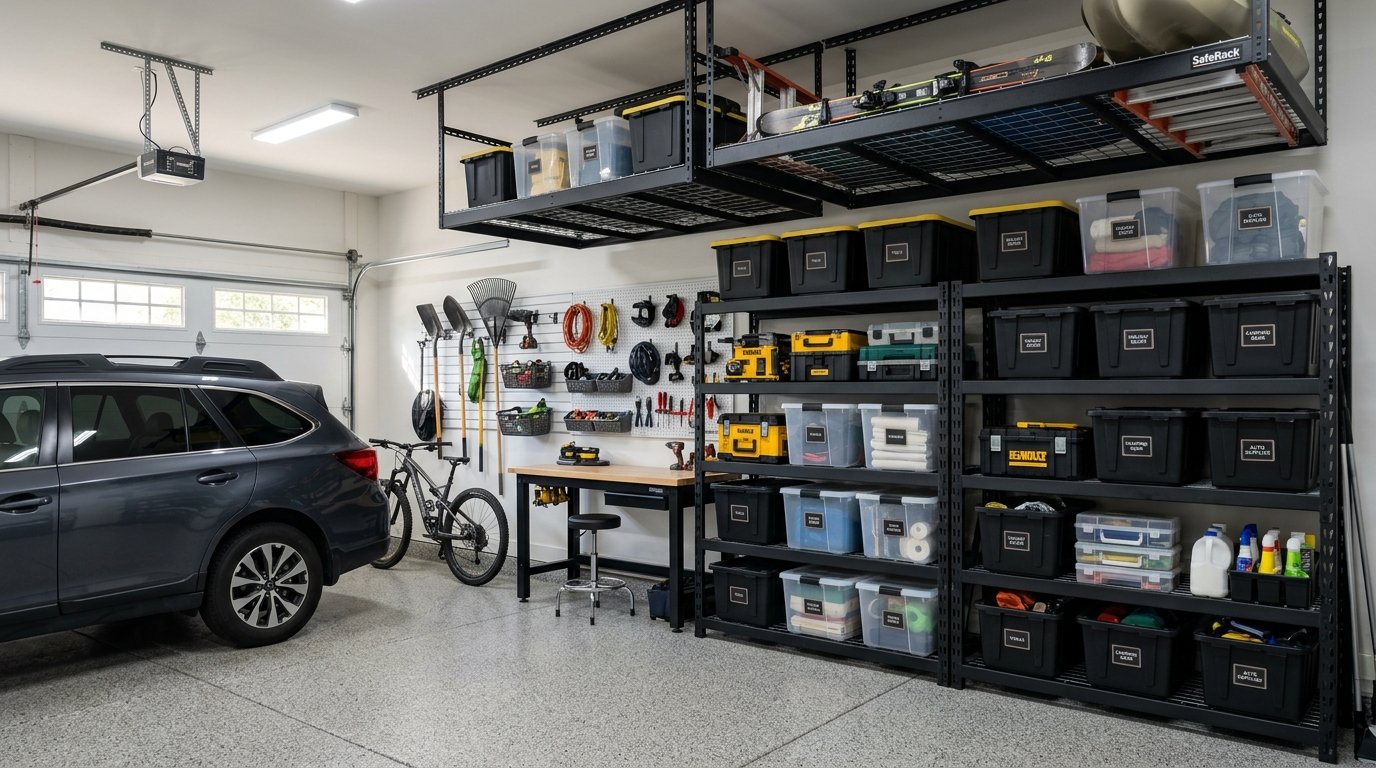
Many garages work best with a mixed layout. Place a steel rack on one side wall, add slatwall above a workbench,. And use a ceiling platform for seasonal bins.
This setup gives you storage for heavy goods, daily tools,. And long-term items without forcing one system to do every job.
For more layout ideas, review these best garage storage systems. And compare how different setups use walls, floors, and ceilings.
How to Choose the Right Rack Size
Measure before you shop. Record the wall length, ceiling height, door swing, garage door track position, and distance from parked vehicles. Include space for walking and for opening car doors.
A rack that fits on paper may still block access if there’s no room to stand in front of it.
Measure the Stored Items
Measure the largest box, bin, tool case, and piece of equipment you plan to store. Add a little extra height for easy removal. Shelves packed tightly from floor to ceiling look efficient, but they make loading and unloading harder.
Check the shelf depth as well as the width. Large storage bins often need at least 18 inches of depth. Small parts bins may work better on a shallower shelf where labels remain visible.
Plan for Future Storage
Leave some spare capacity. Most households add tools, sports gear, and seasonal items over time. Filling every shelf on day one can force you to buy another unit sooner than expected.
Don’t buy a rack based only on its maximum height. A lower rack may work better under a window or beside a vehicle. A tall unit can store more, but it may need wall anchoring and careful loading.
Garage Rack Safety Rules
Safety starts with the manufacturer’s load limits. Never exceed the shelf or unit rating. Spread weight across the shelf, keep heavy goods low, and place lighter items high.
Inspect beams, posts, decking, and fasteners after assembly.
Secure tall freestanding racks when required. Wall anchoring helps prevent tipping if someone pulls on a shelf or if a heavy item shifts. Keep aisles clear, and don’t store sharp tools at head height.
Keep paint, fuel, chemicals, and other hazardous products in approved containers. Store them away from heat sources, electrical equipment, and children’s reach. Check local fire rules for limits on flammable liquids.
Workplaces and shared buildings may need extra controls. You can review the OSHA storage safety standards for guidance on secure storage, clear aisles,. And safe material handling.
Common Garage Rack Buying Mistakes
Choosing Capacity by Appearance
A thick-looking frame doesn’t prove that a rack can carry your load. Check the published rating and see if it applies to each shelf or the complete unit. Also check if the rating changes when the shelf spacing is adjusted.
Ignoring the Garage Floor
A sloped or cracked floor can affect stability. Place the rack on the most level surface available. Use approved leveling feet or shims where allowed, then anchor the unit if the instructions call for it.
Blocking Access to Utilities
Don’t cover electrical panels, water shutoffs, furnace access, or gas equipment. Local codes may require a clear working area around these points. Plan the rack beside them, not directly in front.
Buying Too Many Small Units
Several small racks can leave wasted gaps and make the garage look crowded. One larger rack may offer better shelf space and easier sorting. Still, use separate units if you need to move them often or divide storage by person.
Skipping Labels and Categories
Even a strong rack becomes frustrating when boxes aren’t marked. Group items by use, then label the front of each bin. Keep a simple list on the wall for items stored high or in the back.
Simple Garage Rack Layout
Start with the largest storage need. If you have many bins or heavy tools, place a steel rack along the longest open wall. Leave a clear aisle in front.
Put a workbench near the rack so tools and parts stay close to the task area.
Add slatwall beside or above the bench for hand tools and cords. Place hooks at different heights, but keep the walking zone free from protruding items. Use a ceiling rack over the car hood area or another location where it won’t interfere with doors and lights.
Keep frequently used goods between waist and shoulder height. Put heavy loads below waist height. Use the top shelves for light, infrequently used items.
This arrangement reduces lifting strain and makes the rack easier to maintain.
Care and Maintenance
Wipe shelves and panels when dust builds up. Check for rust, bent beams, cracked decking, loose anchors, and damaged hooks. A powder-coated steel frame can resist corrosion, but standing water and road salt can still cause damage.
Don’t drag heavy bins across a shelf. Lifting them slightly reduces stress on the decking and beams. Replace damaged components with parts approved for that rack model.
Mixing parts from different systems can create unsafe connections.
Review the layout twice a year. Move seasonal goods to the most useful position, remove items you no longer need,. And check that every load still sits within its rating.
Where to Shop for Garage Racks
Compare the frame material, shelf rating, dimensions, connection style, decking, warranty, and anchoring method. Product photos can hide thin posts or weak shelf panels, so read the specification sheet before ordering.
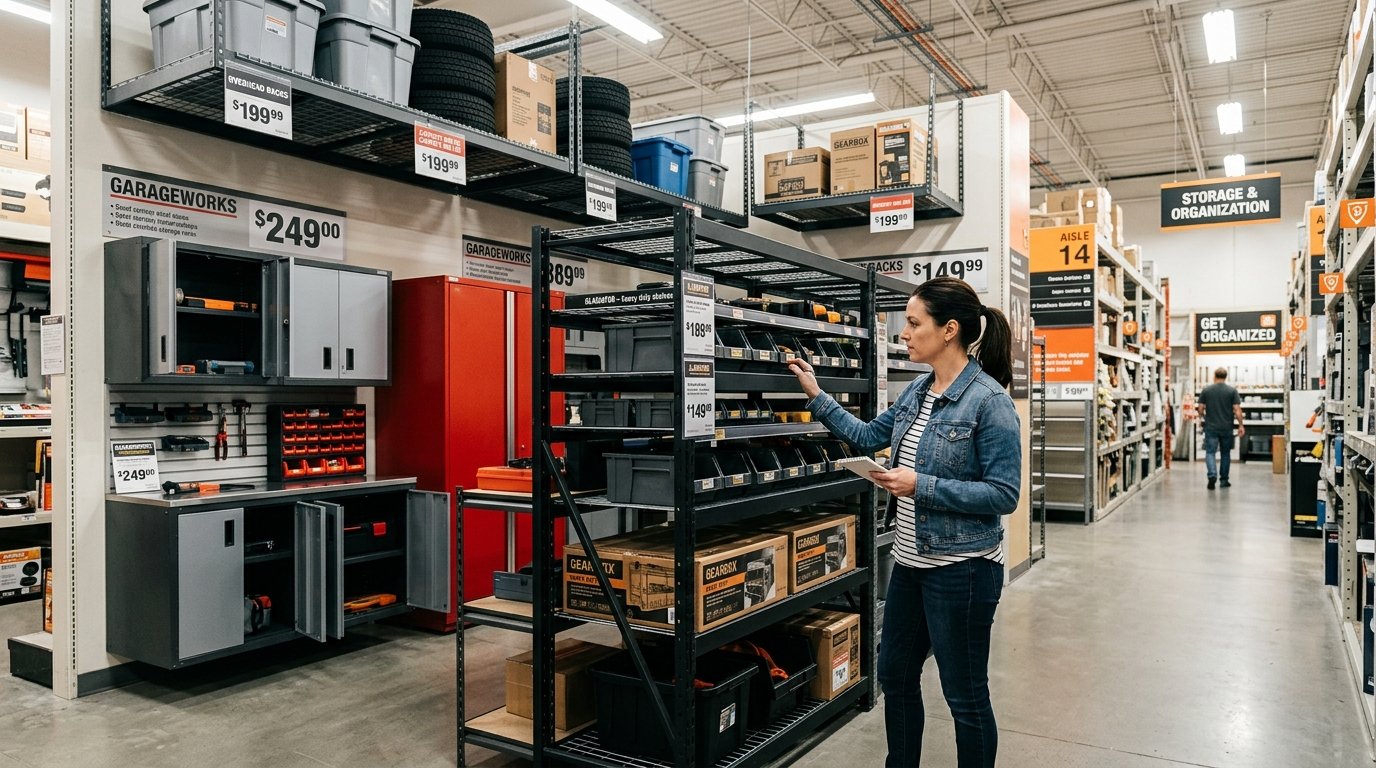
For a broad selection of storage cabinets, shelves, and garage accessories, browse Home Depot garage organization. Measure your space first, then compare the listed dimensions with your garage plan.
Frequently Asked Questions
What is the best racking system for garage storage?
For most garages, a freestanding steel rack is the strongest general choice. It holds heavy bins and equipment, offers adjustable shelves, and doesn’t require a wall-mounted track system. Add wall panels or ceiling storage when you need space for tools or seasonal goods.
Are garage ceiling racks safe for heavy items?
They can be safe when the rack is attached to suitable ceiling joists and loaded within its stated limit. Keep the weight spread across the platform, use approved hardware, and check clearance around the garage door. Heavy items are often better stored on a low floor rack.
How much weight can a garage storage rack hold?
The capacity depends on the model, shelf spacing, decking, frame, and installation. Many steel units rate between 1,000 and 2,000 pounds per unit, but you must check the exact product label. A shelf rating usually assumes the load is spread evenly.
Should garage racks be attached to the wall?
Tall or heavily loaded freestanding racks should be anchored when the manufacturer recommends it. Anchoring reduces the chance of tipping if the rack is bumped or loaded unevenly. Attach it to studs or suitable masonry, not just drywall.
Final Buying Advice
The best racking system for garage storage is the one that matches your load, space, and daily habits. Choose a freestanding steel rack for heavy boxes and equipment. Pick a ceiling rack for light seasonal goods that can stay out of the way.
Use slatwall panels for tools, cords, and small items that need quick access.
Measure first, check every load rating, protect access to utilities, and plan a clear aisle. A mixed system often gives the most useful result, with each rack type handling the job it suits best. For more information on rack styles and buying errors, see this guide to garage storage racks.

Callum Langham
Founder & Technical Storage Editor
Callum Langham is the founder and technical editor of Rack System. With over 12 years of hands-on field experience in warehouse logistics, garage organization, and industrial storage installations, Callum specializes in engineering safety standards, beam load calculations, and OSHA/RMI compliance. Every guide on Rack System is audited against verified steel gauge tolerances and municipal building codes.