Metal garage cabinets give tools, chemicals, parts, and seasonal gear a secure place to live. Compared with open shelving, they keep dust off stored items. And make it harder for children or visitors to reach hazardous supplies.
Compared with plastic cabinets, steel usually provides better resistance to dents, heat, and heavy loads.
The right cabinet depends on four main factors: steel gauge, cabinet style, load rating, and mounting method. A wall cabinet has very different limits from a floor-standing tool cabinet. You’ll also need to check the finish, hinge design, drawer slides and lock.
And the condition of your garage floor or wall.
This guide explains the main specifications in plain language, then shows how to choose and install metal garage cabinets safely.
Quick Answer: Metal Garage Cabinet Steel Gauge & Sizing
Metal garage cabinets are engineered from 16 to 24-gauge cold-rolled steel. Heavy-duty pro cabinets use 16- to 18-gauge steel, supporting 1,200 to 2,000 lb UDL per tall freestanding cabinet and 800 to 1,500 lb for base workbenches. Wall-mounted units hold 150 to 300 lb UDL total and must be secured into 16-inch on-center 2×4 studs using 1/4-inch by 3-inch lag bolts. Powder-coated hammered finishes resist humidity and oil spills.
Key Takeaways
- Steel Gauge Thickness: Select 16- to 18-gauge steel for heavy tool chests and 20- to 24-gauge steel for lightweight utility storage.
- Wall Stud Anchoring: Mount wall cabinets into 16-inch on-center studs with 1/4″ x 3″ lag screws; never rely on hollow drywall anchors.
- Drawer & Hinge Construction: Choose full-extension ball-bearing slides rated for 100 lb per drawer and 110-degree soft-close Euro hinges.
- Finishes & Humidity: Powder-coated steel protects against rust in unconditioned garages better than raw painted sheet metal.
Why Choose Metal Garage Cabinets?
Steel cabinets suit garages where storage takes regular abuse. A quality cabinet can handle toolboxes, power tools, fasteners, fluids and vehicle parts without the flexing common in thin plastic units.
Doors also hide visual clutter, so your work area stays easier to use.
Metal cabinets offer these practical benefits:
- High load capacity: Reinforced steel frames support heavy tools and equipment.
- Better impact resistance: Steel handles bumps from carts, ladders, and vehicle parts.
- Lockable storage: Key locks help protect tools, chemicals, and sensitive equipment.
- Heat tolerance: Steel won’t soften in a hot garage like some plastics can.
- Flexible layouts: You can combine wall units, tall cabinets, and base workbenches.
Steel cabinets can cost more than plastic storage, and they’re heavier to move. They also need a good finish and dry conditions to prevent corrosion. Those tradeoffs are manageable when you choose the right material and install the cabinet correctly.
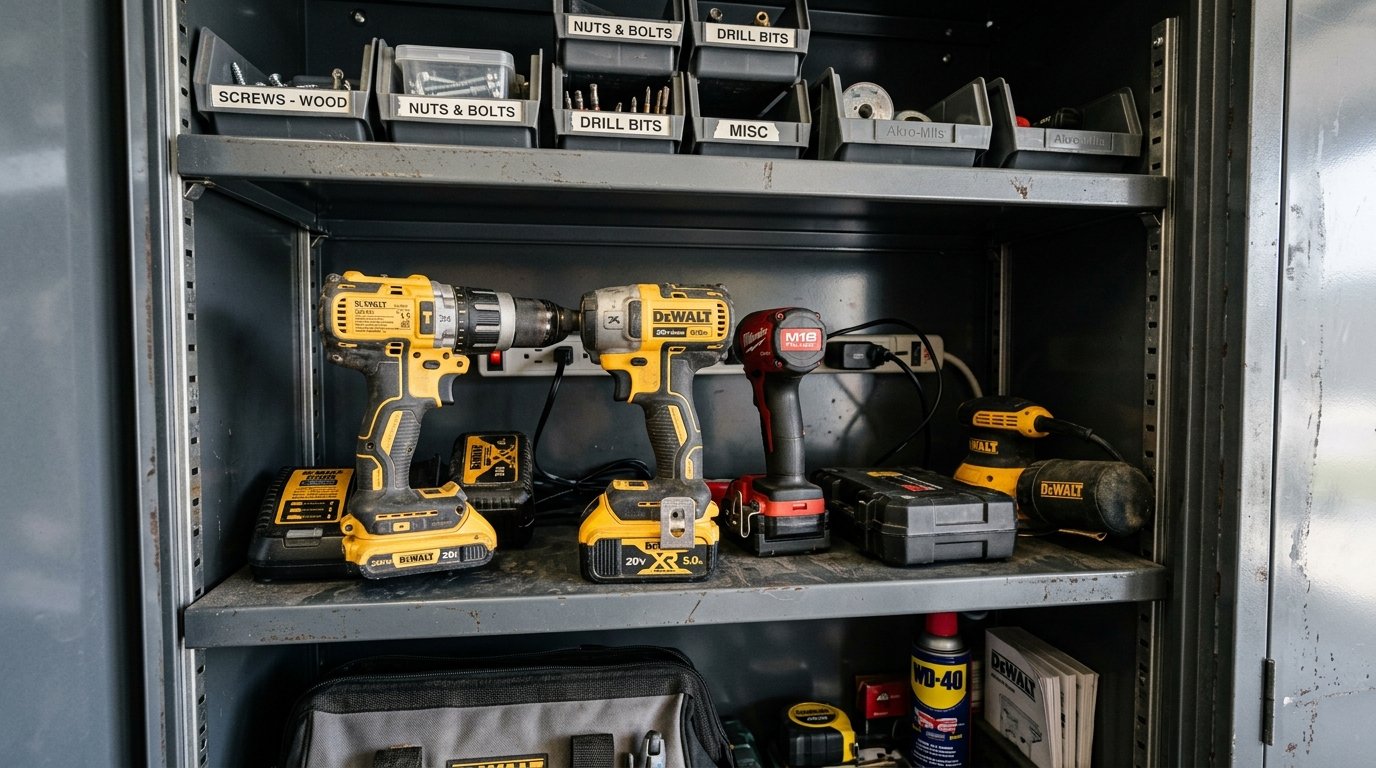
Steel Gauge: Lower Numbers Mean Thicker Steel
Steel gauge can confuse buyers. The rule is simple: a lower gauge number means thicker steel. A 16-gauge panel is thicker and usually stronger than a 22-gauge panel.
- 14 to 16 gauge: Commercial and heavy-duty use, including workbenches and heavy tool storage.
- 18 to 20 gauge: A strong choice for most home garages and professional shops.
- 22 to 24 gauge: Light-duty storage for small tools, supplies, and items that don’t weigh much.
Gauge isn’t the only factor that controls strength. A cabinet with folded edges, welded corners, internal braces,. And a reinforced back can outperform a cabinet made from thicker flat panels with weak joints.
Look closely at the shelf supports, door frame, drawer body, and cabinet base. These parts carry much of the working load. A thick door doesn’t help much if the shelves bend or the frame twists.
Types of Metal Garage Cabinets
Wall-Mounted Cabinets
Wall cabinets keep common supplies above the work surface. They’re useful for spray cans, fluids, small boxes, and light hand tools. They also free up floor space for vehicles, bins, or a rolling tool chest.
Most wall units hold 150 to 300 pounds of uniformly distributed load, or UDL. That rating assumes the weight is spread across the shelves. A single heavy object can put more stress on one shelf or bracket than the listed total suggests.
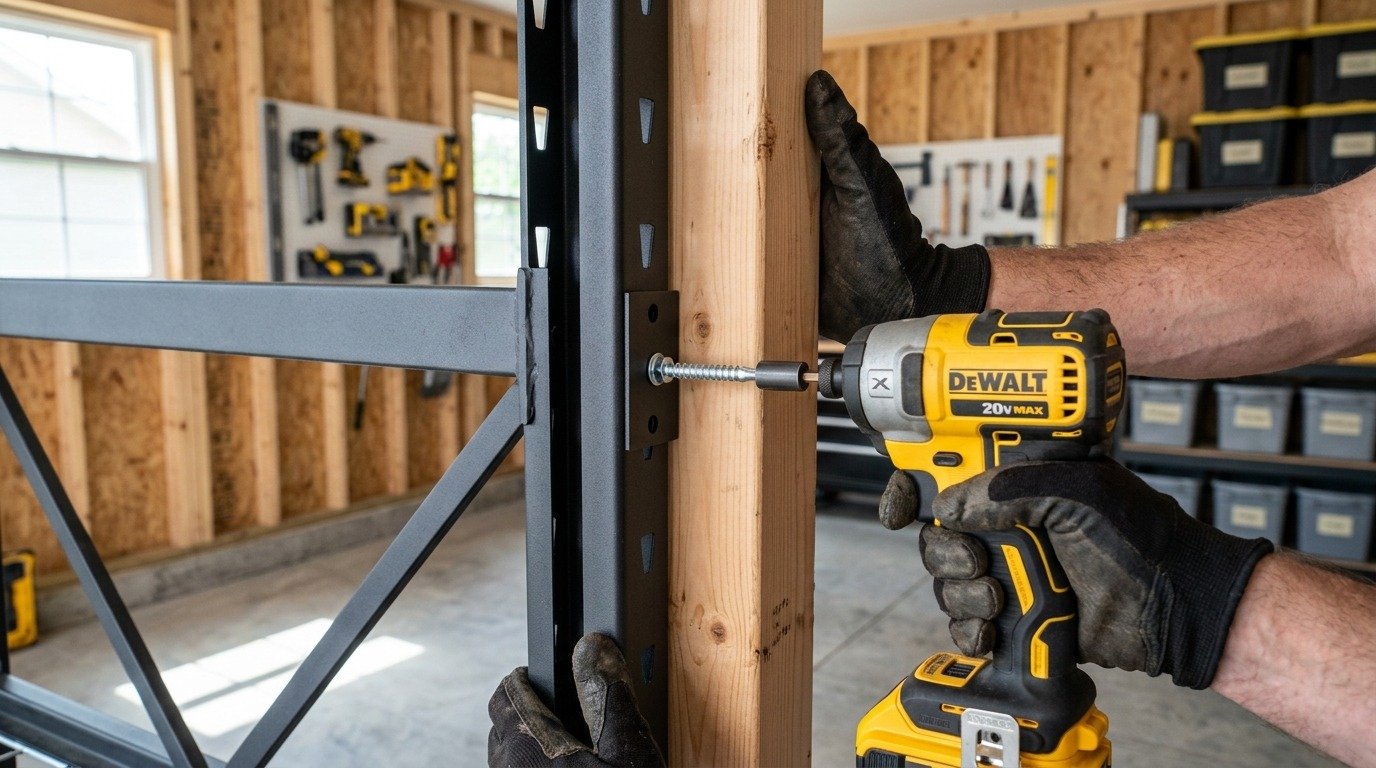
Wall cabinets must be attached to structural framing. Drywall anchors alone aren’t suitable for a loaded steel cabinet. Use a stud finder, confirm the stud locations with a small drill bit,.
And use 1/4-inch by 3-inch lag screws where the cabinet’s mounting rail lines up with the studs.
Freestanding Tall Cabinets
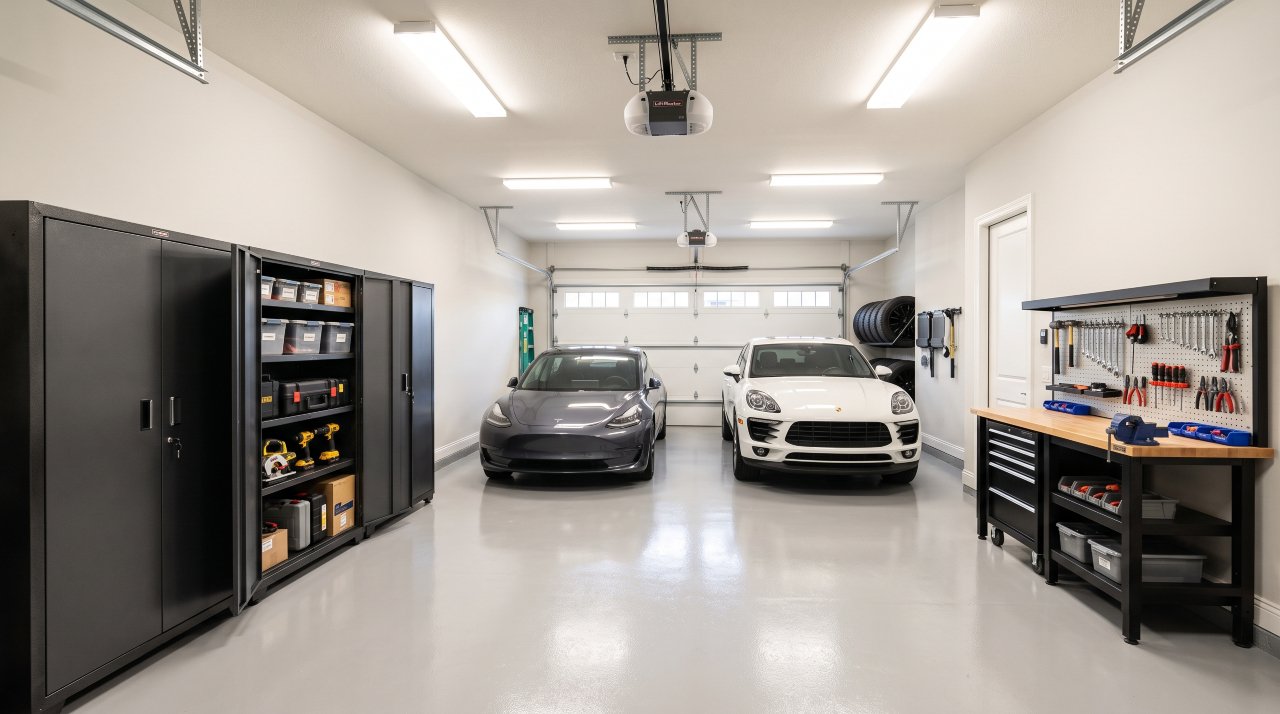
Tall cabinets provide vertical storage for power tools, boxes, seasonal gear, and bulky totes. They work well along a garage wall and can hold far more weight than a wall-mounted unit.
Heavy-duty models commonly support 1,200 to 2,000 pounds UDL per cabinet. The exact limit depends on the shelf spacing, shelf design, frame, and floor support. Spread heavy items across several shelves instead of putting the entire load on the bottom or one middle shelf.
Choose tall cabinets with adjustable leveling feet. Garage floors often slope toward a drain or garage door. Leveling feet prevent door binding and help the cabinet sit firmly.
Add an anti-tip bracket, especially if the cabinet is narrow, tall, or used around children.
Base Workbench Cabinets
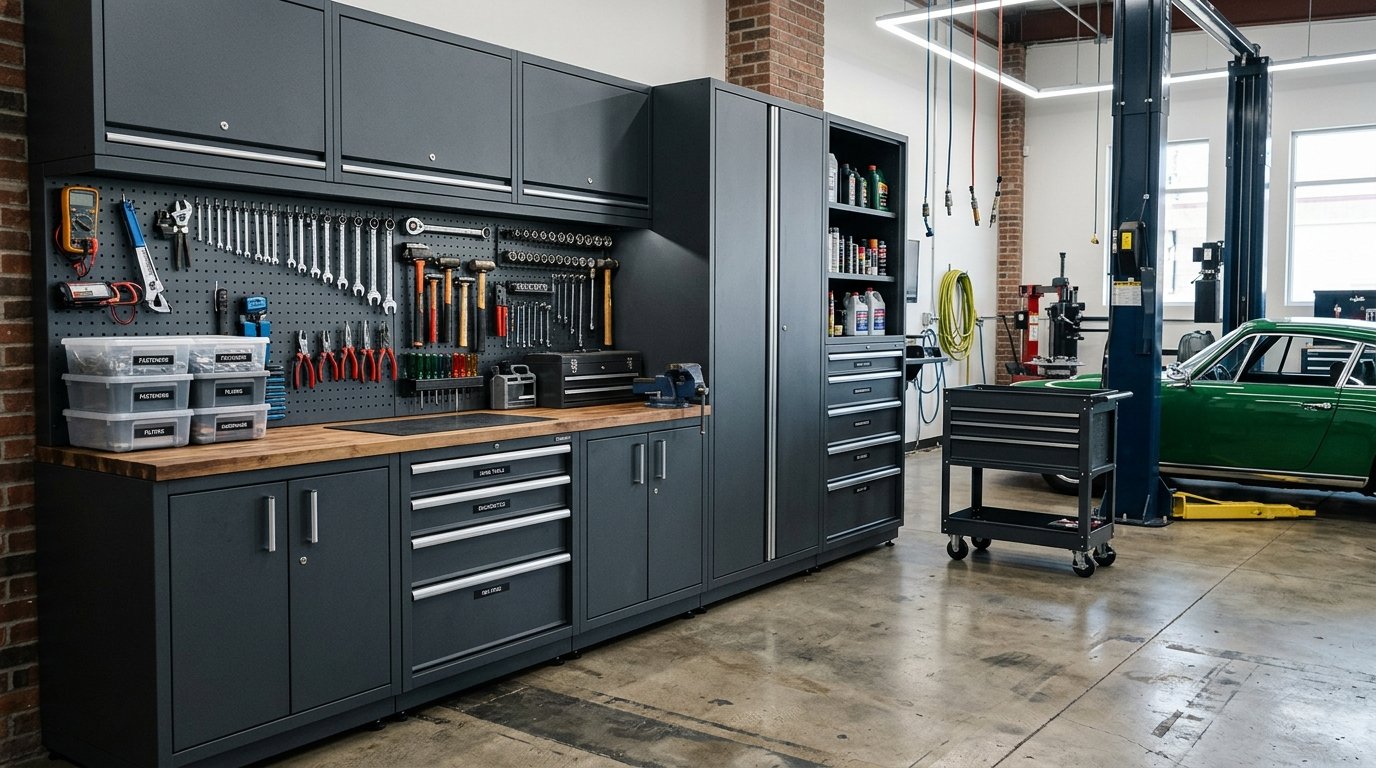
Base cabinets combine storage with a work surface. They’re a strong choice for assembling parts, repairing tools, or installing a vise. Many models accept stainless steel or butcher block tops.
Base units commonly support 800 to 1,500 pounds UDL. Check the separate rating for the worktop and the mounting area for a vise. A vise creates concentrated force, so the top and cabinet frame need more support than a basic storage shelf.
For regular welding, grinding, or fluid work, stainless steel tops are easy to wipe clean and handle moisture well. Butcher block tops reduce noise. And feel more comfortable for general repair work, but they need protection from standing water and oil.
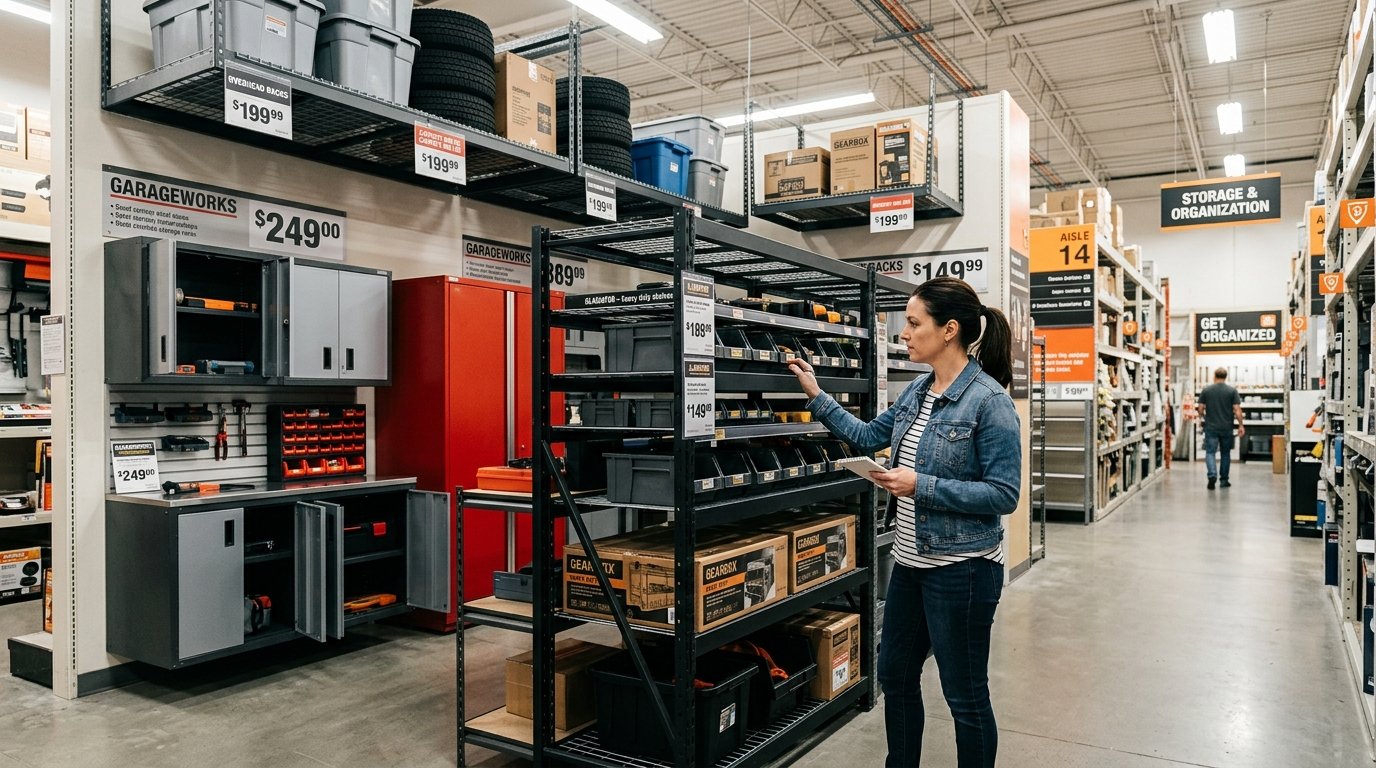
Cabinet Style and Load Comparison
| Cabinet Style | Steel Gauge | UDL Load Limit | Best Storage Function |
|---|---|---|---|
| Wall-Mounted Cabinets | 18 to 20-gauge steel | 150 to 300 lb UDL total | Overhead spray cans, fluids, light hand tools |
| Freestanding Tall Cabinets | 16 to 18-gauge steel | 1,200 to 2,000 lb UDL total | Heavy power tools, seasonal gear, bulky totes |
| Base Workbench Cabinets | 14 to 16-gauge steel | 800 to 1,500 lb UDL total | Heavy vise mounting, socket sets, hardware |
UDL means the load is spread evenly over the shelf or cabinet. It doesn’t mean you can place the full rating in one small spot. Follow the maker’s shelf-by-shelf rating, since the cabinet’s total rating may exceed the limit for one shelf.
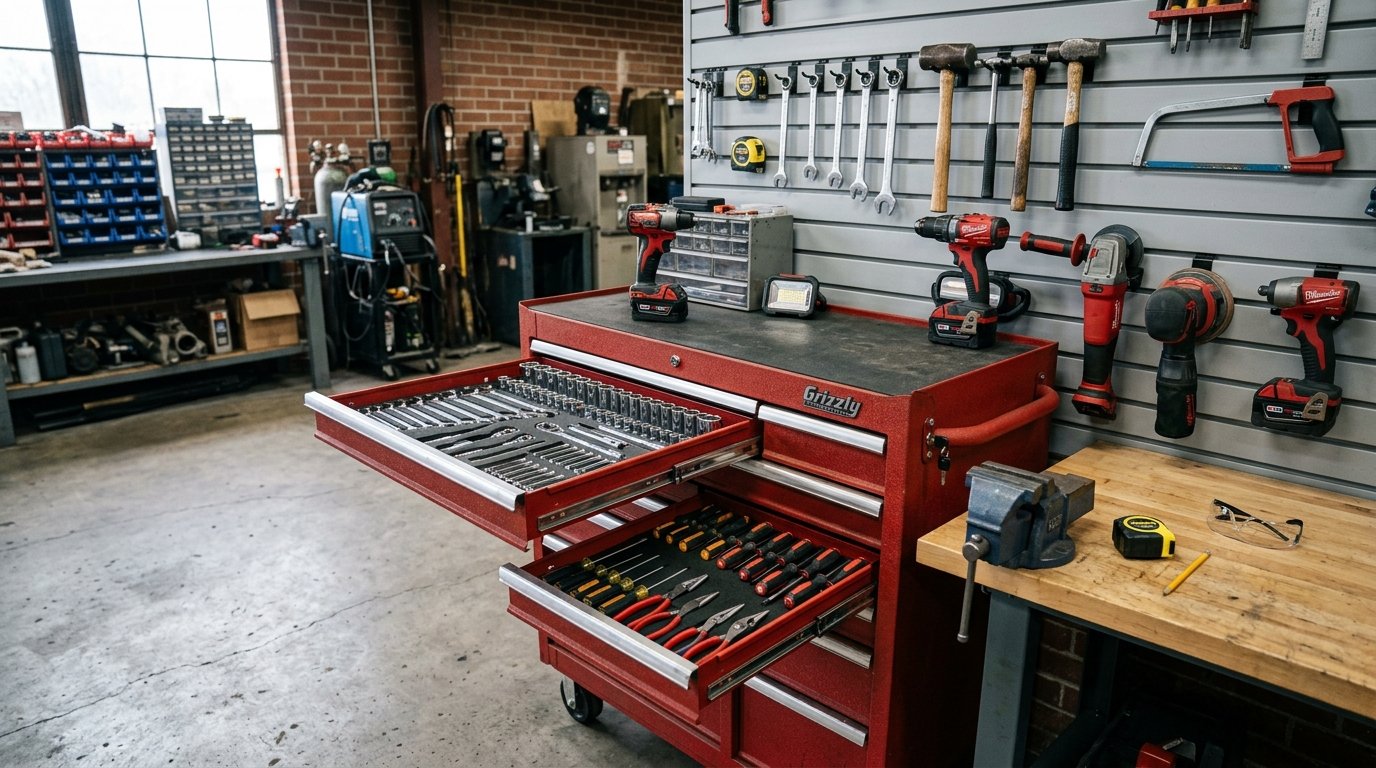
Drawers, Hinges, and Locks
Drawer Slides
Heavy-duty garage cabinet drawers should use full-extension ball-bearing slides. These slides let the drawer open fully, so you can reach tools at the back. A 100-pound rating per drawer is a useful target for socket sets, wrenches, and small power tools.
Check how the maker states the rating. Some ratings apply to one drawer, while others apply to the whole cabinet. Avoid friction slides on drawers that will carry heavy tools.
They can bind, wear quickly, and become difficult to pull when the cabinet isn’t perfectly level.
Door Hinges
Soft-close Euro hinges with a 110-degree opening give you wide access without letting the door slam. They also make small alignment adjustments possible after installation.
Look for doors with a stiff folded edge and a strong hinge connection. A thin, flat door can flex and rub against the frame. If the cabinet includes a lock, check that the lock engages a solid bar.
Or latch, not a small tab that can bend easily.
Security Features
A cabinet lock can keep casual users away from tools and chemicals, but it isn’t a high-security safe. Store flammable liquids according to local requirements, and don’t assume a locked cabinet makes an unsafe chemical setup safe.
For valuable tools, select a cabinet with a three-point locking system, steel locking rods, and a reinforced door. Keep the keys in a controlled location, and label chemical storage clearly.
Powder Coat or Stainless Steel?
Powder-Coated Steel
Powder coating is a dry finish baked onto the steel. It creates a hard surface that resists normal scratches, humidity, and oil spills. Hammered granite and matte black finishes are common in garage cabinets.
Powder coating works well in most unconditioned garages. It’s also usually less expensive than stainless steel. Scratches should be repaired before moisture reaches the steel beneath the coating.
Wipe spills quickly, especially salt, battery acid, brake fluid, and harsh cleaners.
Stainless Steel
Steel doors and tops suit humid garages, coastal areas, and spaces that need frequent cleaning. Stainless resists corrosion better than ordinary coated steel, though it isn’t immune to staining or rust. Salt deposits and metal particles can still damage the surface.
Stainless steel usually costs more and can show fingerprints. Use a mild cleaner and a soft cloth. Don’t use steel wool, since loose iron particles can leave rust marks.
For most garages, powder-coated steel offers a sensible balance of cost and protection. Stainless steel makes more sense where humidity, salt, or frequent washing is a serious concern.
How to Install Wall Cabinets Safely
Correct anchoring matters more than a cabinet’s advertised load rating. A strong cabinet can still pull away from the wall if it’s attached to weak material.
Tools and Materials
- Stud finder
- Level
- Drill and drill bits
- Socket wrench
- 1/4-inch by 3-inch lag screws
- Washers sized for the lag screws
- Clamps or a second person for lifting
Installation Steps
- Check the wall: Find the 2×4 studs behind the drywall. Most garages use 16-inch on-center spacing, but confirm each location.
- Mark the height: Leave enough room below the cabinet for your work surface, tools, or vehicle clearance.
- Find the mounting rail: Measure the rail or mounting holes before drilling. The holes need to line up with studs.
- Predrill the studs: Use a bit suited to the lag screw shaft. Don’t drill a hole wider than the screw’s main body.
- Lift and level the cabinet: Use a helper or temporary support. A steel cabinet can be awkward and heavy.
- Install the lag screws: Place a washer under each screw head. Tighten the screws into the studs without crushing the cabinet rail.
- Check the doors: Open and close them several times. Adjust the hinges if the gaps aren’t even.
- Load it slowly: Put lighter items in first, then check the cabinet for movement before adding heavier supplies.
For more planning help, use this garage cabinets sizing guide. It can help you match cabinet dimensions and gauge to your storage plan.
How to Set Up Freestanding Cabinets
Start by measuring the wall, floor slope, door swing, and vehicle clearance. Leave enough room to open doors and drawers without hitting a car, workbench, or another cabinet.
Place the cabinet on its leveling feet, then use a level across the front and side. Adjust the feet until the cabinet sits firmly with no rocking. If several cabinets sit together, level them as a group before joining them with the supplied fasteners.
Attach anti-tip brackets to the wall or another approved structural point. Don’t skip this step because the cabinet feels heavy. A loaded drawer can move the center of gravity forward, especially when upper shelves are empty.
And lower drawers are extended.
Keep the heaviest items low. Store bulky totes on lower shelves, hand tools in drawers, and light seasonal items higher up. This arrangement reduces tip risk and makes daily use easier.
Metal Cabinets Compared With Plastic
Metal is usually the better pick for heavy tools, workshop use, and long-term storage. Steel resists dents and supports higher loads. It also provides a firm mounting surface for drawer slides, shelves, and locks.
Plastic cabinets have useful advantages. They’re light, often cost less, and won’t rust. They can work well for garden supplies, small parts, or damp areas where low weight matters.
Plastic can crack under impact or become brittle with age. Thin plastic shelves can also bow under concentrated weight. Steel may dent, but a good frame usually stays serviceable after normal garage abuse.
Choose plastic for light storage and easy movement. Choose metal garage cabinets for heavy loads, tool security, strong drawers, and a permanent garage layout.
Maintenance and Rust Prevention
Clean cabinet surfaces with mild soap and water, then dry them fully. Don’t leave wet rags, snow-covered equipment, or leaking containers inside the cabinet.
- Repair chips and deep scratches with a matching touch-up coating.
- Keep cardboard and damp fabric off the cabinet floor.
- Use shelf liners under fluids and small metal parts.
- Inspect the bottom edges for rust twice a year.
- Lubricate drawer slides and hinges according to the manufacturer’s directions.
- Don’t store bleach, acids, and other reactive chemicals together.
In coastal or humid areas, control garage moisture with ventilation, a dehumidifier, or better door seals. Stainless parts can help, but moisture control still matters.
Plan a Complete Garage Storage Layout
Put daily-use tools between waist and shoulder height. Store heavy items from knee height down. Use wall cabinets for small supplies that need to stay off the worktop.
Keep a clear area around electrical panels, water heaters, gas equipment, and garage doors.
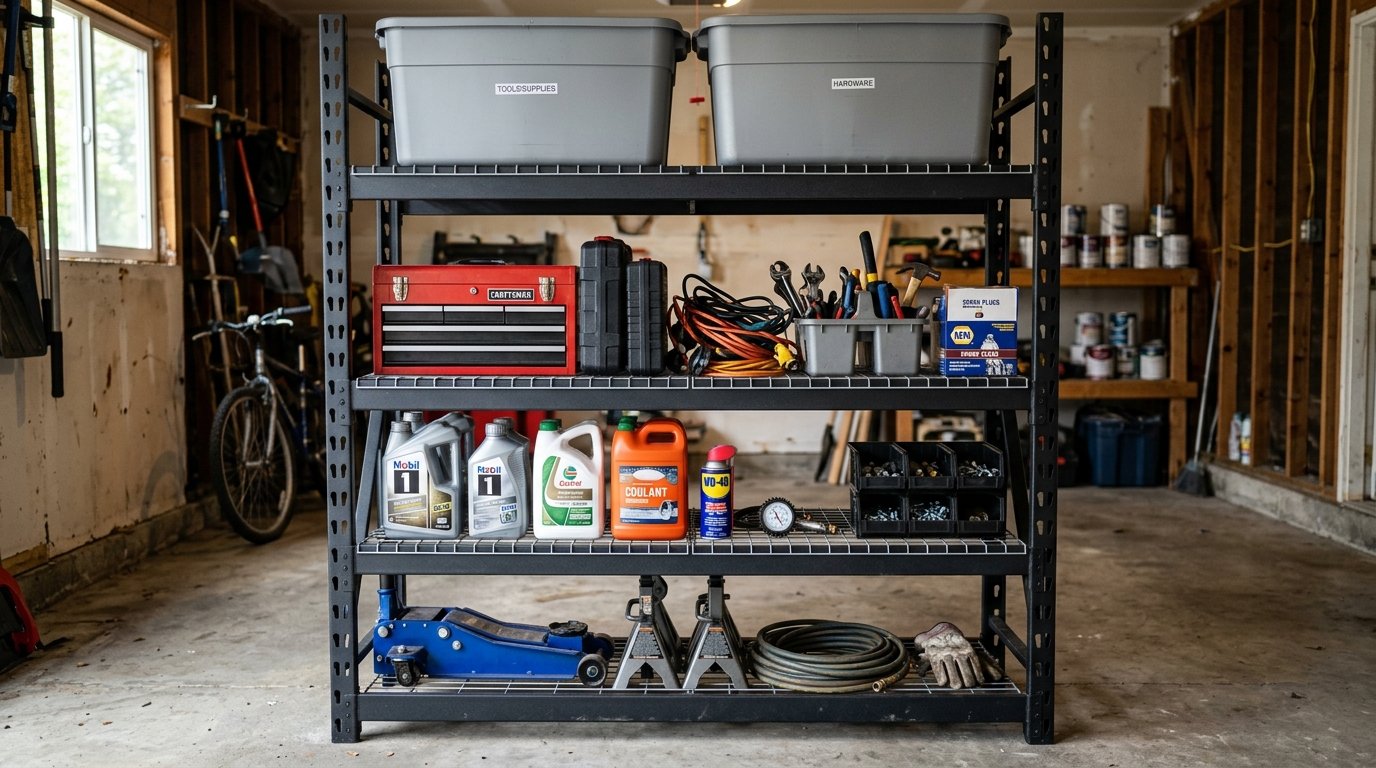
Cabinets work best when they’re part of a planned system. Open racks can hold bins and oversized items that don’t fit behind doors. See this guide to heavy duty storage racks for garage layouts before you buy several storage pieces.
For industry guidance on load handling and storage equipment, review the Material Handling Institute technical standards. For workplace storage safety requirements, consult the OSHA material storage safety standards.
Frequently Asked Questions
How much weight can metal garage cabinets hold?
Wall-mounted cabinets commonly hold 150 to 300 pounds UDL total. Freestanding tall cabinets often hold 1,200 to 2,000 pounds UDL. Base workbench cabinets usually support 800 to 1,500 pounds UDL.
The actual limit depends on steel gauge, shelf design, frame construction, anchoring, and floor support. Spread items evenly and follow the maker’s shelf rating.
Are metal garage cabinets better than plastic?
Metal cabinets are usually better for heavy tools, high loads, locks, and regular workshop use. Plastic cabinets weigh less, won’t rust, and can cost less. Steel is the stronger choice for a fixed storage system, while plastic works well for light items.
Or storage that needs to move often.
How to secure metal garage cabinets to the wall?
Find the 2×4 studs, confirm their locations,. And attach the cabinet through its mounting rail with 1/4-inch by 3-inch lag screws and washers. Aim for 16-inch on-center studs where possible.
Don’t use hollow drywall anchors for a loaded steel cabinet. Freestanding cabinets should use leveling feet and anti-tip brackets.
What is the best steel gauge thickness for garage cabinets?
For most home garages, 18-to-20-gauge steel provides a good balance of strength and price. Choose 16-to-18-gauge steel for heavy tools, tall cabinets, and demanding shop work. Use 14-to-16-gauge steel for base workbenches with vises or concentrated loads.
A 22-to-24-gauge cabinet suits light supplies and basic utility storage.
Final Buying Checklist
Before ordering metal garage cabinets, confirm the following:
- The cabinet width, depth, and height fit the available space.
- The steel gauge matches the weight of your stored items.
- The stated load rating uses UDL and includes shelf-by-shelf limits.
- Wall units can attach directly to structural studs.
- Tall units include leveling feet and anti-tip hardware.
- Drawers use full-extension ball-bearing slides rated for your load.
- Doors have strong hinges, a useful opening angle, and a reliable lock.
- The finish suits your garage humidity and exposure to salt or chemicals.
- The floor can support the cabinet and its contents.
Choose the cabinet style first, then select steel gauge and features based on the work you’ll do. A well-anchored, properly loaded cabinet will protect your tools, improve access, and keep the garage safer for years.

Callum Langham
Founder & Technical Storage Editor
Callum Langham is the founder and technical editor of Rack System. With over 12 years of hands-on field experience in warehouse logistics, garage organization, and industrial storage installations, Callum specializes in engineering safety standards, beam load calculations, and OSHA/RMI compliance. Every guide on Rack System is audited against verified steel gauge tolerances and municipal building codes.