Quick Answer: Best Metal Storage Cabinets
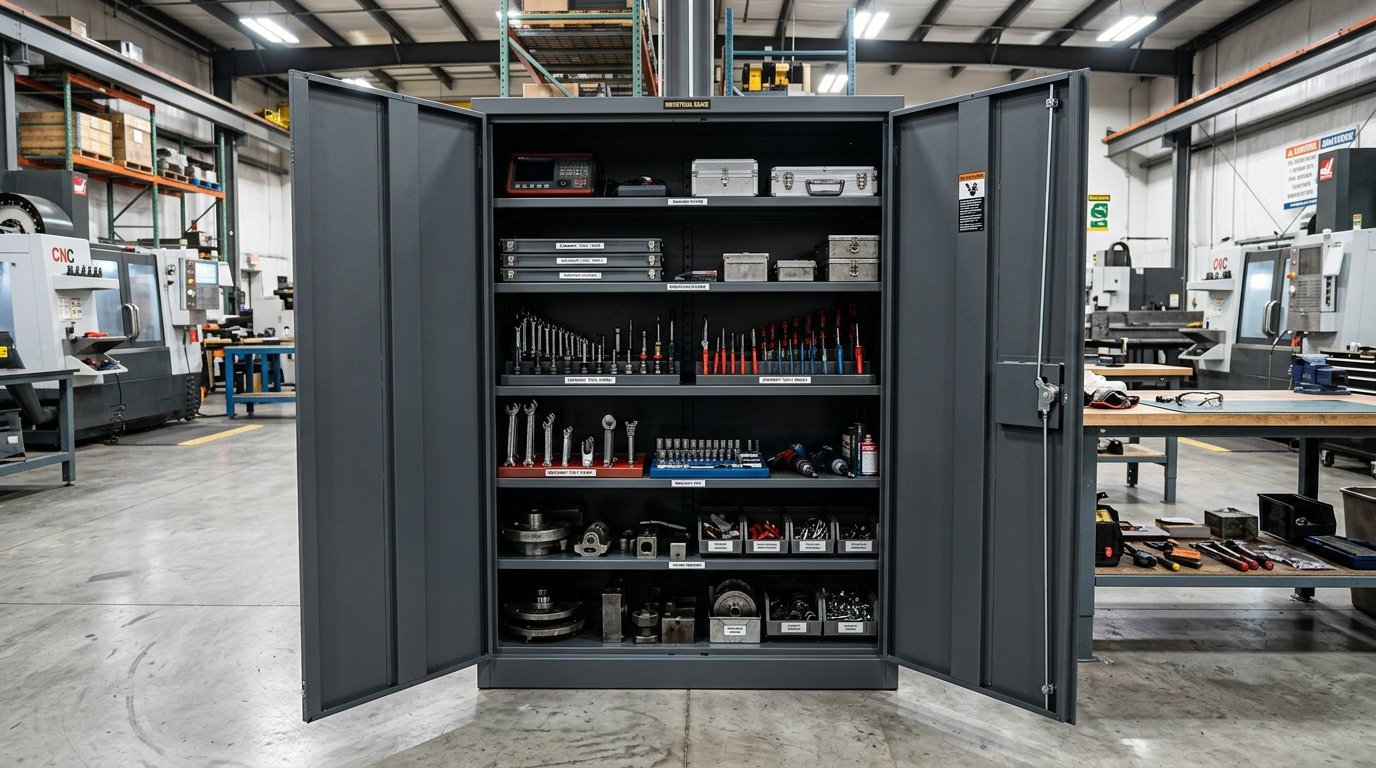
Industrial metal storage cabinets require welded 14-gauge or 16-gauge cold-rolled steel construction rather than thin 22-gauge consumer sheet metal. Look for dual doors featuring a 3-point locking system with solid 3/8-inch vertical steel rods and nylon guide bushings. High-capacity commercial shelves should carry at least 200 to 400 pounds uniformly distributed load (UDL) per tier. Always anchor tall freestanding cabinets into wall studs to eliminate tip-over risks on uneven concrete garage or warehouse slabs.
Key Takeaways
- Steel Gauge Standards: Heavy 14-gauge and 16-gauge steel prevents door racking, frame twisting, and latch binding under heavy tool loads.
- 3-Point Locking Rods: Dual vertical locking rods latch into top header and bottom sill, resisting pry-bar forced entry.
- Box-Formed Shelf Flanges: Triple-flanged return edges support 300+ pounds per tier without sagging or bowing in the middle.
- Concrete Slab Leveling: Uneven garage floors bind locking rods; heavy threaded leveling glides keep doors square and swinging freely.
Choosing Metal Storage Cabinets That Last
Walk through any big box hardware store and you will see rows of shiny metal cabinets. Most of them look tough under showroom lights. Once you load them with heavy socket sets and hydraulic jacks, their flaws show up fast. Cheap sheet metal twists, doors rub against frames, and latch rods jam.
If you need dependable storage for your garage or shop, you cannot buy on appearance alone. Metal storage cabinets handle punishing environments, fluctuating humidity, and brutal weight. Selecting the right cabinet comes down to steel thickness, locking hardware, and shelf construction.
This guide breaks down the real mechanical numbers behind industrial cabinet construction. We will examine steel gauge thickness, load distribution physics, and security mechanisms so you invest in hardware that never lets you down.
Steel Gauge Standards: Consumer vs. Commercial
Steel gauge is the single most critical specification on any storage cabinet. In the steel trade, lower gauge numbers signify thicker, heavier sheet metal. A 14-gauge cabinet has roughly double the thickness of a 20-gauge cabinet.
Consumer grade cabinets found in retail outlets typically use 22-gauge to 24-gauge steel (0.024 to 0.029 inches thick). Manufacturers use this thin sheet metal to cut shipping weight and raw material costs. When loaded with 80 pounds of fluids, these thin panels flex and bow easily.
Commercial and industrial shops require 16-gauge (0.059 inches) or 14-gauge (0.074 inches) cold-rolled steel. Heavy gauge steel provides structural rigidity without requiring internal cosmetic braces. Welded seams stay square over decades of hard service. To compare wall mounted options with freestanding units, check our metal garage cabinets guide.
The Problem With Flat-Pack Bolt-Together Cabinets
Many affordable cabinets ship flat-packed in cardboard cartons. You spend hours assembling hundreds of tiny sheet metal screws and stamped corner brackets. While flat-pack cabinets save initial money, they lack lateral shear strength.
Over time, daily vibrations from opening drawers or operating power tools loosen threaded fasteners. The cabinet box begins to parallelogram or lean to one side. Once a cabinet racks out of square, double doors fail to align and keys bind inside lock cylinders.
Fully welded commercial cabinets arrive as a monolithic unit. Seams are joined by gas metal arc welds along heavy formed corners. A welded cabinet resists diagonal racking forces, allowing doors to swing smoothly even when loaded to maximum capacity.
3-Point Locking Mechanisms Explained
Cabinet security depends entirely on the design of the door latching system. Basic residential cabinets use a simple single-point cam lock mounted in the door center. A thief with a common flat screwdriver can pop the top or bottom corner open in seconds.
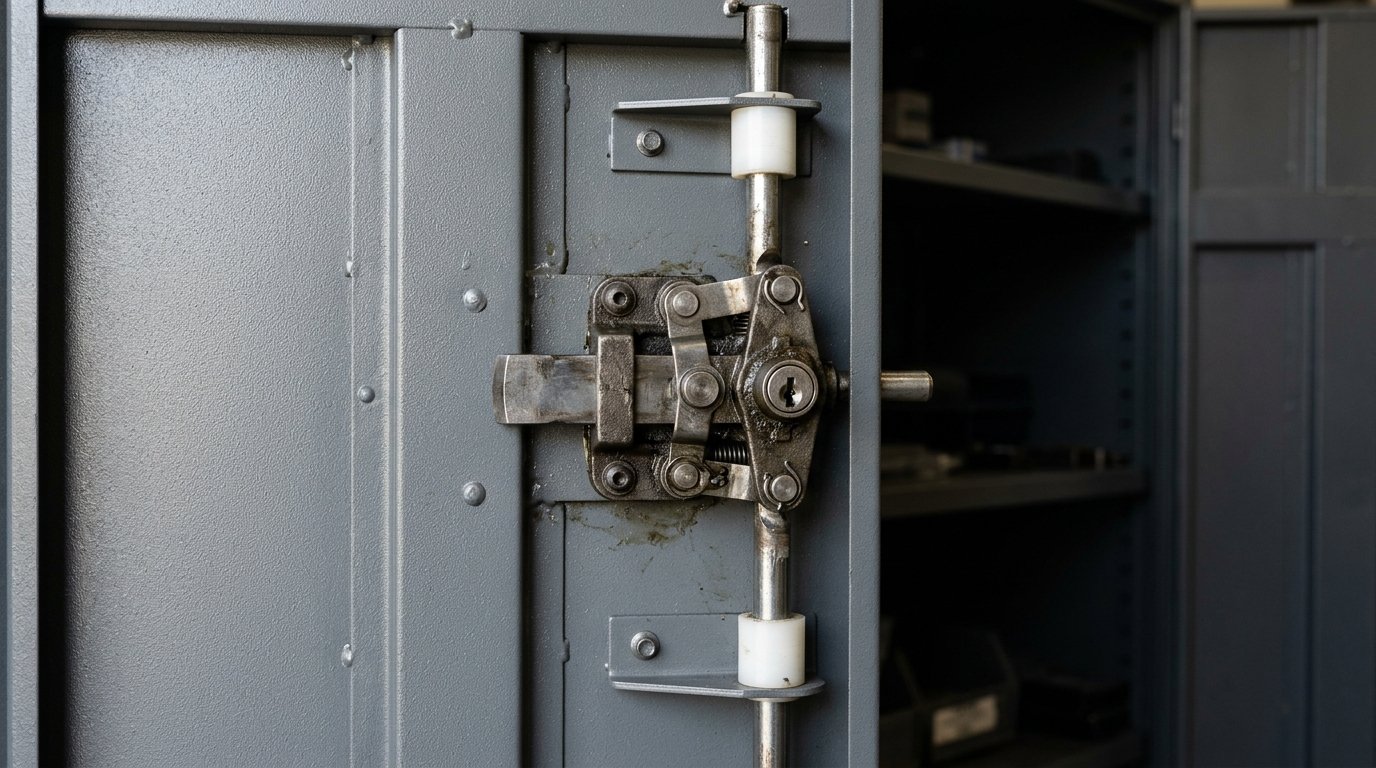
Professional metal storage cabinets rely on a heavy-duty 3-point locking system. Turning the exterior handle rotates a central die-cast cam mechanism. This cam simultaneously drives two solid steel rods vertically into the top header frame and bottom sill.
The third locking point engages a heavy center deadbolt latch directly into the opposing door or center jamb. High quality systems encase the steel rods inside nylon guide bushings to reduce friction and eliminate metal rattling during operation. For secure lock selection, review our lockable storage cabinet guide.
Solid Steel Locking Rods vs. Stamped Flat Straps
Examine the locking rods before you buy any storage cabinet. Budget units use thin stamped sheet metal straps with stamped hook ends. These flat straps flex easily when pry pressure is applied to the door gap.
Industrial grade cabinets utilize solid 5/16-inch or 3/8-inch round cold-drawn steel rods. Solid round steel rods resist bending forces and hold door edges tightly against the frame gasket. Look for cast alloy or forged steel center cams rather than plastic linkage pieces.
Heavy commercial handles feature integrated padlock hasps alongside standard keyed cylinder locks. This dual-lock architecture allows you to apply commercial padlocks for high-value power tools or hazardous chemical storage, complying with OSHA general materials handling and storage regulations.
Shelf Capacity and Deflection Engineering
Cabinet manufacturers quote shelf ratings in Uniformly Distributed Load (UDL). A shelf rated for 300 pounds UDL can hold that weight only if spread evenly across its entire surface. Placing a single 150-pound engine component directly in the middle can bend the shelf permanently.
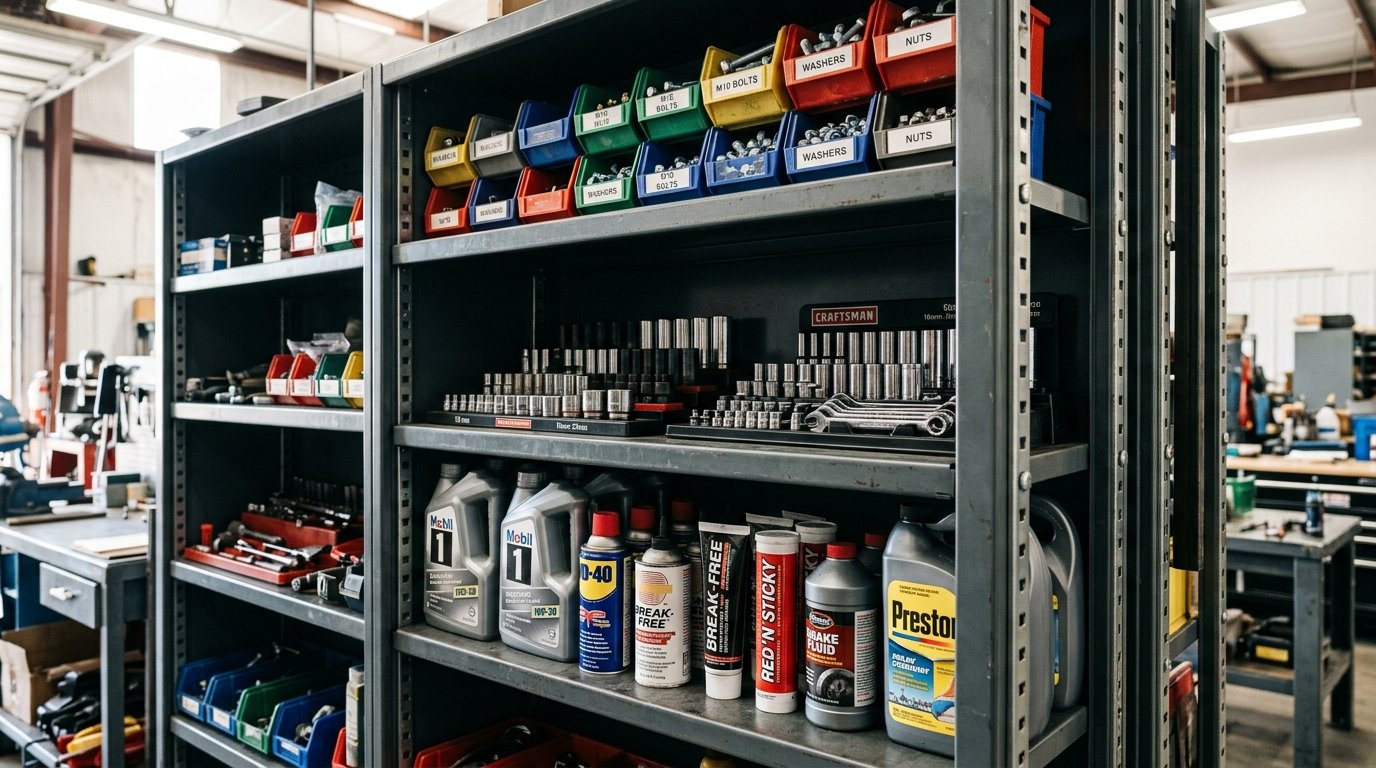
Shelf strength depends on edge forming rather than raw steel thickness alone. High-capacity steel shelves feature box-formed return flanges on all four edges. The front edge undergoes a double or triple 90-degree fold to create a rigid box beam profile.
Without front flange folds, a 36-inch wide shelf bows visibly under moderate loads. Look for shelves supported by welded vertical pilaster channels rather than thin punched tabs in the outer skin. Heavy-duty commercial systems use four-corner shelf clips that wedge tighter as load increases, meeting Material Handling Industry storage safety standards.
Cabinet Sizing and Footprint Strategy
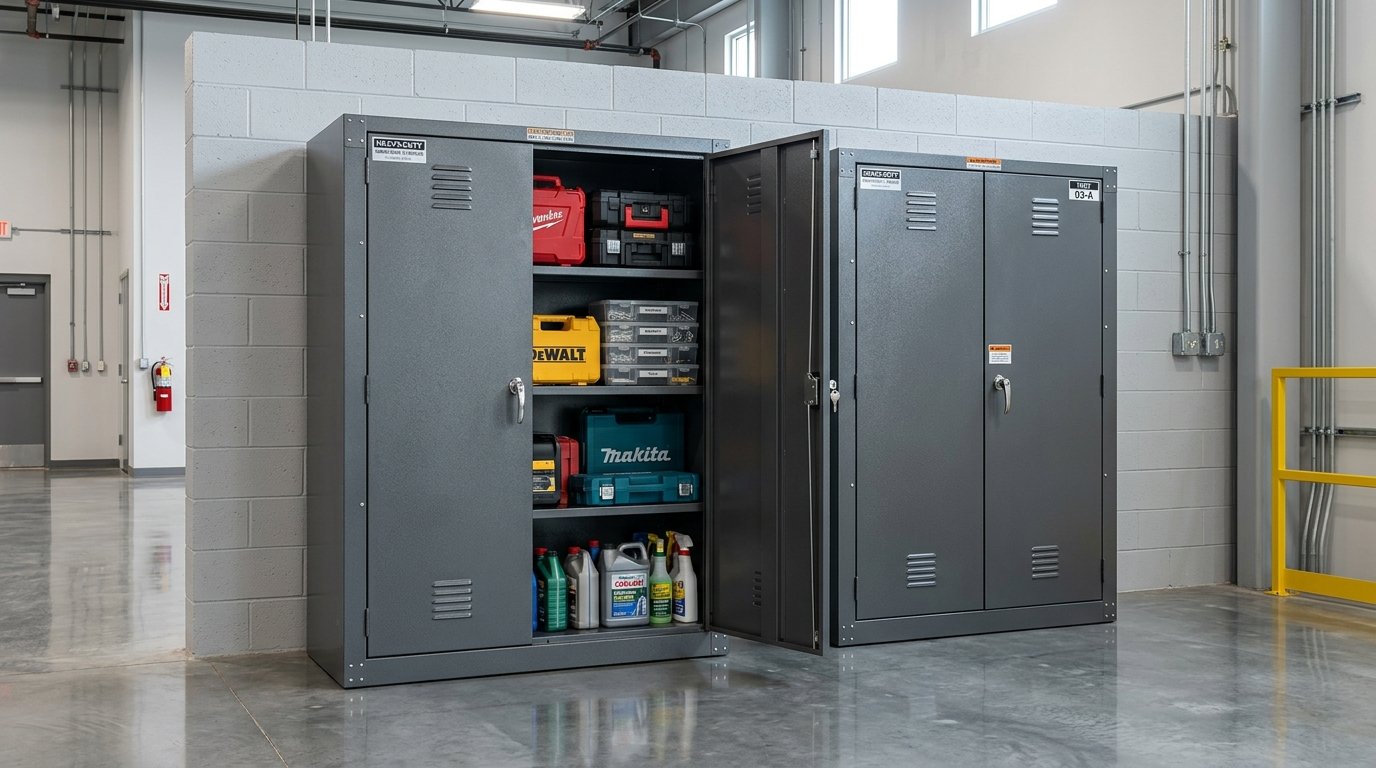
Selecting the right dimensions prevents crowded walkways and awkward door swings in your workspace. Standard industrial cabinets come in 36-inch, 48-inch, and 60-inch widths. Standard heights run either 72 inches or 78 inches.
Depth is where many buyers make costly mistakes. A 18-inch deep cabinet fits hand tools, paint cans, and small hardware organizers cleanly. Large power tool cases, air compressors, and automotive parts require 24 inches of clear internal depth.
Keep door swing clearance in mind when laying out your shop floor plan. Double doors on a 48-inch cabinet require 24 inches of open swing radius in front of the unit. In tight single-car bays, bi-fold or sliding door models preserve walking paths while keeping contents accessible.
Comparison: Metal Storage Cabinet Grades
Compare the four primary cabinet construction tiers before making your buying decision:
| Cabinet Grade | Steel Gauge | Shelf Capacity (UDL) | Locking Mechanism |
|---|---|---|---|
| Light Retail / DIY | 22 to 24 Gauge | 100 to 150 lbs / shelf | Single-point cam lock, stamped keys |
| Standard Commercial | 18 to 20 Gauge | 200 to 250 lbs / shelf | 3-point latch, flat sheet metal rods |
| Heavy Industrial | 14 to 16 Gauge | 350 to 500 lbs / shelf | 3-point solid 3/8″ round rods, cast cam |
| Severe Service / Mill | 12 Gauge All-Welded | 1,000 to 1,900 lbs / shelf | Heavy padlock hasp, cast iron handle |
Leveling Glides and Concrete Slab Slope
Garage floors are deliberately sloped toward the overhead vehicle door to drain water and melting snow. A standard residential concrete slab drops roughly 1/4 inch per foot. When you set a tall 78-inch metal cabinet on a sloped slab, it leans forward noticeably.
Leaning forward places constant gravitational pull on the door hinges. Worse, uneven floor contact twists the cabinet base, pulling the top header out of square with the vertical rods. This misalignment causes locking rods to scrape and bind against latch receivers.
Always choose metal storage cabinets equipped with heavy threaded leveling legs. Heavy-duty 1/2-inch threaded steel glides allow you to raise individual corners until the cabinet sits perfectly plumb. Use a 4-foot spirit level across the front header and side panels during installation.
Anti-Tip Anchoring: Non-Negotiable Safety
A tall metal storage cabinet loaded with heavy tools possesses substantial forward tip-over potential. If you open both doors simultaneously and slide a heavy equipment case off an upper shelf, the center of gravity shifts past the front feet instantly.
Anti-tip wall anchoring is mandatory for every freestanding metal cabinet over 60 inches tall. Never rely on plastic drywall anchors to hold a cabinet that weighs several hundred pounds. Drive 5/16-inch structural lag screws directly through the rear cabinet frame into wood wall studs.
On unfinished concrete or masonry foundation walls, use 3/8-inch concrete wedge anchors or heavy masonry sleeve bolts. Anchoring eliminates cabinet rocking and protects children, pets, and shop workers from catastrophic crush injuries.
Ventilation, Flammables, and Finishes
Powder-coated finishes provide superior scratch and chemical protection compared to liquid spray paints. The dry powder polymer melts under high temperature ovens, forming a hard impact-resistant shell. Look for textured or hammertone powder coats that conceal minor tool scratches.
If you store motor oils, aerosol brake cleaners, or fuel additives, check local ventilation requirements. Standard utility cabinets trap volatile solvent fumes inside closed doors. Cabinets intended for combustible liquids require dual flame arrestor vents and grounded bonding wires to meet fire codes.
High-end workshop cabinets now feature internal power strips with surge suppression. These integrated outlets allow you to charge cordless tool battery packs overnight behind locked steel doors. Ensure the cabinet includes built-in cable pass-through grommets to prevent power cords from pinching in door jambs.
People Also Ask (FAQs)
How much weight can a metal storage cabinet hold?
A standard commercial metal cabinet holds between 800 and 1,500 pounds total distributed weight. Light consumer cabinets top out around 400 to 600 pounds total. Heavy-duty 14-gauge welded industrial models can hold over 2,000 to 4,000 pounds across all shelves combined.
What steel gauge is best for metal storage cabinets?
Commercial workshops and home garages should aim for 16-gauge or 18-gauge cold-rolled steel. Heavy industrial facilities and severe environments require 14-gauge or 12-gauge plate steel. Avoid 22-gauge or 24-gauge retail cabinets for storing heavy mechanical tools and shop equipment.
How does a 3-point locking system work on a metal cabinet?
Turning the exterior handle operates an internal central cam mechanism. This cam pushes two vertical steel rods into the top header and bottom sill while extending a center latch into the opposing door frame. This locks the top, center, and bottom of the door simultaneously.
Do metal storage cabinets need to be anchored to the wall?
Yes. Any freestanding cabinet over 60 inches tall should be anchored directly into wood wall studs or masonry. When loaded upper doors open, the center of gravity shifts forward, creating a dangerous tip-over hazard if unanchored.

Callum Langham
Founder & Technical Storage Editor
Callum Langham is the founder and technical editor of Rack System. With over 12 years of hands-on field experience in warehouse logistics, garage organization, and industrial storage installations, Callum specializes in engineering safety standards, beam load calculations, and OSHA/RMI compliance. Every guide on Rack System is audited against verified steel gauge tolerances and municipal building codes.