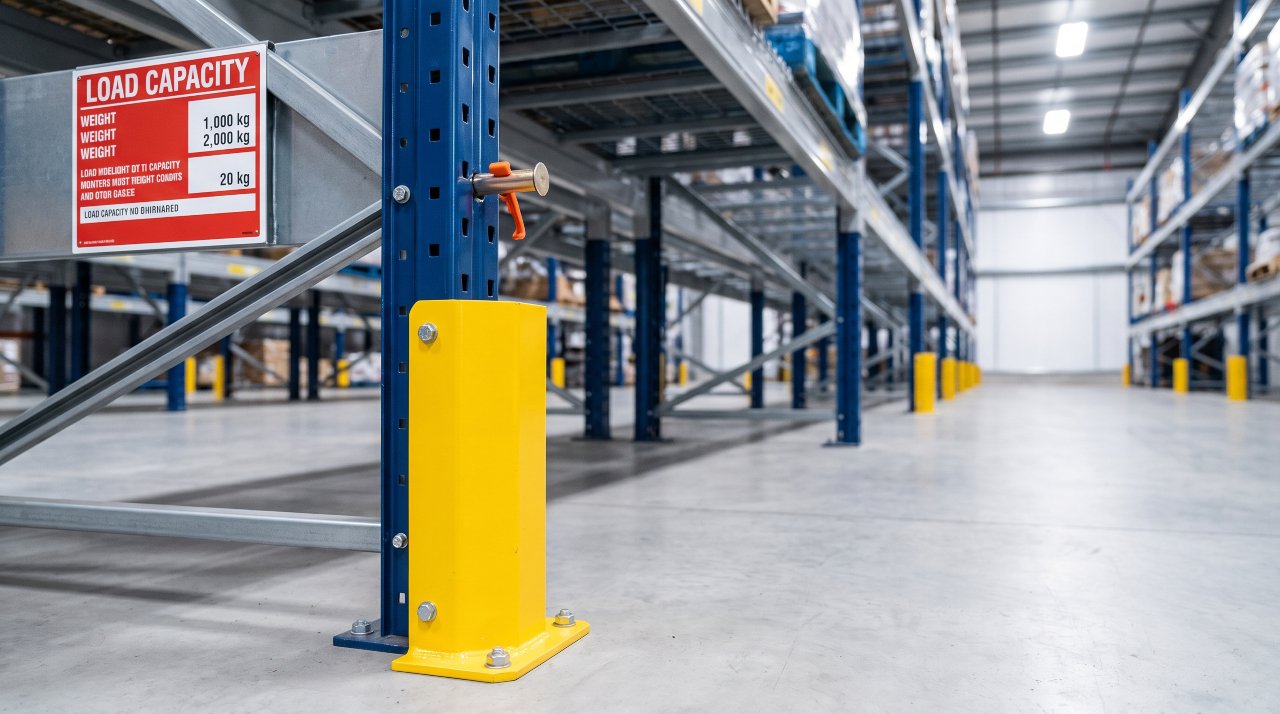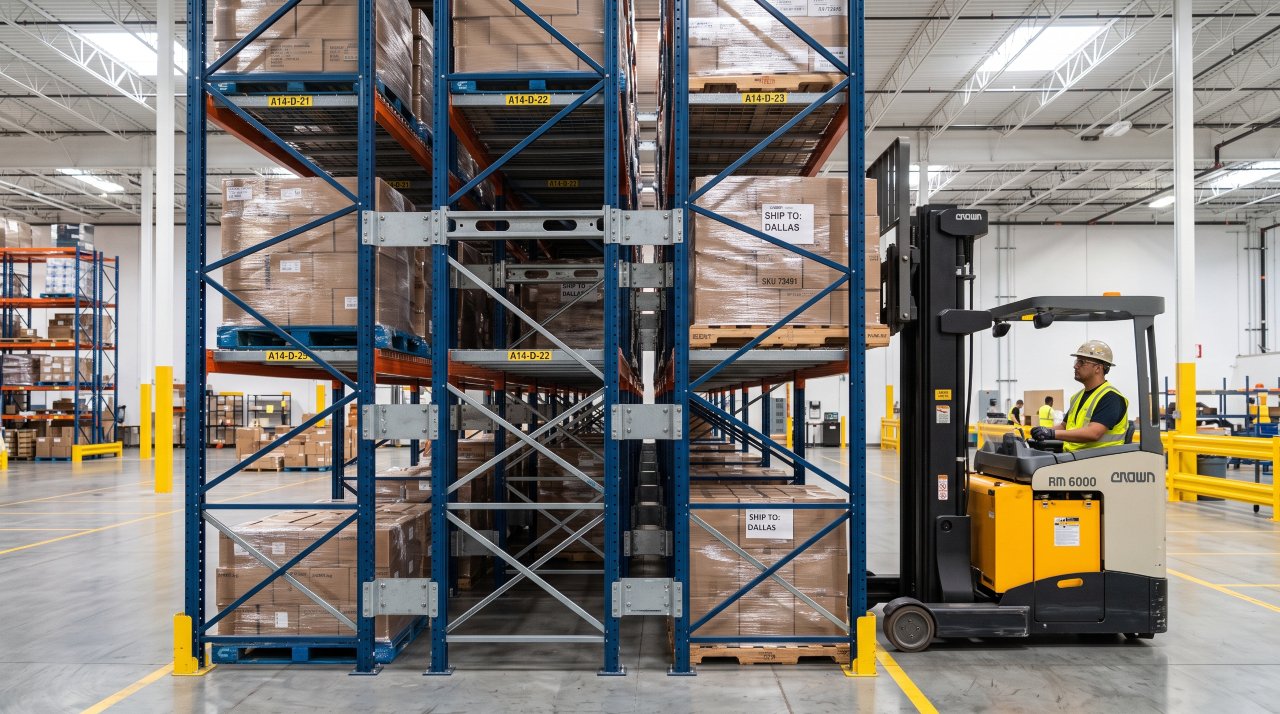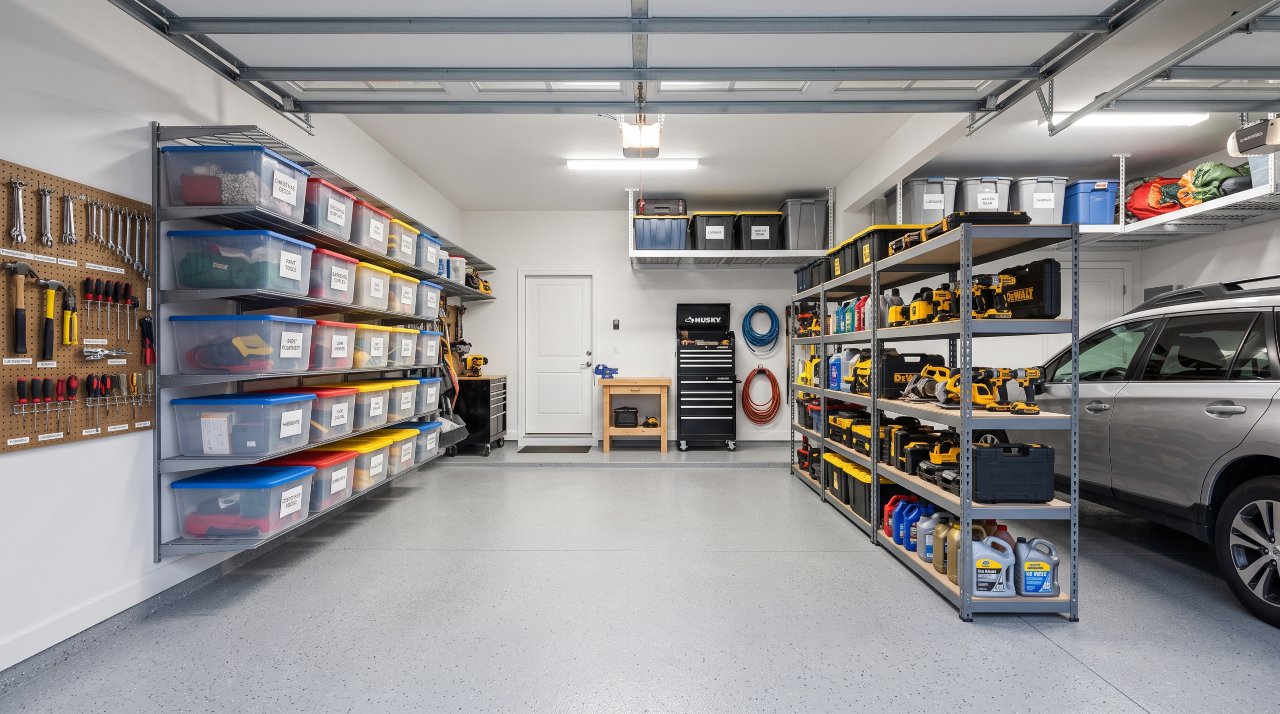
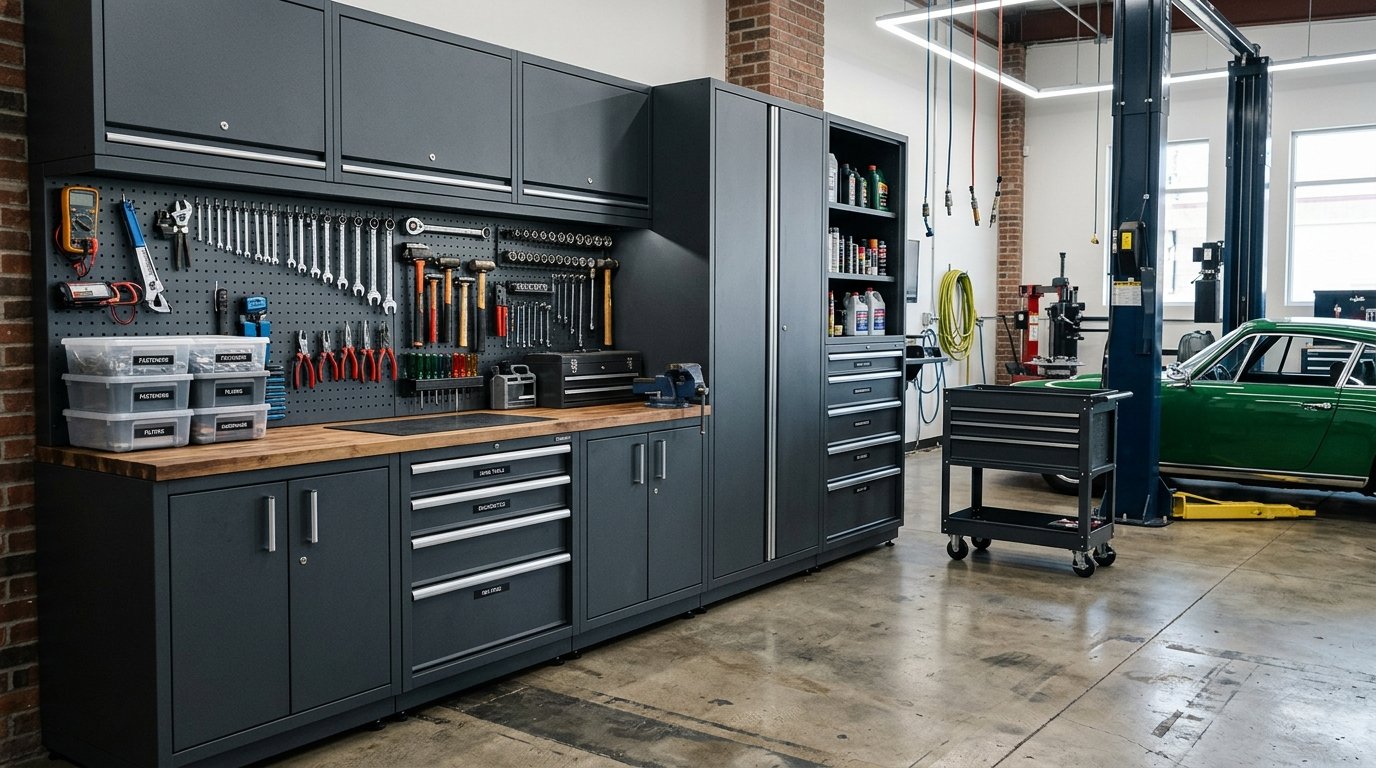
Garage cabinets can turn a crowded garage into a safer, more useful work area. The right setup keeps tools, chemicals, sports gear, And seasonal items off the floor while protecting them from dust, moisture, and accidental damage.
It can also give you a lockable place for expensive tools and hazardous products.
There isn’t one cabinet style that suits every garage. Wall space, floor space, ceiling height, garage temperature, item weight, and your budget all matter. This guide covers cabinet types, steel gauges, shelf ratings, cabinet depth, anchoring and load calculations.
And installation details so you can buy with fewer mistakes. For a broader storage plan, see these garage storage systems.
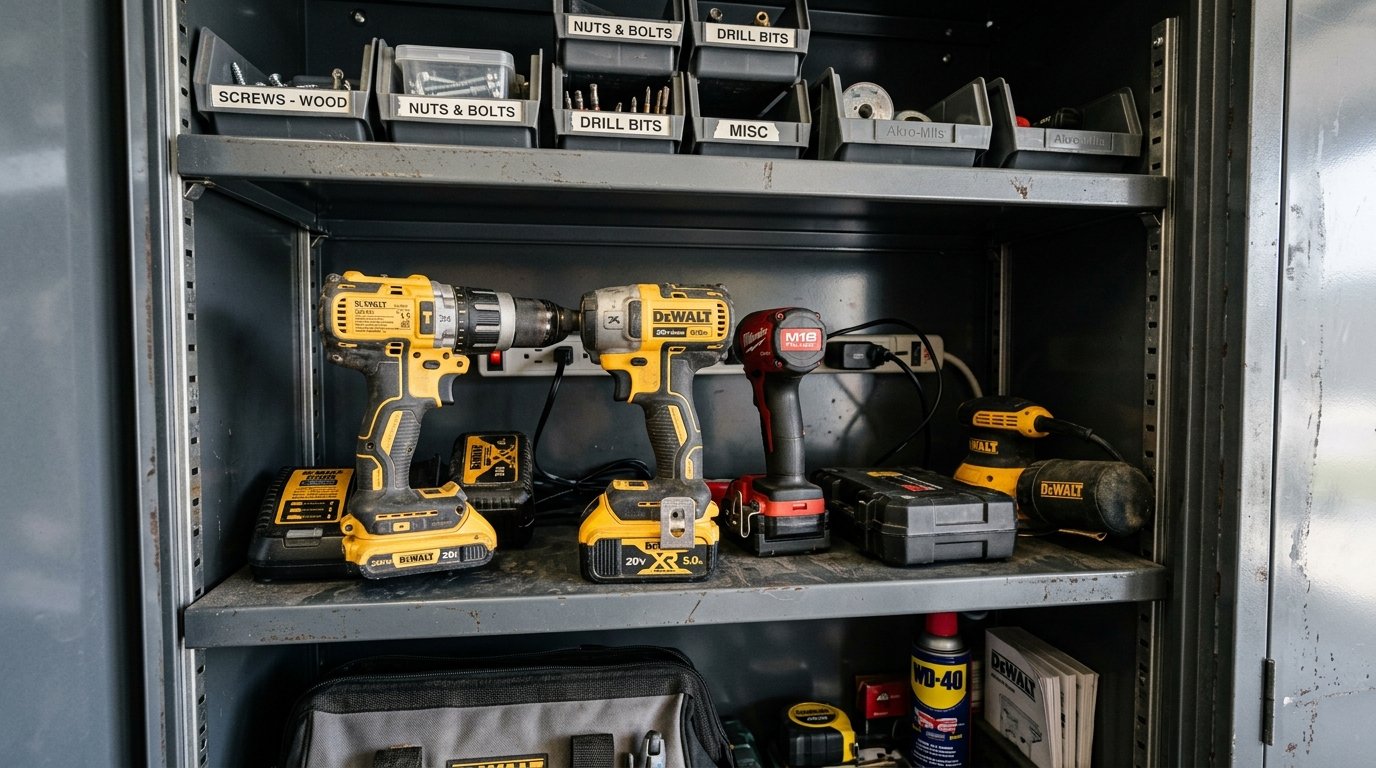
Quick Answer: How to Choose Garage Cabinets
To choose the right garage cabinets, select 18-gauge steel for commercial strength or 20-to-24-gauge steel for light residential tool storage. Wall-mounted units support 150 to 300 lb UDL total and require 1/4-inch by 3-inch lag screws anchored directly into 16-inch on-center 2×4 wall studs. Tall freestanding cabinets hold 1,200 to 2,000 lb total but must be anchored to wall studs to prevent tipping. Choose powder-coated finishes for dry garages or stainless steel for high-humidity environments.
Key Takeaways
- Steel Gauge Matters: 18-gauge steel (0.0478 in) resists denting and flex under heavy point loads compared to thin 24-gauge (0.0239 in) budget steel.
- UDL Load Math: Shelf ratings assume Uniformly Distributed Load (UDL); concentrated point loads fail at significantly lower capacities.
- Wall Anchoring Safety: All tall freestanding cabinets must be anchored into wall studs using lag screws to prevent dangerous tipping hazards.
- Cabinet Depth Selection: Standard 18 to 24-inch depth fits storage totes and power tools while leaving clearance for vehicle doors.
Why Garage Cabinets Are Useful
Open shelving gives quick access, but cabinets protect contents and make the room look less cluttered. Doors keep sawdust off hand tools and stop small parts from spreading across shelves. Locking doors also help keep children away from paint, cleaners, blades, and automotive fluids.
Cabinets work best when each unit has a clear job. A shallow wall cabinet can hold spray cans and small tools. A rolling base cabinet can support a toolbox and provide a work surface.
A tall cabinet can store folding chairs, camping equipment, large totes, and seasonal decorations.
Before buying, measure the wall, floor, and access path. Account for the garage door tracks, vehicles, workbenches, windows, electrical panels, and water heaters. Leave enough room to open doors without hitting a car or blocking a walkway.
Types of Garage Cabinets
Wall-Mounted Cabinets
Wall-mounted cabinets preserve floor space and work well above workbenches. They suit lighter items such as hand tools, spray cans, fasteners, and small bins. Most units use a steel back panel, mounting rail, or rear brackets.
These cabinets must attach to wall studs, not just drywall. A typical unit may support about 150 to 300 pounds total, but the rating often varies by shelf. And mounting method.
The wall, fasteners, cabinet frame, and shelf all limit the safe load.
Freestanding Full-Size Cabinets
Tall freestanding cabinets offer the most storage volume. Common depths range from 18 to 24 inches, with deeper units reaching 30 to 36 inches. They work well for large totes, fluids, power equipment, and out-of-season items.
A tall cabinet can become dangerous if it tips. Anchor it to a wall stud, masonry surface, or a suitable structural point. Many products include an anti-tip bracket, but you’ll still need the correct fastener for your wall.
Rolling Tool Cabinets
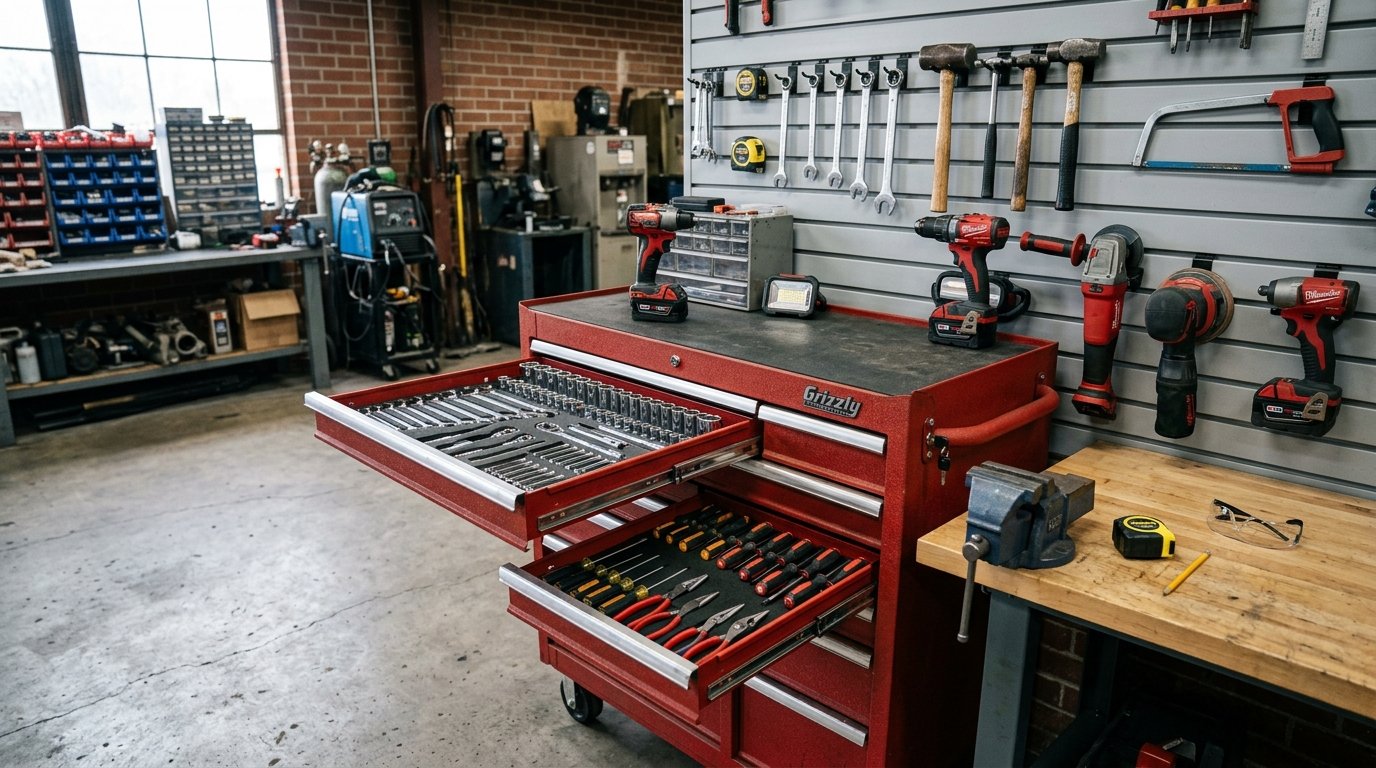
Rolling cabinets are useful in a workshop because you can move tools close to the vehicle or workbench. Caster quality matters. Look for locking casters, a welded frame, full-extension drawers, and a stated total load rating.
Rolling units often carry 400 to 800 pounds, depending on their steel gauge, drawer design, and caster size. Keep heavy tools in lower drawers. Lock the casters before opening several full drawers at once.
Modular Cabinet Systems
Modular systems combine wall cabinets, base cabinets, tall lockers, and worktops. You can start with one section and add matching pieces later. Interlocking sections can improve alignment,.
But the entire run should still be secured to the wall where the manufacturer requires it.
Check the product dimensions before combining units. Matching finishes don’t always mean matching heights, depths, or mounting hardware. Review these garage storage cabinets for more layout and cost guidance.
Steel Gauge and Cabinet Strength
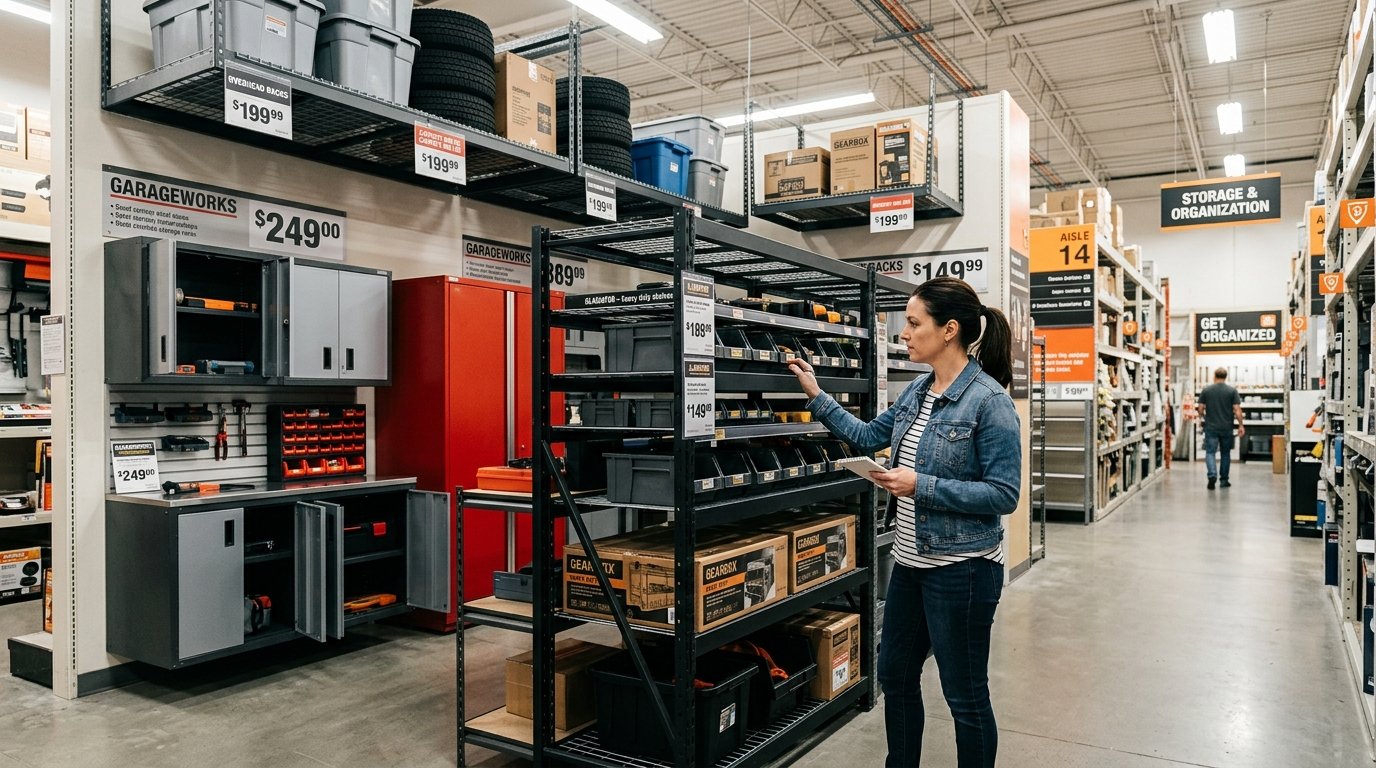
Steel gauge describes sheet thickness. A lower gauge number means thicker steel. Thickness affects dent resistance, shelf deflection, frame stiffness, and how well a cabinet handles repeated use.
- 24-gauge steel: About 0.0239 inches thick. It’s common in budget cabinets and can work for light storage. It may shake, dent, or flex under heavy point loads.
- 20-gauge steel: About 0.0359 inches thick. This mid-grade option suits many homeowner garages and moderate shelf loads.
- 18-gauge steel: About 0.0478 inches thick. It resists bending and dents better, making it useful for heavy-duty shelves and frequent workshop use.
Some commercial welded cabinets use 16, 14, or heavier steel for frames and shelves. Don’t judge strength from gauge alone. Shelf supports, welds, cabinet width, door bracing, fasteners, and the floor also affect capacity.
Powder-coated steel is a common finish. The coating helps resist scratches and corrosion, but it won’t make steel rust-proof. Wipe up water, salt, oil, and chemical spills quickly.
Stainless steel can suit damp or moisture-prone garages, though it usually costs more.
Garage Cabinet Capacity and UDL
Manufacturers often state a shelf rating as a uniform distributed load, or UDL. This means the weight is spread across the shelf surface. A 48-inch shelf rated for 300 pounds UDL isn’t automatically safe for one 300-pound engine block placed in the center.
A concentrated item creates a point load. It puts more stress on the shelf panel, front edge, brackets, and side supports. If you need to store a dense item, place it over a shelf support or on the cabinet floor.
Use a plywood load spreader when the manufacturer allows it.
Simple Load Math
Suppose a shelf has a 300-pound UDL rating and you plan to store six bins. The basic average is:
300 pounds ÷ 6 bins = 50 pounds per bin
That doesn’t mean six 50-pound bins will always be safe. You should also account for the shelf itself, uneven loading, movement, shelf age, and the cabinet’s total rating. Keep a practical buffer instead of loading every shelf to its published limit.
For paint buckets, four 5-gallon buckets may weigh about 240 pounds when full. Spread them across the shelf, keep them low, and check that the shelf rating covers the combined weight. Tires, batteries, metal parts, and toolboxes are also denser than clothing or empty plastic bins.
Read the rating carefully. Some brands list capacity per shelf, some list total cabinet capacity,. And some list a rating based on evenly spread weight.
The weakest part of the system sets the real limit.
| Cabinet Style | Steel Gauge | UDL Shelf Rating | Best Stored Goods |
|---|---|---|---|
| Wall-Mounted Unit | 18 to 20-gauge steel | 150 to 300 lb per unit | Spray cans, hand tools, small bins |
| Rolling Base Cabinet | 16 to 18-gauge steel | 400 to 800 lb per unit | Heavy toolboxes, power tools, parts |
| Tall Freestanding Cabinet | 14 to 18-gauge steel | 1,200 to 2,000 lb total | Out-of-season gear, fluids, large totes |
How Deep Should Cabinets Be?
Cabinet depth affects storage volume, aisle space, and access. An 18-inch cabinet works well for chemicals, hand tools, small bins, and items you use often. It keeps the cabinet closer to the wall and leaves more room for a vehicle.
A 24-inch cabinet is a common choice for power tools, medium storage bins, tool cases, and larger household goods. It offers more capacity without reaching too far into the garage.
Choose 30 to 36 inches for large boxes, sports equipment, bulky machines, and oversized totes. Measure the items first. Deep cabinets can cause items to disappear behind one another, and they take more aisle space.
Leave enough clearance for doors and drawers. A rolling cabinet may need extra room to move, while a tall cabinet needs space for the door swing. Check the garage doorway width before ordering a deep or assembled unit.
Anchoring Garage Cabinets Safely
Every wall-mounted cabinet must be anchored correctly. Most tall freestanding cabinets should also be anchored because a loaded cabinet can tip when doors open or drawers extend. Anchoring isn’t an optional upgrade.
It’s a basic safety requirement.
Finding Wall Studs
Most wood-framed garage walls have studs spaced 16 or 24 inches on center. Use a stud finder, inspect visible fasteners, or measure from a known corner. Confirm the location with a small pilot hole before drilling the mounting holes.
For many wall-mounted cabinets, a 1/4-inch by 3-inch or 5/16-inch by 3-inch lag screw is a practical starting point,. But follow the cabinet maker’s instructions. The screw must pass through the mounting rail and wall surface, then penetrate solid wood.
A pilot hole helps prevent splitting and makes it easier to keep the screw straight.
A single lag in the face of a wood stud may provide about 300 to 500 pounds of pull-out resistance, depending on wood grade, penetration, hole size, and installation quality. A 2×4 stud can support much more weight vertically.
But pull-out strength is the concern for a cabinet projecting from the wall. Use multiple studs and fasteners whenever the cabinet design permits.
Concrete and Block Walls
Concrete requires a masonry bit and anchors rated for the cabinet load. Expansion anchors, sleeve anchors, and concrete screws each have different installation rules. Don’t use a wood lag screw in concrete.
Cinder block needs extra care because the hollow center may not hold an anchor like solid concrete. Fasten to the web or use an anchor designed for hollow masonry. If the block is damaged or weak, ask a qualified installer to review the mounting point.
Drywall anchors alone aren’t suitable for heavy wall cabinets. They may hold a light picture or small accessory. But they aren’t a substitute for structural fastening into studs or masonry.
Preventing Tall Cabinet Tip-Over
Tipping force increases when a cabinet gets taller, its center of gravity rises, and its load moves forward. Opening a tall door can shift weight away from the wall. Pulling a loaded drawer creates another forward force.
For a simple check, picture a 72-inch-tall cabinet that is 24 inches deep. If heavy items sit near the front, the center of gravity moves forward. A small push at the top can create a large turning force at the floor.
The floor may support the cabinet’s weight, but it can’t stop rotation without an anchor.
Install the supplied anti-tip strap or bracket into a stud, concrete anchor, or approved structural point. Load heavy items on the lowest shelves. Keep doors and drawers closed when they aren’t in use.
Don’t allow children to climb on cabinet drawers.
For workplace storage, review the OSHA material storage safety standards. Home garages still benefit from the same habits: stable loads, clear aisles, secure cabinets. And no stacked items that can fall.
Features That Matter
Adjustable Shelves
Adjustable shelves let you place tall bottles, bins, and tool cases without wasting vertical space. Check how the shelf locks into the side supports. A strong shelf pin or bracket is better than a thin tab that can bend under repeated loading.
Door and Lock Design
Soft-close hinges reduce slamming and protect the cabinet frame. Barrel locks, single-key cam locks, and padlock hasps are common. Premium cabinets may use an electronic keypad, but batteries and access codes add maintenance needs.
Use a lock for security, not as a substitute for safe chemical storage. Keep flammable liquids in approved containers and follow local storage rules. A ventilated cabinet may be needed for certain products.
Welded Versus Knock-Down Frames
Welded cabinets usually feel stiffer and handle heavy use well. Knock-down cabinets cost less to ship and may be easier to carry through a narrow doorway. Their strength depends heavily on bolts, corner joints, and correct assembly.
Look at the frame, shelf supports, hinges, and bottom panel. A thick door with a weak cabinet body won’t solve a capacity problem. Ask for a shelf rating and total cabinet rating before purchase.
You can also compare published Home Depot garage cabinet specifications.
Are Garage Cabinets Worth the Cost?
Garage cabinet prices vary by steel gauge, size, finish, locking hardware, and installation. A basic wall unit may cost a few hundred dollars. A modular run with worktops can cost several thousand dollars, while commercial welded cabinets often cost more.
Cost per linear foot gives you a useful comparison. Divide the cabinet price by the total width of the cabinet run. Include shelves, worktops, legs, casters, mounting rails, delivery, and installation.
A low purchase price can rise after you add missing hardware.
Cabinets can be worth the cost if you need security, clean storage, better floor access, and long service life. They may not suit a tight budget if open shelves can safely hold your items. And dust control isn’t a concern.
Start with the storage problems that cause the most clutter, then add cabinets in stages.
Planning and Installation Tips
- Measure first: Record wall width, ceiling height, door swings, vehicle clearance, and obstacles.
- Sort your items: Group tools, chemicals, sports gear, seasonal goods, and small parts before choosing cabinet sizes.
- Estimate weight: Add the contents of each shelf and compare the result with the UDL and total cabinet ratings.
- Choose the depth: Use 18 inches for shallow storage, 24 inches for general use, and 30 to 36 inches for bulky goods.
- Plan the anchors: Mark studs or masonry points before lifting a cabinet into place.
- Level the base: An uneven floor can twist doors and shift loads. Use approved levelling feet or shims.
- Secure the cabinet: Install wall brackets, anti-tip straps, and interlocking hardware as directed.
- Load from the bottom: Put dense items low and light items high. Spread weight across each shelf.
Wear gloves when handling steel panels, and use two people for tall cabinets. Don’t lift a loaded cabinet. Check that doors, shelves, casters, and locks work before storing valuable or hazardous items.
Frequently Asked Questions
What is the best material for garage cabinets?
Welded steel with a powder-coated finish is the strongest choice for most garages. It resists dents, supports heavy shelves, and provides good long-term durability. Reinforced steel works well for tools and large loads.
MDF costs less. It can look like built-in furniture, but it has lower structural strength and can swell if it gets wet. Resin or plastic won’t rust.
And suits damp areas, though it usually carries less weight and may flex under heavy loads. Stainless steel suits garages with frequent moisture, but its higher price may not fit every project.
Are garage cabinets worth it?
They can be worth it when you need locked storage, cleaner floors, protection from dust,. And a setup that can handle years of use. Cabinets also use vertical space and can improve the way you work in the garage.
They may not be the right first purchase if open shelving solves your storage needs at a much lower price. Compare the cabinet cost with the cost of shelving, bins, wall rails, installation, and future replacement. Buy capacity for your real items, not just the largest cabinet you can fit.
How deep should garage cabinets be?
Choose 18 inches for spray cans, hand tools, chemicals, and small bins. Choose 24 inches for power tools, tool cases, and standard storage totes and choose 30 to 36 inches for large boxes, sports equipment, and bulky gear.
Deeper isn’t always better. It reduces aisle clearance and can make items harder to reach. Measure your largest goods and leave enough room to open doors, walk safely, and park the vehicle.
Do garage cabinets need to be anchored to the wall?
Yes. Wall-mounted units must attach to studs or suitable masonry anchors. Most tall freestanding cabinets should also use anti-tip straps or brackets.
Anchor points must match the wall type and the cabinet’s load.
Use lag screws into wood studs, masonry anchors in solid concrete, and approved fasteners for cinder block. Drywall anchors alone aren’t enough for heavy cabinets. Keep dense items low, secure the cabinet before loading it, and follow the manufacturer’s instructions.
Final Buying Checklist
Before ordering garage cabinets, confirm the cabinet width, depth, height, steel gauge, shelf rating, total capacity, lock type, finish,. And warranty. Check the mounting method and included hardware.
Confirm that the cabinet fits through the garage door and can be assembled in the available space.
Choose a wall cabinet for light, reachable storage. Choose a rolling base for workshop tools and choose a tall freestanding cabinet for large goods, then anchor it.
If you spread loads properly, use the right fasteners. And keep heavy items low; your cabinet system will stay safer and more useful for years.

Callum Langham
Founder & Technical Storage Editor
Callum Langham is the founder and technical editor of Rack System. With over 12 years of hands-on field experience in warehouse logistics, garage organization, and industrial storage installations, Callum specializes in engineering safety standards, beam load calculations, and OSHA/RMI compliance. Every guide on Rack System is audited against verified steel gauge tolerances and municipal building codes.