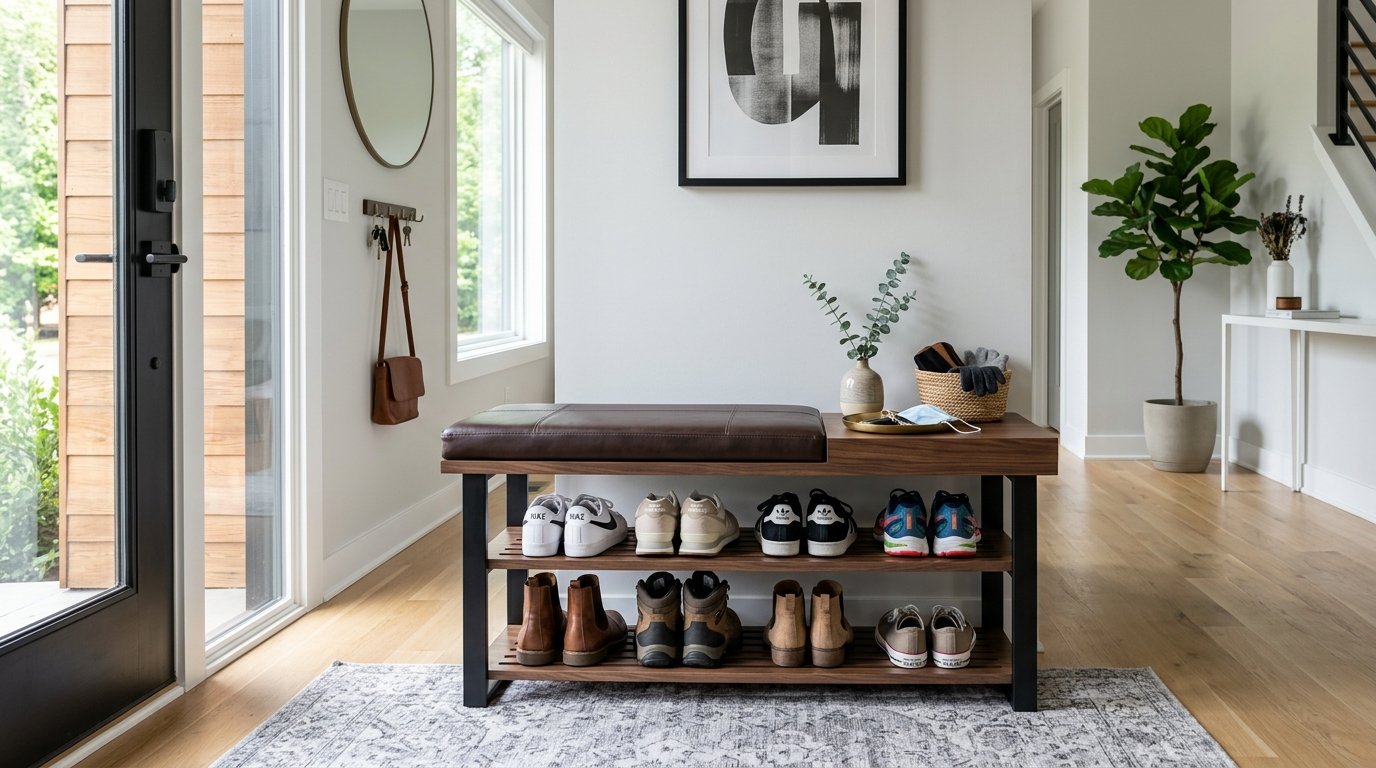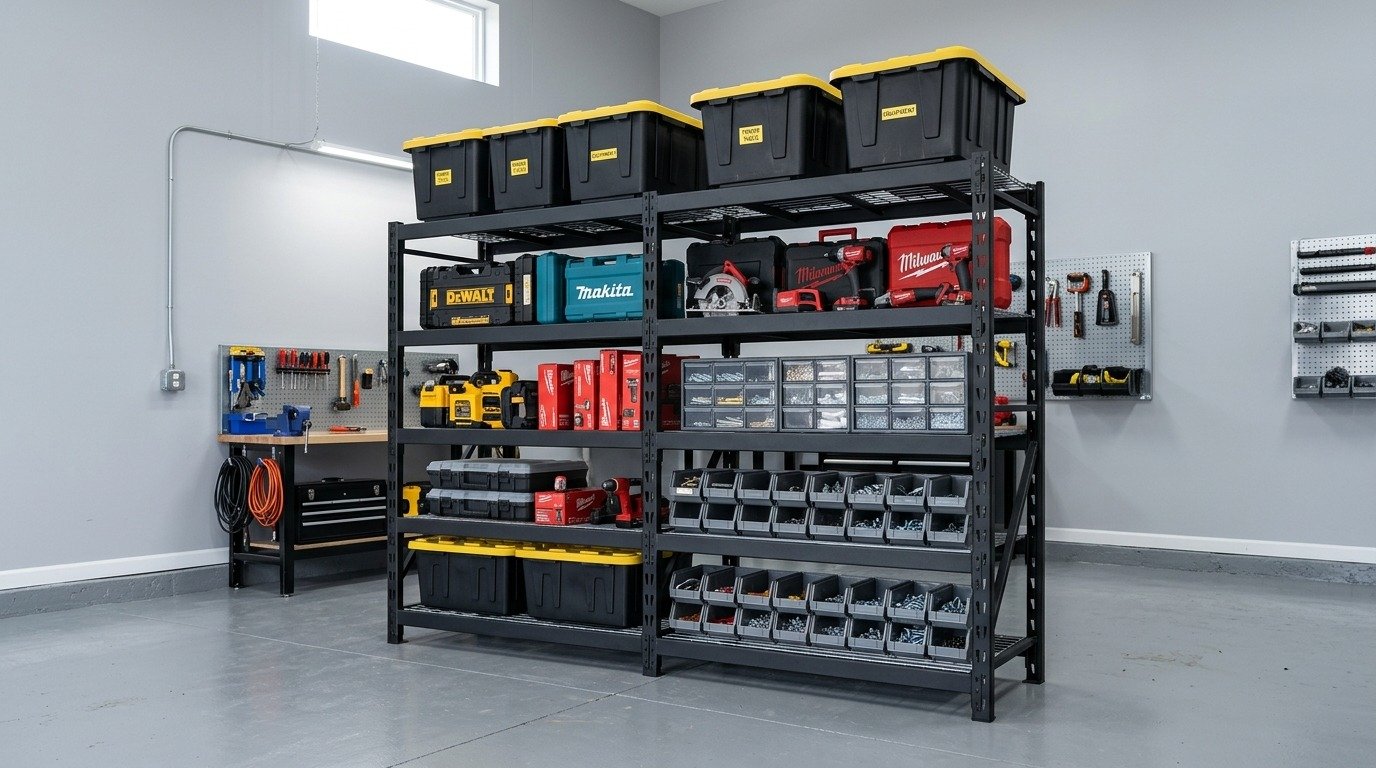
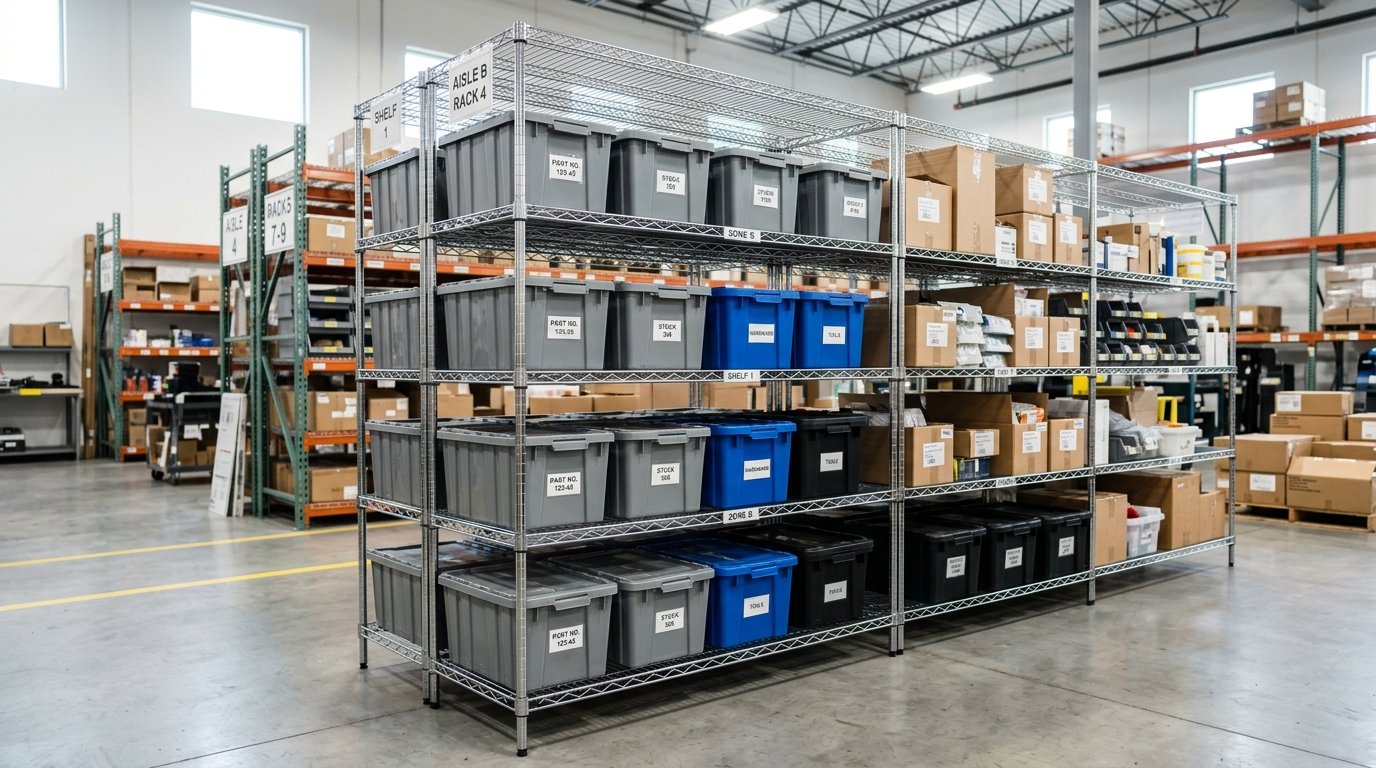
The main choices are shelf depth, mounting method, load capacity, and closet rod support. A small linen closet has different needs than a walk-in closet filled with winter coats or storage bins. Choosing the correct parts before you drill will help prevent sagging shelves, loose anchors, and damaged drywall.
Quick Answer: Wire Closet Shelving Sizing & Installation
Wire closet shelving comes in 12-inch, 16-inch, and 20-inch depths manufactured from 4-gauge steel rim wire and 10-gauge deck wire. Fixed-mount systems secured with drywall anchors hold 15 to 30 lb per linear foot. Stud-mounted hang-track systems support up to 100 lb per linear foot, while heavy-duty MaxLoad systems hold 180 to 300 lb UDL per shelf. Space closet rod support hooks every 24 inches to prevent sagging under heavy winter coats.
Key Takeaways
- Weight Capacity Limits: Fixed drywall anchors hold 15 to 30 lb/ft; stud-anchored hang tracks support 100 lb/ft.
- Depth Selection Rules: Use 12-inch depth for folded clothes, 16-inch depth for shoes and sweaters, and 20-inch for utility bins.
- Closet Rod Support Spacing: Install rod support hooks every 24 inches maximum to prevent center rod deflection.
- Fixed vs Hang-Track Systems: Hang-track rails allow tool-free shelf height adjustments without re-drilling drywall.
What Is Wire Closet Shelving?
Wire closet shelving uses steel shelves made from a perimeter frame and welded deck wires. Many residential systems use 4-gauge steel rim wire for the main frame and 10-gauge deck wire for the shelf surface. A vinyl coating, often white or nickel, protects the steel and gives the shelf a clean finish.
The open-wire design allows air to move around clothing and linens. Dust can also fall through the shelf instead of collecting on a solid surface. You’ll still need to wipe the shelves from time to time, especially in garages, laundry rooms, and utility closets.
Most systems use one of two mounting styles. Fixed-mount shelving attaches to back wall clips, end brackets, vertical standards, and diagonal braces. Hang-track systems use a steel rail on the back wall, with vertical standards that hang from the rail.
Shelf brackets then attach to those standards.
Choose the Right Shelf Depth
Shelf depth affects access, storage volume, and the amount of space left for hanging clothes. Measure the closet before buying parts. Check the door swing, trim, baseboards, and any light fixtures that could limit shelf placement.
12-Inch Wire Shelves
A 12-inch shelf is the standard choice for folded shirts, pants, towels, linens, and small clothing baskets. It keeps items within reach and leaves more room for hanging garments below or beside the shelf.
Use this depth in reach-in closets and linen closets where you’ll access the front of each shelf often. It’s also a good choice when a deep shelf would interfere with a door. Or make folded clothing hard to see.
16-Inch Wire Shelves
A 16-inch shelf provides extra room for shoes, sweaters, handbags, and larger folded items. It works well in walk-in closets and bedrooms with more floor depth.
Before installing 16-inch shelving above a clothing rod, check the distance between the shelf and the rod. Clothes hangers need enough clearance to sit freely without rubbing against the shelf or wall.
20-Inch Wire Shelves
Use 20-inch shelving for utility storage, large bins, paper goods, laundry products, and bulky household supplies. This depth can hold more, but it also places more force on the wall. And brackets when the shelf is loaded.
For 20-inch shelves, use stud-mounted rails, lag bolts, or a heavy-duty system. Don’t fill a deep shelf with dense items and rely on small plastic drywall anchors.
Wire Closet Shelving Load Limits
Load ratings depend on the shelf design, support spacing, mounting surface, fasteners, and how the weight is placed. A shelf loaded evenly across its length performs better than one carrying a dense stack at the center.
Fixed systems with drywall anchors generally support 15 to 30 pounds per linear foot. That range suits light clothing, towels, and linens. The rating can fall if an anchor is installed in weak drywall, placed too close to an edge,.
Or tightened incorrectly.
Stud-mounted hang tracks can support up to 75 to 100 pounds per. Linear foot when the rail is secured to structural studs with suitable fasteners. This makes them a better choice for heavy coats, shoes, and large walk-in closet loads.
Heavy-duty MaxLoad wire systems can support 180 to 300 pounds UDL per shelf. UDL means uniformly distributed load. That rating doesn’t mean you can place 300 pounds in one small spot.
Follow the manufacturer’s spacing and fastener requirements, and spread stored items across the shelf.
| Closet System Type | Mounting Method | Linear Foot Load Limit | Best Closet Application |
|---|---|---|---|
| Fixed-Mount Wire Shelving | Drywall anchors & back clips | 15 to 30 lb per linear ft | Light bedroom clothes, linen closets, towels |
| Hang-Track Adjustable Systems | Top steel hang-rail in 2×4 studs | 75 to 100 lb per linear ft | Walk-in closets, heavy coat storage, shoes |
| Heavy-Duty MaxLoad Wire | Dual wall standards & stud lag bolts | 180 to 300 lb UDL per shelf | Bulk pantry items, laundry detergents, storage bins |
For a deeper look at load calculations, shelf spans,. And steel rack ratings, review this wire rack weight capacity guide.
Hang-Track Systems vs. Fixed-Mount
Fixed-Mount Wire Shelving
Fixed-mount shelving usually costs less upfront. It uses back wall clips, end brackets, vertical standards, and diagonal braces to hold each shelf in a set position. This design works well when you already know the height of every shelf.
Installation takes more measuring and drilling. Each clip and bracket must line up correctly, and you may. Need to move a fastener if a planned hole misses a stud.
Fixed systems also make later changes harder. Moving a shelf often means drilling new holes and filling the old ones.
Hang-Track Shelving
Hang-track systems start with a horizontal steel rail mounted near the top of the wall. Vertical standards hang from that rail, and shelf brackets attach to the standards. You can move shelves by lifting the brackets and placing them at a new height.
This setup costs more than a basic fixed system, but it can reduce installation time and future repair work. It’s useful for closets that may change as storage needs change. Stud mounting gives the rail a stronger base than drywall anchors alone.
Hang tracks also help when the wall layout is uneven. Once the rail is level and secure, the standards provide repeatable shelf positions. Don’t assume the rail can support a heavy load by itself.
The rail still needs enough fasteners in studs or approved structural blocking.

Drywall Anchors and Stud Mounting
Can you install wire closet shelving without drilling into studs? Yes, but the load must stay within the anchor rating. Drywall anchors can work for light clothing, towels, and small linen loads.
They’re a poor choice for dense books, large detergent bottles, or bins filled with tools.
A common failure starts when a shelf looks secure during installation but pulls away after repeated loading. Winter coats, wet towels, and packed storage bins can create a strong downward force. A loose clip can then enlarge the drywall hole and reduce the anchor’s grip.
Use a stud finder to locate framing behind the wall. Mark each stud, then plan the hang track or shelf brackets around those locations. If the layout doesn’t line up with studs, use approved toggle bolts.
Or install structural blocking behind the drywall during a renovation.
Don’t mix fasteners without checking their ratings. A strong bracket attached with a small general-purpose anchor still has the capacity of the weaker part. Keep the shelf, bracket, anchor, and wall material within the same load plan.
For bracket selection and fastener guidance, see this metal shelves and brackets guide.
Prevent Wire Shelves From Sagging
Sagging usually comes from excessive span, concentrated weight, weak mounting, or too few supports. Start by checking the shelf’s rated span. Longer shelves need more brackets or a center support.
Use 45-degree diagonal braces where the system calls for them. These braces transfer part of the shelf load back to the wall and reduce downward movement at the front edge. Install them firmly, with the correct bracket orientation and fastener type.
Closet rods need separate support planning. Install closet rod support hooks every 24 inches maximum. A 36-inch spacing may look acceptable when the rod is empty,.
But it can allow the center to bend under heavy coats.
Spread weight across the shelf instead of placing dense items in one location. Put lighter clothing on long spans, and reserve heavy bins or supplies for shelves with close bracket spacing. Check the shelf after loading it.
If you see a visible bend, remove some weight and add support before the shelf or wall hardware fails.
Installation Steps for Wire Shelving
1. Measure the Closet
Measure wall width, usable height, shelf depth, and the clearance around doors. Mark the location of hanging rods, light switches, vents, and trim. Make a quick drawing with shelf heights and bracket positions.
2. Plan the Load
List what each shelf will hold. Estimate the weight of the stored items, then select a system with a suitable margin. Clothing and towels are light.
Shoes, books, canned goods, detergent, and filled bins are much heavier.
3. Mark Studs and Shelf Lines
Use a level to mark each shelf line. Locate studs and mark them clearly. For a hang-track system, draw one level line for the rail.
For fixed shelves, mark each back clip and bracket location.
4. Install the Main Hardware
Secure the hang rail, vertical standards, back clips, or wall standards first. Use the supplied fasteners when they match the wall construction. Tighten hardware firmly, but don’t crush the vinyl coating or strip the drywall.
5. Add Braces and Rod Supports
Install 45-degree braces where required. Add end brackets and closet rod support hooks, keeping rod supports no more than 24 inches apart. Check that each support sits fully on the shelf frame.
6. Set Shelves and Test Them
Place the wire shelves into their brackets and push them fully into position. Apply light hand pressure at several points. Look for movement, loose clips, or gaps between brackets and the shelf frame.
Load the shelves gradually. Start with light items, then add heavier items while checking for deflection. Don’t exceed the rating for the shelf, bracket, anchor, or wall system.
Safety and Maintenance Checks
Inspect wire closet shelving twice a year, and inspect it sooner after a heavy load has been added. Look for bent wires, cracked clips, loose screws, rust, pulled anchors, and shelf movement.
Keep cleaning products in sealed containers. A leaking bottle can corrode metal hardware and stain the wall. Wipe the vinyl coating with mild soap and water.
Avoid harsh chemicals that can damage the finish.
Keep heavy items low when possible. Lower shelves are easier to reach and create less risk if an item falls. Store small loose items in bins so they don’t slip through the wire deck.
For storage areas that hold heavy materials, review the Material Handling Institute technical standards. And the OSHA material storage safety standards.
Frequently Asked Questions
How much weight can wire closet shelving hold?
Fixed wire shelving attached with drywall anchors generally holds 15 to 30 pounds per linear foot. Stud-mounted hang-track systems can support up to 75 to 100 pounds per linear foot when installed with suitable fasteners. Heavy-duty MaxLoad shelving can support 180 to 300 pounds UDL per shelf.
The actual limit depends on the product rating, shelf span, bracket spacing, wall construction, and fasteners.
What is the best depth for wire closet shelving?
Use 12-inch shelving for folded clothing, towels, and linens. Choose 16-inch shelves for shoes, sweaters, and larger clothing stacks. Use 20-inch shelves for utility bins, laundry products, and bulky supplies.
Check door and hanger clearance before selecting a deeper shelf.
Can you install wire closet shelving without drilling into studs?
Yes, fixed shelving can use approved drywall anchors. Keep the load light and follow the anchor manufacturer’s rating. Stud mounting is stronger and is the safer choice for heavy coats, bins, shoes, books, and dense household supplies.
Toggle bolts can help when a stud isn’t available, but they must match the wall thickness and load.
How do you prevent wire closet shelves from sagging under clothes?
Stay within the shelf load rating, reduce the unsupported span, and add brackets or 45-degree diagonal braces as needed. Mount key hardware into studs or structural blocking. Install closet rod support hooks every 24 inches maximum.
Spread heavy items across the shelf instead of placing them at the center.
Final Buying Checklist
- Measure the closet, trim, doors, and available wall height.
- Choose 12, 16, or 20 inches based on the items you’ll store.
- Use fixed-mount shelving for light, stable loads and lower purchase cost.
- Choose a hang-track system when shelf height changes are likely.
- Mount rails and standards into studs whenever practical.
- Use toggle bolts or rated anchors when studs aren’t available.
- Use 45-degree braces and keep rod supports within 24 inches.
- Spread heavy items across each shelf and inspect the hardware after loading.
Good wire closet shelving starts with an accurate load plan and a sound wall connection. Match the shelf depth to the items, use the right support system,. And don’t treat a drywall anchor as a substitute for a stud when the closet will carry heavy loads.

Callum Langham
Founder & Technical Storage Editor
Callum Langham is the founder and technical editor of Rack System. With over 12 years of hands-on field experience in warehouse logistics, garage organization, and industrial storage installations, Callum specializes in engineering safety standards, beam load calculations, and OSHA/RMI compliance. Every guide on Rack System is audited against verified steel gauge tolerances and municipal building codes.