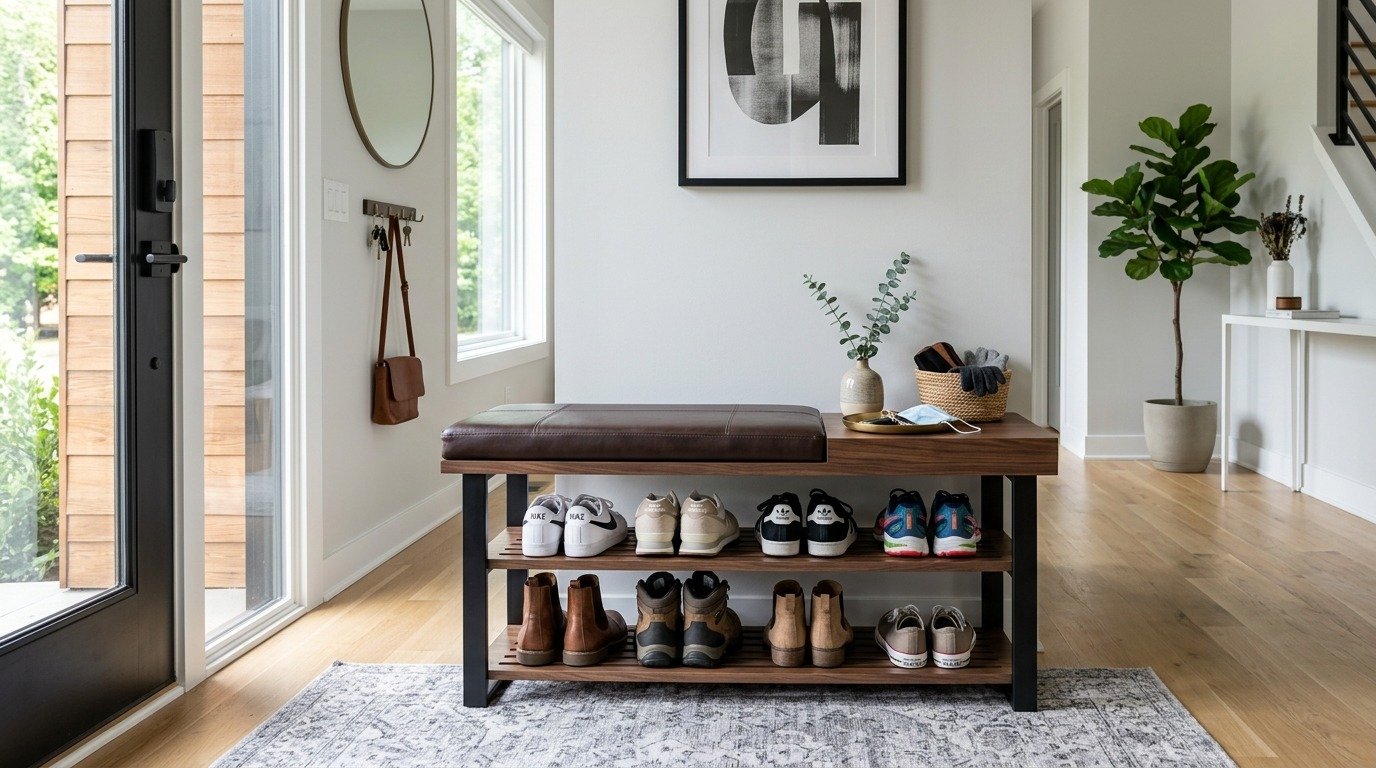
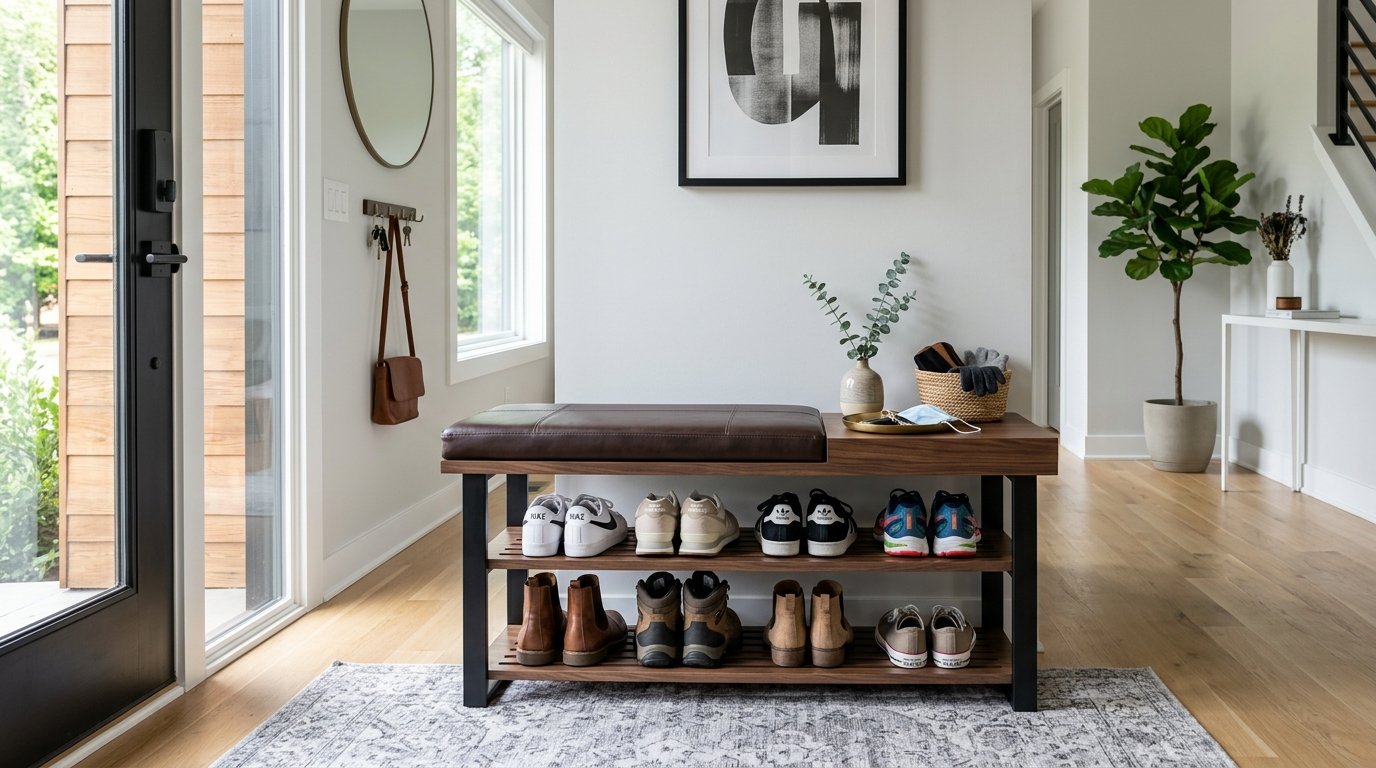
A shoe rack bench gives you two useful entryway features in one piece of furniture. You get a stable seat for putting on shoes, plus open storage for daily footwear. The right model can also help keep mud, water, and clutter off the floor.
Not every bench is built for the same job. A light bedroom bench may work for slippers, but it may fail in a busy family entryway filled with boots. And wet shoes.
Before you buy, check the seat height, frame size, shelf rating, depth, and available walking space.
This guide covers the main shoe rack bench types, the best materials, useful dimensions, weight ratings, and safe placement advice. For a wider look at entryway layouts, see this shoe rack for entryway guide.
Quick Answer: Shoe Rack Bench Weight Capacity & Sizing
A heavy-duty shoe rack bench combines a 17-to-19 inch ergonomic seat height with static weight capacities between 300 and 450 lb. Look for 25x25mm square carbon steel frames with solid wood or padded polyurethane tops to resist dynamic drop shock when sitting. Lower metal slatted shelves hold 30 to 45 lb per tier while providing crucial air circulation to dry wet shoes and muddy boots.
Key Takeaways
- Ergonomic Seat Height: Standard 17″ to 19″ seat heights allow adults to comfortably sit while tying laces.
- Static vs Dynamic Drop Load: Choose welded steel frames rated for 350+ lb to prevent joint splitting from sudden drop impacts.
- Ventilated Metal Slats: Lower metal wire shelves let wet dirt and water fall through rather than pooling under soles.
- Hallway Clearance Math: Ensure your bench depth leaves a clear 36-inch residential egress pathway across the foyer.
What Is a Shoe Rack Bench?
A shoe rack bench is a low storage unit with a built-in seat. Most models have one or two lower shelves for shoes. Some also include doors, lift-up storage, coat hooks, or a tall side compartment for boots.
Open shelves make daily footwear easy to reach. They also let air move around damp shoes. A cushioned top adds comfort, while a wood top gives the unit a firmer feel and often supports more weight.
These benches suit entryways, mudrooms, bedrooms, walk-in closets, and covered porches. Measure the space first. A bench that’s too deep can make a hallway feel cramped, even if its storage capacity looks useful on paper.
Choose the Right Bench Size
Seat height: 17 to 19 inches
A seat height from 17 to 19 inches works well for most adults. It lets you sit with your feet on the floor while tying laces or pulling on boots. A seat below 17 inches can make standing up harder.
A taller bench may leave your feet unsupported.
Children may find a lower seat easier to use, but adults usually need the standard range. If several people will use the bench, measure the distance. From the floor to the back of the knee while seated.
Use that measurement as a practical check against the product’s listed height.
Width: match storage to household use
Bench width affects both seating room and shoe storage:
- 28 to 32 inches: Compact size, usually enough for four to six pairs.
- 36 to 42 inches: Standard size, often holding six to nine pairs.
- 48 inches: Wide size, generally holding 10 to 12 pairs and giving two people more room.
Pair counts vary by shoe size and shelf design. Men’s size 12 shoes take more shelf length than children’s shoes or sandals. Boots also need extra height, so don’t judge storage by pair count alone.
Depth: 12 to 15 inches
A depth of 12 to 15 inches gives most adults enough sitting support. It also leaves room for larger shoes, including men’s size 12 or bigger. A bench below 12 inches may feel unstable when you sit.
Down, especially if the top doesn’t extend far enough past the frame.
Check the product’s full outside depth, not just the shelf depth. The frame, cushion, trim, and feet can add several inches to the listed storage measurement.
Shelf height for shoes and boots
Lower shelves with 6 to 7 inches of clearance work for trainers, flats, sandals, and low shoes. Boots need more room. Look for an 11 to 13 inch open section, a tall side cubby,.
Or a bottom area without a fixed upper shelf.
Before buying, measure your tallest footwear. Include the shaft height of rain boots, work boots, and winter boots. A shelf that fits sneakers may force boots to lie on their sides, which wastes space and can deform them.
Compare Shoe Rack Bench Types
| Shoe Rack Bench Type | Frame & Seating Material | Seating Weight / Shelf Capacity | Best Entryway Application |
|---|---|---|---|
| Steel Frame Wood Top Bench | 25x25mm carbon steel tube / Solid rubberwood | 350 to 450 lb seat (45 lb/shelf) | High-traffic family mudrooms, heavy winter boot seating |
| Upholstered Cushion Shoe Bench | Tubular metal frame / High-density foam & PU leather | 250 to 350 lb seat (35 lb/shelf) | Formal home foyers, bedroom footboards, walk-in closets |
| Hall Tree All-in-One Bench | Welded steel frame / Top coat hooks & shoe bench | 300 lb seat (100 lb coat rail) | Narrow front entryways needing combined jacket & shoe storage |
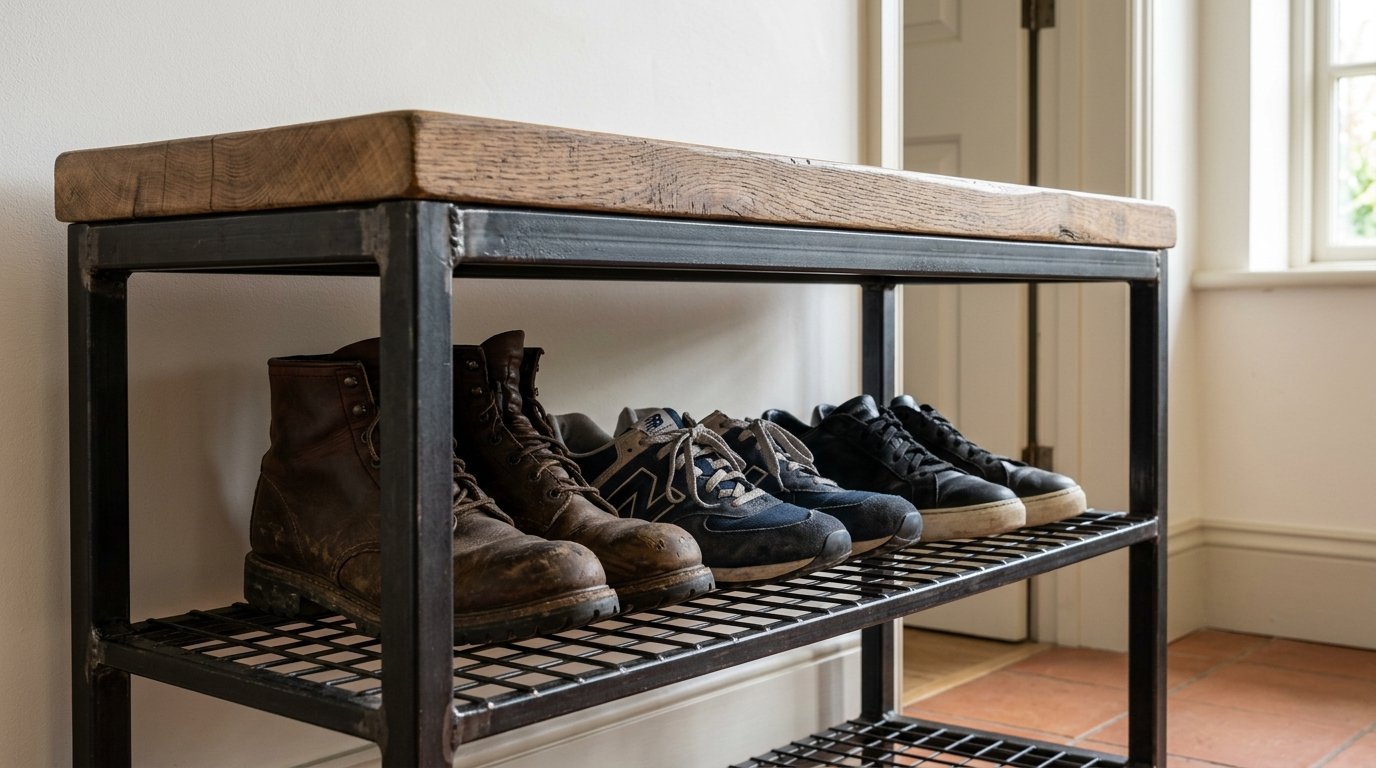
Steel frame wood top benches
This type is a strong choice for a busy home. A 25x25mm square carbon steel tube frame can support a 350 to 450 lb seated load when the joints. And cross braces are properly built.
A solid rubberwood or bamboo top adds strength and gives the bench a warm appearance.
Look for welded joints, a powder-coated finish, and adjustable screw-in feet. Welded frames have fewer connection points that can loosen. Powder coating helps protect the steel from scratches and light moisture.
Leveling feet stop rocking on tile, old wood floors, and uneven concrete.
Upholstered cushion benches
A padded bench feels more comfortable when you sit for several minutes. High-density foam holds its shape better than thin foam. Water-resistant polyurethane upholstery is practical because you can wipe off dirt, salt, and light moisture.
These benches often have a tubular metal frame and a lower slatted shelf. They’re a good fit in a formal foyer, bedroom, or closet. Check the seat rating before buying, since some upholstered models are made for light use.
And support only 250 to 350 lb.
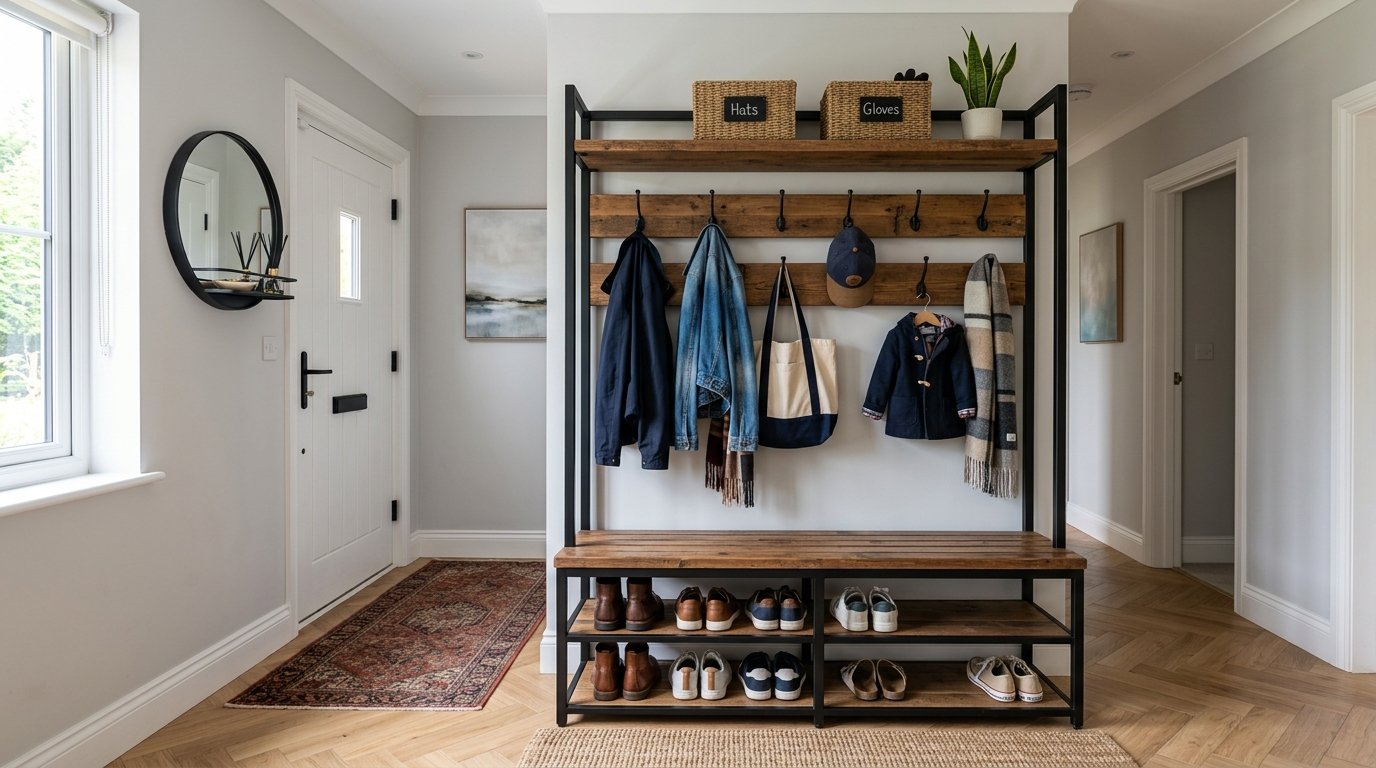
Hall tree bench combinations
A hall tree combines a bench with coat hooks, a back panel, and sometimes a top shelf. It can save floor space in a narrow front entry because one unit handles jackets, hats, bags, and shoes.
Measure the wall height before ordering. Tall units can interfere with light switches, trim, doors, or ceiling fans. Anchor a tall hall tree to the wall if the maker supplies an anti-tip kit.
Keep heavy items low and use upper hooks for lighter coats and bags.
Flip-top hidden storage benches
Flip-top benches hide shoes inside a closed compartment. This creates a cleaner visual line and keeps footwear out of sight. The trade-off is reduced air movement.
Wet shoes shouldn’t go straight into a closed box, since trapped moisture can cause odors, mold, and material damage.
Use hidden storage for dry shoes and keep wet boots on an open slatted shelf until they’ve dried. Check the hinge quality and make sure the lid has a safe stop or soft-close feature.
Check Materials and Construction
Frame strength
Heavy-gauge square carbon steel tubing from 20x20mm to 25x25mm offers good support for a shoe rack bench. A larger tube can resist bending, but tube size alone doesn’t prove quality. The welds, bracing, fasteners, and frame layout also matter.
Press down on each corner in the showroom, or inspect customer photos when shopping online. The bench shouldn’t twist or rock. A center support is useful on benches wider than 42 inches, since it reduces flex in the seat and shelves.
For general material-handling information, review the Material Handling Institute technical standards. These standards aren’t a substitute for the maker’s test data, but they can help you assess basic storage. And load practices.
Seat materials
Solid rubberwood and bamboo tops are strong, repairable, and comfortable without a cushion. Engineered wood can also work well when it has a thick top, sealed edges, and proper support below. Cheap particleboard is more likely to swell after contact with water or split around screws.
For padded tops, check the foam density and cover material. PU leather is easy to clean. Woven fabric can feel softer, but it may hold mud and moisture.
Removable covers are useful if the bench will sit near a door used during wet weather.
Shelf materials and ventilation
Metal slatted shelves are useful for wet and muddy footwear. Water and dirt can fall through the gaps instead of sitting beneath the soles. Air can also pass around shoes, which helps them dry faster.
A solid wood shelf looks neat and can hold heavier items, but water may collect on its surface. If you choose solid shelves, use a waterproof tray for wet boots and wipe spills quickly. For more shelf design advice, read this metal shoe rack guide.
Understand Weight Ratings
Static seating load
A static seating rating describes a person sitting still on the bench under controlled conditions. Quality shoe rack benches commonly support 300 to 450 lb in this position. Stay below the listed limit, and check if the rating applies to the whole bench or each seat section.
Dynamic drop load
Real use can place more stress on a bench than a slow, controlled sit. Someone may drop onto the seat, sit near the front edge, or shift suddenly while pulling on a boot. That impact creates a dynamic load, which can be much higher than body weight alone.
Cheap particleboard benches may fail at joints when a user drops heavily onto the seat. Screws can pull out, panels can split, and the frame can twist. A welded steel frame with cross bracing handles this type of shock better than a lightly fastened flat-pack frame.
Shelf load ratings
Lower shelves commonly support 30 to 45 lb per tier. That’s enough for several pairs of shoes and boots, but don’t use the shelf as a step. A shelf rating assumes the load is spread across the shelf, not concentrated at one corner.
Place heavier boots near the sides of a shelf only if the frame supports those areas. Keep the weight balanced from left to right. If the unit starts to bow, rock, or show loose hardware, remove the contents and inspect it.
For storage safety guidance, review the OSHA material storage safety standards. Household furniture isn’t the same as industrial storage, but the basic message applies: keep loads stable. And don’t create a falling or tripping hazard.
Plan Hallway Clearance
A shoe rack bench needs more space than its own footprint. You also need room to sit, open a door, and walk past it. Keep a clear 36-inch residential egress path across the foyer whenever possible.
Use this simple measurement method:
- Measure the full width of the hallway or entry area.
- Measure the bench’s outside depth, including the cushion and feet.
- Subtract the bench depth from the available width.
- Keep at least 36 inches for the walking path.
- Open nearby doors and drawers to check for conflicts.
For example, a 50-inch-wide hall with a 14-inch-deep bench leaves 36 inches of clearance. A 15-inch bench in that same space leaves only 35 inches, so the fit may feel tight. And could restrict movement.
Place the bench against a wall when possible. Don’t leave it beside the door swing. If the bench sits near stairs, keep the first step and handrail area clear.
Use a wall anchor for tall units or models with coat hooks.
Set Up and Maintain the Bench
Assembly checks
Follow the assembly order in the instructions. Loose bolts can make a frame feel weak even when the parts are strong. Tighten all hardware after the bench has been used for a week, then check it every few months.
Set all leveling feet firmly on the floor. Don’t use folded cardboard or loose objects to stop wobbling. If the floor has a large slope, use a proper furniture-leveling pad made for the surface.
Cleaning and moisture control
Vacuum dirt from slatted shelves before it builds up. Wipe steel with a damp cloth, then dry it. Clean wood with a product suitable for its finish, and don’t let standing water remain on the top.
Let wet shoes dry on an open shelf. Use a rubber boot tray below the bench if water regularly drips onto the floor. Keep salt and grit off metal finishes because they can speed up corrosion, even on powder-coated steel.
Frequently Asked Questions
What is the ergonomic seat height for a shoe rack bench?
The standard ergonomic height is 17 to 19 inches. This range lets most adults sit comfortably with both feet on the floor while tying laces. Check the full height from the floor to the top of the cushion.
Or wood seat, not just the frame height.
How much weight can a heavy-duty shoe rack bench safely hold?
A well-built bench usually supports 300 to 450 lb of static seated weight. Lower shelves commonly support 30 to 45 lb per tier. Choose a model with a rating above your expected use because.
Sudden sitting impacts can produce more force than a slow, controlled sit.
What frame materials are strongest for entryway shoe benches?
Heavy-gauge square carbon steel tubing is a strong frame choice, especially in 20x20mm to 25x25mm or 25x25mm sections. Welded joints, cross braces, powder coating, and leveling feet also affect performance. For the seat, solid rubberwood or bamboo offers good strength and moisture resistance when properly sealed.
How do you fit a shoe rack bench into a narrow entryway hallway?
Start with the bench depth and the hallway width. Choose a compact model from 28 to 32 inches wide and 12 to 14 inches deep. After placing it, keep a clear 36-inch walking path.
A hall tree can combine hooks. And shoe storage, but measure its height and anchor it to the wall when needed.
Final Buying Checklist
Before you order a shoe rack bench, confirm these details:
- The seat height is 17 to 19 inches.
- The width matches the number of users and pairs of shoes.
- The depth is 12 to 15 inches and fits your largest footwear.
- The frame uses strong steel tubing with secure joints.
- The seat rating is at least 300 lb for regular adult use.
- Each shelf has a stated capacity of 30 to 45 lb or more.
- The shelf clearance fits sneakers, boots, or both.
- Leveling feet are included for uneven floors.
- The finish can handle dirt and light moisture.
- The installed bench leaves a clear 36-inch route through the entryway.
Choose the bench based on the work it needs to do. A steel frame wood top model suits heavy daily use. A padded bench works well where comfort and appearance matter most.
A hall tree makes sense when wall storage and shoe storage need to share one narrow area. Good measurements and a clear load rating will help you get useful storage without sacrificing safety or walking space.

Callum Langham
Founder & Technical Storage Editor
Callum Langham is the founder and technical editor of Rack System. With over 12 years of hands-on field experience in warehouse logistics, garage organization, and industrial storage installations, Callum specializes in engineering safety standards, beam load calculations, and OSHA/RMI compliance. Every guide on Rack System is audited against verified steel gauge tolerances and municipal building codes.