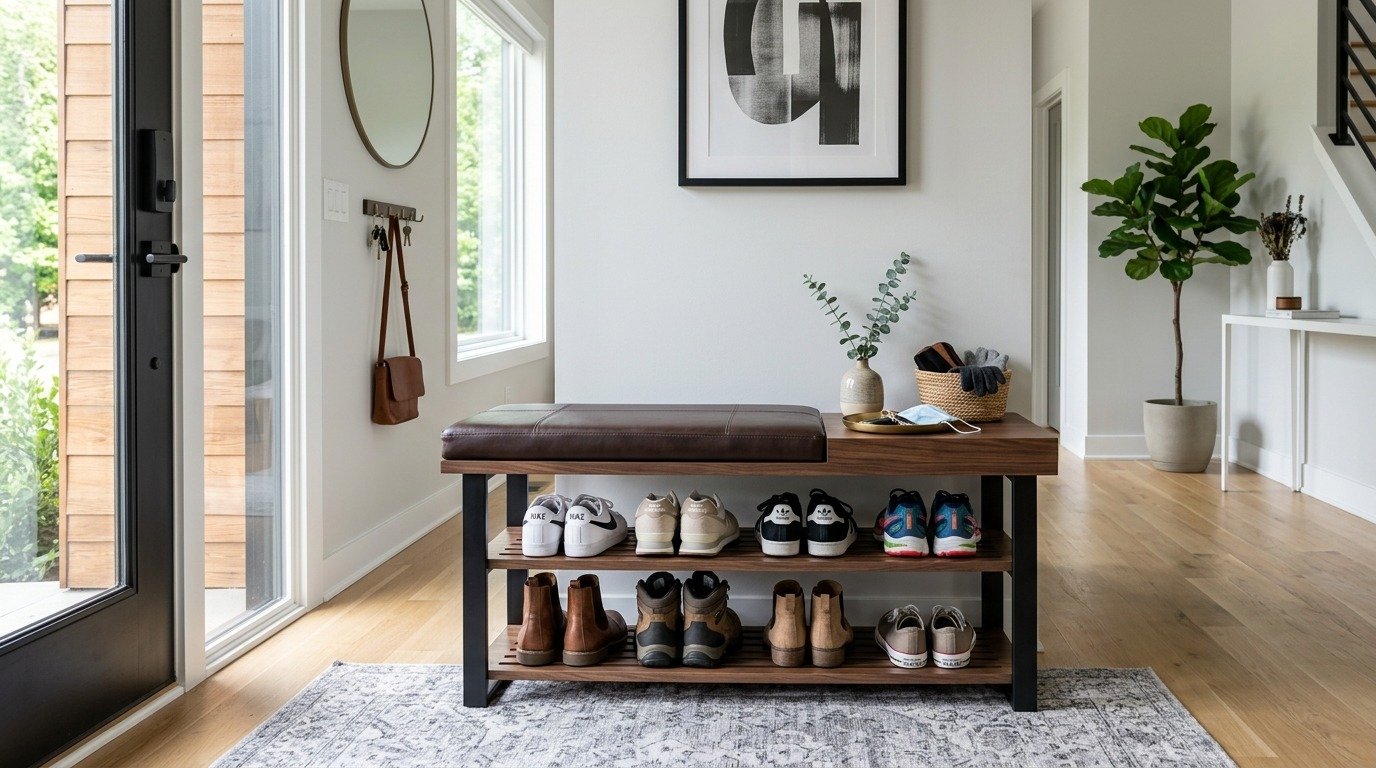
A metal shoe rack gives you a strong, open place to store footwear in an entryway, closet, garage, or mudroom. Or bedroom. Compared with many plastic racks, steel frames resist bending, hold more weight, and handle daily use better.
Open shelves also let air move around damp shoes after rain or workouts.
The right rack depends on your shoes, available floor space, and how often you move or rearrange the unit. A small rack with tubular rails may work for sandals and light sneakers. A dense wire mesh rack makes more sense for work boots, high heels, and larger collections.
Tall stackable units can save floor space, but they need careful assembly and wall anchoring.
This guide covers frame steel, shelf types, weight ratings, dimensions, storage layouts, and tip prevention. For a wider look at steel storage, read this metal shelving units guide. You can also compare entryway dimensions in this shoe rack for entryway guide.
Quick Answer: How to Choose a Metal Shoe Rack
A durable metal shoe rack uses 16- to 19 mm powder-coated carbon steel tubing and heavy-gauge wire mesh shelves that hold 30 to 45 lb per tier. Choose dense wire mesh over tubular bar designs to prevent thin heels and sandals from falling through. For large collections, stackable modular units with steel locking pins expand up to 10 tiers, but require wall-anchor safety straps on any rack taller than 5 tiers.
Key Takeaways
- Wire Mesh vs Bar Rails: Dense wire mesh decks stop footwear heels from slipping between bars and support 45 lb per tier.
- Heel-Stop Lip Benefits: Angled shelves with raised rear lip stops keep shoes visible while preventing forward slippage.
- Boot Clearance Adjustment: Remove a middle shelf tier to create 14 inches of vertical clearance for work boots.
- Anti-Tip Wall Straps: Secure any modular stackable metal shoe tower exceeding 5 tiers directly into wall drywall anchors.
Why Choose a Metal Shoe Rack?
Steel storage offers three useful advantages: strength, airflow, and a long service life. A powder-coated carbon steel frame resists scratches and surface rust better than unfinished steel. It also provides enough stiffness to support several pairs of heavy boots without twisting.
Open metal shelves keep shoes off the floor and allow moisture to escape. This helps after wet commutes, yard work, or exercise. The open design also makes it easier to see every pair.
So you won’t need to move a stack of shoes to reach the pair at the back.
Metal racks come in several formats. Stackable towers use interlocking steel pins and can grow from two tiers to as many as 10. Wire mesh racks use a flat grid that supports soles across a broad surface.
Angled racks display shoes clearly and often include a rear heel-stop lip. Rolling commercial racks use casters, which help in garages, dressing rooms, and large closets.
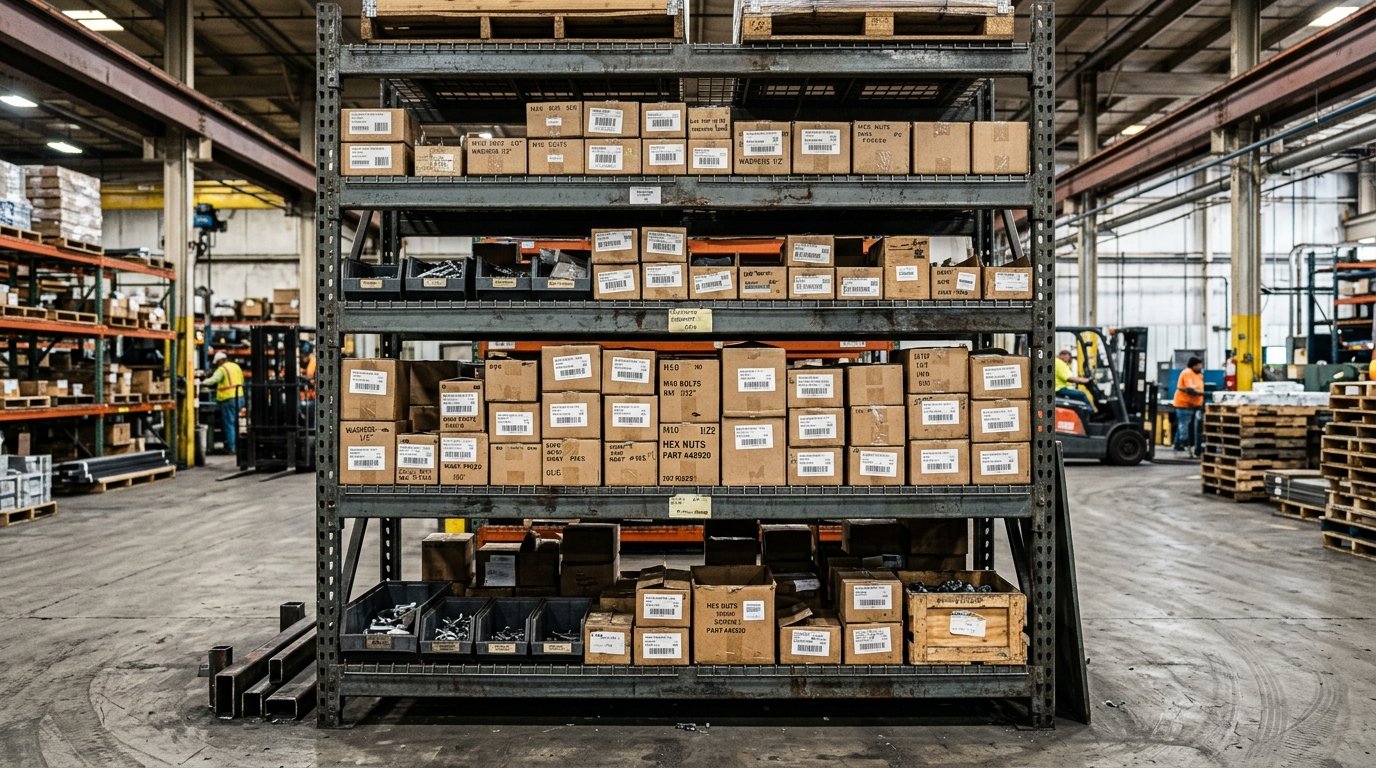
Metal Shoe Rack Styles Compared
| Metal Shoe Rack Style | Frame Steel & Shelf Decking | Tier Weight Rating | Best Storage Application |
|---|---|---|---|
| Stackable Wire Mesh Tier Rack | 19mm carbon steel tube / dense wire mesh | 30 to 45 lb per tier | Heavy work boots, athletic sneakers, high heels |
| Adjustable Angled Steel Rack | Powder-coated steel / rear heel-stop lip | 25 to 35 lb per tier | Walk-in closets, retail shoe displays, entryway organization |
| Telescoping Expandable Metal Rack | Dual chrome expandable slide tubes | 15 to 20 lb per tier | Lightweight shoes, sandals, compact apartment closets |
Stackable wire mesh racks
These racks suit homes with mixed footwear. Dense mesh supports the full sole, so narrow heels and soft athletic shoes are less likely to drop between rails. Steel connector pins hold each section in place as you add tiers.
A two- or three-tier setup works well below a coat rack or inside a closet. A taller tower stores more pairs in a small footprint. But the higher center of gravity makes tip control more important.
Use a wide base; keep heavier boots on the bottom. And attach the tower to the wall once it reaches five tiers.
Adjustable angled steel racks
Angled shelves tilt footwear slightly forward for quick viewing. A raised lip at the rear or front helps hold each pair in place. This layout works well in a walk-in closet or retail display because the shoes face you instead of sitting flat.
And partly hidden.
Angled shelves suit sneakers, dress shoes, and high heels. Flat shelves work better for tall boots, shoe boxes, and bulky footwear. Look for a rack with removable shelf levels, since fixed angles and spacing can limit storage options.
Telescoping expandable racks
Expandable racks use sliding tubes to adjust width, often from about 26 inches to 48 inches. They fit narrow closets and can fill an awkward gap beside a wardrobe. Their smaller shelf surface and lighter frame usually support less weight than a mesh commercial rack.
Use this style for sandals, flats, slippers, and light sneakers. Don’t load it with several pairs of wet work boots. Check the locking points after adjusting the width, since an unlocked slide can shift when you add shoes.
Frame Steel and Shelf Construction
Many useful home and commercial racks use 16mm to 19mm carbon steel tubing. Larger tubing generally gives the frame more stiffness, but tube size alone doesn’t set the rack’s safe load. Weld quality, connector design, shelf support bars, and the floor surface also matter.
Powder coating adds a dry protective finish. It helps resist chips and surface rust in closets, garages, and mudrooms. Still, no coating makes steel rust-proof.
Wipe off standing water, salt, and mud. Dry the rack if it sits near an exterior door or in a damp garage.
Wire mesh versus tubular rods
Dense wire mesh is the better choice for varied footwear. It spreads weight across many contact points and reduces sole sagging. A thick mesh deck also deflects less when loaded near its rating.
Small gaps help ventilation without creating large openings for heels or sandal straps.
Tubular rods cost less and look clean, but shoes can sit unevenly on them. Thin soles may bend into the gap, and narrow heels can slip through. Rod shelves work best for broad, firm soles and light footwear.
Check the gap size before buying if you plan to store high heels or children’s shoes.
How to Pick the Right Rack Size
Measure the space first. Record the maximum width, depth, and height, then leave room for doors, trim, baseboards, and walking paths. A rack that fits the bare wall measurement may still block a door or make it hard to remove shoes.
Width and pair capacity
Racks from 26 to 36 inches wide usually hold about three to four pairs per tier, depending on shoe size. And how closely you place each pair. Telescoping models can extend close to 48 inches, but the middle section needs firm support at its widest setting.
Count your current pairs, then add room for seasonal footwear. Don’t pack shoes tightly against side frames. Leave enough space to pull one pair out without knocking over the next pair.
Depth for large shoes
A depth of 11.5 to 13 inches accommodates many shoes, including US men’s size 14, without excessive overhang. Measure your largest boot from heel to toe. Add a little extra clearance if the rack has a front lip or if your shoes have thick soles.
Tier spacing and boot clearance
Seven inches between shelves suits flats, low sneakers, and many dress shoes. Work boots and tall hiking boots need more room. A removable shelf can create about 14 inches of vertical clearance for bulky boots.
Put tall boots on the lowest level when you can. This keeps the rack’s center of gravity low and makes the unit less likely to tip. If you need two boot levels, choose a wide, anchored frame rather than a narrow tower.
Weight Ratings You Can Use
Manufacturers often list a per-tier rating rather than one total rack rating. A dense wire mesh shelf may support 30 to 45 pounds per tier. Tubular rod shelves often fall in the 15 to 25 pound range.
Expandable racks may support about 15 to 20 pounds per level, depending on width.
Use the lowest rating listed for your setup. A rack may hold more weight when the load sits evenly across the shelf,. But less when several heavy items sit at the center or one side.
Wide shelves also need enough cross supports to resist bending.
For a practical test, place the heaviest pair on the lowest shelf and inspect the frame. The shelf shouldn’t bow, the joints shouldn’t open, and the feet should stay flat. Stop loading if you see movement, bent mesh, or a leaning frame.
Angled or Flat Shelves?
Angled shelves make shoes easier to see. They can also help water drain from wet footwear. Their main safety feature is the heel-stop lip, which keeps shoes from sliding off the front or slipping backward.
Flat shelves provide a stable surface for boots, boxes, slippers, and shoes with thick soles. They also make it easier to stack a boot upright if the shelf is tall enough. Flat mesh is a practical choice for a family rack with many shoe types.
For high heels, select dense mesh or a narrow-gap deck with a raised stop. A simple tubular rail may leave the heel unsupported. For soft sandals, use a close mesh pattern so straps and thin soles don’t fall through.
Are Stackable Racks Stable?
Stackable metal shoe racks can be sturdy when their sections lock together correctly. Steel pins or interlocking connectors prevent sections from sliding sideways. Fully seat each connector before adding another tier.
Stability also depends on the base. A wider base gives the tower a lower tipping risk than a narrow base with the same height. Adjustable leveling feet help keep all corners planted on uneven garage or closet floors.
A tower taller than five tiers needs a wall strap. Attach the strap to a solid wall point or a suitable drywall anchor, and follow the rack maker’s fastener instructions. Don’t rely on the weight of shoes to hold a tall rack in place.
Put heavy items low, keep the tower away from busy door swings, and check the strap after moving the unit.
For general storage safety, review the OSHA material storage safety standards. The Material Handling Institute technical standards can also provide useful reference material for storage equipment. And safe handling.
Useful Features to Look For
Interlocking steel pins
These connectors make modular sections less likely to separate. Choose a rack with pins that fit tightly and remain easy to inspect. Avoid stacking sections that only balance on loose plastic caps.
Heel-stop lips
A raised lip gives angled shelves a physical edge that holds shoes in place. Look for a lip high enough to catch a thin sole but low enough to remove footwear easily.
Leveling foot pads
Adjustable feet help on tile, old wood, and rough concrete. Set each foot until the rack doesn’t rock. Recheck the feet after loading the shelves, since weight can expose a floor slope.
Rolling bases
Casters make a rack easy to move for cleaning or seasonal changes. Choose locking wheels for any rack that stays in one place. Lock all casters before loading shoes, and don’t roll a tall, fully loaded tower across an uneven floor.
How to Organize Shoes on the Rack
Place the heaviest footwear on the bottom shelf. Keep work boots, safety boots, and hiking shoes low. Use middle tiers for daily sneakers and dress shoes.
Keep sandals, slippers, and light flats on higher levels.
Store pairs toe to heel if the shelf is shallow. Or place one shoe slightly behind the other if the rack is wide enough. Leave a small gap between pairs for airflow.
Clean mud from soles before storage, since grit can scratch the coating and transfer dirt to other footwear.
In an entryway, keep the rack close to the door but outside the door swing. In a closet, measure the shelf depth against the closet door and trim In a garage, use leveling feet and choose a powder-coated frame that can handle occasional moisture.
Maintenance and Cleaning
Dust the shelves every few weeks with a dry cloth or soft brush. Wipe spills with mild soap and water, then dry the metal. Don’t use harsh abrasive pads on a powder-coated finish, since they can expose the steel below.
Check welds, connectors, shelf supports, and wall straps twice a year. Tighten loose fasteners and replace damaged feet. If a coating chip reaches bare steel, dry the area and use a compatible touch-up product made for metal.
Keep wet shoes on a tray or mat instead of placing them directly on a wood floor. This protects the floor and keeps dirty water from pooling beneath the rack.
Frequently Asked Questions
What is the best metal shoe rack for heavy work boots?
Choose a heavy-duty wire mesh rack with a 30 to 45 pound. Rating per tier, a 19mm carbon steel tube frame, and adjustable shelf spacing. Remove a middle shelf to create about 14 inches of clearance for tall boots.
Put the boots on the bottom tier and anchor a tall rack to the wall.
Do angled metal shoe racks keep shoes from falling off?
They can, when the shelf has a raised heel-stop lip and a close mesh deck. The lip limits forward sliding, while dense mesh supports thin heels and narrow soles. A plain angled rail without a stop may let shoes slide, especially if the rack is bumped.
How much weight can a heavy-duty metal shoe rack hold per shelf?
A heavy-duty wire mesh shelf commonly holds 30 to 45 pounds per tier. Tubular rod shelves often hold 15 to 25 pounds. Follow the product’s stated rating, and spread the load across the shelf.
Reduce the load if the rack bows or rocks.
Are stackable metal shoe racks sturdy without wall anchors?
Short two- or three-tier racks can be stable on a level floor when assembled correctly. Don’t use a tower taller than five tiers without a wall strap. Stackable connectors stop sections from shifting, but they don’t remove the tipping risk caused by height.
And a high center of gravity.
Final Buying Checklist
- Measure width, depth, height, doors, trim, and walking space.
- Choose 16mm to 19mm powder-coated carbon steel for a stronger frame.
- Select dense wire mesh for boots, heels, sandals, and mixed footwear.
- Use flat shelves for bulky shoes and angled shelves with heel stops for display.
- Look for 14-inch adjustable clearance if you store tall work boots.
- Check the per-tier rating, not just the rack’s total claimed capacity.
- Pick leveling feet for uneven garage or closet floors.
- Use steel locking pins on modular sections.
- Attach a wall strap to any tower taller than five tiers.
- Keep heavy shoes low and inspect the rack after assembly.
A well-built metal shoe rack should fit your space, match your footwear, and stay stable during daily use. Look for dense mesh, strong tubing, and adjustable spacing. And proper wall anchoring gives you a practical storage setup that can handle years of regular use.

Callum Langham
Founder & Technical Storage Editor
Callum Langham is the founder and technical editor of Rack System. With over 12 years of hands-on field experience in warehouse logistics, garage organization, and industrial storage installations, Callum specializes in engineering safety standards, beam load calculations, and OSHA/RMI compliance. Every guide on Rack System is audited against verified steel gauge tolerances and municipal building codes.