A shoe rack for entryway storage has one job: keep footwear organized without blocking the path into your home. The right rack also needs to handle daily use, wet soles, muddy boots,. And the weight of people sitting down to put on shoes.
Start by measuring the available wall or floor space. Then check the rack’s depth, shelf spacing, weight rating, and ventilation. A rack that fits six pairs may work for one person,.
But a family may need 36 to 48 inches of width and several storage levels.
Quick Answer: Sizing a Shoe Rack for Your Entryway
The shoe rack for an entryway requires 12 to 14 inches of depth for adult shoes and boots, while preserving a minimum 36-inch clear hallway walking path. Open tiered metal slatted racks hold 9 to 15 pairs and allow wet soles to dry. Shoe rack benches support 250 to 350 lb seating capacity, while ultra-slim flip-drawer cabinets (6.5 to 9.5-inch depth) fit narrow apartment foyers.
Key Takeaways
- Hallway Clearance Rule: Maintain at least 36 inches of clear walkway width to avoid entryway bottlenecks.
- Depth & Boot Clearance: Standard sneakers fit 11 to 12″ shelves; allocate 10 to 12″ vertical bottom spacing for tall boots.
- Slatted Wire vs Solid Wood: Powder-coated metal slats provide ventilation for wet footwear and resist muddy water damage.
- Bench Seating Strength: Verify bench weight ratings exceed 300 lb static load before using as an entryway seat.
How to Measure Your Entryway
Measure three areas before choosing a shoe rack for entryway use: width, depth, and walking clearance. Mark the planned rack position with painter’s tape. This gives you a quick view of how doors, stairs, and people will move around it.
Check Width and Capacity
A 24-inch rack usually stores about 6 to 8 pairs. A 36-inch model holds around 9 to 12 pairs, while a 48-inch rack can hold 12 to 16 pairs. These figures change with shoe size and shelf shape, so allow extra room for wide trainers and work shoes.
Choose a width based on the footwear used every day, not the full shoe collection. Seasonal shoes can stay in a bedroom closet or garage. This keeps the entryway from becoming crowded.
Measure Depth and Hallway Clearance
Most adult shoes need 10 to 12 inches of shelf depth. Work boots, large trainers, and hiking shoes usually need 13 to 14 inches. Slim flip-drawer cabinets can fit in 6.5 to 9.5 inches, but their angled compartments may limit the size of boots.
Keep at least 36 inches of clear walking space in front of the rack. Measure from the rack’s front edge to the opposite wall, furniture, or open door. A rack that fits on paper can still create a daily bottleneck if the hallway is narrow.
For storage safety guidance, review the OSHA material storage safety standards. Residential storage is different from workplace storage, but the same basic habits apply: keep paths clear, prevent unstable loads, and avoid placing items where they can fall.
Entryway Shoe Rack Types
Each rack style solves a different space problem. Pick the design based on traffic, shoe volume, moisture, and the need for seating.
Tiered Metal Slatted Racks
Tiered open racks are a strong choice for daily family use. Two to five levels provide quick access, and the open sides make it easy to see every pair. Powder-coated tubular steel resists scratches and light moisture better than unfinished wood or low-grade particle board.
Slatted shelves help wet shoes dry because air can move around the soles. A removable drip tray is useful beneath the bottom level, especially in rainy or snowy areas. Look for adjustable leveling feet and non-slip pads if the floor is uneven.
Plan on 6 to 7 inches of vertical space for sneakers and flats. Set aside 10 to 12 inches on the bottom level for boots and high-top shoes. Some racks include adjustable shelves, which lets you change the layout during different seasons.
Shoe Rack Storage Benches
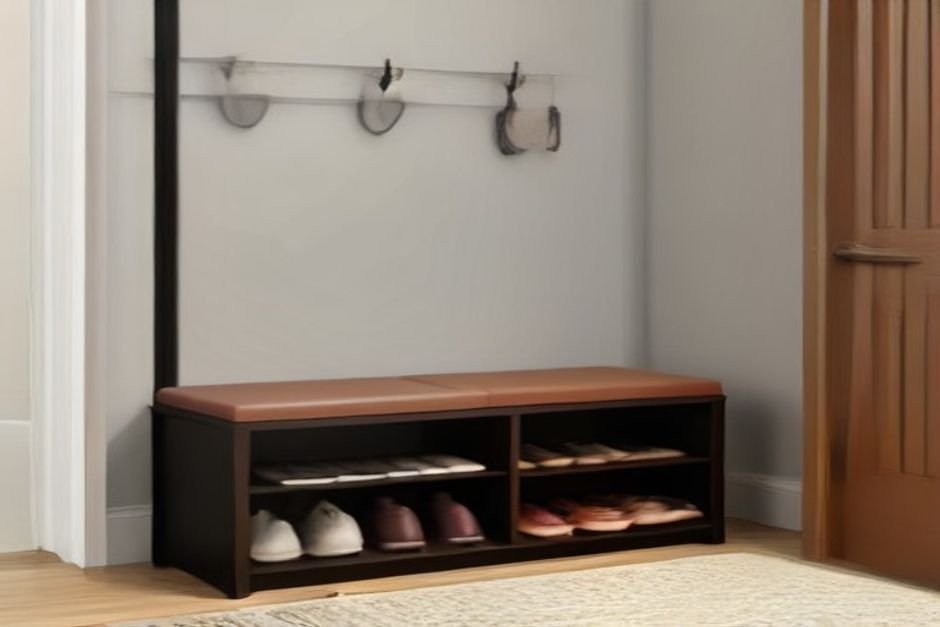
A shoe rack bench combines seating with storage. It’s useful in a foyer where people need to sit while tying laces or pulling on boots. Most models have two lower shelves and hold about 6 to 8 pairs.
Check the seating rating before buying. A suitable bench often supports 250 to 350 pounds. Look for a rating based on a static load, and don’t treat a shoe shelf rating as a seating rating.
A shelf may support 40 pounds spread across its surface, but that doesn’t mean it can safely hold a person.
Bench depth is usually 14 to 16 inches. This gives enough room for adult shoes below and a stable seat above. Confirm that the bench has a firm frame, reinforced joints, and feet that won’t slide across tile or hardwood.
Slim Flip-Drawer Cabinets
Slim flip-drawer cabinets suit narrow hallways and apartment foyers. Their 6.5 to 9.5-inch depth keeps the front edge close to the wall. Enclosed drawers hide footwear and give the entryway a cleaner appearance.
Check the interior dimensions before ordering. Angled drawers may hold 8 to 12 pairs, but tall boots often won’t fit. Some models need wall anchoring because their narrow shape can become unstable when several drawers are open.
Vertical Shoe Towers
Vertical towers use height instead of floor width. They work well beside a coat closet or near a door with unused wall space. Choose a tower with a wide base and a wall strap if it’s tall and narrow.
Check each opening for enough height. Small compartments may fit flats and low-top shoes but fail to hold boots. A mixed-height layout is more useful than shelves that all have the same spacing.
Wall-Mounted Floating Racks
Wall-mounted racks keep the floor clear, which makes sweeping easier and preserves hallway space. They’re useful in small entryways, but the wall must support the rack and its loaded weight.
Use the correct anchors for drywall, masonry, or wood studs. Avoid placing a floating rack where a door handle can hit it. Keep enough space below the rack for boots, umbrellas, or a small drip mat.
Shoe Rack Comparison
| Entryway Shoe Rack Type | Depth & Tier Clearance | Shoe Capacity / Weight Limit | Best Foyer / Mudroom Use |
|---|---|---|---|
| Tiered Metal Slatted Rack | 12 to 14-inch depth / 7-inch tier spacing | 9 to 15 pairs (40 lb per shelf) | Daily family sneakers, boots, wet footwear drying |
| Shoe Rack Storage Bench | 14 to 16-inch depth / 2 lower shelves | 6 to 8 pairs (300 lb seating limit) | Foyer entryways where seating is needed to put on shoes |
| Slim Flip-Drawer Shoe Cabinet | 6.5 to 9.5-inch ultra-slim depth | 8 to 12 pairs enclosed | Narrow hallways, apartment foyers, tight entryway corridors |
Materials That Work Best
Powder-Coated Steel
Powder-coated steel is a practical choice for busy entryways. It resists chips, supports heavier loads, and cleans up with a damp cloth. Tubular frames are light enough to move but strong enough for multiple pairs of shoes.
Inspect the welds and corners. Rough welds can scratch floors or catch clothing. A baked-on powder coating should cover the frame evenly, with no exposed steel at the joints.
Slatted Wire Mesh
Slatted wire mesh works well for wet footwear. Water and grit can fall through the gaps instead of pooling under the shoes. Pair the rack with a removable tray if muddy boots are common.
Mesh openings shouldn’t be so wide that narrow heels or children’s shoes fall through. A flat, closely spaced slat is easier to clean than deep woven mesh.
Rubberwood and Bamboo
Rubberwood and bamboo add warmth to a foyer and can work well in homes with dry entryways. They’re suitable for benches and open shelves, but standing water can stain or swell the finish.
Use a washable mat under the rack. Wipe wet shoes before placing them on wood,. And check that the finish is sealed on the top and lower shelves.
Particle Board
Particle board cabinets can be affordable and visually tidy. They’re best for enclosed storage in a dry hallway. Water can damage exposed edges, especially around the bottom panel and drawer openings.
Check the hardware and back panel. A thin back can flex when the cabinet is loaded, while weak hinges may sag after repeated use.
Moisture and Mud Control
Wet footwear can damage floors and create odors if air can’t circulate. An open rack is usually better than a sealed cabinet for shoes that come in from rain or snow.
Use the bottom shelf for boots and place a removable tray below them. The tray should lift out easily for rinsing. A raised edge helps contain water, but don’t let the tray stay full for days.
Standing water can still damage nearby flooring.
Leave space between pairs. Shoes packed tightly together dry slowly, especially when the rack is inside a closed foyer. If you need enclosed storage, allow damp footwear to dry first.
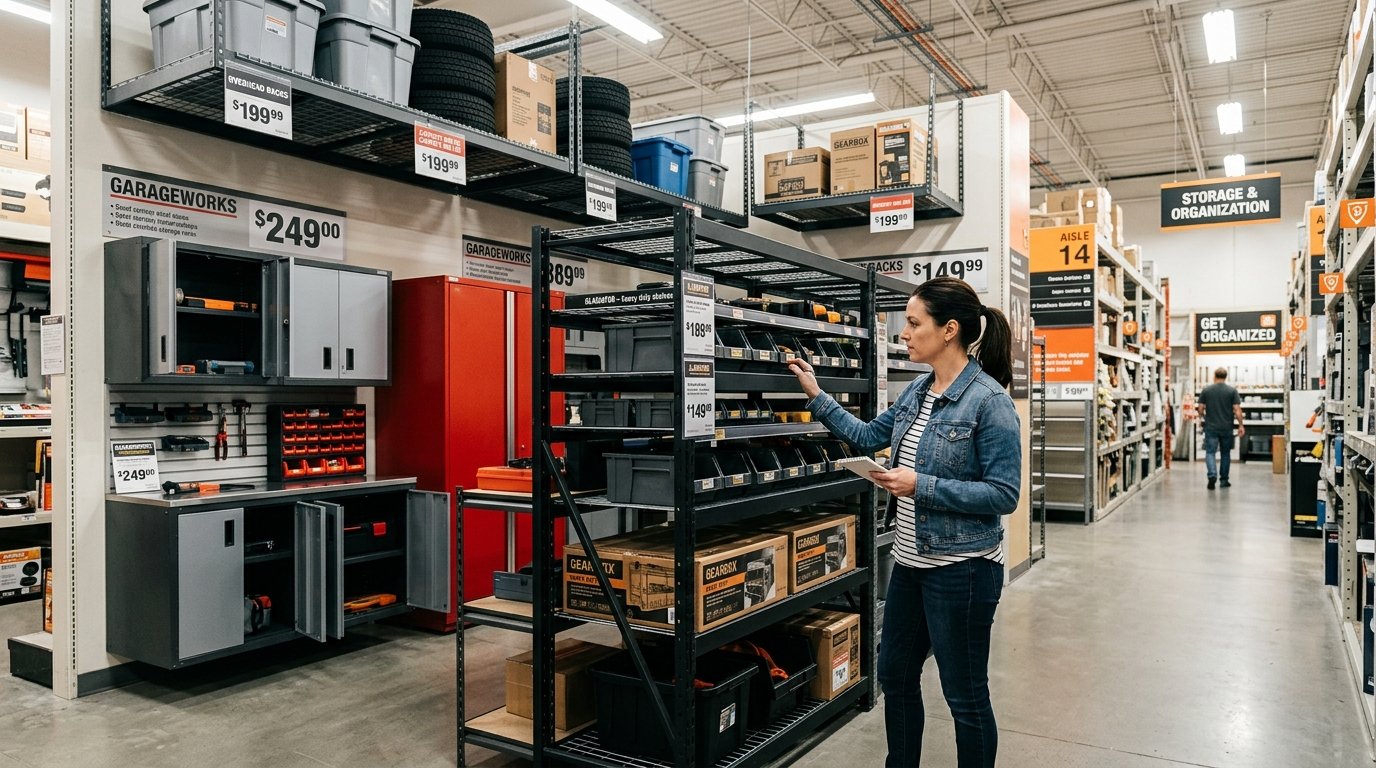
For more storage planning ideas outside the home, see our garage tool storage systems guide. It covers load planning, clearances, and practical rack layout methods that also apply to mudrooms.
Load Ratings and Stability
Look for two separate ratings: shelf capacity and seating capacity. A shelf rating usually refers to a uniform load spread across the full shelf. A bench rating refers to a person’s weight on the seat.
For example, a metal shelf rated for 40 pounds may hold several pairs of shoes,. But it shouldn’t be used as a seat. A bench rated for 300 pounds needs a frame designed for that load, with secure fasteners and a stable base.
Place heavier boots on the bottom shelf. This lowers the center of gravity and reduces tipping. Don’t stack boxes on top of a tall tower unless the maker allows it.
Keep tall cabinets anchored if children or pets may pull on them.
Adjustable leveling feet help prevent rocking on tile, old timber floors, and uneven concrete. Non-slip pads also reduce movement when shoes are removed quickly.
For broader storage equipment guidance, the Material Handling Institute. Technical standards can provide useful reference points for rack construction and safe loading.
How to Organize the Rack
Give each household member a shelf or section. This makes it easier to spot missing shoes and keeps pairs from spreading across the floor.
- Use the bottom level for boots and wet shoes.
- Keep daily sneakers at waist or knee height.
- Place rarely used footwear on the highest shelf.
- Leave one open section for guests.
- Store loose laces inside shoes instead of across the shelf.
Don’t fill every inch of the rack. A little spare space makes it easier to return shoes after use. It also prevents shoes from being pushed onto the hallway floor when the rack is full.
If the entryway is shared with coats, bags, and sports equipment, assign each item a fixed place. A hook rail, small tray, or basket can stop the shoe rack from becoming a catch-all shelf.
Buying Checklist
Use this checklist before you choose a shoe rack for entryway storage:
- Measure the available width and depth.
- Confirm at least 36 inches of clear walking space.
- Check shelf depth for adult shoes and boots.
- Look for 10 to 12 inches of bottom-tier height for tall footwear.
- Choose slats or mesh if wet shoes are common.
- Check for a removable drip tray.
- Verify shelf and bench load ratings separately.
- Look for leveling feet and non-slip pads.
- Anchor tall or narrow cabinets to the wall.
- Choose a finish that matches the cleaning demands of the space.
For more ideas on storage layouts and product selection, read our best garage storage systems guide. The same approach can help you compare frame strength, shelf spacing, and floor clearance for an entryway rack.
Frequently Asked Questions
What is the best shoe rack for a small entryway?
A slim flip-drawer cabinet is a strong choice for a. Narrow entryway because it’s only about 6.5 to 9.5 inches deep. A wall-mounted floating rack also saves floor space and keeps the walkway open.
Check the cabinet’s interior before buying if you own boots or large trainers. For wet footwear, an open wall rack with a floor tray provides better air movement.
How much weight can an entryway shoe rack bench hold?
Many shoe rack benches support 250 to 350 pounds, with 300 pounds being a common rating. Check the maker’s stated seating limit and confirm that it applies to the full bench, not just the shelf. Don’t sit on a rack that only lists a shelf load rating.
Tighten the fasteners after assembly and place the bench on a level surface.
How do I choose the right size shoe rack for my foyer?
Use 10 to 12 inches of depth for sneakers. And flats, and 13 to 14 inches for work boots or larger shoes. Slim cabinets usually need 7 to 9 inches, but they may not fit tall footwear.
For width, 24 inches stores about 6 to 8 pairs, 36 inches stores 9 to 12 pairs,. And 48 inches stores 12 to 16 pairs. Keep at least 36 inches of clear hallway space in front.
What materials are best for wet boots on an entryway shoe rack?
Powder-coated steel and slatted wire mesh are strong choices for wet boots. They resist muddy water and let air move around the footwear. Add a removable drip tray to protect the floor.
Rubberwood. And bamboo can work in a dry foyer, but they need a sealed finish and quick cleanup after water spills.
Final Buying Advice
The best shoe rack for entryway storage fits the space first, then meets your storage and cleaning needs. Choose a 24 to 48-inch open rack for regular family footwear, a bench when seating matters,. Or a slim cabinet for a narrow corridor.
Check the depth before the appearance. Confirm the 36-inch walkway clearance, make room for tall boots, and choose ventilation for wet shoes. A stable frame, sensible load rating, drip control, and easy cleaning will keep the entryway useful every day.

Callum Langham
Founder & Technical Storage Editor
Callum Langham is the founder and technical editor of Rack System. With over 12 years of hands-on field experience in warehouse logistics, garage organization, and industrial storage installations, Callum specializes in engineering safety standards, beam load calculations, and OSHA/RMI compliance. Every guide on Rack System is audited against verified steel gauge tolerances and municipal building codes.