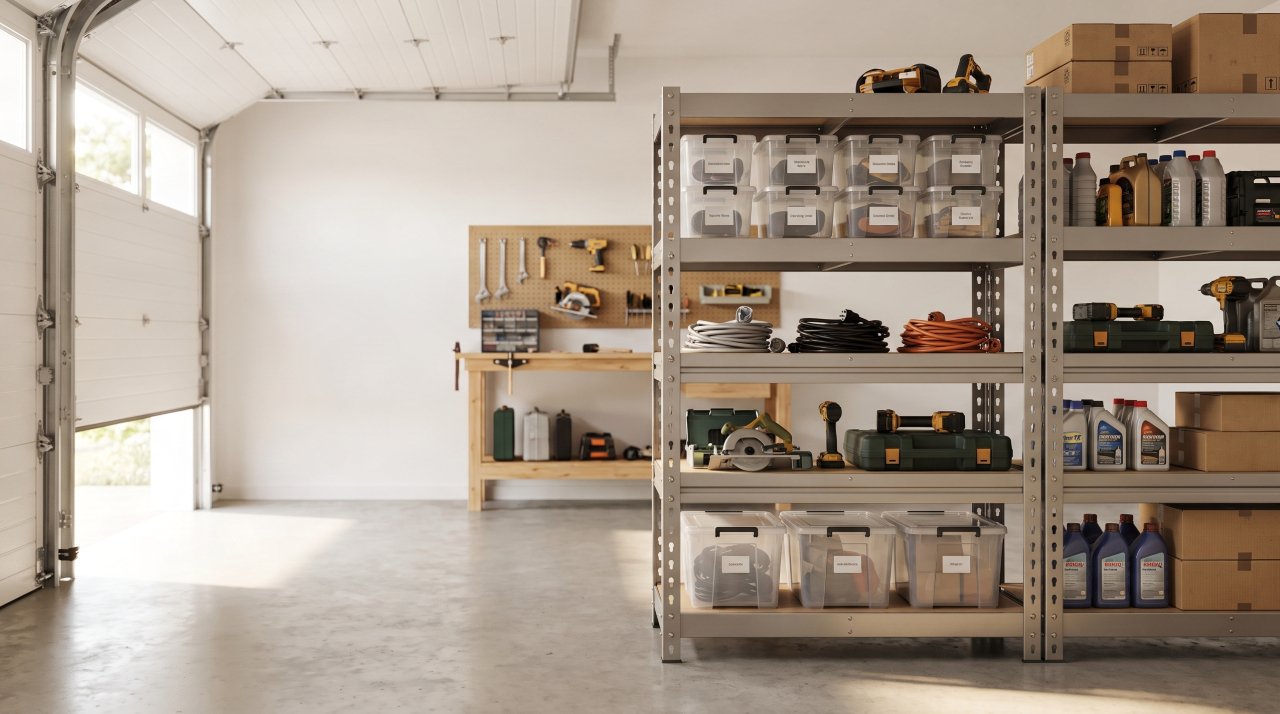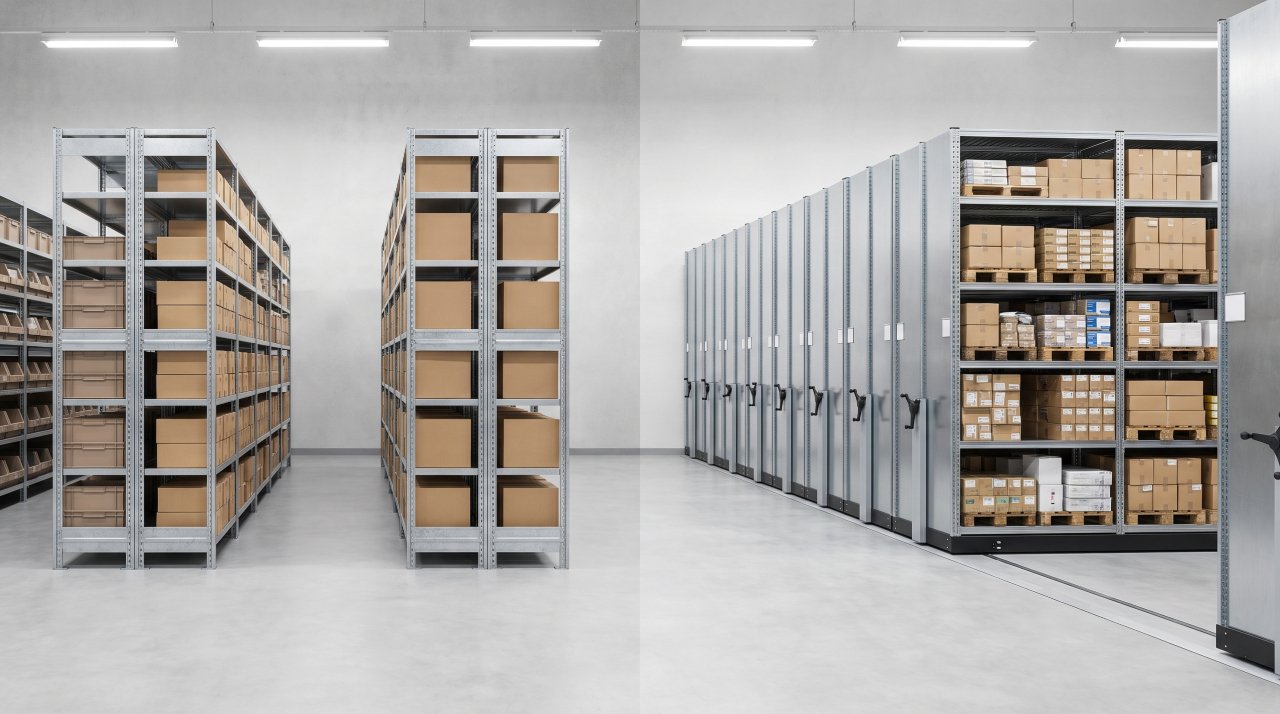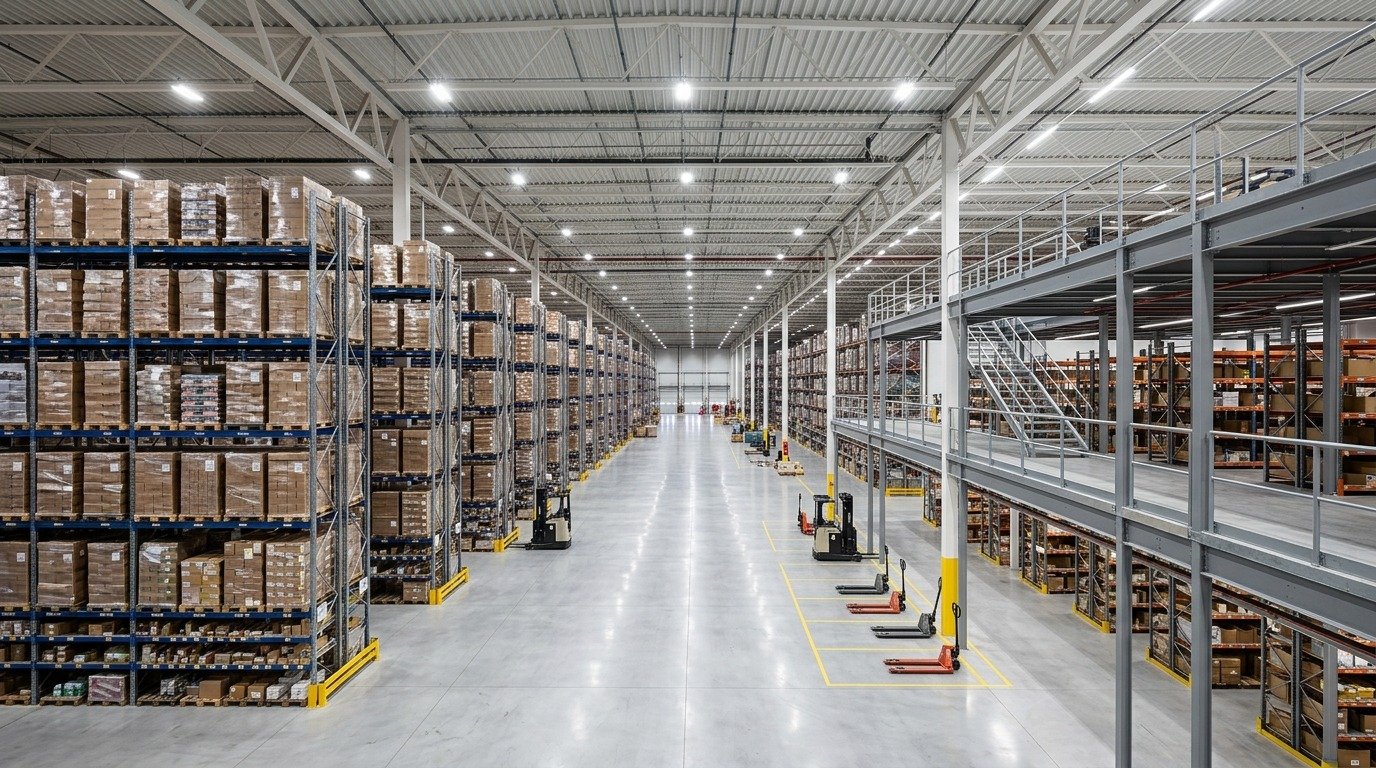
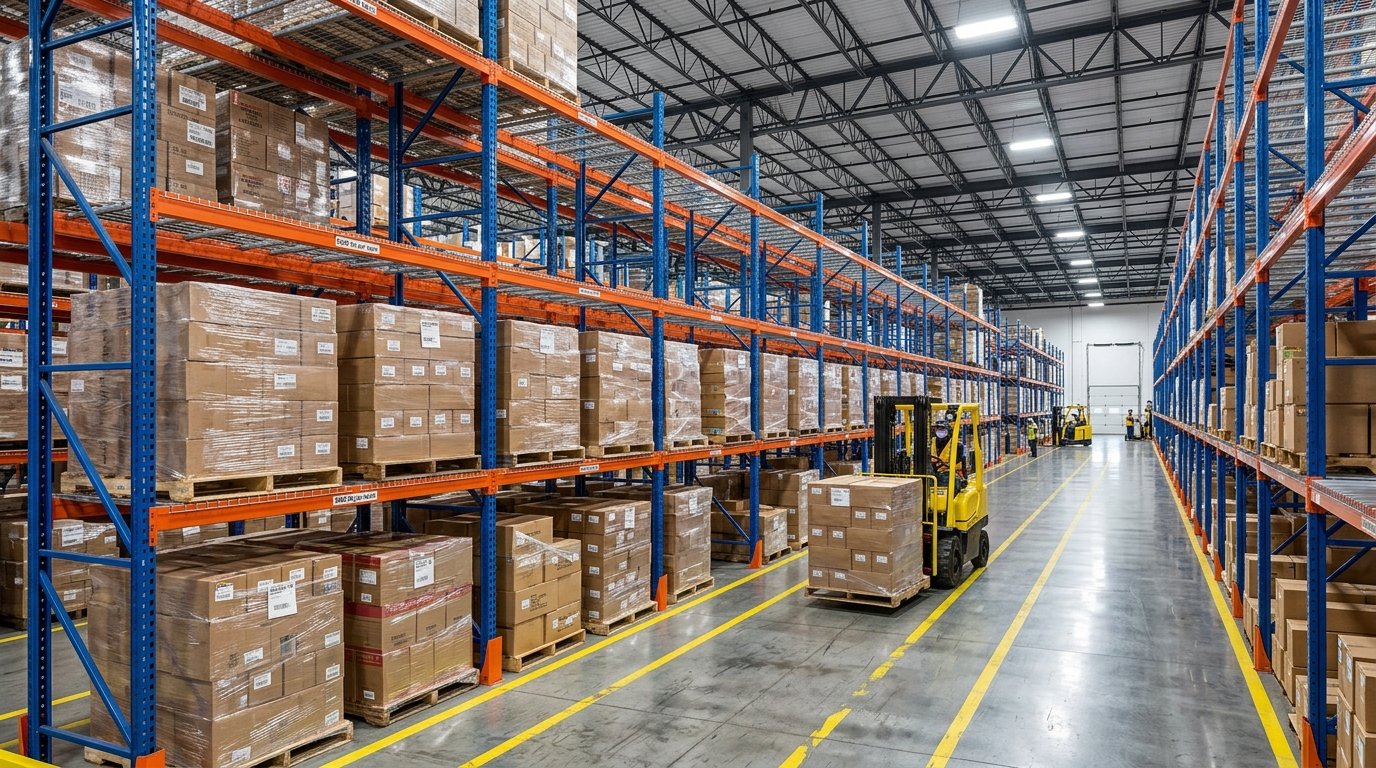
Quick Answer: Pallet Rack Shelving & Wire Deck Selection
Pallet rack shelving converts open industrial pallet rack step beams into continuous, load-bearing storage surfaces for split-case picking, undersized skids, and carton storage. The industry standard is galvanized steel wire mesh decking, typically fabricated from 4-gauge or 6-gauge resistance-welded steel wire in a 2×4-inch grid reinforced by three to four cold-formed steel U-channels. Standard wire deck panels carry uniformly distributed load (UDL) capacities between 2,000 and 3,500 pounds per panel. Unlike solid plywood or sheet metal decking, open wire decking provides over 50% open surface area, allowing overhead fire sprinkler water to penetrate rack tiers during an emergency in full compliance with NFPA 13 life safety codes.
Key Takeaways
- Wire Decking vs. Solid Shelves: Solid wood decks act as combustible fuel and block overhead fire sprinklers. Wire mesh allows water penetration and natural light transmission throughout warehouse bays.
- Deck Capacity Does Not Exceed Beam Rating: Installing two 2,500-pound wire decks on a pair of beams rated for 4,000 pounds does not increase bay capacity; total load remains capped at 4,000 pounds.
- Channel Geometry Matches Beam Profiles: Standard step beams require step-channel wire decks, while box beams and structural channel beams mandate flared universal support channels.
- Uniform Loads vs. Point Loads: Wire mesh decks are strictly engineered for Uniformly Distributed Loads (UDL); concentrated point loads from metal equipment feet can punch through the wire grid.
The Transformation: From Bare Beams to Continuous Shelving
Standard selective pallet racking relies on two parallel horizontal beams designed to support rigid 40×48-inch wooden pallets. When warehouse operations require storing undersized skids, plastic bins, loose cartons, or split-case items, bare beams create severe falling object liabilities. For broader commercial purchasing frameworks, review our pallet racks for sale buyer guide.
Installing pallet rack shelving bridges the void between front and rear beams. It provides a stable, unbroken surface that prevents inventory from slipping through the rack structure and dropping into pedestrian aisles below.
Historically, warehouses placed 3/4-inch plywood or particleboard across rack beams. Today, modern industrial safety codes, municipal fire marshals, and insurance underwriters have rendered combustible solid wood decks obsolete across certified facilities.
Anatomy of Pallet Rack Shelving Panels
Modern pallet rack shelving is predominantly fabricated from cold-drawn steel wire welded into structural mesh panels. Understanding the mechanical components of a wire deck ensures you match deck specifications to your inventory weights. For evaluating structural frames, explore our used pallet racking inspection safety guide.
A certified wire decking shelf consists of three primary engineering elements:
- Welded Wire Mesh Grid: Longitudinal and transverse steel wire rods resistance-welded at every intersection. Wire thickness typically ranges from 4-gauge (0.225-inch diameter) for heavy industrial use to 6-gauge (0.192-inch diameter) for medium-duty retail staging.
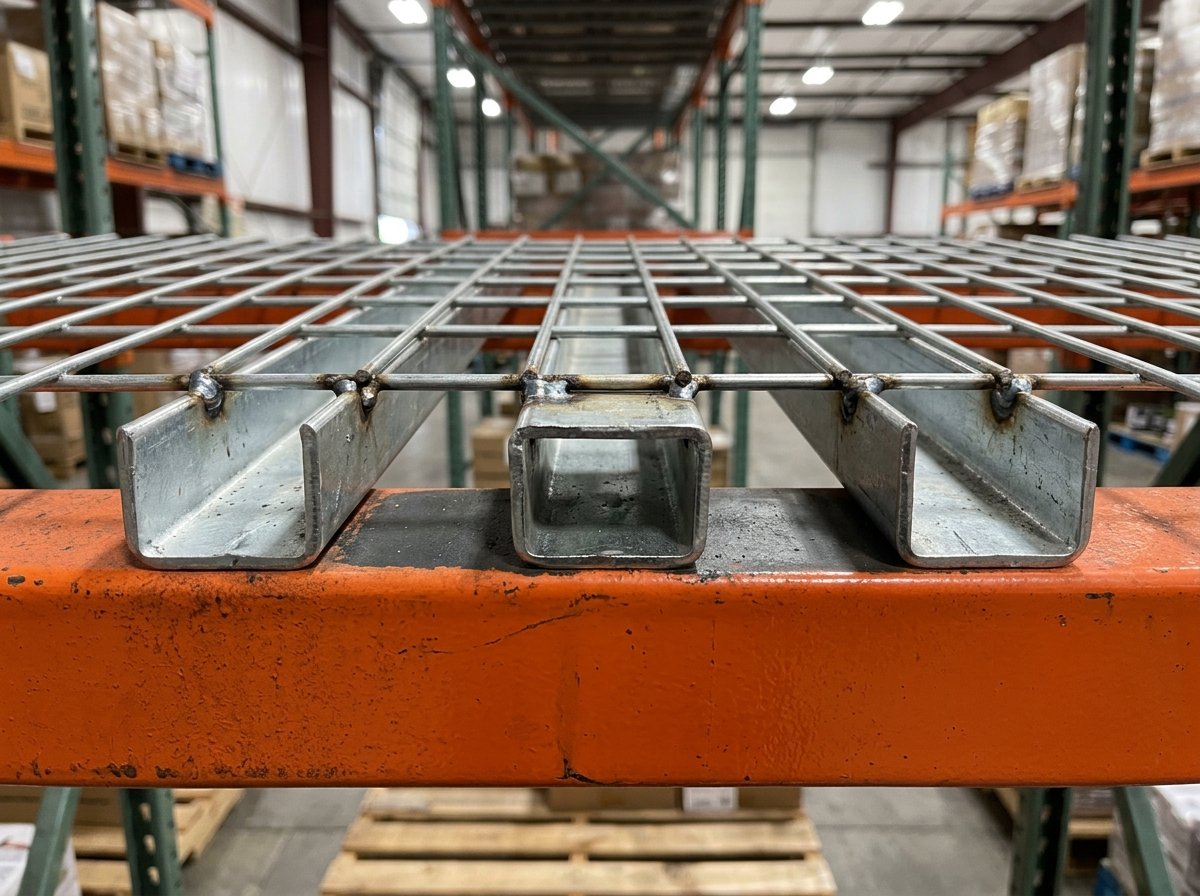
- Formed Steel Support Channels: Heavy-gauge cold-rolled steel U-channels welded to the underside of the mesh. These structural channels transfer the downward cargo load directly onto the horizontal step of the rack beams.
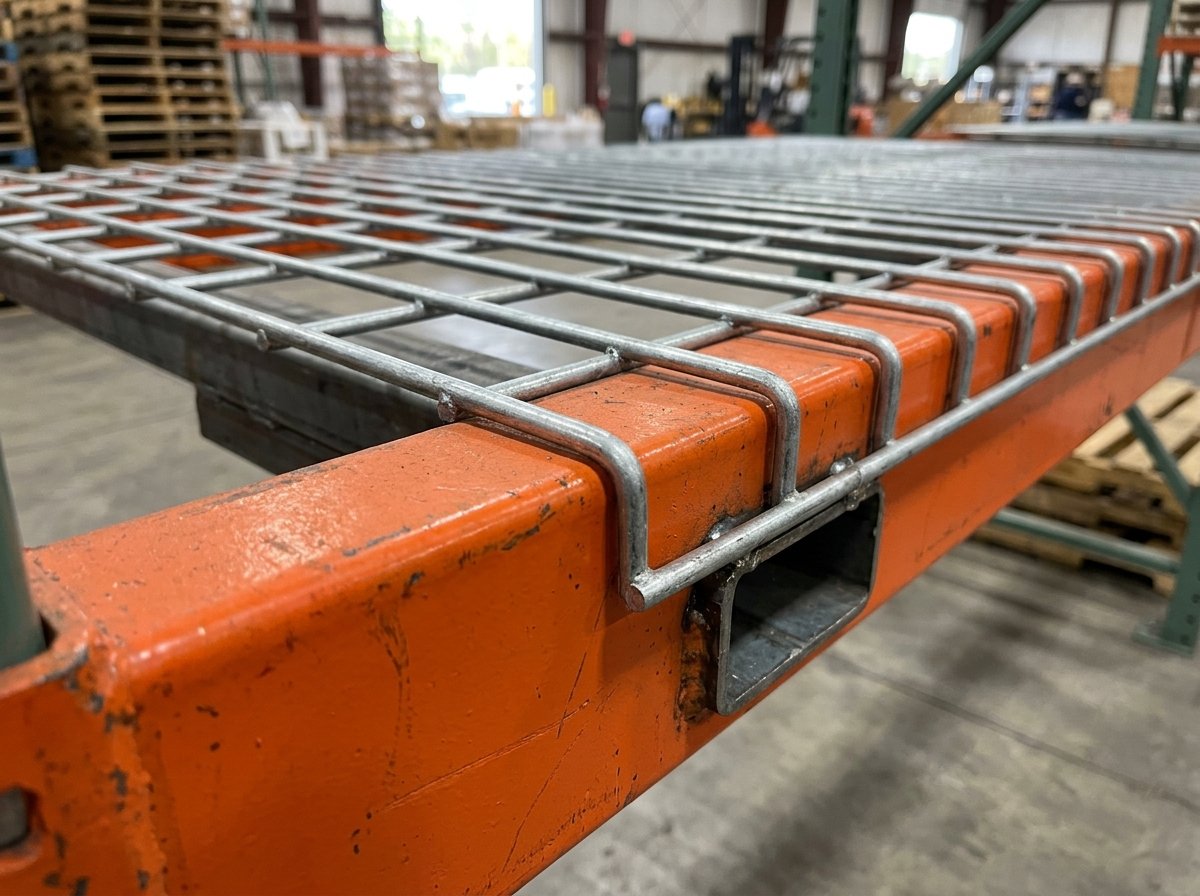
- Perimeter Waterfall Lip: The front and rear wire ends extend over the top of the beam and bend downward by 1.5 inches. This waterfall contour prevents the deck panel from shifting front-to-back during forklift loading.
Deck Types Decoded: Waterfall vs. Inverted vs. Flared
Not all pallet rack shelving panels interface with rack beams in the same way. Matching the channel profile to your specific beam profile is mandatory. For full system architecture rules, consult our selective pallet racking specs guide.
1. Standard Outside Waterfall Decking
Standard outside waterfall is the most common wire decking format in North American warehousing. The 1.5-inch waterfall lip wraps cleanly over the outer vertical face of the beam.
This overhang provides immediate visual confirmation that the deck is centered. The external lip also prevents pallets from snagging the exposed front beam edge during insertion.
2. Inside Waterfall / Flush Decking
Inside waterfall decks feature support channels that drop into the beam step, while the waterfall lip rests inside the recessed ledge rather than hanging over the outer face. The front face of the orange beam remains completely flush and smooth.
Inside waterfall designs are mandatory for pick-and-pack fulfillment operations. Workers frequently brush against the beam face when retrieving items, and exposed barcode tracking labels can be scanned without interference from wire lips.
3. Flared Universal Channel Decking
Standard step channels require a 1 to 5/8-inch internal step on the rack beam. However, heavy-duty structural channel beams and rectangular box beams possess flat upper surfaces with zero interior step.
Flared wire decks feature support channels with flattened, wing-like ends that rest flat on any horizontal beam flange. This universal design accommodates both roll-formed step beams and heavy structural C-channel steel.
4. Inverted Channel Decking
In standard support channels, the open U-shape faces upward, forming an interior trough beneath the wire mesh. Over time, wood splinters, cardboard dust, and packaging debris settle inside these open channels.
Inverted channel decking turns the channel upside down, with the flat steel web facing upward. Food distribution centers, cold storage warehouses, and pharmaceutical cleanrooms specify inverted channels to eliminate sanitation concerns and dust traps.
Pallet Rack Shelving Specification & Load Table
Evaluate deck types by their engineering parameters, fire code compliance, and maintenance requirements. For calculating beam pair capacities, reference our storage rack weight capacity and safety guide.
| Decking Surface Type | Typical UDL Capacity | Sprinkler Open Area % | Channel Support Count | Surface Finish | Primary Application |
|---|---|---|---|---|---|
| Standard Outside Waterfall | 2,500 lbs / panel | > 50% Open Area | 3 or 4 U-Channels | Electro-Zinc Galvanized | General pallet storage, 3PL distribution |
| Inside Waterfall (Flush) | 2,500 lbs / panel | > 50% Open Area | 3 or 4 Step Channels | Powder Coat or Zinc | Order picking, case flow, hand-loaded cartons |
| Inverted Channel Wire Deck | 3,000 lbs / panel | > 50% Open Area | 4 Inverted Channels | Hot-Dip Galvanized | Food processing, pharmaceutical, cleanrooms |
| Flared Universal Deck | 2,500 lbs / panel | > 50% Open Area | 3 Flared Wings | Zinc Plated | Box beams, structural C-channel racks |
| Heavy Bar Grating | 4,500+ lbs / panel | > 70% Open Area | Integrated Welded Bars | Hot-Dip Galvanized | Heavy steel dies, engine blocks, point loads |
Load Ratings: Deck Capacity vs. Beam Pair Ratings
The single most dangerous calculation error in warehouse operations is confusing wire deck capacity with total shelf level capacity. Wire decks are tested and certified under standards published by the Rack Manufacturers Institute (RMI) wire decking standards (ANSI MH26.2).
Consider a standard 96-inch long pallet rack shelf bay containing two 46×42-inch wire decking panels. If each individual wire deck carries a certified load rating of 2,500 pounds, workers might assume the bay can hold 5,000 pounds.
However, if the pair of orange horizontal step beams is only rated for 4,000 pounds total, placing 5,000 pounds on the shelf will cause excessive beam deflection and potential catastrophic collapse. The load capacity of any pallet rack shelving level is always determined by the weakest structural component in the assembly.
Why NFPA 13 Fire Sprinkler Codes Ban Solid Plywood Decks
In smaller backrooms and independent facilities, contractors sometimes lay 3/4-inch CDX plywood or OSB sheets over rack beams to create an inexpensive flat shelf. This practice represents a severe municipal building code violation that voids commercial property insurance policies.
Under the mandatory fire safety criteria of the National Fire Protection Association (NFPA 13) sprinkler penetration criteria, solid shelving exceeding 20 square feet in area acts as an umbrella during a fire event. Solid wood shelves block overhead Early Suppression Fast Response (ESFR) ceiling sprinklers from dousing fires ignited on lower rack tiers.
Wire mesh decking maintains greater than 50% open grid surface area across the entire bay. When a fire occurs, sprinkler water cascades freely through every wire deck tier to extinguish burning inventory at the floor. In addition, open wire decks allow high-bay warehouse LED lighting to filter through to lower levels, improving picker visibility and reducing energy consumption.
Step-by-Step Installation & Fastening Protocol
Installing wire decking panels requires no specialty tools, but proper seating is essential to satisfy OSHA 1910.176 materials storage rules. Follow this four-step sequence:
Step 1: Verify Beam Spacing and Locking Pins
Before placing decking panels, measure the out-to-out distance of your front and rear beams. A 42-inch upright frame requires exactly 42-inch deep decking panels. Verify that safety locking pins or bolts are firmly engaged in both ends of every horizontal beam connector.
Step 2: Drop the Deck Panel into Position
Position two workers at the front and rear of the rack bay. Lower the wire deck panel into the opening at a slight diagonal angle, then set it flat so the support channels drop squarely into the 1 to 5/8-inch beam steps.
Step 3: Center Channels and Check Waterfall Lips
Ensure the front and rear waterfall lips wrap snug against the outer vertical faces of the beams. Verify that all three or four support channels rest fully on the beam step with zero gap beneath the channel flanges.
Step 4: Secure Decks with Self-Drilling Screws
While wire decks rest securely under their own weight, aggressive forklift pallet placement can dislodge panels over time. Drive one 1-inch self-drilling Tek screw through the rear waterfall wire into the top of the rear beam on each panel. This mechanical anchor prevents panels from sliding during heavy loading. For holistic warehouse facility planning, review our warehouse storage solutions layout guide.
5 Costly Pallet Rack Shelving Mistakes to Avoid
Avoid these five common procurement and operational pitfalls when outfitting pallet racks:
- 1. Placing Concentrated Point Loads on Wire Mesh: Placing heavy metal machinery feet or narrow metal bins directly onto wire mesh between channels will shear resistance welds. Point loads require solid bar grating or dedicated pallet crossbars.
- 2. Confusing Upright Depth with Beam Length: Ordering 48-inch decking for 42-inch deep upright frames leaves 6 inches of overhang, causing severe interference in adjacent aisles.
- 3. Ignoring Channel Flange Profiles: Attempting to seat step-channel wire decks onto flat box beams causes the channels to tilt awkwardly, reducing load ratings by over 70%.
- 4. Allowing Pallet Edges to Float Over Mesh: Heavy pallets must span completely from the front beam to the rear beam. Storing short pallets that rest exclusively on wire mesh without beam contact risks deck failure.
- 5. Neglecting Routine Impact Inspections: Forklift drivers bumping beam steps can pop wire resistance welds. Inspect decking annually and immediately replace panels displaying bent channels or severed cross-wires.
Frequently Asked Questions
Can you store standard pallets directly on wire rack decking?
Yes, but the pallet must be sized properly to bridge the front and rear beams. A standard 48-inch deep wooden pallet placed in a 42-inch deep rack bay rests its solid runners directly on the steel step beams. The wire decking serves as a secondary safety net to catch broken bottom boards, prevent undersized pallets from falling, and support odd-sized cargo.
What is the standard wire gauge used in pallet rack decking?
Most commercial wire decking utilizes 6-gauge steel wire (0.192 inches in diameter) for standard 2,500-pound capacity panels. Heavy-duty industrial wire decking engineered for 3,000 to 3,500 pounds per panel utilizes heavier 4-gauge steel wire (0.225 inches in diameter) combined with four or five structural support channels.
Do you need to screw wire decking down to pallet rack beams?
While wire decking panels stay in place under normal operation due to their contoured waterfall lips, fastening them with self-drilling Tek screws is an industry best practice. Screwing the back waterfall lip into the beam prevents panels from lifting or shifting when forklift operators slide pallets in and out of high bays.
Why is plywood decking illegal in commercial warehouse racking?
Plywood is not strictly illegal under federal law, but municipal building codes, local fire marshals, and NFPA 13 regulations heavily restrict solid shelving decks exceeding 20 square feet. Solid plywood blocks water from ceiling fire sprinklers, preventing fire suppression on lower tiers. Insurance companies frequently deny commercial coverage or impose astronomical premiums on facilities utilizing solid wood rack decks without expensive in-rack fire sprinkler systems.

Callum Langham
Founder & Technical Storage Editor
Callum Langham is the founder and technical editor of Rack System. With over 12 years of hands-on field experience in warehouse logistics, garage organization, and industrial storage installations, Callum specializes in engineering safety standards, beam load calculations, and OSHA/RMI compliance. Every guide on Rack System is audited against verified steel gauge tolerances and municipal building codes.