The average American garage holds over 1,200 worth of stored items. If you’re looking at heavy duty storage racks for garage use, you’re already making a smarter choice than most. But picking the wrong rack, or installing it incorrectly, can cost you far more than the price tag. A rack collapse doesn’t just damage your stuff. It can injure you, your kids, or anyone nearby.
This guide gives you what the product reviews don’t: the real specs, the safety math, and the seven things you need to know before you spend a cent.
What “Heavy Duty” Actually Means
The phrase “heavy duty” has no legal or industry-standard definition for consumer shelving. Any manufacturer can print it on a box. So you can’t rely on the label alone.
Under Rack Manufacturers Institute standards, what you can rely on is the certified load rating. Look for the Uniformly Distributed Load (UDL) figure, which tells you how much weight a shelf can hold when that weight is spread evenly across the full surface. This is the number that actually matters.
Here’s where most buyers get burned: they see “2,000 lbs capacity” on the box and assume each shelf holds 2,000 lbs. That’s the total capacity across all shelves combined. A five-tier rack with a 2,000 lb total rating gives you roughly 400 lbs per shelf, not 2,000. Always check whether the rating is per shelf or per unit, and confirm the UDL figure before you buy. For a deeper look at how different rack systems are rated, our complete garage rack guide breaks it down type by type.
The 3 Types of Heavy Duty Garage Racks
You’ve got three main options when it comes to heavy duty storage racks for garage spaces, and each one works best in a specific situation.
Freestanding Steel Shelving Units
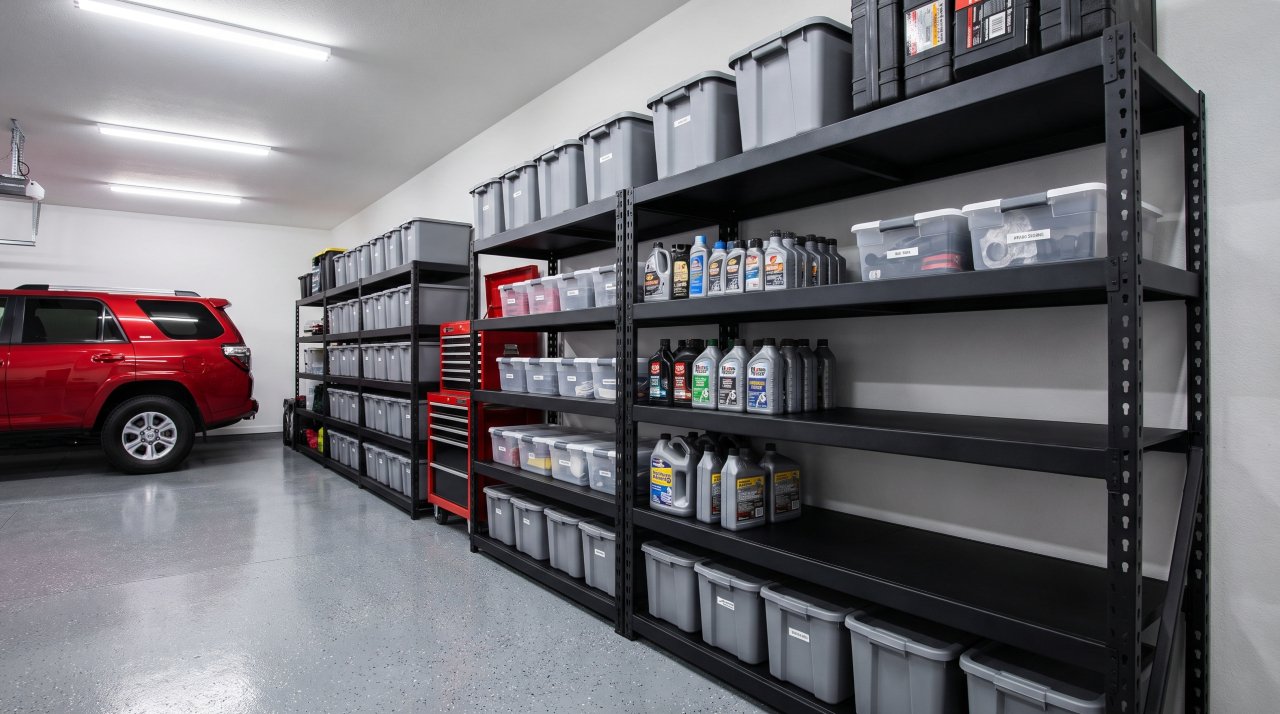
Freestanding units sit directly on your garage floor. They transfer the load straight down to the concrete slab, which makes them the best choice for truly heavy items like engine parts, weight sets, power tools, or bulk materials.
Top-rated brands in this category include REIBII (with total capacities up to 2,400 lbs), Gladiator’s welded 4-tier steel units, and DEWALT’s industrial wire racks rated above 4,500 lbs total. These units don’t require drilling into studs, and most use boltless assembly you can finish in under 30 minutes.
The honest downside: they eat floor space. In a two-car garage, a row of freestanding racks along one wall can reduce your usable parking width by 18 to 24 inches. Plan your layout before you buy.
Wall-Mounted Heavy Duty Shelving
Wall-mounted systems free up your floor completely and work great for frequently accessed items like hand tools, paint cans, or gardening gear. The critical rule: always mount into wall studs, never into drywall alone. A typical 2×4 stud on 16-inch centers can handle around 200 to 250 lbs in shear force per fastener, but only when properly anchored.
Don’t guess at stud location. Use a quality stud finder and verify with a small test nail before committing. For a full breakdown of the best wall rack systems on the market right now, check best overall garage storage systems for editor-tested picks.
Overhead Ceiling Racks
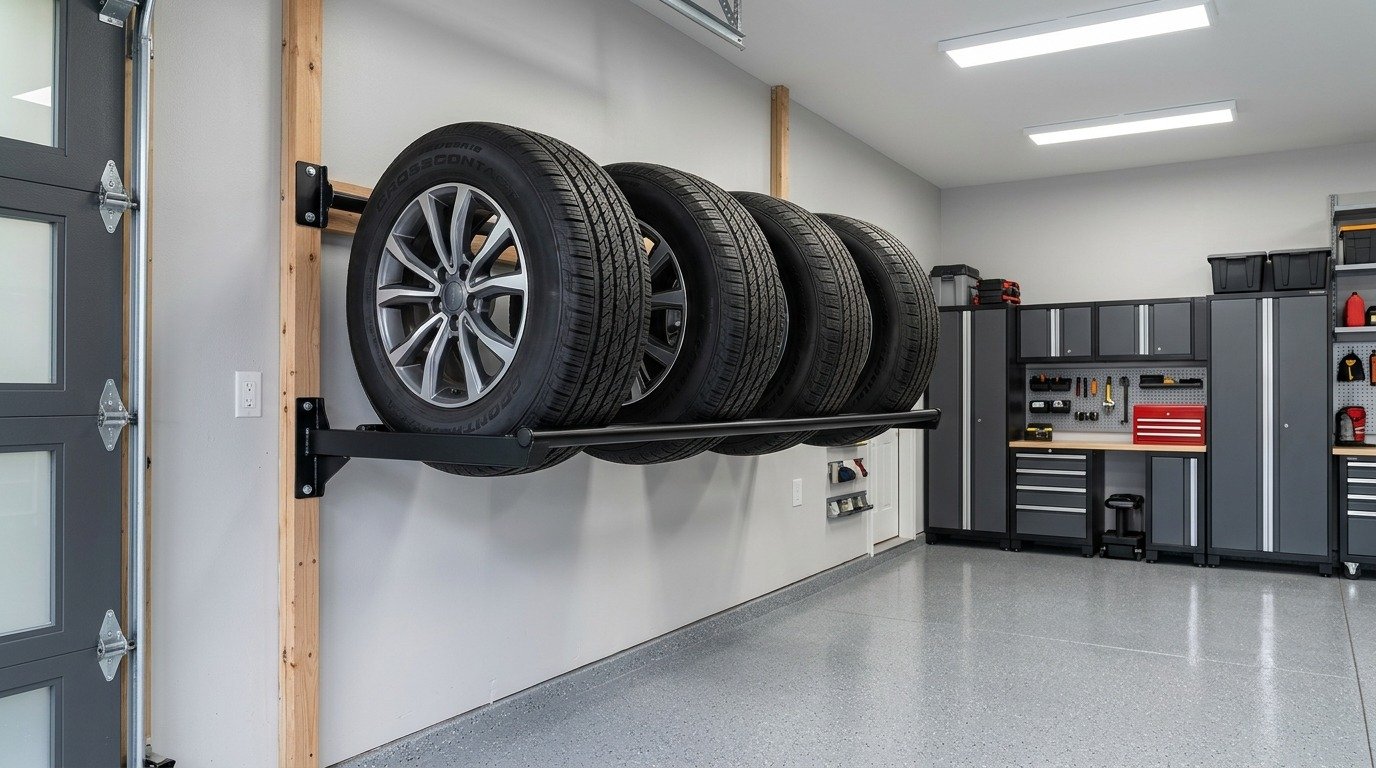
Ceiling racks are perfect for seasonal items, holiday decorations, camping gear, spare tires, that you don’t need weekly access to. They mount to ceiling joists and can hold 400 to 600 lbs per unit in most residential garages.
The catch is real: you need a ladder every single time. If you store items you grab regularly, ceiling racks will frustrate you fast. Use them strategically for deep storage, not day-to-day access.
The Weight Capacity Trap (And How to Avoid It)
This is the single most important thing you’ll read today. Most people skip it. That’s exactly why racks fail.
Manufacturers rate shelves based on Uniformly Distributed Load (UDL) , weight spread evenly across the whole shelf. The moment you stack everything on one side, or place a heavy item dead-center without shelf support beneath, you create a point load. Point loads can cause a shelf to fail at 50 to 60% of its rated UDL capacity.
So if your shelf is rated at 400 lbs UDL and you stack 300 lbs of tool boxes in the center, you’re already flirting with the limit. Add a minor impact, someone bumping the rack, a vibration from a garage door, and you’ve got a real problem.
The fix is simple: spread weight across the full shelf surface. Use flat storage bins rather than stacking heavy items in towers. And always load your heaviest gear on the bottom shelf to keep the center of gravity low. This one habit alone makes your rack dramatically safer.
Steel, Wire, or Plastic? Pick the Right Material
Your garage environment should drive this choice as much as weight requirements do.
Powder-coated steel is the strongest and most durable option. It handles the highest loads and resists dents. The weakness: any scratch or chip in the coating can lead to surface rust, especially on damp concrete floors. Rubber leg pads or foot plates solve this, keep metal feet off wet concrete.
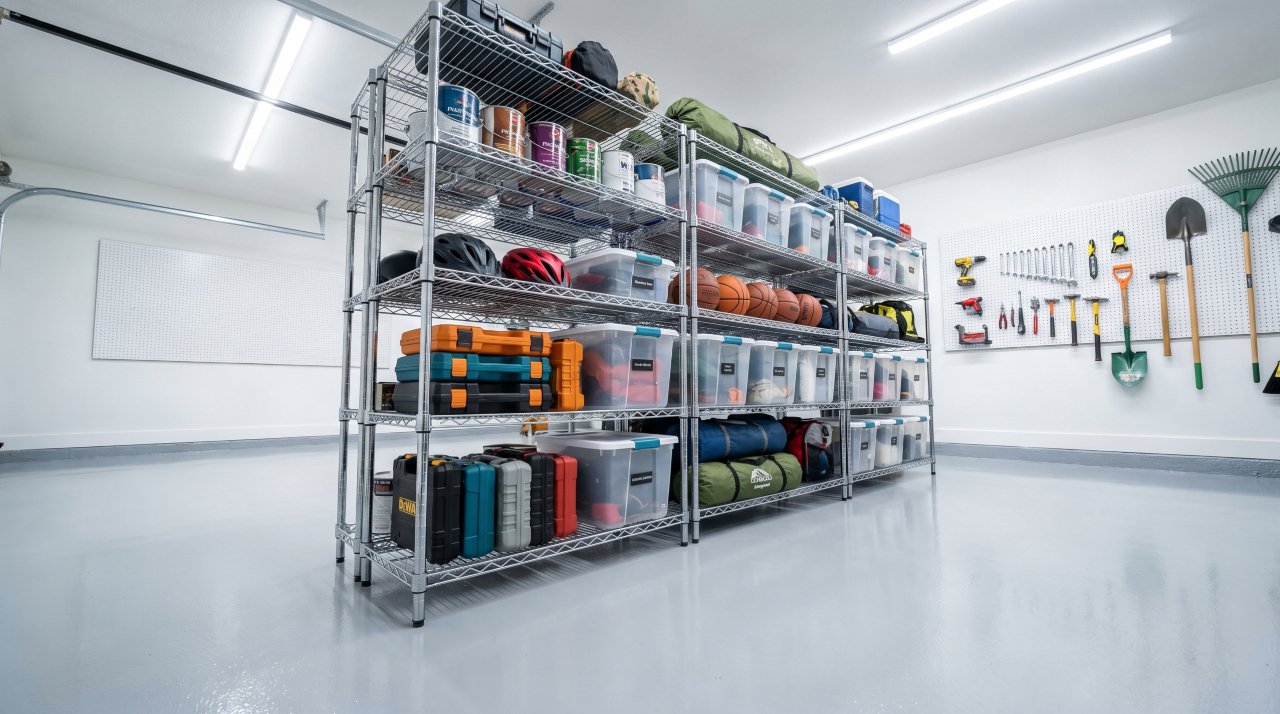
Steel wire shelving gives you the same strength with built-in airflow and visibility. Wire racks let you see what’s stored without pulling everything out, and they won’t trap moisture or debris on the shelf surface. The downside is that small or rounded items can fall through wide-gauge wire. Check the wire spacing before you commit.
Plastic or resin shelving resists rust completely and works well in garages with high humidity. It doesn’t corrode, and it’s easy to wipe clean. But honest truth: plastic can’t match steel for heavy-duty loads. Even heavy-duty plastic units typically max out around 350 to 500 lbs total, fine for general storage, not fine for engine blocks or tool chests.
For a standard garage storing tools, automotive supplies, and seasonal gear, powder-coated steel freestanding racks with rubber foot pads hit the best balance of strength, durability, and value.
Your Garage Floor: The Factor Nobody Talks About
Most guides skip this entirely. Your concrete slab matters.
A standard residential garage floor slab is poured at 3,000 to 4,000 PSI and is typically 4 inches thick. That’s strong enough for most freestanding storage racks under normal loads. But here’s what few buyers consider: heavy racks concentrate enormous pressure onto a tiny footprint, sometimes just 2 to 3 square inches per leg.
A rack with 1,500 lbs of stored gear, sitting on four legs with 2-square-inch footpads, creates a point load of roughly 375 lbs per leg, or 187 PSI per leg footprint. Most residential concrete handles this fine. But if your slab is old, cracked, or shows spalling, get it assessed before you bolt anything down.
The solution if you’re worried: use base plates. Wide base plates (4″x4″ or larger) distribute the load over more surface area, dropping the PSI dramatically and reducing the chance of concrete damage or rack tipping.
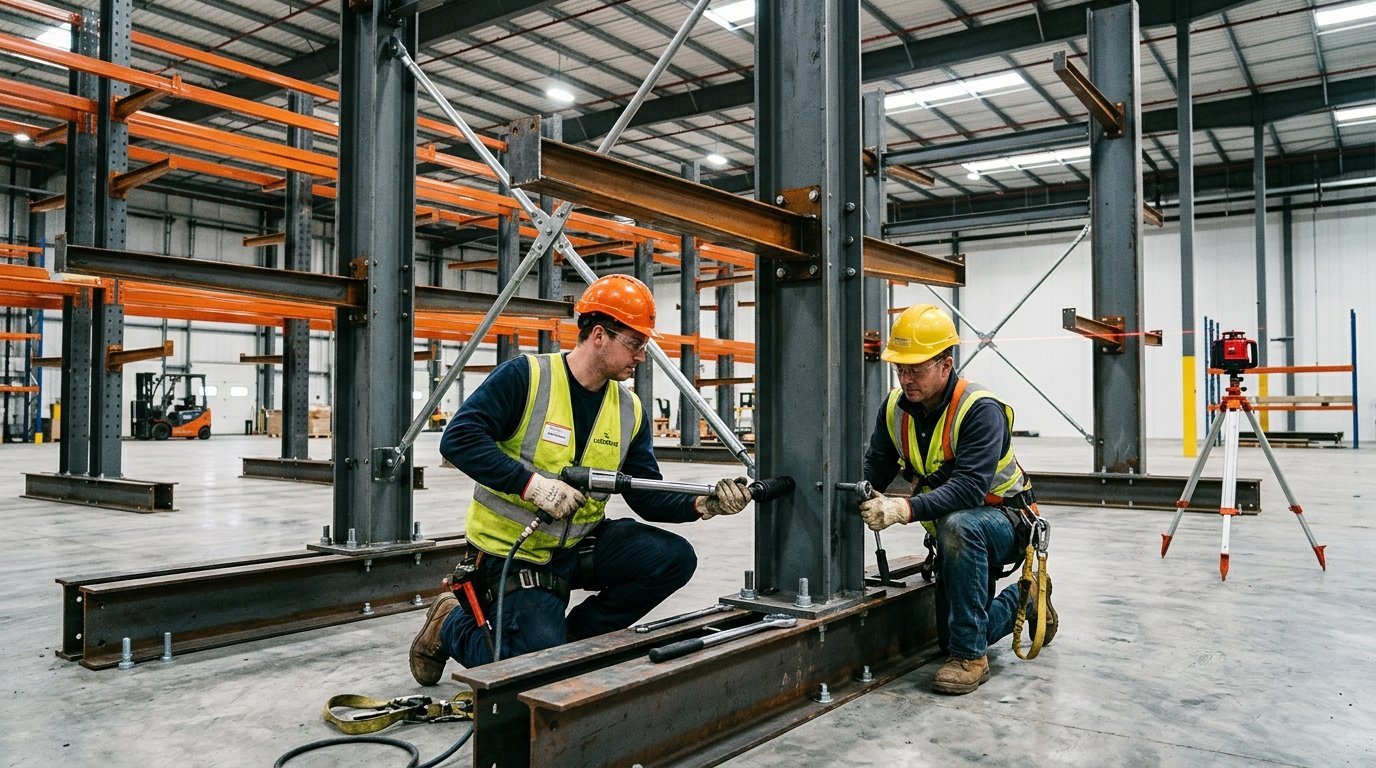
How to Anchor Your Rack (The Safety Step Most People Skip)
Anchoring isn’t optional for tall or heavily loaded racks. The Consumer Product Safety Commission (CPSC) estimates that tip-over accidents involving furniture and storage equipment send tens of thousands of people to the ER annually, and unsecured freestanding shelving is a common culprit.
Here’s a 5-step anchoring checklist:
| Step | Action |
|---|---|
| 1 | Level the rack on your concrete floor using adjustable feet |
| 2 | Position rack against the wall and mark stud locations |
| 3 | Use a stud finder, anchor into 2×4 or 2×6 studs, not drywall |
| 4 | Use lag bolts or heavy-duty wall anchors rated for the full load |
| 5 | Do a shake test after installation, the rack should feel dead solid |
For concrete floors without wall access (like center-of-garage placement), use concrete floor anchors and a hammer drill. These are rated for seismic zones and handle lateral forces that a tip-over would create.
5 Red Flags That a Rack Is Already Failing
Once your rack is up and loaded, don’t just leave it and forget it. A monthly visual check takes 60 seconds and can prevent a serious injury.
Look for these five warning signs:
- Bowing or sagging beams , the shelf surface curves downward under the load
- Leaning uprights , the frame leans away from vertical, especially at the top
- Loose or missing bolts/pins , boltless systems use locking drop pins that can vibrate out over time
- Surface rust on steel legs , particularly at floor contact points
- Creaking or popping sounds , metal stress vocalizes before it fails
If you spot any of these, remove the load immediately and identify the issue before reloading. Don’t ignore a bowed shelf and add more weight hoping it’ll hold.
FAQ: Your Questions Answered
What is the best heavy duty shelving for a garage?
The best heavy duty storage racks for garage use depend on what you’re storing. For truly heavy loads, tools, automotive parts, bulk supplies, a powder-coated steel freestanding unit with a UDL rating of 400+ lbs per shelf is your best bet. Brands like REIBII, Gladiator, and DEWALT consistently earn top marks for structural integrity and real-world load performance.
What weight can heavy duty shelves hold?
It varies widely by product, so you must read the spec sheet. Consumer-grade “heavy duty” shelves typically hold 250 to 500 lbs per shelf. Industrial-grade units can handle 800 to 1,000+ lbs per shelf. Always look for the per-shelf UDL rating, not the total unit capacity number, those two figures are not the same thing.
What is the strongest type of shelving for a garage?
Welded steel shelving is the strongest option because there are no joints or connections that can loosen over time. Bolted and boltless systems are nearly as strong when properly assembled, but welded frames have zero assembly failure points. For the absolute maximum load capacity in a garage wall rack system, welded steel wins.
Are wire or solid shelves better for a garage?
Wire shelves offer better airflow and visibility, and they don’t trap debris. Solid steel shelves handle higher point loads and work better with small items that would fall through wire gaps. For garage workshop shelving where you mix small bins with heavy tools, solid steel decking or a mix of both gives you the most flexibility.
The One Mistake That Costs People the Most
After everything in this guide, the single costliest mistake is buying based on total price and total capacity without reading per-shelf UDL specs. An 180-rack that holds 400 lbs per shelf is a better investment than a 120-rack rated at 2,000 lbs total across six shelves.
Spend 10 minutes comparing specs before you buy. Measure your garage. Check your floor. Plan your layout on paper first. That 10 minutes of prep work saves you from a rack that bows, tips, or collapses, and the costs that come with that.
When you’re ready to build a complete storage system, not just one rack, explore best overall garage storage systems to see how racks, wall panels, and overhead units work together as a full solution.

Callum Langham
Founder & Technical Storage Editor
Callum Langham is the founder and technical editor of Rack System. With over 12 years of hands-on field experience in warehouse logistics, garage organization, and industrial storage installations, Callum specializes in engineering safety standards, beam load calculations, and OSHA/RMI compliance. Every guide on Rack System is audited against verified steel gauge tolerances and municipal building codes.