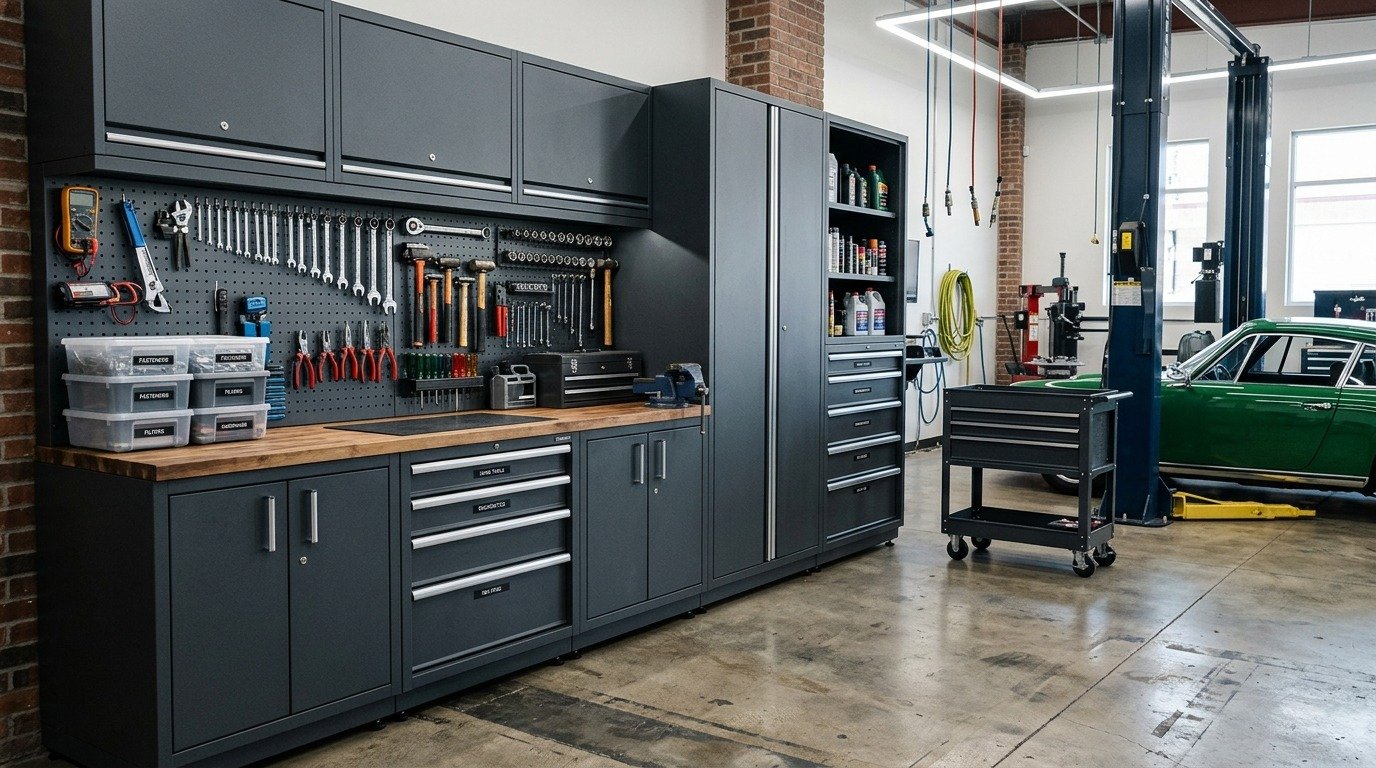
Garage wall cabinets turn unused wall space into secure storage for tools, paint, automotive fluids, hardware, and seasonal supplies. They also keep heavy items off the floor, protect contents from dust,. And leave more room for vehicles and work areas.
The right cabinet depends on three factors: steel thickness, mounting method, and the weight you plan to store. A light flat-pack cabinet can handle spray cans. And small parts, but it may flex under heavy fluids or power tools.
A welded 18-gauge cabinet costs more, yet it offers better stiffness and a higher load rating.
Quick Answer: Garage Wall Cabinet Steel Gauge & Mounting
Heavy-duty garage wall cabinets use 18-gauge cold-rolled steel supporting 250 to 350 lb total UDL (100 lb per shelf), while standard consumer units use 21-to-24 gauge steel holding 150 lb. Mount cabinets 54 to 60 inches from the floor (18 to 24 inches above workbenches) by driving 1/4-inch by 3-inch lag screws directly into 16-inch on-center 2×4 wall studs or heavy-duty French cleat steel rails.
Key Takeaways
- Steel Gauge Thickness: 18-gauge pro steel prevents shelf sag under heavy fluids; 24-gauge budget steel flexes under point loads.
- Stud Anchoring Rules: Always fasten cabinets to 16″ O.C. 2×4 studs with 1/4″ x 3″ lag screws; drywall anchors cannot support cantilever weight.
- Mounting Clearance Height: Mount bottom edges 54″ to 60″ from the floor to leave 18″-24″ usable clearance over work surfaces.
- French Cleat Leveling: Heavy steel French cleats simplify installation across uneven or bowed drywall walls.
Why Use Garage Wall Cabinets?
Garage wall cabinets help you use vertical space without taking up floor area. Floor clutter can block vehicles, reduce walking space, and make tools harder to find. Wall-mounted storage keeps common items at eye level while leaving the floor open for a workbench, compressor, lawn equipment,.
Or storage bins.
Closed doors also provide useful protection. They keep dust off power tools, reduce exposure to moisture, and hide hazardous products from children. Cam locks add basic security for chemicals, blades, and expensive equipment.
Garage wall cabinets work best when you assign each cabinet a clear purpose. One unit might hold hand tools, another might store automotive supplies, and a third might contain fasteners and small parts. Clear labels and adjustable shelves will save time during daily use.
Steel Gauge and Cabinet Strength
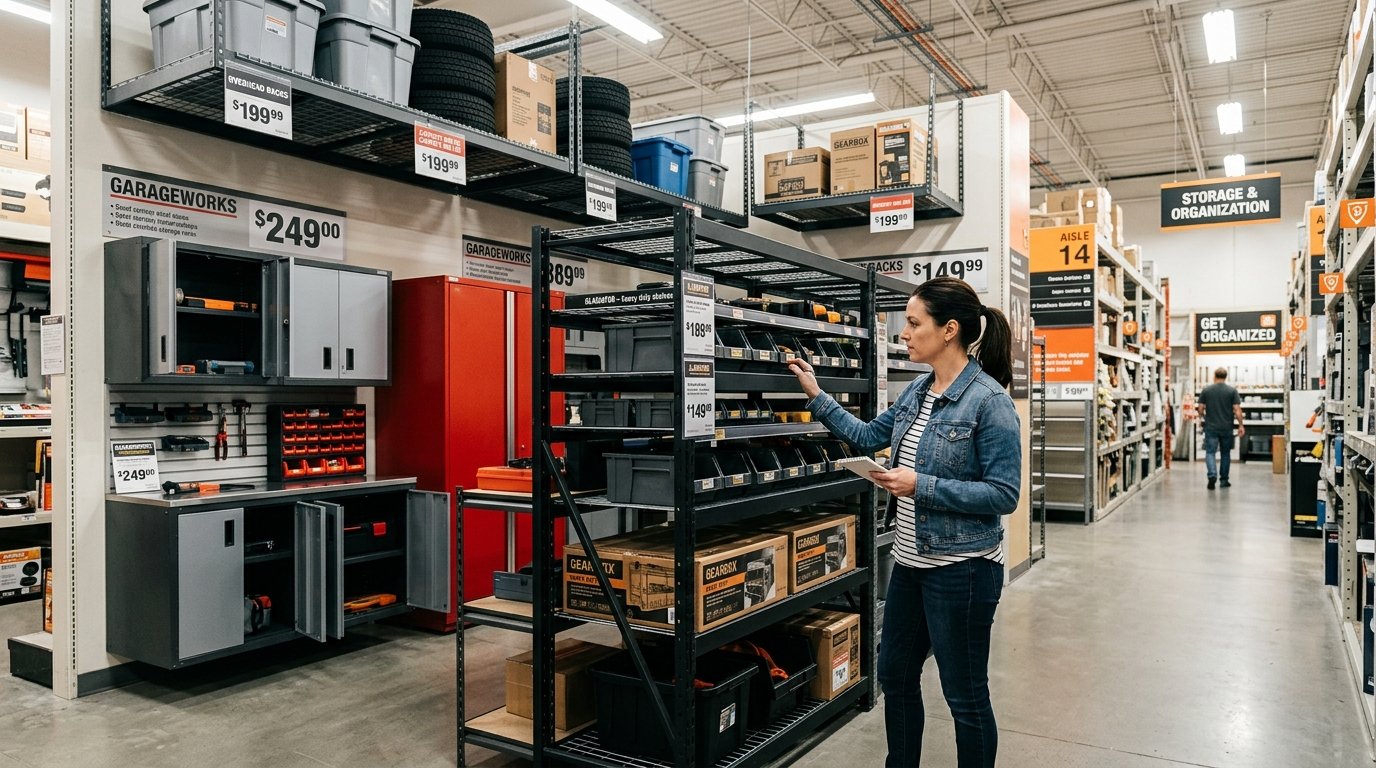
Steel gauge describes sheet thickness. A lower gauge number means thicker steel. An 18-gauge panel is thicker and stiffer than a 24-gauge panel, so it resists bending when shelves carry concentrated loads.
This difference matters when you store paint cans, motor oil, coolant, batteries, or dense metal tools. A 24-gauge shelf can support its rated uniform load,. But a heavy item placed near the front edge creates a point load.
That load can bend the shelf or distort the cabinet frame.
Pro-series garage wall cabinets commonly use 18-gauge cold-rolled steel. These cabinets often have welded seams, reinforced shelf supports,. And a total uniform distributed load (UDL) rating from 250 to 350 pounds.
Many shelves are rated at 100 pounds each.
Consumer cabinets often use 21-gauge steel, with total ratings from 150 to 200 pounds and shelf ratings around 50 pounds. Lightweight 24-gauge units may hold 100 to 150 pounds total, with about 35 pounds per shelf. Always check the maker’s rating because shelf spacing, cabinet width, and mounting hardware affect the result.
Garage Wall Cabinet Comparison
| Cabinet Construction | Steel Gauge & Mounting | UDL Load Limit | Best Garage Application |
|---|---|---|---|
| Heavy-Duty Pro Series | 18-gauge welded steel / French cleat | 250 to 350 lb total (100 lb/shelf) | Heavy power tools, automotive fluids, chemical storage |
| Standard Consumer Welded | 21-gauge steel / direct lag bolts | 150 to 200 lb total (50 lb/shelf) | Spray cans, hand tools, hardware boxes, car wash gear |
| Lightweight Flat-Pack DIY | 24-gauge steel / wall bracket tabs | 100 to 150 lb total (35 lb/shelf) | Light household storage, small parts, seasonal supplies |
Use the table as a starting point, not as a replacement for the product manual. A cabinet’s load rating assumes correct installation and an even load across the shelves. It doesn’t mean you can place the full rating in one box on one shelf.
Flat-Pack or Welded Cabinets?
Welded Steel Cabinets
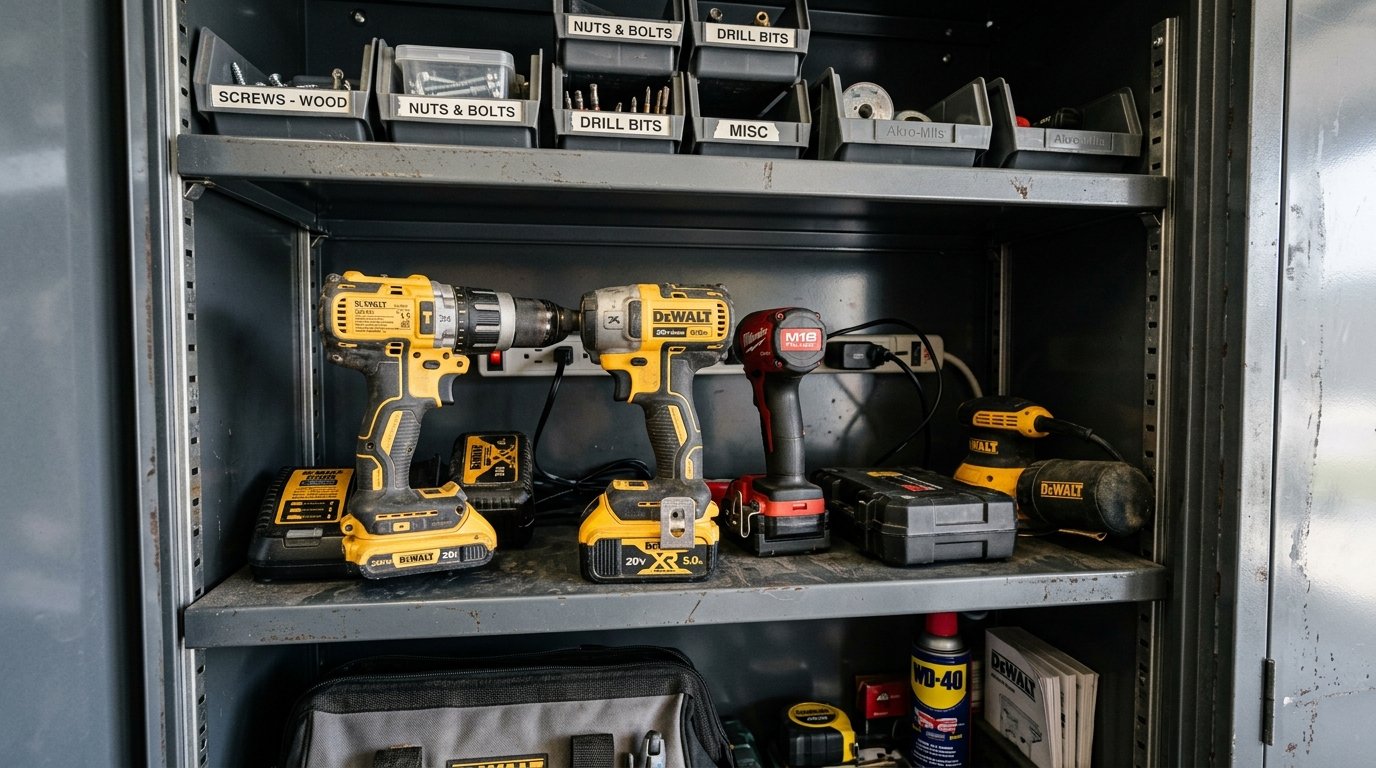
Welded garage wall cabinets arrive assembled and usually feel rigid as soon as they’re out of the box. These Welded corners reduce movement, and reinforced frames help the doors stay aligned. This construction suits frequent use and heavier storage.
The tradeoff is cost and handling. A welded unit is heavier to carry and may require two people for installation. Measure doorways, stairways, and the available wall before ordering.
Flat-Pack Cabinets
Flat-pack cabinets ship in smaller boxes and usually cost less. You’ll assemble the body, shelves, doors, and wall brackets at home. They’re useful for light storage and can be a sensible choice for renters or homeowners building a modular garage system.
Check every fastener during assembly. Loose corner bolts can let the cabinet rack out of square, which can cause doors to bind. Use a level during assembly, and don’t overload a shelf just because the cabinet looks large.
Choosing the Door Style
Flip-Up Doors
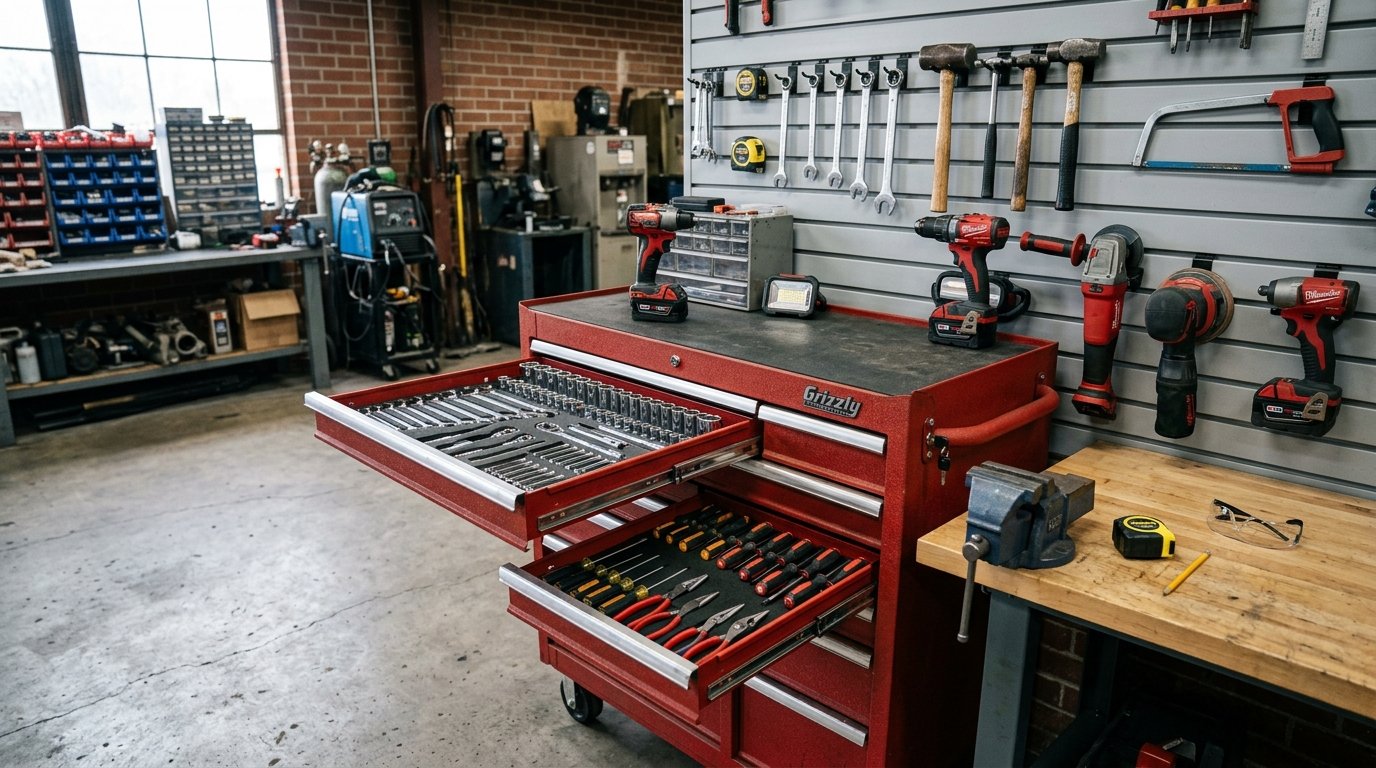
Gas-strut flip-up doors lift above the cabinet and stay open without blocking the work surface. They give you hands-free access when you’re moving tools in and out. Check the ceiling height and nearby lights before choosing this design.
Double Swing Doors
Double doors with 110-degree hinges provide a familiar layout and wide access. Soft-close hinges reduce noise and help prevent slamming. Cam locks can keep the doors shut during normal garage use and add a basic layer of storage control.
Leave enough side clearance for the doors to open fully. If a cabinet sits next to a wall, a wide door. May hit the wall before you can reach the back shelf.
Best Mounting Methods
Direct Stud Mounting
Direct stud mounting gives a strong connection when the cabinet’s rear rail lines up with wall studs. In a typical framed wall, studs sit 16 inches on center. Find each stud with a stud finder, then confirm the location with a small drill bit.
Or measure from a known corner.
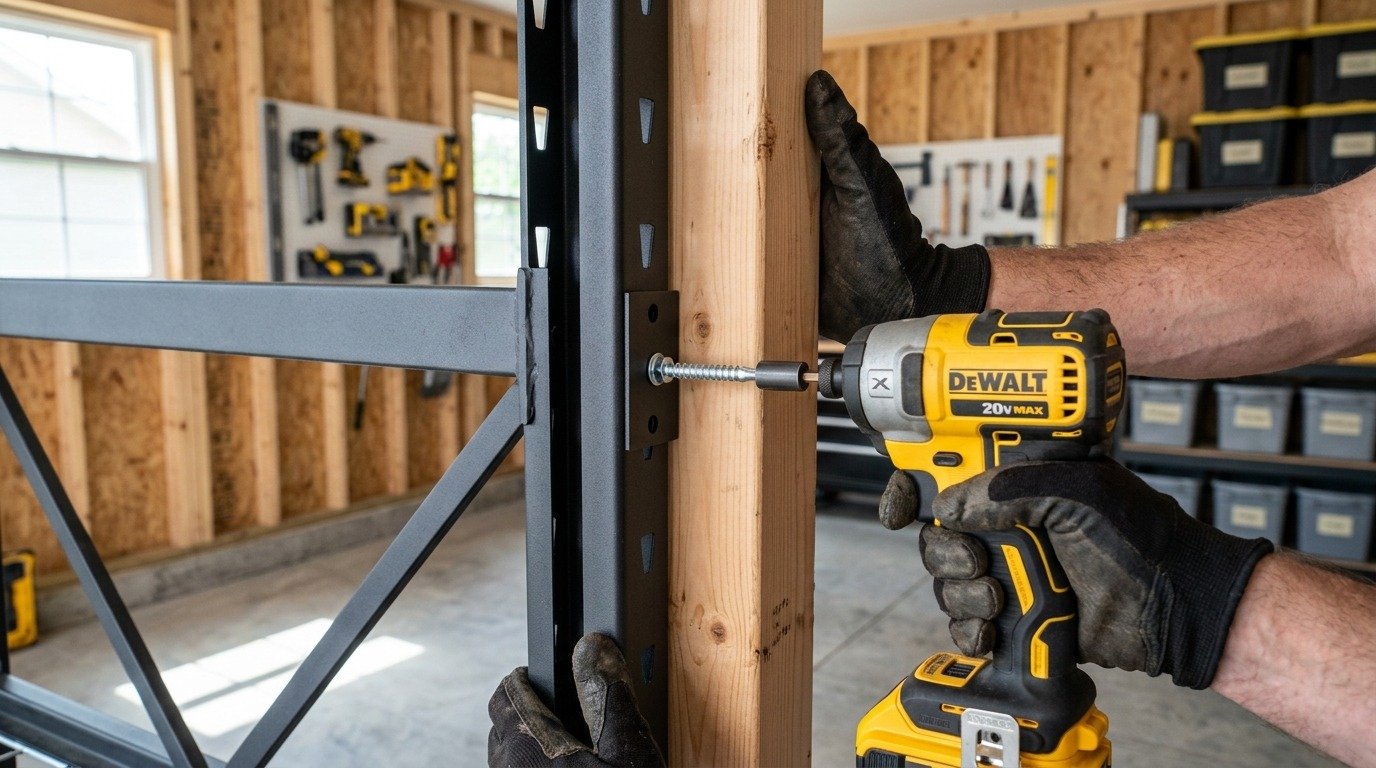
Use 1/4-inch by 3-inch lag screws with suitable washers. The screw must pass through the cabinet rail, wall covering, and any gap before entering solid wood. Aim for at least 2 inches of thread engagement in the stud after accounting for drywall and the cabinet back.
Do not rely on drywall anchors for a heavy garage wall cabinet. The cabinet creates a cantilever load because its contents sit out from the wall. Pullout and shear forces increase as the cabinet gets deeper and heavier.
French Cleat Rails
A heavy steel French cleat uses two interlocking angled rails. One rail attaches to the wall, and the other attaches to the cabinet. You can lift the cabinet onto the wall rail, shift it into place, and then secure it with locking screws.
This system makes leveling easier on bowed drywall or uneven studs. Shim the wall rail where needed, use a long level, and fasten the rail into several studs. The cleat spreads the load across a wider section of the wall than a few isolated screws.
Unistrut Channel
Unistrut channel works well in commercial garages, workshops, and walls that may need future adjustments. Attach the channel to several studs or suitable masonry anchors, then use channel nuts. And bolts to position the cabinet brackets.
This method costs more and adds depth, but it lets you move cabinets without drilling a new set of holes. Follow the channel maker’s load rating and use hardware made for the channel size.
Mounting Height and Workbench Clearance
The standard bottom height for garage wall cabinets is 54 to 60 inches above the floor. This usually leaves 18 to 24 inches above a workbench. The exact height depends on your bench depth, ceiling height, and the people using the garage.
For a 36-inch-high workbench, a cabinet bottom at 54 inches leaves an 18-inch gap. That gap gives you room for a backsplash, small tools, or task lighting. A 60-inch bottom provides more working clearance but may put the upper shelf out of easy reach.
Mark the cabinet bottom on the wall before drilling. Hold a piece of cardboard at the planned location to check door swing, head clearance, and access to outlets. If you’ll use an integrated LED valance, allow space for the light housing and its wiring.
How to Install Garage Wall Cabinets
1. Plan the Layout
Measure the wall width, cabinet width, outlet locations, windows, and garage door tracks. Keep cabinets clear of moving doors and allow room to open each cabinet fully. Group cabinets by use so frequently used tools stay near the workbench.
2. Find Studs or Masonry Points
Mark the center of every wood stud. For concrete or tilt-up walls, identify solid anchor points and select masonry anchors rated for the cabinet load. Don’t assume a drywall plug or a small concrete screw can carry a loaded cabinet.
3. Build and Inspect the Cabinet
Assemble flat-pack units on a protected surface. Confirm that the body is square, shelf clips are fully seated, and hinges or gas struts are tight. Remove doors if the manual allows it, since a lighter cabinet is easier to lift.
4. Install the Rail or Brackets
Mark a level line for the top rail, French cleat, or mounting brackets. Drill pilot holes for lag screws. Use washers under the screw heads, and tighten the hardware firmly without crushing the cabinet rail.
5. Lift and Secure the Cabinet
Get help with heavy steel cabinets. Lift the cabinet onto the rail or hold it in position while the first screws are installed. Check the level from side to side and front to back, then install every specified fastener.
6. Test the Load Gradually
Close and open the doors before loading the shelves. Add light items first, then distribute heavier items across the shelf supports. Keep dense fluids low and near the cabinet sides or rear, rather than placing them at the front edge.
For technical handling references, review the Material Handling Institute technical standards. For safe storage practices around workplace materials, see the OSHA material storage safety standards.
How Much Weight Should You Store?
Start with the cabinet’s total UDL rating and the rating for each shelf. A 300-pound cabinet rating doesn’t mean every shelf can carry 100 pounds if the cabinet has three shelves. The rating may assume a specific number of shelves and a particular mounting method.
Distribute weight across the full shelf depth. Put heavy bottles in a low position, keep sharp tools in trays,. And store small hardware in bins so it doesn’t spread across the cabinet floor.
Leave a little capacity in reserve instead of loading the cabinet to its maximum every day.
Inspect the cabinet twice a year. Look for bowed shelves, elongated screw holes, cracked welds, loose hinges, and doors that no longer close squarely. Remove contents before repairing a loose mount.
Are Garage Wall Cabinets Worth It?
Garage wall cabinets are a good choice when you need secure, organized storage and want to preserve floor space. They protect tools from dirt, make it easier to group supplies, and can improve the way a workbench functions.
They aren’t the right storage for every item. Long tools, ladders, and bulky equipment may fit better on hooks or open shelving. Heavy cabinets also need a real structural connection.
So installation takes more planning than placing a plastic bin on a floor shelf.
Use this garage cabinets sizing guide to compare widths, depths, and material choices before you order. You can also review this metal garage cabinets guide for more load and steel gauge details.
Frequently Asked Questions
How much weight can garage wall cabinets hold?
Most garage wall cabinets hold 150 to 300 pounds as a total UDL, while heavy-duty models may reach 350 pounds. Individual shelves commonly hold 50 to 100 pounds. The real limit depends on steel gauge, shelf design, cabinet width, and the strength of the wall connection.
Follow the lower rating if the cabinet and mounting hardware list different limits.
What is the best way to mount garage wall cabinets to studs?
Find the 16-inch on-center 2×4 studs, mark their centers,. And drive 1/4-inch by 3-inch lag screws through the cabinet’s mounting rail and into the studs. Use washers and pilot holes.
A steel French cleat is a strong option when the wall is uneven. Or the cabinet holes don’t line up with every stud.
What is the standard height to hang garage wall cabinets?
Set the cabinet bottom 54 to 60 inches above the floor. This leaves about 18 to 24 inches above a standard workbench. Mark the layout first and check door swing, head clearance, lighting, and access to outlets before drilling.
What is the difference between 18-gauge and 24-gauge garage wall cabinets?
18-gauge steel is thicker and resists flexing under heavy loads. It suits power tools, fluids, and chemical storage when the cabinet is mounted correctly. 24-gauge steel is thinner, lighter, and usually less costly.
It works best for small parts, seasonal supplies, and other light items that won’t create heavy point loads.

Callum Langham
Founder & Technical Storage Editor
Callum Langham is the founder and technical editor of Rack System. With over 12 years of hands-on field experience in warehouse logistics, garage organization, and industrial storage installations, Callum specializes in engineering safety standards, beam load calculations, and OSHA/RMI compliance. Every guide on Rack System is audited against verified steel gauge tolerances and municipal building codes.