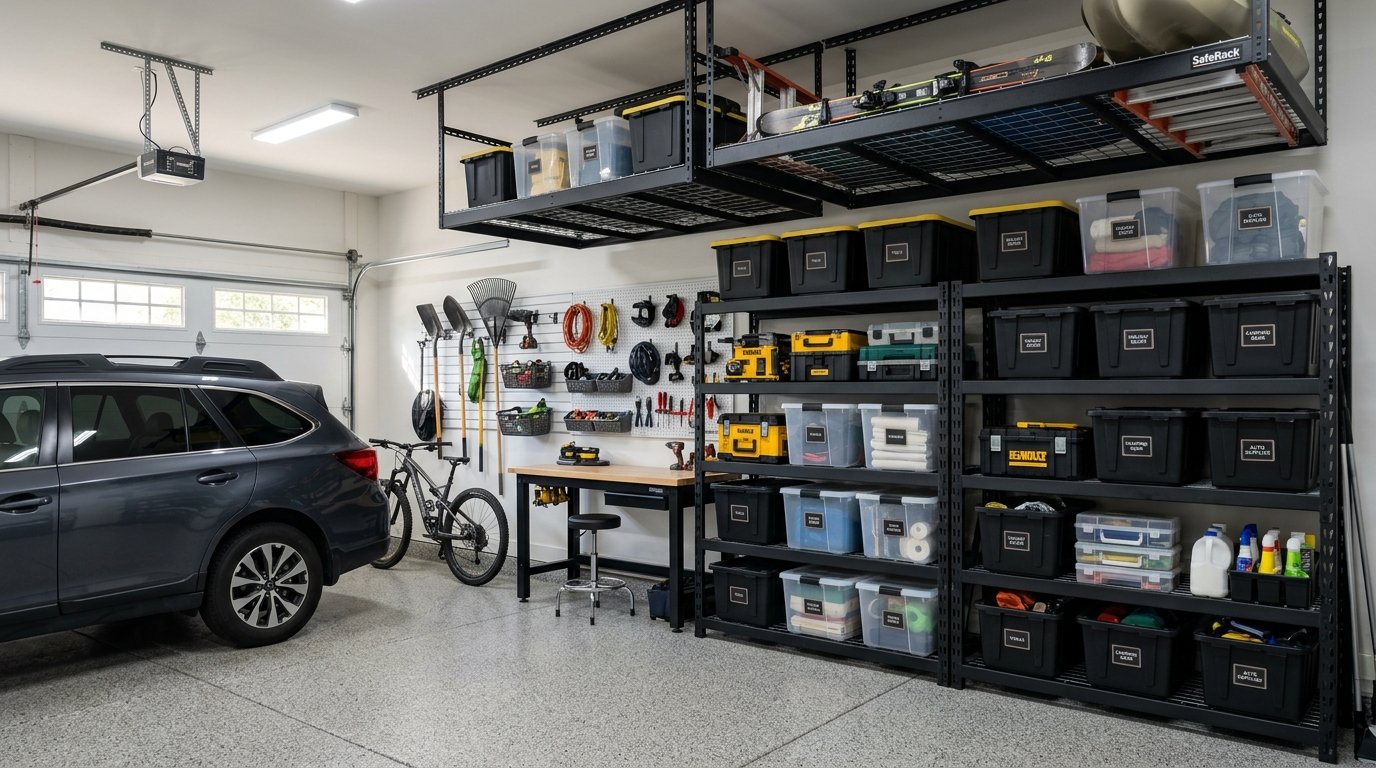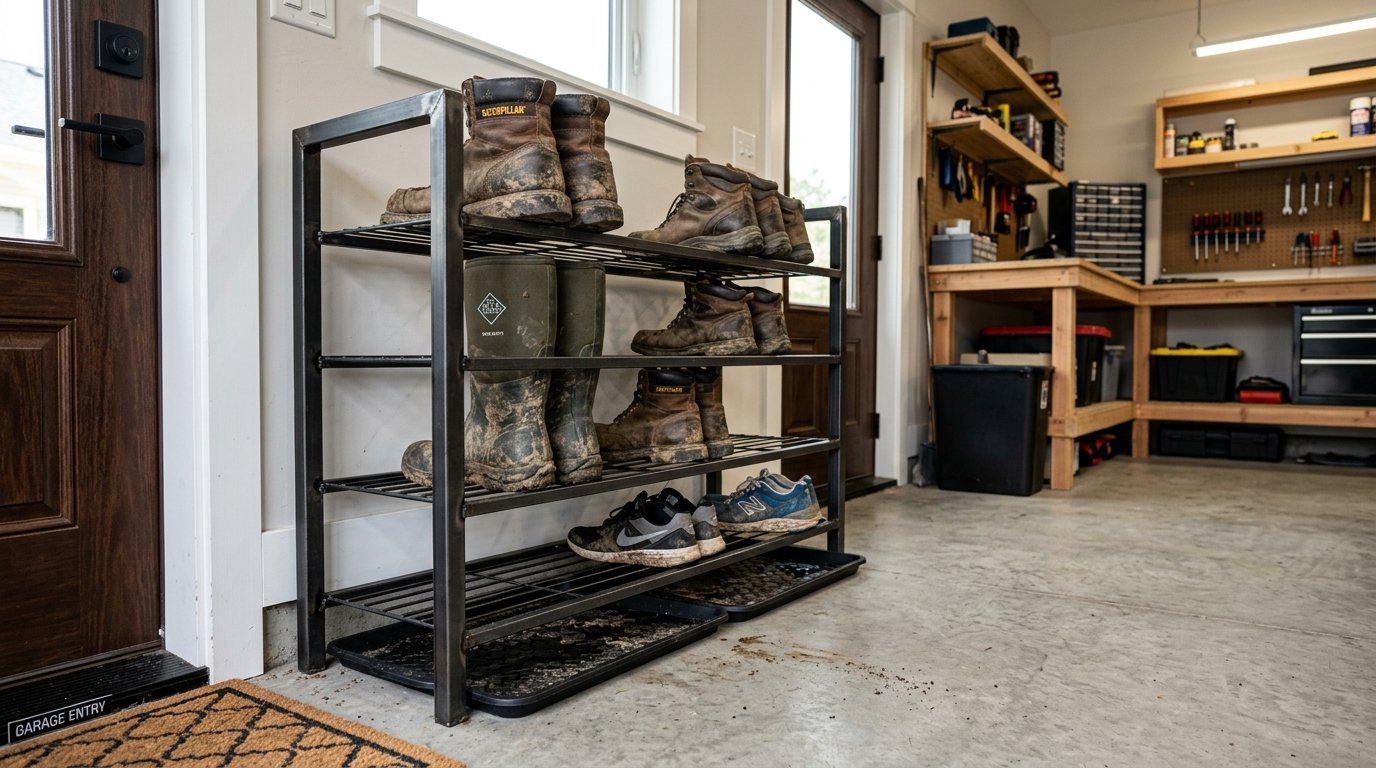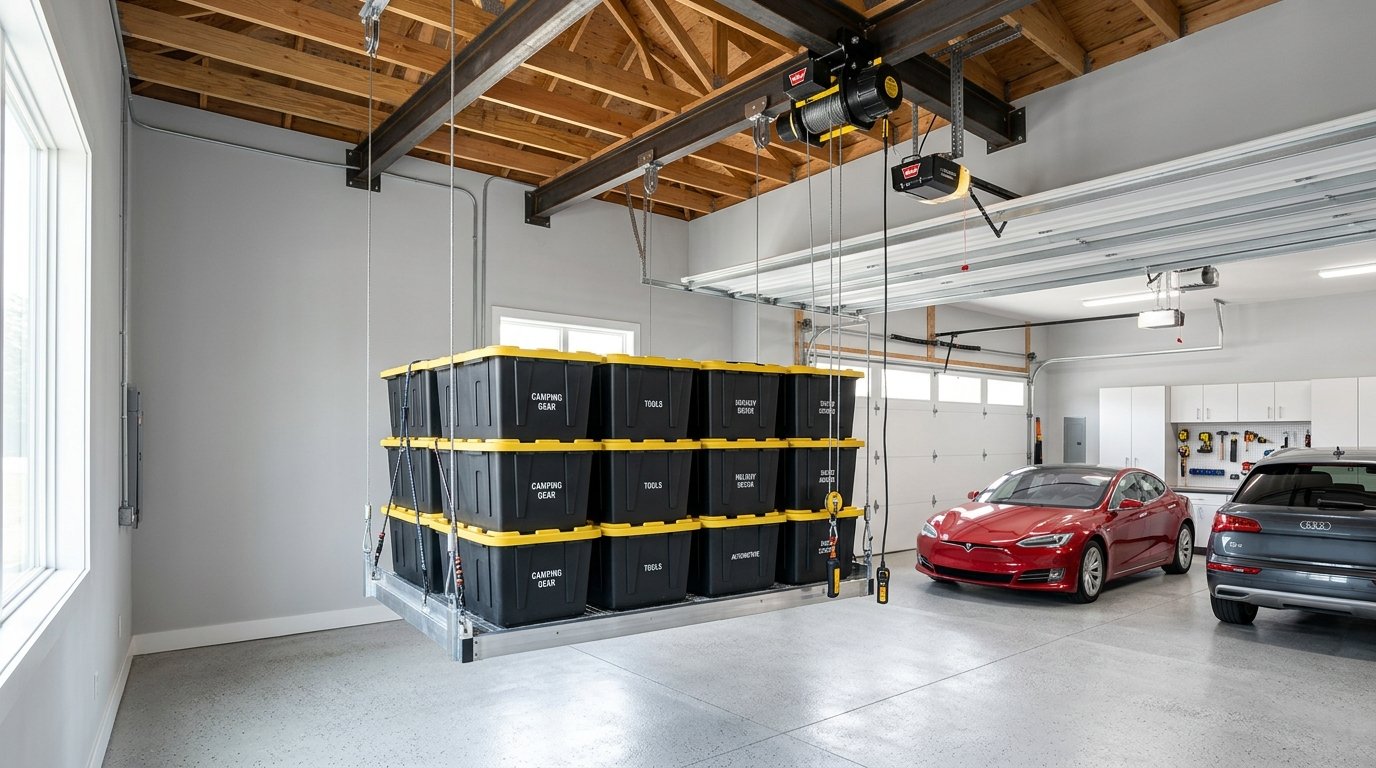
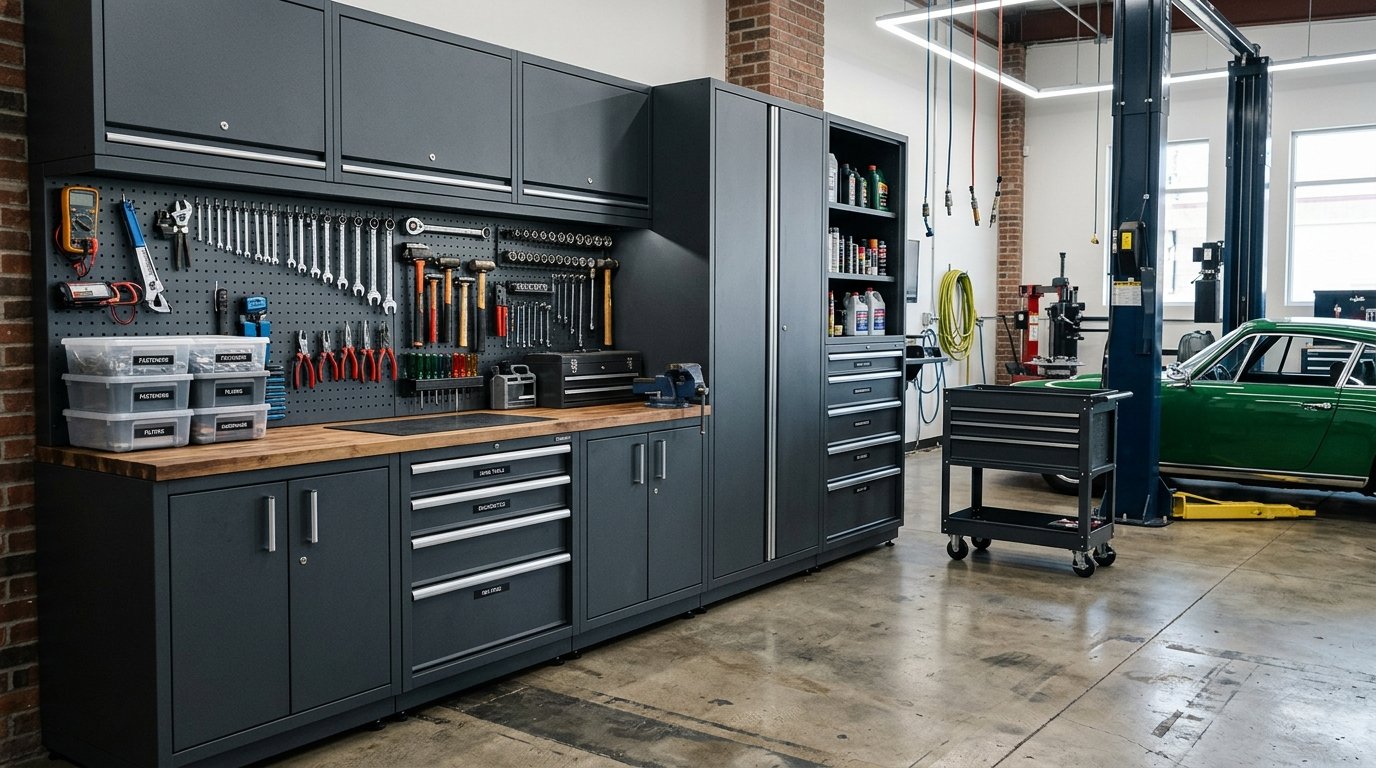
Garage hooks turn empty wall space into useful storage. They hold ladders, bikes, garden tools, hoses, cords, and bulky equipment off the floor. The right hook can also make your garage safer, since clear walkways reduce trips.
And keep sharp tools away from foot traffic.
Hook choice matters more than it may seem. A small S-hook can hold a hand tool, while a long steel ladder hook may need to support 100 pounds. The wall surface, fastener, hook length, and item shape all affect the safe load.
A hook that works well for a bicycle may fail when used for a leaf blower or extension ladder.
This guide explains the main garage hook styles, how much weight they can hold, and how to mount them correctly. You’ll also find practical spacing advice, torque examples, and storage tips for common garage items.
Quick Answer: Garage Hooks Weight Capacity & Installation
Heavy-duty garage hooks support 50 to 100 lb per hook when secured into 2×4 wall studs with 2.5-inch lag screws, compared to only 15 to 30 lb in hollow drywall. Use 10-to-12 inch ladder hooks for extension ladders, rubber-coated vertical hooks spaced 14 inches apart for bikes, and double J-hooks for power trimmers. Always anchor deep cantilever hooks into solid wood studs to avoid wall blowout.
Key Takeaways
- Stud Mounting Physics: Lag screws driven into 2×4 studs hold 100 lb; drywall anchors fail under rotational cantilever torque.
- Rubber-Dipped Coating: Heavy non-slip PVC or rubber coating protects bicycle rims and tool handles from scratches.
- Vertical Bike Spacing: Stagger vertical bike hooks 14 inches apart to keep handlebars from tangling together.
- Ladder Hook Reach: Long 12-inch reach hooks safely cradle bulky extension ladders and folding sawhorses.
How Garage Hooks Support Weight
A garage hook’s rating depends on the full installation, not just the metal arm. You need to check four parts:
- The hook’s steel diameter and weld quality
- The wall material behind the hook
- The screw type, length, and embedment
- The distance the load sits from the wall
Wood studs provide the strongest common mounting point in a finished garage. Standard studs are usually placed 16 inches on center. A 2 to 2.5-inch lag screw driven into the center of a stud gives a hook a firm base.
Many heavy-duty garage hooks can support 50 to 100 pounds per hook in this setup,. But you should still follow the product rating.
Hollow drywall is a poor choice for long-arm hooks. Plastic anchors may support 15 to 30 pounds in a light, close-to-wall application. That rating drops when the load hangs several inches out from the surface.
A ladder hook creates a twisting force that can crush the drywall core or pull the anchor out.
For example, a 10-pound ladder placed 12 inches from the wall creates 120 pound-inches of torque. That force acts on the screw and the drywall around the anchor. The ladder may seem light, yet the long arm makes the mounting points work much harder than a small tool hanging close to the wall.
Common Garage Hook Styles
Heavy-Duty Ladder Hooks
Ladder hooks use a long arm and a broad cradle. Most useful models have a 10 to 12-inch reach and a tubular steel frame. The extra reach gives an extension ladder room to sit above the floor, while the curved.
Or covered cradle helps prevent sliding.
Mount ladder hooks directly into wall studs. Use two hooks for a long extension ladder, with the hooks placed far enough apart to support both rails. Measure the ladder first, then mark mounting points that avoid hinges, locks, and other wall hardware.
These hooks also work for folding sawhorses, step stools, long levels, and narrow sections of pipe. Keep the load balanced. An uneven ladder can roll or place extra force on one hook.
Rubber-Coated Bike Hooks
Bike hooks come in vertical and horizontal styles. A vertical hook holds a bicycle by one wheel, which saves floor space. A horizontal model supports the frame and keeps the bike closer to the wall.
Choose a hook with a thick rubber or PVC coating. Bare steel can scratch a rim, damage a painted frame, or leave marks on tool handles. The coating also adds grip, which helps keep the wheel from slipping during storage.
For several bikes, stagger vertical hooks 14 inches apart. Place one hook higher and the next lower so handlebars don’t collide. Check the ceiling height before mounting.
A bike stored vertically may need more than 80 inches of clear space, depending on its wheel size.
Double Utility J-Hooks
Double J-hooks have two curved arms on one mounting plate. They’re useful for weed eaters, leaf blowers, hoses, extension cords, and long-handled garden tools. The two arms spread the load and give you separate storage points.
Look for a steel hook with a welded backplate and a non-slip coating. A wide opening works well for coiled hoses and thick cords. A narrow opening holds tool handles more securely.
Don’t force a large item onto a small hook, since that can bend the arm or damage the coating.
S-Hooks and Utility Hooks
S-hooks are simple, movable, and useful for light storage. You can hang buckets, garden baskets, small hand tools, and bins from a rail or overhead rack. They’re also handy when you need to remove an item often.
Check the wire thickness and end shape before loading an S-hook. A thin wire hook may twist under a heavy bucket. Choose a closed or deep curve for items that may swing when bumped.
Slatwall and Track Hooks
Slatwall and track-compatible hooks attach to a horizontal storage panel or steel rail. They’re a good choice when you want to move storage without drilling new holes. Locking tabs or retaining clips help keep the hooks in place when you remove equipment.
Some steel rail systems support loads up to 400 pounds when the weight is distributed across the rail. And the rail is mounted correctly. That rating doesn’t mean one small hook can carry 400 pounds.
Check the rail, hook, fastener, and wall capacity as separate limits.
Garage Hook Comparison
| Hook Type & Style | Arm Reach / Material | Stud Weight Capacity | Best Hanging Storage Use |
|---|---|---|---|
| Heavy-Duty Ladder Hooks | 10 to 12-inch reach / tubular steel | 60 to 100 lb per hook | Extension ladders, step stools, folding sawhorses |
| Rubber-Coated Bike Hooks | Vertical / horizontal vinyl dipped | 40 to 60 lb per hook | Mountain bikes, road bikes, kid bicycles |
| Double Utility J-Hooks | 5 to 8-inch dual prong steel | 50 to 80 lb per hook | Weed eaters, leaf blowers, garden hoses, extension cords |
Drywall, Studs, and Steel Rails
Mounting Into Wood Studs
Stud mounting is the first choice for heavy garage hooks. Use a stud finder, then confirm the location with a small pilot hole. Mark the center of the stud, not its edge.
Driving a lag screw too close to the edge can split the wood or reduce holding strength.
For many hooks, a 2 to 2.5-inch lag screw gives enough length to pass through the mounting plate. And drywall, then enter the stud. The screw should bite deeply into solid wood.
Don’t count the drywall thickness as useful structural support.
If the hook has two mounting holes, use both. Two fasteners resist twisting better than one. Hold the plate level, drill pilot holes sized for the screw core,.
And tighten the screws until the plate sits firmly. Don’t overtighten, since crushed wood fibers can weaken the connection.
Using Drywall Anchors
Drywall anchors can work for lightweight items that sit close to the wall. They’re a poor match for ladders, bikes, power equipment, and other loads that pull or twist. Toggle anchors may have a higher straight-pull rating, but a long hook still places rotational force on the wall.
If no stud is available, mount a plywood backer board across two or more studs. Attach the board with lag screws, then attach the garage hooks to the board. This spreads the load and gives you more freedom to position the hooks.
Installing Hooks on Steel Rails
Steel rail systems need solid wall mounting at every required rail point. Follow the rail maker’s spacing and fastener directions. A rail can carry a large distributed load, but its total rating depends on the wall, fasteners, rail length,.
And load placement.
Keep heavy items near the rail’s strongest mounting points. Don’t place every heavy tool at one end. Spread the weight across the system and inspect the rail for movement after loading it.

How to Install Garage Hooks
- Plan the storage zone: Measure the item, its handle, and the space needed to remove it safely.
- Locate studs: Mark stud centers with painter’s tape or a pencil.
- Check clearances: Look for wiring, plumbing, doors, and garage door hardware before drilling.
- Choose fasteners: Use lag screws for studs and the anchor type listed by the hook maker for light loads.
- Drill pilot holes: Use the correct bit size and drill straight into the stud.
- Attach the hook: Use every mounting hole supplied with the hook.
- Test gradually: Apply light pressure first, then add the stored item while watching for movement.
Wear eye protection when drilling. Keep ladders and bikes low enough for safe removal. If a hook bends, a screw backs out, or the wall cracks, unload it immediately and fix the mounting point.
For storage planning across several wall sections, see this garage tool storage systems guide. It can help you match hook locations with cabinets, rails, shelves, and work areas.
Garage Hook Placement Tips
Put frequently used items between waist and shoulder height. Store seasonal equipment higher, provided you can remove it without climbing onto an unstable object. Keep sharp tools away from vehicle doors and walking paths.
Leave enough room around every item. A bicycle needs space for handlebars, pedals, and tires. A ladder needs room to pivot off the hook.
A coiled hose needs a hook opening wide enough for easy removal.
Group items by task. Place trimmers, blowers, and extension cords near the garage door. Keep bike hooks near a repair area.
Store ladders close to other project equipment. Grouping cuts down on searching and keeps tools from being placed on the floor.
For a larger storage plan, read the best garage storage systems guide.
Protecting Hooks From Rust and Wear
Humid garages can cause bare steel to rust, especially near exterior doors or concrete floors. Powder-coated steel adds a protective finish and helps the hook last longer. Look for smooth coverage around the mounting plate and welds.
Dual or triple weld points can add strength at high-stress joints. Inspect the welds for gaps, sharp edges, or visible cracking. A rubber or PVC dip should cover the contact area fully, with no exposed steel where the item rests.
Clean hooks with a dry or slightly damp cloth. Don’t leave wet hoses, muddy tools, or snow-covered equipment hanging on a steel hook for long periods. Dry the item first when possible.
For general storage design and load practices, review the Material Handling Institute technical standards. For workplace storage guidance, see the OSHA material storage safety standards.
Frequently Asked Questions
How much weight can heavy duty garage hooks hold?
Heavy-duty garage hooks commonly hold 50 to 100 pounds per hook when lag screws are driven into solid 2×4 studs. Drywall anchors may support only 15 to 30 pounds,. And that figure can fall when the hook has a long arm.
Steel rail systems may support up to 400 pounds as a distributed system,. But one hook won’t carry the full rail rating. Check the maker’s rating and count the wall and fastener limits.
How do you hang heavy extension ladders on a garage wall?
Use two 10 to 12-inch ladder hooks mounted directly into wall studs. Place the hooks under the ladder’s rails, keep them level, and spread them far enough apart to prevent bending. Use lag screws that enter the studs by about 2 inches after passing through the hook plate and drywall.
Don’t mount a heavy ladder hook only in hollow drywall.
What is the best way to hang bicycles with garage hooks?
Use rubber-coated vertical bike hooks when floor space matters. Hang each bicycle by one wheel, and stagger hooks 14 inches apart vertically so the handlebars don’t collide. Use horizontal hooks for a bike that needs frame support or for a lower mounting position.
Confirm that the hook coating is thick enough to protect rims. And that the fastener enters a stud or an approved rail.
Can heavy garage hooks damage drywall without studs?
Yes. A long hook creates torque as the load sits farther from the wall. A 10-pound item on a 12-inch hook creates about 120 pound-inches of torque, which can crush drywall.
Or pull out an anchor. Mount heavy garage hooks in studs, or install a plywood backer across studs before attaching the hooks. Watch for cracks, loose plates, and crushed drywall around the fasteners.
Final Buying Checklist
Before buying garage hooks, match the hook to the item and the wall. Choose tubular or solid heavy-gauge steel for ladders and powered equipment. Look for a rubber or PVC coating when the hook will touch bike rims, painted frames, or finished tool handles.
Choose powder-coated steel for damp garage conditions.
- Check the loaded weight, not just the empty item weight.
- Measure the hook reach and the item’s distance from the wall.
- Use two hooks for long or flexible items.
- Mount heavy hooks into studs or a properly fixed rail.
- Use every supplied mounting hole.
- Leave room to remove each item without striking nearby storage.
- Inspect hooks and fasteners at least twice a year.
With the right hook style and a sound mounting point, you can move. Bulky gear off the floor and make better use of your garage walls. Start with the heaviest items, mark the studs, and build the storage layout around safe access.

Callum Langham
Founder & Technical Storage Editor
Callum Langham is the founder and technical editor of Rack System. With over 12 years of hands-on field experience in warehouse logistics, garage organization, and industrial storage installations, Callum specializes in engineering safety standards, beam load calculations, and OSHA/RMI compliance. Every guide on Rack System is audited against verified steel gauge tolerances and municipal building codes.