A garage storage system should make your space safer, easier to use, and quicker to clean. The right setup keeps tools off the floor, protects seasonal items, and gives every box a clear home. The wrong setup can waste money, block your car, or fail under a heavy load.
This garage storage buying guide covers the main choices, from steel shelving and cabinets to wall storage and ceiling racks. You’ll learn how to measure your garage, check load ratings, compare materials, and plan storage around the items you own. Use these steps before you buy, and you’ll avoid many common mistakes.

Start With a Garage Storage Plan
Before you shop, clear enough space to see the garage floor, walls, and ceiling. Group your items by use. Put daily tools in one group, car supplies in another, and seasonal items in a third group.
This simple step helps you pick storage that matches your habits.
Make a list of large or heavy items first. Common examples include lawn equipment, tool chests, paint cans, power tools, tires, coolers, and storage totes. Write down an estimated weight for each group.
You don’t need exact numbers at this stage,. But rough figures will help you avoid buying shelves that are too light.
Next, mark the space needed for your vehicle, workbench, doors, and walking paths. Leave room to open car doors and reach utility panels. Keep access to the water heater, electrical panel, furnace, and garage door equipment clear.
Storage should improve the room, not make basic maintenance harder.
Measure Before You Buy
Measure the full width, depth, and height of the garage. Then measure the space available beside and in front of your car. Note low beams, ductwork, door tracks, windows, outlets, and wall switches.
For floor shelving, measure the clear wall length and the distance from the wall to the car. A shelf that’s 24 inches deep may fit against a wall,. But it can make a narrow parking bay hard to use.
For ceiling storage, measure from the ceiling to the garage door track when the door is open. This check helps you avoid buying a rack that blocks the door.
Use painter’s tape on the floor to mark the proposed footprint. Park your vehicle inside the taped area and open the doors. Walk around it with a full box in your hands.
If the path feels tight now, storage will make it worse.
Choose the Right Storage Type
Each storage type solves a different problem. Floor shelving gives quick access and holds heavy loads. Cabinets protect items from dust and hide clutter.
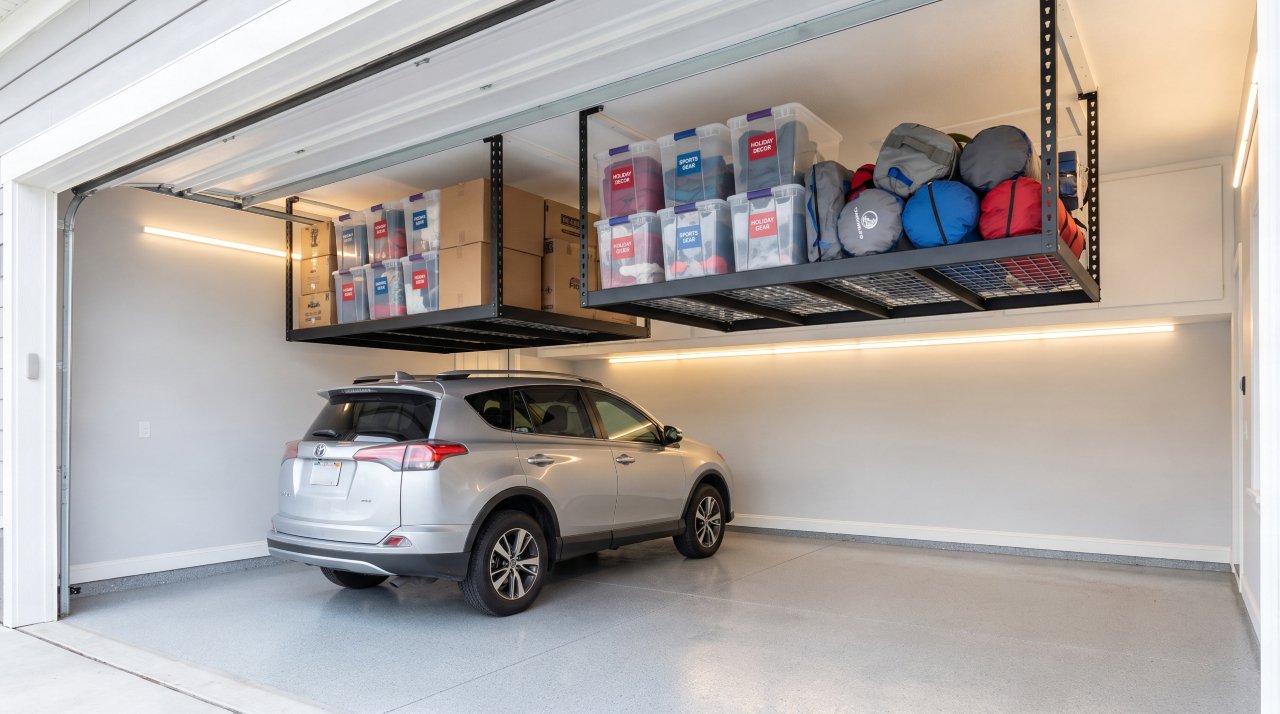
Wall systems save floor space and work well for tools. Ceiling racks store items you use only a few times each year.
| Storage Type | Width / Depth Options | UDL Load Capacity | Stored items |
|---|---|---|---|
| Steel Shelving Unit | 36 to 48 in W, 18 to 24 in D | 800 to 1,500 lb per unit | Heavy totes, toolboxes, liquids |
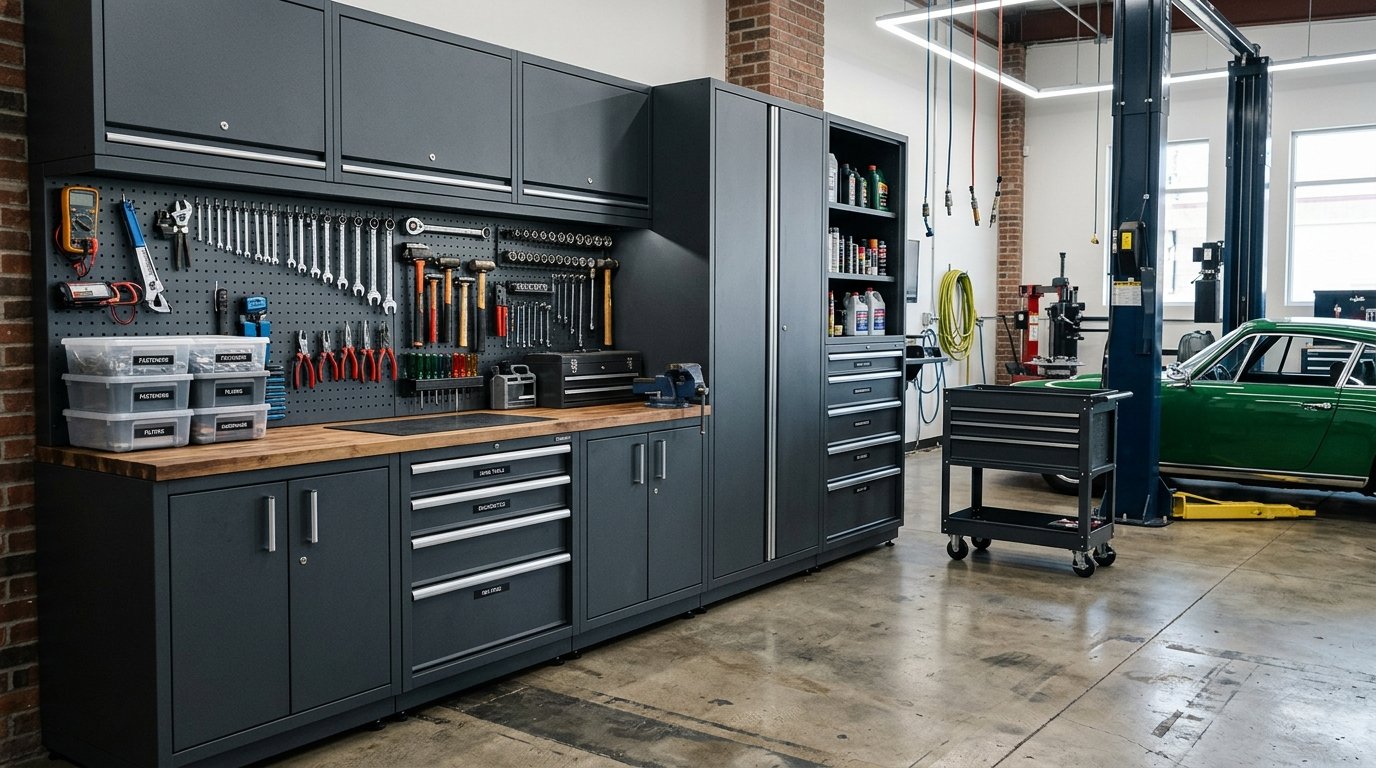
| Wall Cabinet Set | 30 to 36 in W, 12 to 18 in D | 200 to 400 lb per unit | Valuable tools, chemicals, spray cans |
| Ceiling-Mount Rack | 4×8 ft or 4×4 ft grids | 300 to 600 lb per unit | Seasonal tires, holiday bins, skis |
Steel Shelving Units
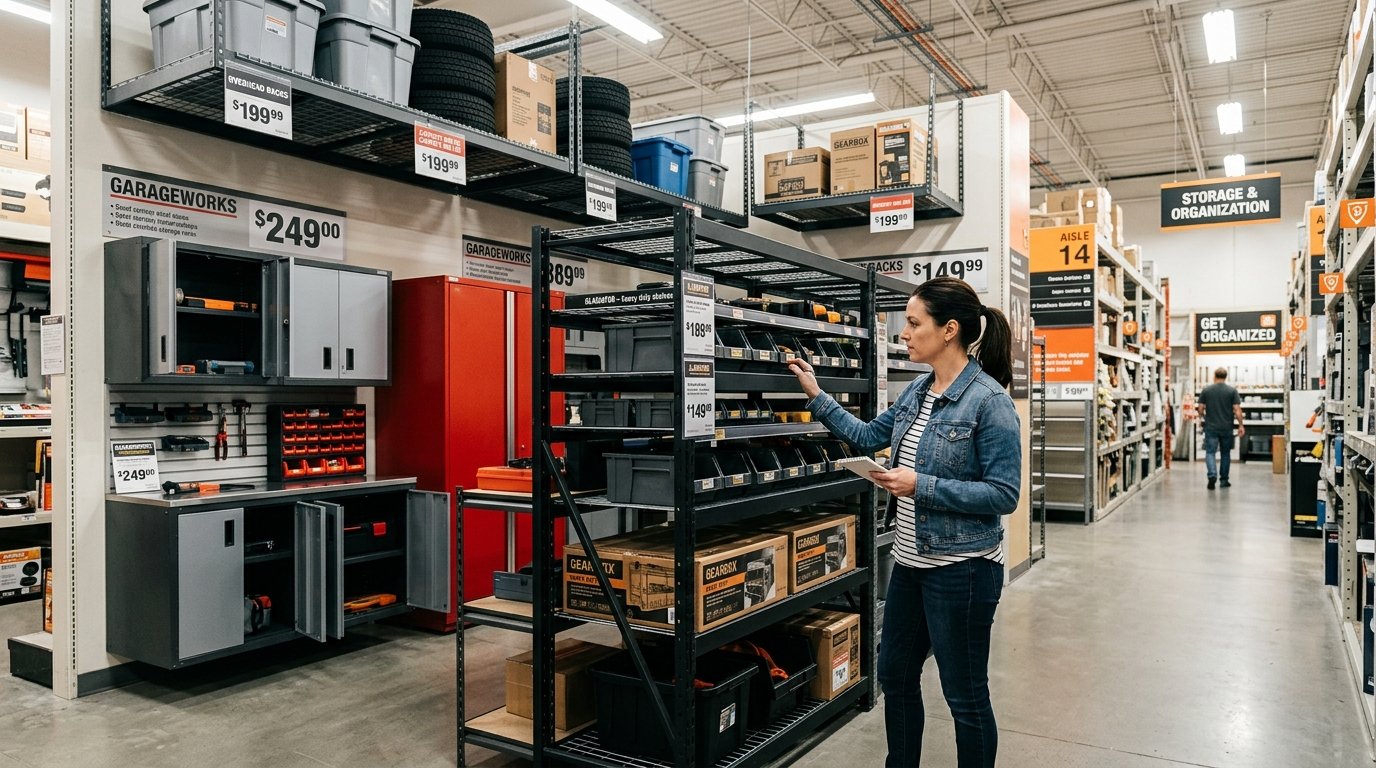
Steel shelving is a strong choice for heavy containers, toolboxes, automotive fluids, and workshop equipment. Look for adjustable beams, steel posts, and shelves that don’t flex under load. Rivet, boltless, and clip-in designs can all work well when they’re built for garage use.
Check the load rating for each shelf and for the full unit. A rating of 1,000 pounds per unit doesn’t mean you can place 1,000 pounds on one shelf. The manufacturer may rate each level at 200 pounds, with the full frame rated at 1,000 pounds.
Check how the rating was tested. UDL means evenly distributed load. A shelf rated for 500 pounds under UDL may struggle with one very heavy machine placed at the center.
Or near one post. Spread heavy items across the shelf, keep the load centered, and put the heaviest goods on the bottom level.
For more details on frame strength, shelf design, and garage placement, see these heavy-duty storage racks.
Wall Cabinets
Wall cabinets are useful for smaller tools, car care products, fasteners, and items you want to keep away from children. Steel cabinets protect contents from dust better than open shelves. Lockable doors add control when the garage contains chemicals or costly equipment.
Check the cabinet’s mounting system before you buy. A full cabinet can become very heavy once you add tools and bottles. It needs to attach to wall studs or to a properly installed structural rail.
Drywall anchors alone aren’t suitable for a heavily loaded cabinet.
Measure the door swing and handle depth. A cabinet may fit on the wall. But still block a light switch or make it hard to use a nearby workbench.
Leave enough space below the cabinet for the tallest item on your bench.
Wall Rails and Pegboards
Wall rails and pegboards work well for hand tools, cords, garden tools, and small bins. They keep frequently used items visible and easy to reach. Use hooks made for the panel system, and check the weight limit for each hook and the full panel.
Place daily-use tools between waist and shoulder height. Store sharp tools with blades facing down or inside protective covers. Put long-handled tools in a side rack so they don’t fall across a walkway.
Wall storage is best for light and medium loads. It isn’t a replacement for a floor rack when you’re storing dense items such as bricks, engine parts,. Or full paint cans.
Ceiling-Mount Racks
Ceiling racks free up floor space for cars, bikes, and work areas. They’re a strong fit for holiday decorations, camping gear, spare tires,. And other items you use a few times each year.
A 4×8-foot platform can hold many large bins,. But the rack must attach to ceiling joists or another approved structural point.
Find the joist direction before drilling. Use the supplied hardware or hardware approved by the manufacturer. Don’t attach a loaded rack to drywall, thin paneling, or a ceiling surface without a structural connection.
Keep the lowest part of the rack clear of the garage door’s moving path. Test the door several times after installation. You also need enough clearance to lift bins on.
And off the platform without hitting the door, opener, lights, or vehicle roof.
If this option suits your storage plan, review this guide to overhead rack garage storage.
Check Load Ratings the Right Way
Load ratings are one of the most important parts of a garage storage purchase. Start by adding the weight of the items you plan to store. Add a safety margin, since you’ll likely add more items later.
Look for four separate ratings:
- Per shelf: The maximum load for one shelf.
- Per unit: The maximum combined load for the full rack or cabinet.
- Per bracket or hook: The limit for wall-mounted parts.
- Ceiling connection: The approved load for the rack and its mounting points.
Keep loads balanced from left to right and front to back. Don’t place a heavy box on a shelf that has a. Large gap beneath it unless the frame is designed for that layout.
Inspect shelves after installation. Bent beams, loose connectors, cracked welds, and leaning posts are warning signs.
Use a rack with a higher rating than your current need. For example, if your stored items total 650 pounds, a unit rated at 800 pounds may work,. But a 1,000-pound unit gives you more room for future use.
Never exceed the manufacturer’s stated limit.
Pick Materials for Garage Conditions
Garages can be damp, dusty, hot, and cold. Material choice affects how long your storage lasts.
Powder-Coated Steel
Powder-coated steel is common for shelving, cabinets, and wall systems. The finish helps resist scratches and light rust. Wipe spills quickly, especially water, salt, fertilizer, and automotive fluids.
Use shelf liners when storing bottles that may leak.
Galvanized Steel
Galvanized steel has a zinc coating that helps protect against corrosion. It can be a useful choice for damp garages or storage near an exterior door. Check the joints and cut edges, since exposed metal can still rust.
Plastic
Plastic bins resist moisture and are easy to clean. They work well for clothing, decorations, camping gear, and small parts. They don’t hold concentrated weight as well as steel,.
And some plastic can become brittle after long exposure to heat or sunlight.
Wood
Wood shelves can look good and may cost less, but they need solid framing and protection from moisture. Particleboard can swell after a leak. If you use wood, choose a suitable thickness, support long spans, and seal exposed edges.
Plan Safety and Access
A good storage system must stay stable during daily use. Anchor tall shelving to the wall when the manufacturer recommends it, especially in homes with children. Or in areas that may experience vibration.
Keep heavy objects low. Don’t store dense items on the top shelf where they can fall during removal.
Keep aisles at least wide enough for the work you do. A small hand tool area may need less space than a spot where you carry a snow blower. Or lawn mower.
Make sure boxes don’t extend into the vehicle path. Or sit beside a door where they can be kicked or struck.
Store flammable liquids in approved containers and keep them away from ignition sources. Follow the product label for paint, fuel, pesticides, and cleaners. Don’t place chemicals above eye level.
A leak from a high shelf can land on your face, tools, or electrical equipment.
Use the OSHA storage guidelines as a safety reference for stable stacks, clear aisles,. And safe material handling.
Compare Features Before Purchase
Price is just one part of the decision. Compare the full system, including posts, shelves, doors, brackets, anchors, and hardware. A low-cost rack may need extra parts before it can handle your load.
- Adjustability: Adjustable shelves let you fit tall bottles and short bins without wasted space.
- Assembly: Check the tool list, assembly time, and number of people needed.
- Anchoring: Confirm that wall or ceiling hardware is included and suited to your structure.
- Finish: Look for a coating that suits damp or dusty conditions.
- Replacement parts: Posts, beams, hooks, and shelves should be available later.
- Mobility: Locking casters can help in a workshop, but they reduce stability compared with fixed legs.
- Door clearance: Cabinet doors and drawers need room to open fully.
Browse Lowe’s garage storage options to compare common shelving, cabinets, hooks, and bin systems. Use product measurements and load data, not just product photos, to make your choice.
Build a Storage Layout That Works
Place storage by frequency of use. Keep daily tools near the workbench. Put car care items near the vehicle, but keep fluids in a secure, stable location.
Place seasonal bins on high shelves or ceiling racks. Store bulky lawn equipment on the floor where you can roll it out without moving several boxes first.
Use clear bins when you need to see contents quickly. Use matching bins when you want a neat stack and consistent shelf spacing. Label the front and top of each bin.
A label on the top won’t help when the box sits above your head. So use both locations for high shelves.
Leave some empty capacity. A shelf packed from edge to edge is hard to clean and hard to use. A small amount of open space lets you add new items without creating a second pile on the floor.
Use Zones and Labels
Divide the garage into simple zones:
- Vehicle zone: Jack, tire tools, wash supplies, and emergency gear.
- Workshop zone: Hand tools, fasteners, chargers, and spare parts.
- Garden zone: Hoses, pruners, soil, pots, and lawn equipment.
- Seasonal zone: Holiday bins, camping gear, fans, and winter items.
- Household zone: Bulk goods, cleaning supplies, and repair materials.
Keep each zone together when possible. You’ll spend less time searching, and other people in the home will know where items belong. If an item doesn’t have a clear zone, review if you still need it before buying more storage.
Set a Realistic Budget
Set a budget after you list the storage types and quantities you need. A single strong rack may serve you better than several small units with low load ratings. Add costs for anchors, labels, bins, liners, lighting, and installation tools.
Don’t cut costs on structural parts. You can save on labels or basic bins, but posts, beams, brackets,. And mounting hardware need to match the expected load.
If installation requires changes to the ceiling or wall, include professional help in the budget.
Buy in stages if needed. Start with the storage that removes the biggest safety problem, such as a leaning pile or blocked walkway. After using the first section for a few weeks, you’ll have a better idea of the bin sizes.
And shelf heights that suit your garage.
Garage Storage Buying Mistakes to Avoid
- Buying by size alone: A rack can fit the wall and still fail to hold your items safely.
- Ignoring the ceiling: Door tracks, lights, and open doors can limit overhead storage.
- Using drywall anchors for heavy loads: Heavy cabinets and racks need structural attachment.
- Putting all heavy items up high: High loads are harder and less safe to remove.
- Skipping a load plan: A shelf rating doesn’t replace a weight estimate.
- Blocking service equipment: Keep panels, heaters, and shutoffs accessible.
- Leaving no empty space: Packed shelves become hard to use and clean.
- Choosing a system with no spare parts: Future repairs become harder and more costly.
Frequently Asked Questions
What type of garage storage holds the most weight?
Heavy steel shelving usually holds the most weight for floor storage. Check the shelf rating, full-unit rating, frame design, and floor condition. Place dense items on lower shelves and spread the load across the full shelf surface.
How deep should garage shelves be?
Many garages work well with shelves from 18 to 24 inches deep. Use 18 inches for narrow spaces and smaller bins. Choose 24 inches for large totes or toolboxes, but confirm that the added depth won’t reduce vehicle or walkway clearance.
Can I install a ceiling rack in any garage?
No. The rack needs a suitable structural connection, enough ceiling height, and clear space around the garage door and opener. Find the joists, follow the manufacturer’s mounting instructions, and check the load rating before installation.
How much weight should I put on a garage shelf?
Stay below the shelf’s stated UDL rating, and follow the lower limit if the shelf has special placement rules. Spread items evenly, keep the frame level, and leave a safety margin for future additions. If the shelf bends or the connectors loosen, remove the load and inspect the unit.
Final Buying Checklist
Before placing your order, confirm the following:
- You measured the garage, vehicle space, doors, beams, and ceiling height.
- You listed the items to store and estimated their combined weight.
- You checked both shelf ratings and full-unit ratings.
- You selected materials suited to moisture, heat, and daily use.
- You planned anchors for tall shelving, cabinets, and ceiling racks.
- You left clear paths to doors, panels, equipment, and the vehicle.
- You chose bins, labels, and shelf heights that match your routine.
- You included installation hardware and accessories in the budget.
The best garage storage system fits the room, carries the load, and supports the way you use the space. Measure first, buy for the actual weight, and keep heavy or hazardous items low and secure. With a clear plan, you’ll gain useful floor space without creating new safety problems.

Callum Langham
Founder & Technical Storage Editor
Callum Langham is the founder and technical editor of Rack System. With over 12 years of hands-on field experience in warehouse logistics, garage organization, and industrial storage installations, Callum specializes in engineering safety standards, beam load calculations, and OSHA/RMI compliance. Every guide on Rack System is audited against verified steel gauge tolerances and municipal building codes.