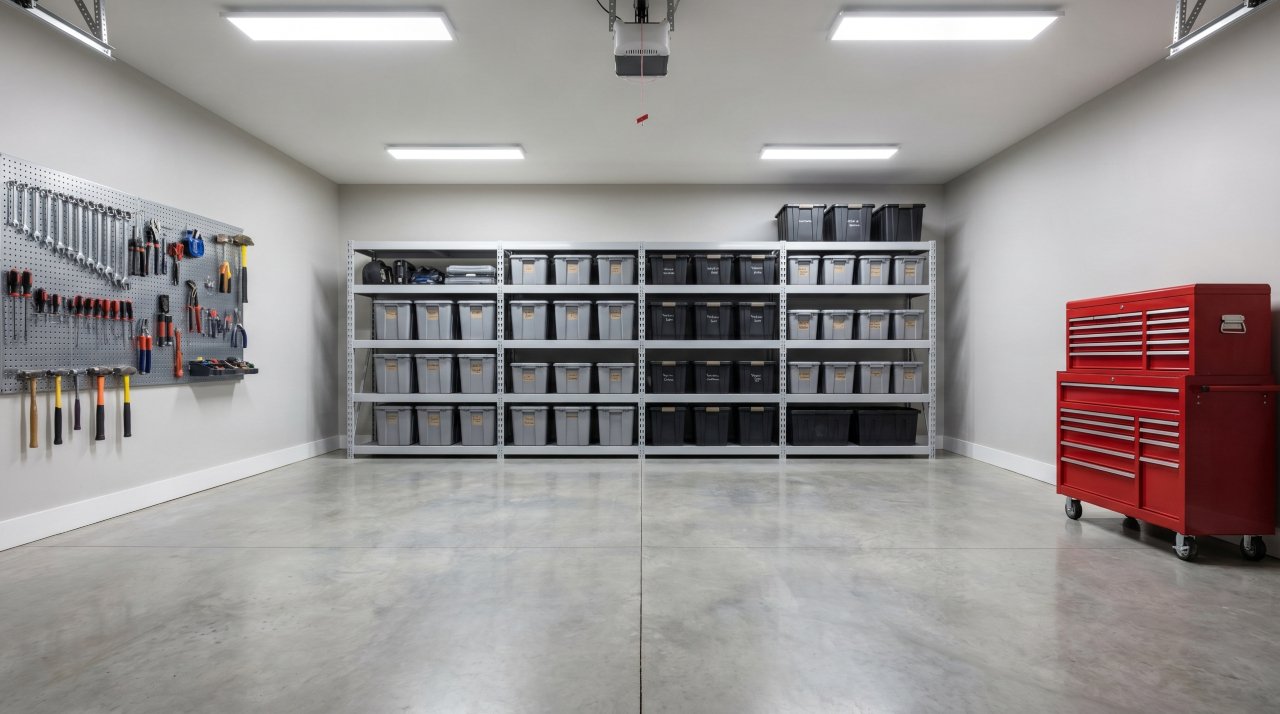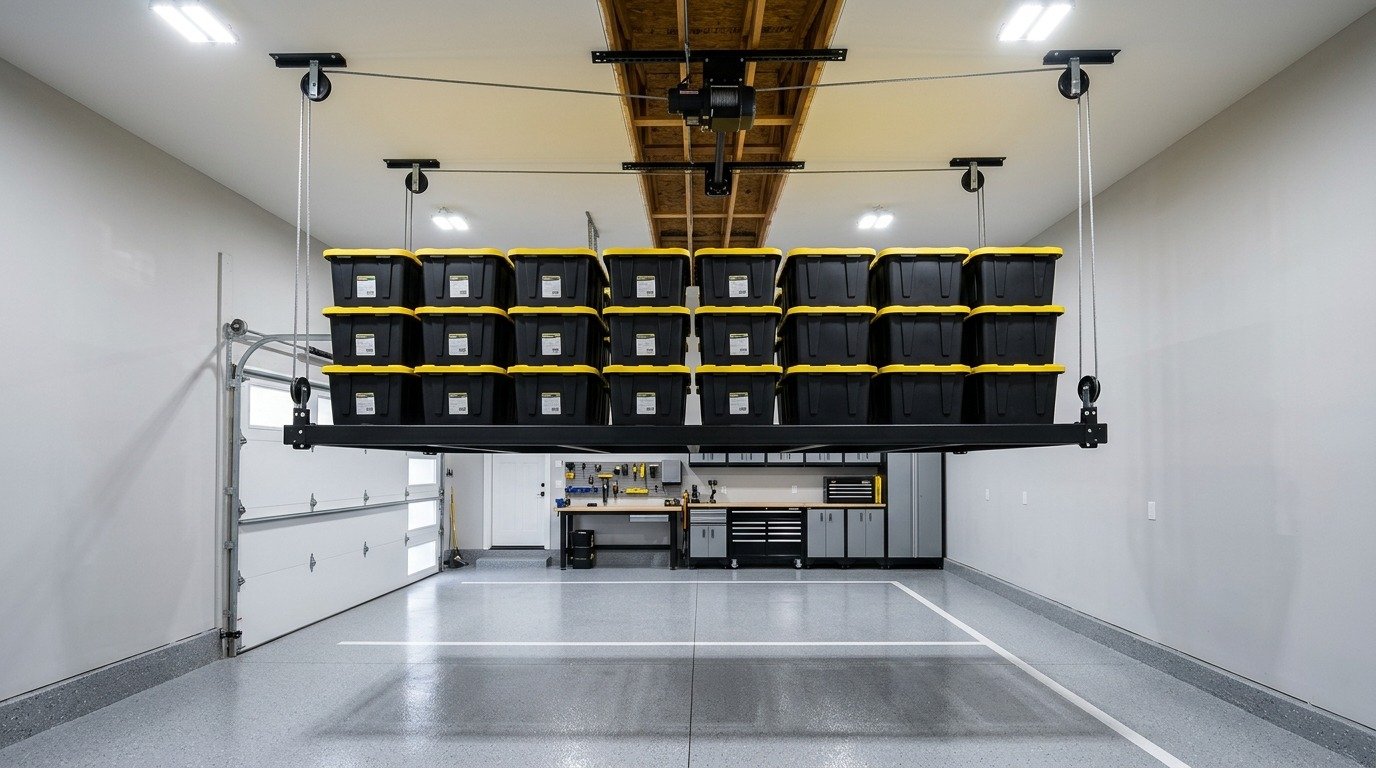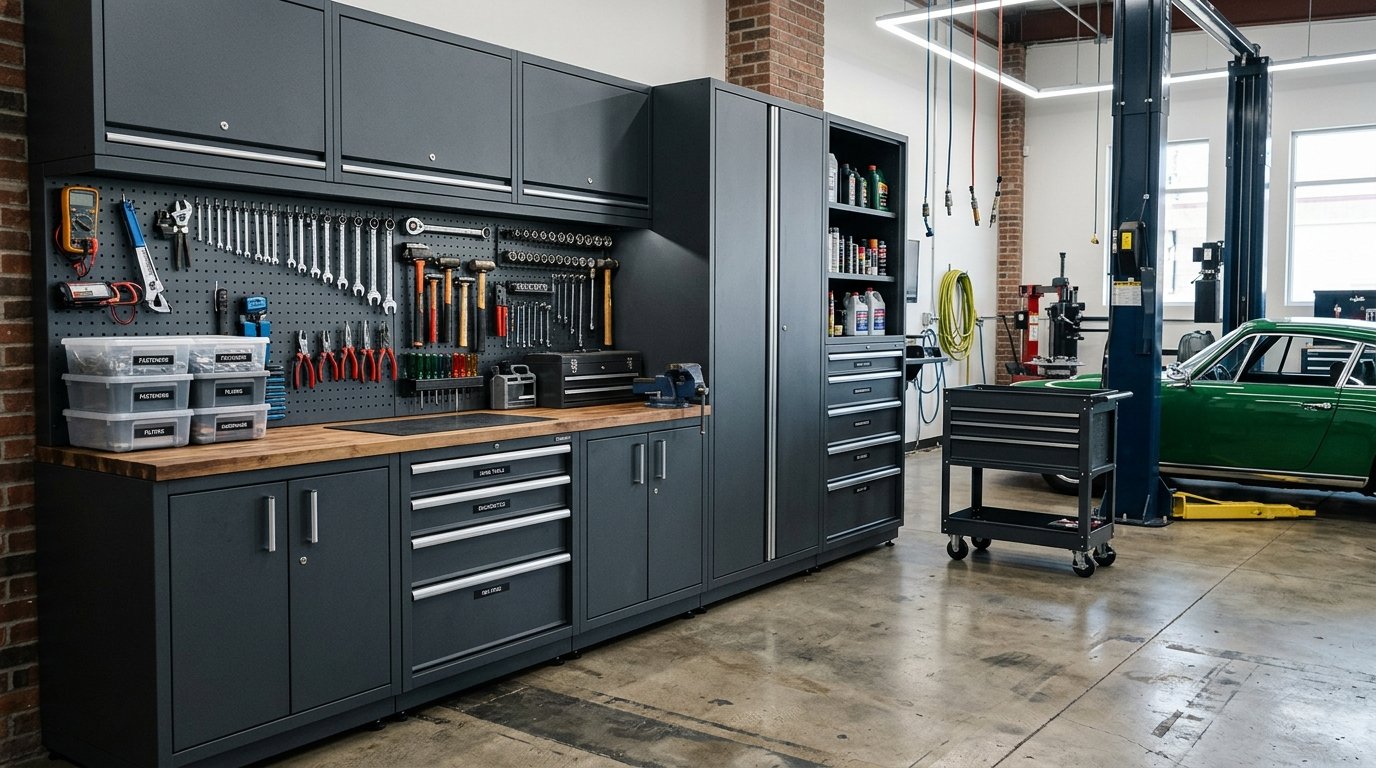
Good wall storage can turn a crowded garage into a working space. It gets totes, tools, ladders, and chemicals off the floor, while leaving room for vehicles and projects. The key is choosing a system that matches the load, shelf depth, wall framing, and access needs.
Heavy items need more than drywall anchors. A loaded shelf acts like a lever. Its weight pushes down at the front edge and pulls the top fastener away from the wall.
For this reason, strong brackets, proper shelf depth, and structural lag screws are central to a safe installation.
Quick Answer: How to Plan Garage Wall Storage
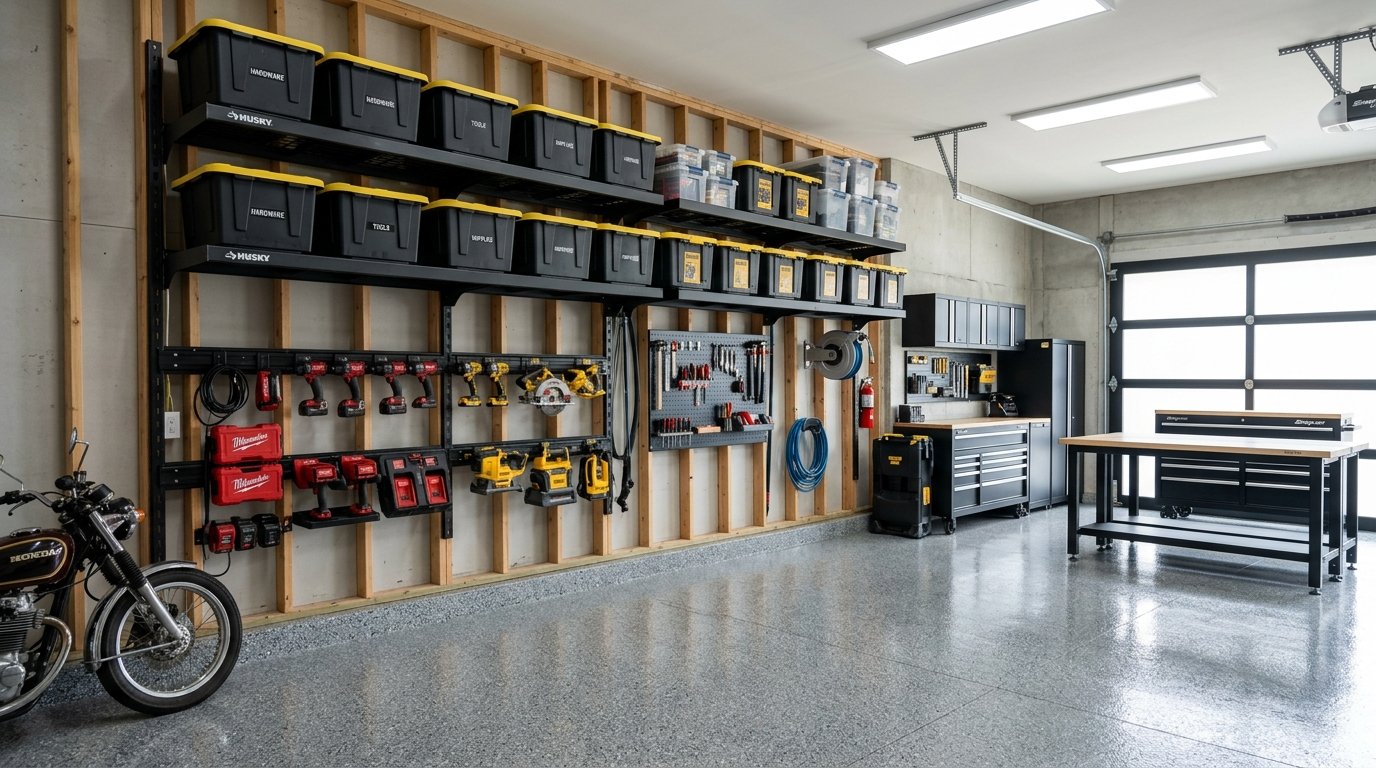
Heavy-duty garage wall storage relies on 18-inch shelf depths to fit standard 27-gallon plastic totes without creating excessive cantilever torque. Always anchor triangular gusset brackets into 16-inch on-center wall studs using 5/16-inch by 3-inch structural lag screws, which support 400 to 600 lb per shelf pair. Combine upper tote shelves with middle hanging track rails to keep garage floors completely clear.
Key Takeaways
- 18-Inch Depth Sweet Spot: Standard 27-gallon storage totes sit flush on 18-inch shelves without tipping forward.
- Stud Penetration Rule: Structural lag screws must penetrate at least 2 inches into solid wood 2×4 framing studs.
- Cantilever Tension Physics: The top mounting lag bolt absorbs outward pulling force, while the bracket bottom bears against the wall.
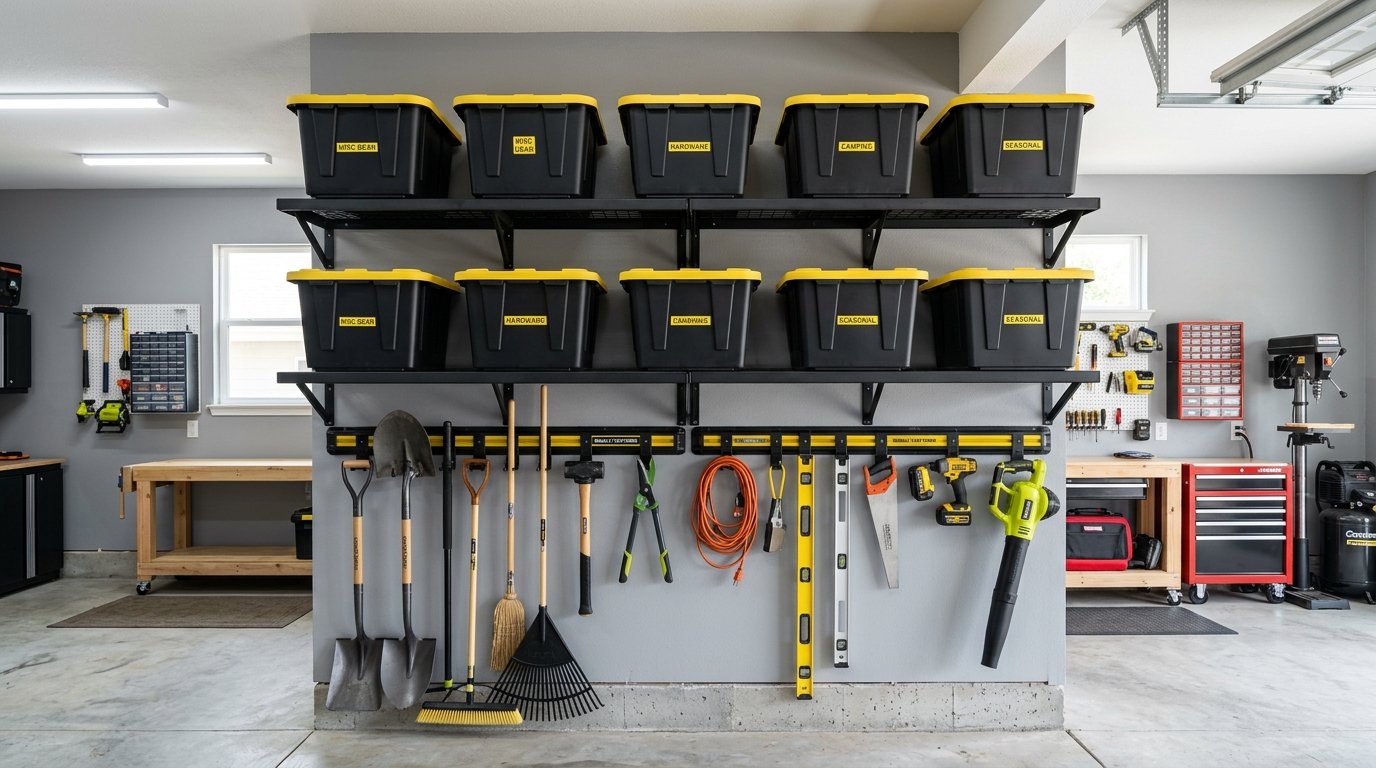
- Three-Tier Vertical Zoning: Position seasonal tote boxes on upper shelves, hand tools in the middle, and floor space open for parking.
Choose the Right Wall Storage System
Garage wall storage usually falls into four groups: cantilever shelves, wall track rails, slatwall panels, and steel cabinets. Each one handles a different job.
Gusseted Cantilever Shelves
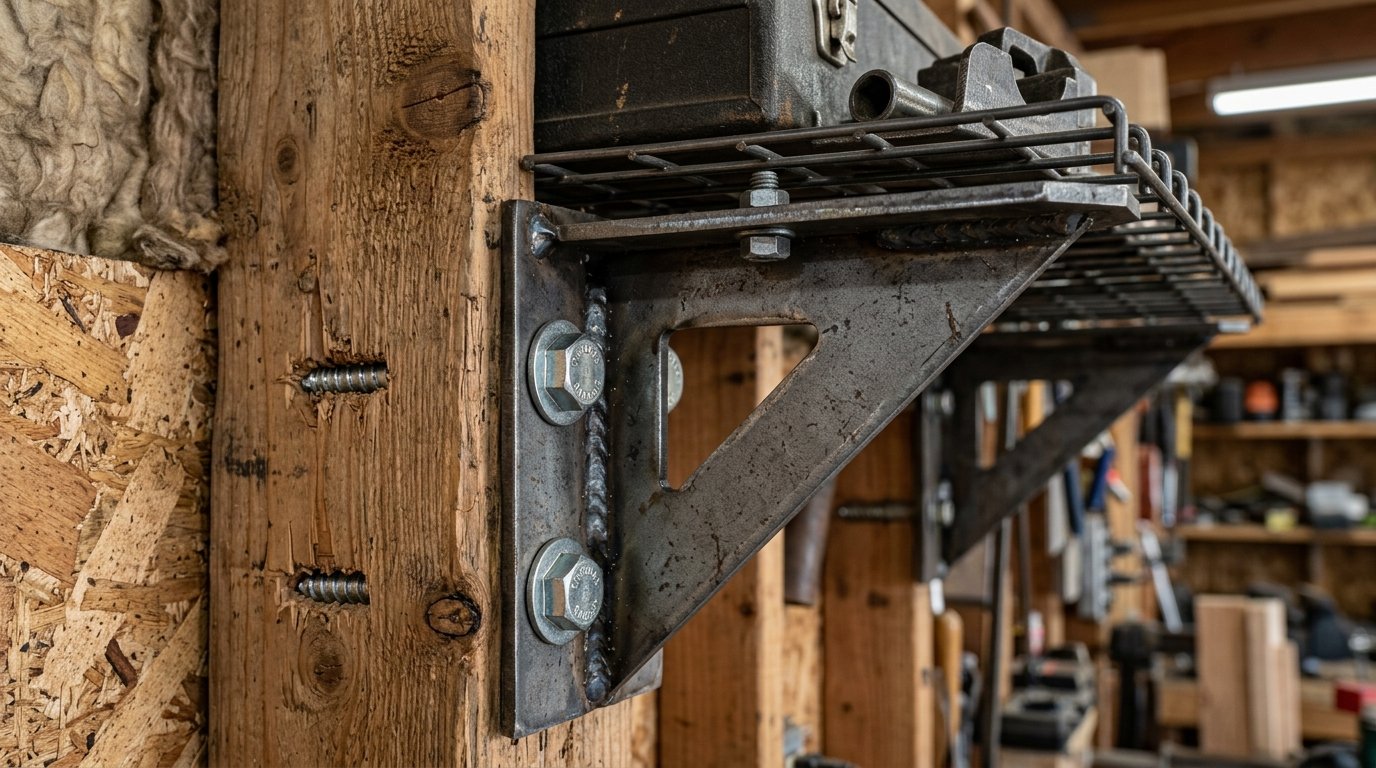
These shelves use triangular steel brackets fixed to wall studs. A gusset reinforces the corner, helping the bracket resist bending when the shelf carries heavy totes or toolboxes. Look for welded steel brackets with an integrated front safety lip.
The lip helps stop boxes from sliding during vibration or accidental contact.
For heavy loads, choose shelves that span two or more studs. A bracket fixed across a 16-inch or 24-inch stud pattern spreads force across several framing members. A single-stud mounting point carries more concentrated stress and can loosen sooner.
Horizontal Track Rails
Track rails use a horizontal metal rail fastened to studs. Hooks, baskets, tool holders, and shelves attach to the rail and can be moved later. This makes them useful for shovels, extension ladders, weed eaters, hoses, and other long equipment.
Rails work best for changing tool collections. They usually aren’t the first choice for dense rows of heavy storage. Totes unless the manufacturer gives a clear load rating for that use.
Check the rail, hook, fastener, and wall framing ratings as separate points.
Slatwall Panels
Cellular PVC slatwall gives the garage a finished appearance and accepts many hooks and baskets. It works well for hand tools, sports equipment, small bins, and medium loads. The panels still need secure attachment to studs or a properly built backing frame.
The panel itself can’t replace structural mounting.
Steel Wall Cabinets
Steel cabinets keep tools, paint sprays, chemicals, and small parts enclosed. They also reduce visual clutter and protect contents from casual contact. A cabinet needs direct support at the studs, especially when its load sits on shelves inside the box.
For cabinet gauge, mounting points, and sizing details, read this garage wall cabinets guide.
Wall Storage Comparison
| Wall Storage System | Bracket & Fastening Spec | Weight Capacity per Stud Run | Best Garage Storage Use |
|---|---|---|---|
| Gusseted Steel Cantilever Shelves | 14-gauge welded triangular brackets / 5/16″ x 3″ lag screws | 400 to 600 lb per shelf pair | 27-gallon tough totes, heavy tool boxes, automotive fluids |
| Horizontal Metal Wall Track Rails | Extruded aluminum rails / 1/4″ x 2.5″ lag screws | 300 to 1,000 lb per 4-foot rail | Extension ladders, weed eaters, shovels, garden hoses |
| Heavy-Duty Welded Wall Cabinets | 18 to 20-gauge cold-rolled steel / dual stud lag mounting | 200 to 350 lb total cabinet load | Lockable chemical storage, paint sprays, power tool kits |
These figures are planning ranges, not a substitute for the product rating. The wall material, stud condition, fastener spacing, shelf span, and load placement all affect the safe working load.
Plan Shelf Depth Around the Load
Shelf depth changes both storage space and mounting stress. A deeper shelf puts the load farther from the wall, increasing the lever effect on the brackets. And top lag screws.
Use 12 Inches for Small Items
A 12-inch shelf works for paint cans, oil jugs, compact tool cases, and small parts bins. It uses less wall projection, so it leaves more walking space and creates less. This depth also suits areas beside doors or near a vehicle’s mirrors.
Use 16 to 18 Inches for Totes
Most 27-gallon yellow and black storage totes need more than a shallow shelf. A 16-inch shelf can work, but the tote may overhang at the front or rear. That overhang shifts weight outside the bracket’s strongest support area.
An 18-inch shelf usually gives the tote base full support without adding the extra projection of a 24-inch shelf. The container sits flat, the lid remains accessible, and the front edge is less likely to receive excessive downward force. Keep a small amount of clearance at the sides so you can grip the tote.
Use 24 Inches with Extra Support
A 24-inch shelf is useful for large items on an upper perimeter shelf, but it creates much more. Use gusseted brackets and 45-degree diagonal support struts. Don’t use a deep shelf with light brackets or drywall anchors.
Place bulky items near the wall instead of at the front edge.
Mount Wall Storage to Studs
Find the stud pattern before buying the system. Residential garage walls commonly use studs at 16 inches or 24 inches on center. Use a stud finder, inspect exposed framing, or confirm locations with small test holes.
Mark the center of every stud with a vertical line.
For heavy shelves, use 5/16-inch or 1/4-inch structural wood lag screws. A 3-inch length often allows the screw to pass through the bracket, drywall, and any spacer before reaching the stud. Aim for at least 1.5 to 2 inches of thread engagement in solid wood.
Don’t count drywall as structural support.
Pre-drill with the bit size specified by the fastener maker. Keep the drill straight and place the screw in the center of the stud. Tighten the head firmly against the bracket, but don’t crush the drywall or strip the wood.
Plastic drywall anchors and light toggle anchors aren’t suitable for heavy cantilevered shelves. They may hold a light picture or small basket, but they don’t provide the stud engagement needed for loaded storage. A shelf can seem secure when empty and then pull loose after totes are added.
For more installation checks, see this wall mounted garage shelving guide.
How Cantilever Force Affects Shelves
A wall shelf carries more than simple downward weight. The shelf projects from the wall, so the load creates a turning force. A simple estimate is:
Moment = weight x distance from the wall
For example, 300 pounds placed 9 inches from the wall creates 2,700 inch-pounds of moment. If the same load sits 12 inches from the wall, the moment rises to 3,600 inch-pounds. The weight stayed the same, but the bracket and fasteners see one-third more turning force.
The top lag screw takes much of the outward pull. The lower part of the triangular bracket presses into the wall, creating a compression point. Drywall can act as a bearing surface at that lower point,.
But it can’t replace solid stud attachment at the top.
This is why deeper shelves need stronger brackets, closer fastener spacing, and careful load placement. Keep heavy items toward the back. Don’t stack dense boxes above the shelf’s front lip.
Build a Three-Tier Garage Layout
A vertical plan keeps the floor open without putting daily-use tools out of reach. Start by measuring the garage door, tracks, opener, lights, vehicle hood, and walking paths. Mark the usable wall area with painter’s tape.
Lower Tier: Heavy and Occasional Items
Use the lower zone for heavy toolboxes, automotive fluids, compressors, and items that would be unsafe to lift overhead. Keep shelves high enough to allow floor cleaning and low enough for safe lifting. Don’t place chemical containers where a vehicle door can hit them.
Middle Tier: Daily-Use Tools
Place the most-used tools between waist and shoulder height. Track rails, hooks, shallow shelves, and small cabinets work well here. Group tools by task, such as lawn care, vehicle work, and household repairs.
Leave enough space between hooks so handles don’t tangle.
Upper Tier: Seasonal Totes
Use the upper zone for holiday items, camping gear, spare parts, and other contents used a few times each year. An 18-inch shelf suits standard totes. Add a front safety lip and use a stable step platform when loading.
Don’t climb on a shelf, cabinet, or plastic storage bin.
Keep the upper shelf below the garage door’s moving path unless the shelf is designed to clear it. Measure the highest point of the door and track during operation, then add a safety margin. The opener rail and motor also need clear space for service access.
Keep the Garage Wall Safe
Put heavier loads on lower shelves and lighter loads above. Check for cracked brackets, loose lag heads, bowed shelves, and pulled wall material twice a year. Remove the load before tightening or replacing hardware.
Use a safety lip or retaining bar on shelves holding bins. Anchor tall cabinets if the manufacturer calls for it. Store flammable liquids in approved containers and keep them away from ignition sources.
Lock chemical cabinets if children or visitors can access the garage.
Follow recognized handling guidance from the Material Handling Institute technical standards. For general storage practices in a workplace garage, review the OSHA material storage safety standards.
Frequently Asked Questions
How much weight can a garage wall storage shelf hold safely?
Heavy-duty shelves commonly support 200 to 600 pounds per shelf pair,. But the rating depends on the bracket, shelf span, depth, fasteners, and wall framing. Use gusseted steel brackets fixed to studs with structural lag screws.
A drywall anchor installation doesn’t provide the same support, even if the shelf rating is high.
What is the best depth for garage wall shelving to store plastic totes?
An 18-inch shelf is a strong choice for standard 27-gallon totes. It supports the tote base with little overhang and avoids much of the extra created by a 24-inch shelf. A 16-inch shelf can work for smaller containers, while a 12-inch shelf suits paint cans and compact tool cases.
Why do heavy-duty garage shelves pull out of drywall?
The usual cause is poor fastener placement. Loaded shelves create an outward pull on the top fastener and a downward force at the front edge. Drywall anchors can fail under this combined torque.
Fix the brackets to the center of wood studs, use the specified lag screw size,. And provide at least 1.5 to 2 inches of thread engagement.
How do you arrange garage wall storage around garage door tracks?
Measure the door, tracks, opener rail, motor, lights, and vehicle clearance while the door is both open and closed. Put daily-use tools in the middle zone, heavy items lower down,. And seasonal totes above the track line only when there is safe clearance.
Keep service access around the opener and don’t allow shelves or hooks to enter the door’s moving path.
Final Wall Storage Checklist
Before loading your system, confirm the following:
- You’ve marked every stud and checked the actual spacing.
- Each heavy bracket uses structural lag screws sized for the wall assembly.
- The fasteners reach solid wood by at least 1.5 to 2 inches.
- The shelf depth matches the tote or item size.
- Deep shelves have gussets and 45-degree support struts where required.
- Safety lips stop bins from sliding forward.
- Heavy items sit low and close to the wall.
- Garage door tracks, the opener, lights, and vehicles have clear space.
- You haven’t exceeded the lowest rating in the shelf, bracket, fastener, or wall system.
Well-planned wall storage gives every item a fixed place and keeps the garage floor usable. Start with the wall framing, select the correct bracket. And depth, then build the layout around how often you use each item.
That approach produces storage that stays stable under real garage loads.

Callum Langham
Founder & Technical Storage Editor
Callum Langham is the founder and technical editor of Rack System. With over 12 years of hands-on field experience in warehouse logistics, garage organization, and industrial storage installations, Callum specializes in engineering safety standards, beam load calculations, and OSHA/RMI compliance. Every guide on Rack System is audited against verified steel gauge tolerances and municipal building codes.