A rolling clothing rack helps you move, store, and organize garments without lifting full loads by hand. The right rack can carry winter coats, uniforms, costumes, dresses, and retail inventory while keeping aisles clear. The wrong rack may lean, jam at door thresholds, or fail when plastic joints crack under pressure.
For frequent commercial use, focus on the frame, caster mounting, load rating, and storage footprint. A strong rolling clothing rack should match the way you work. A retail backroom needs easy movement and tight storage.
A costume department may need extra height. A traveling salesperson may value a folding frame more than a 500-pound capacity.
Quick Answer: What Makes a Heavy-Duty Rolling Clothing Rack?
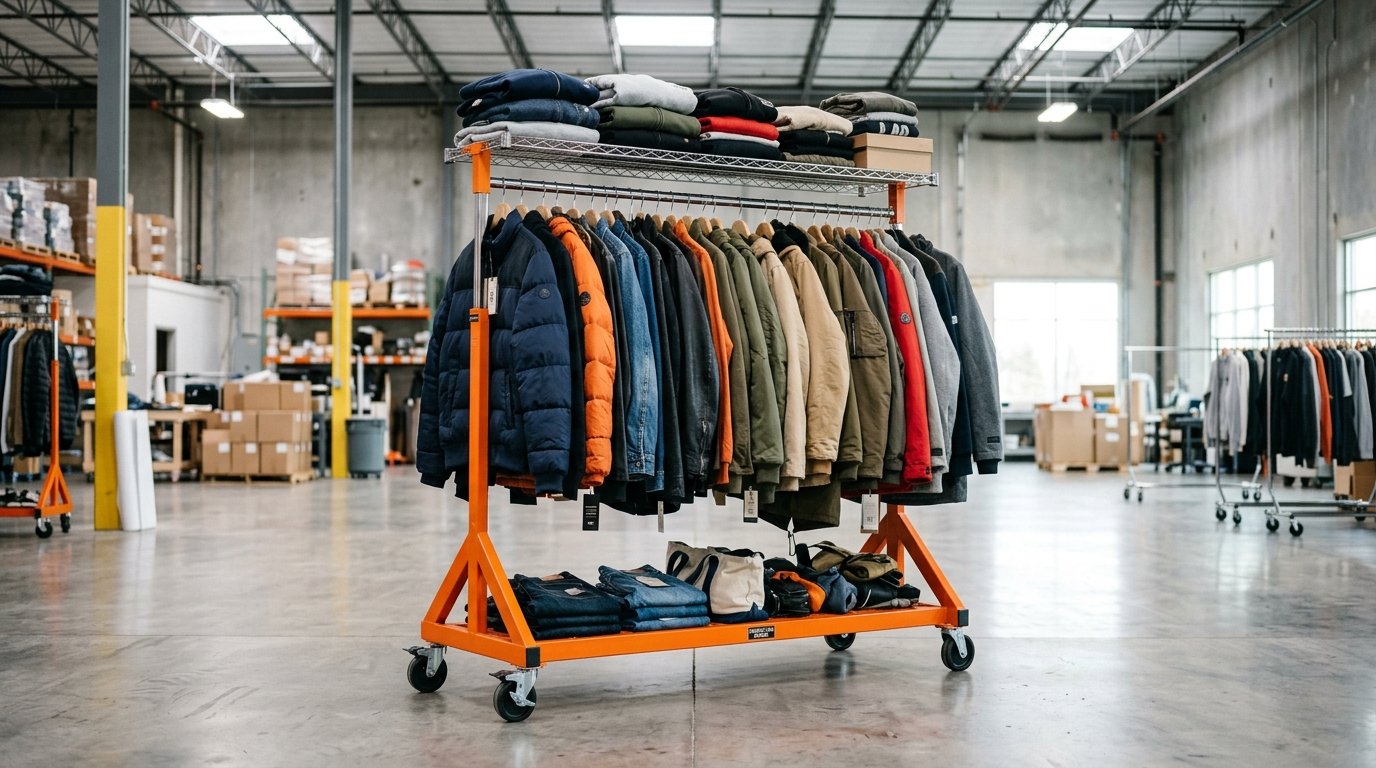
Commercial-grade rolling clothing racks use 1.25-to-1.5 inch 14-gauge round carbon steel tubing and a welded tubular Z-base supporting 400 to 500 lb static weight. Unlike cheap consumer racks with plastic collars, commercial Z-racks feature 4-inch non-marking rubber swivel casters mounted to steel plates and nest together tightly when empty to save floor space.
Key Takeaways
- Nesting Z-Base Design: Nest up to 10 empty racks in a compact row to free valuable backroom floor space.
- All-Steel Welded Joints: Welded tubular steel connections stop racking sway and eliminate catastrophic plastic joint failures.
- 4-Inch Industrial Casters: Large rubber caster wheels glide over elevator thresholds and door sills without snagging.
- Add-On Tier Bars: Double hanging capacity for shirts and folded pants by adding a middle horizontal crossbar.
What Is a Rolling Clothing Rack?
A rolling clothing rack is a garment storage frame fitted with casters. It usually has a horizontal top rail for hangers, two uprights, and a base that supports the load. Some models add a lower shelf, a second hanging rail, height extensions, or folding sections.
These racks serve several jobs. Retail teams use them to move new stock from receiving areas to sales floors. Laundries use them for clean uniforms.
Theaters and studios use them for costumes. Dry cleaners use them to group finished garments for pickup. Homes can also use smaller models for seasonal clothing, laundry, or wardrobe overflow.
Commercial racks differ from light consumer racks in their joints and wheels. A low-cost rack may use thin tubing and plastic collars that loosen over time. A commercial rack uses thicker steel, welded connections, and casters built for repeated movement.
Those parts affect safety, service life, and the amount of clothing the rack can carry.
Choose the Right Rack Type
Each rack design solves a different storage problem. Review the frame style before you compare finish, price, or accessories.
| Rolling Clothing Rack Type | Base & Upright Steel Gauge | Static Load / Dynamic Rolling Limit | Best Commercial Storage Use |
|---|---|---|---|
| Commercial Nesting Z-Rack | Welded tubular Z-base / 14-gauge round steel | 400 to 500 lb static (350 lb rolling) | Retail backrooms, warehouses, apparel inventory, winter coat storage |
| Heavy-Duty H-Frame Garment Rack | Welded rectangular H-frame / 16-gauge steel | 300 to 400 lb static (250 lb rolling) | Permanent stockroom aisles, laundry facilities, stage costume storage |
| Collapsible Salesman Rolling Rack | Folding tubular chrome frame / telescoping ends | 200 to 250 lb static (150 lb rolling) | Pop-up stores, trade shows, mobile apparel traveling reps |
Commercial Nesting Z-Racks
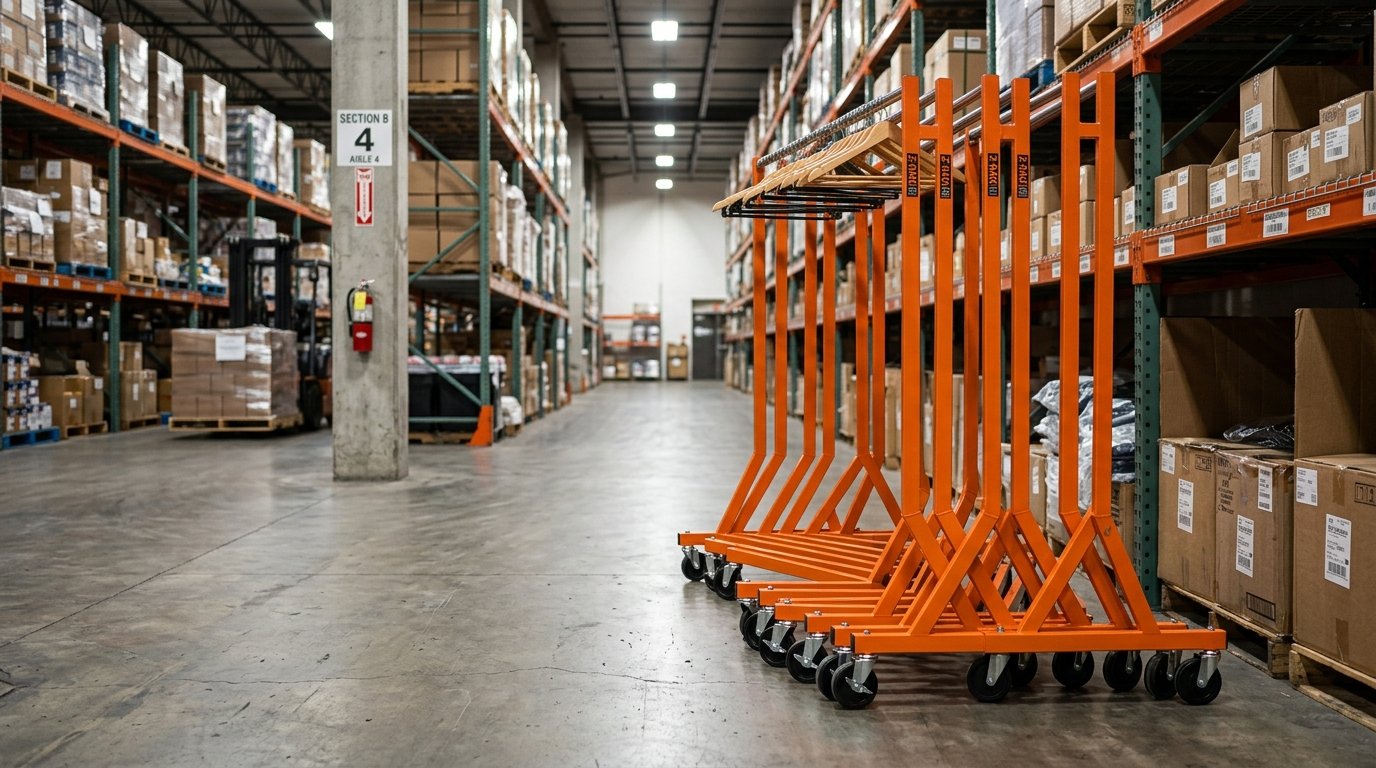
A Z-rack has a base shaped so empty racks can slide into one another. This nesting design can store five to ten racks in a small footprint. It’s a strong choice for retail backrooms, event venues, and warehouses where racks must leave the aisle when they’re empty.
Most heavy-duty Z-racks use 1.25-inch to 1.5-inch, 14-gauge round carbon steel for the uprights and top rail. The tubular Z-base is welded, so the frame resists sway when staff push a full load. Common finishes include black, orange, and chrome.
A 60-inch top rail works for most shirts, jackets, and pants. A 12-inch upright extension can raise the rail to 72 or 84 inches for long dresses, gowns, and overcoats.
Heavy-Duty H-Frame Racks
An H-frame rack has a broad base that gives it a stable stance. It won’t nest as tightly as a Z-rack, but it can work well in a permanent stockroom aisle. The design suits facilities that keep racks in place for long periods and need dependable support.
Look for welded rectangular steel and a base that spreads weight across the floor. H-frame racks are useful in laundries, costume storage rooms, uniform departments, and backrooms with fixed storage lanes. Check the turning radius before purchase, since a broad base may be harder to move through narrow doors.
Collapsible Salesman Racks
Folding salesman racks are made for transport and temporary displays. Telescoping ends and folding sections reduce the packed size, which helps traveling reps and pop-up shops. Chrome tubing gives these racks a clean display finish.
They usually carry less weight than commercial Z-racks. Don’t use a folding rack for dense winter coats or long-term warehouse storage unless its manufacturer gives a suitable rating. Place heavier items near the center and lock the casters before loading or unloading.
Steel Gauge and Frame Construction
Steel gauge tells you how thick the metal is, but gauge alone doesn’t tell the full story. In common steel sizing, a lower gauge number generally means thicker material. A 14-gauge round tube is heavier than a 16-gauge tube of a similar design.
Tube diameter also matters. A 1.5-inch rail can resist bending better than a narrow tube when the rack carries a dense row of coats. The shape of the base, the span between uprights, and the quality of the welds affect performance too.
Welded joints are a major difference between commercial and low-cost racks. Plastic collars can split, slip, or become loose after repeated loading. Bolted joints can work, but they need regular checks.
Welded tubular steel connections create a fixed frame with less movement at the corners.
When you compare products, ask these questions:
- What diameter and gauge steel make up the top rail?
- Is the base welded or held together with plastic connectors?
- Are the caster plates welded to the frame?
- Does the stated capacity apply to the whole rack or just the rail?
- Has the rack been rated for movement with a full load?
For more storage planning help, read this metal shelving units guide. It explains steel grades, gauge choices, and load factors that also apply when you’re building a broader stockroom system.
Static Weight vs. Rolling Weight
A static load rating describes a rack standing still on a level surface. A dynamic rolling limit describes a rack moving with weight on it. The rolling limit should be lower because movement adds force to the frame, casters, welds, and floor contact points.
For example, a commercial Z-rack may hold 400 to 500 pounds while parked, yet have a 350-pound rolling limit. That difference gives the rack a safer operating margin when it crosses a doorway or changes direction.
Don’t treat a static rating as permission to push a full rack quickly. Keep the load centered, move at walking speed,. And use two staff members when the rack is tall, crowded, or hard to see around.
Reduce the load if the path includes ramps, rough concrete, elevator gaps, or tight turns.
Distribute garments across the rail. A dense group of coats at one end can make the rack turn or tip more easily. Keep long, heavy items close to the uprights and avoid hanging bags or boxes from the side of the frame.
Why Caster Size Matters
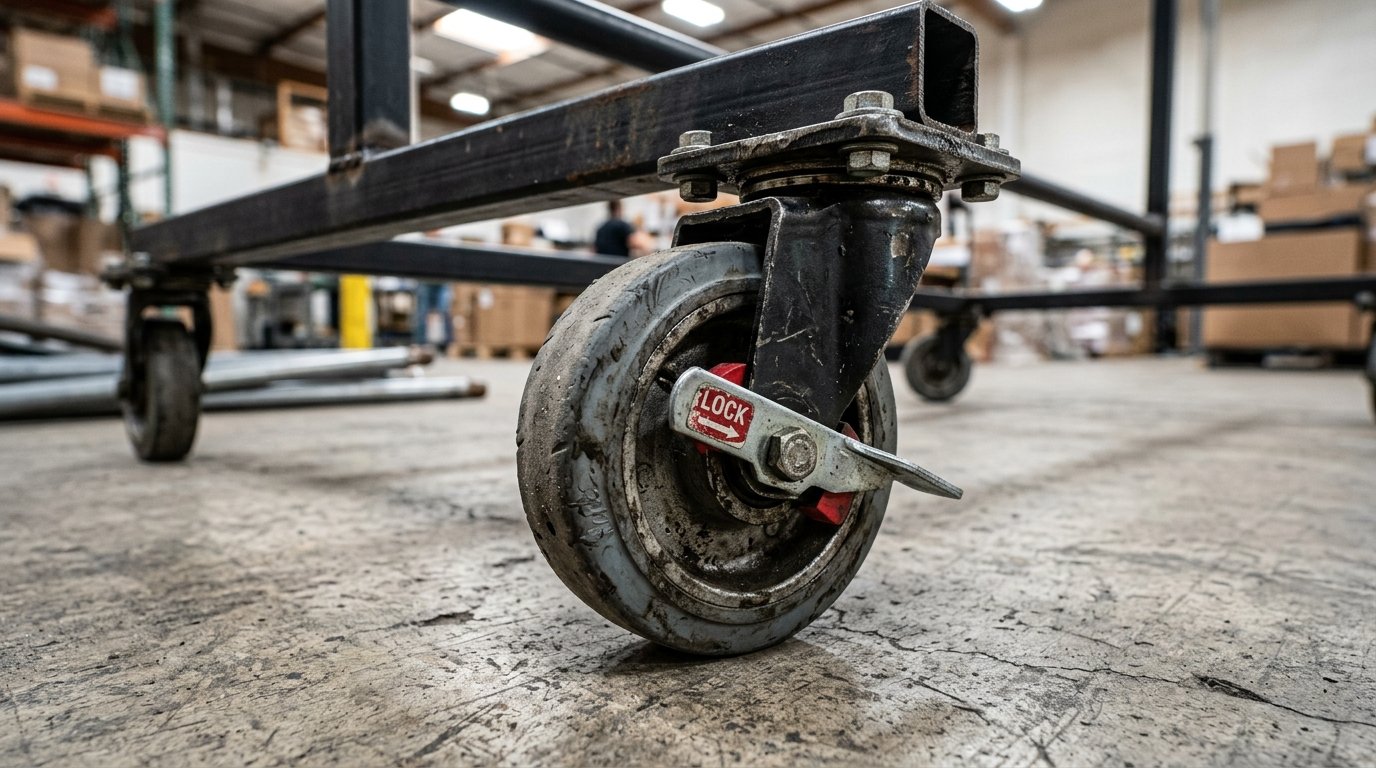
Casters affect how much effort it takes to move a rolling clothing rack. Two-inch plastic twin wheels may work on smooth tile, but they can stick at floor thresholds, cords, cracks,. And elevator gaps.
A full rack then needs a hard shove, which can strain staff and shift the load.
Four-inch to five-inch casters roll over small obstacles more easily. Non-marking thermoplastic rubber or polyurethane protects finished floors and reduces noise. Swivel casters help the rack turn in stockrooms and loading areas.
At least two locking brakes keep the rack in place during loading, unloading, and display setup.
Plate Casters vs. Threaded Stems
Heavy commercial racks should use plate-mounted casters when they carry large loads. A steel plate spreads force across a wider part of the base. Threaded-stem casters fit into a socket or hole,.
But the stem can bend or shear when a heavily loaded rack hits an obstacle or turns sharply.
Check how the caster attaches before you buy. A welded steel plate is a stronger choice for warehouse movement. Also check the wheel material, wheel diameter, brake count, and listed capacity for each caster.
The rack’s total rating should account for all four wheels, the frame, and the way the load moves.
Features That Increase Storage Capacity
Second Hanging Rail
An add-on middle rail can turn one tall hanging level into two levels. This works well for shirts, skirts, trousers, and other shorter garments. It can nearly double hanging capacity in the same floor area, but it reduces clearance between the rails.
Measure the garment drop before adding a tier bar. Shirts need less vertical space than coats or dresses. Don’t add a second rail if it forces garments to drag on the base.
Or bunch so tightly that staff can’t remove them.
Bottom Wire Shelf
A lower wire shelf gives you a place for shoes, bins, folded textiles, and accessories. It also helps keep small items off the floor. A wire grid allows dust and moisture to pass through, which can be useful in laundry and stockroom settings.
Check the shelf rating and its attachment points. Keep heavy bins low and centered. A shelf loaded with dense boxes can raise the total weight beyond the rack’s rolling limit.
Height Extensions
Standard 60-inch racks fit most garments. Height extensions are useful for bridal gowns, stage costumes, robes, and long overcoats. Extensions commonly add 12 inches, creating a 72-inch rail, with some setups reaching 84 inches.
Taller racks need more care during movement. Keep the load below the stated limit, avoid uneven floors, and use the caster brakes when parked. Measure door openings, elevator interiors, and ceiling fixtures before ordering a tall model.
How to Save Space in a Backroom
Start by measuring the storage zone, aisle width, doorway clearance, and turning areas. Record both the rack’s loaded width and its nested depth. A rack that fits on paper may still block a door if staff can’t turn it into position.
Z-racks provide the strongest space-saving feature. When empty, they can nest in a row, so the bases occupy much less floor space than separate H-frames. Mark a dedicated parking lane for empty racks.
This keeps them from drifting into fire exits, loading routes, or customer areas.
Use the second rail for short garments and reserve the upper rail for longer pieces. Add a lower shelf for accessories instead of placing loose boxes beside the rack. Label each rack by department, size, delivery route, or season.
Good labeling cuts handling time and reduces unnecessary movement.
For a wider storage plan, see this wire closet shelving guide. It can help you pair hanging storage with shelves for shoes, bins, and folded inventory.
Safe Use and Routine Maintenance
Inspect a rolling clothing rack before each shift if it carries a heavy load. Look for bent rails, cracked welds, loose bolts, damaged caster plates, and wheels that don’t swivel freely. Test both locking brakes before staff load the rack.
Keep the route clear of cords, loose packaging, wet spots, and broken floor surfaces. Push from the base, not from the top rail. Keep hands away from pinch points when nesting racks.
Move one rack at a time through narrow doors unless the manufacturer gives another procedure.
Don’t exceed the rolling rating because the rack appears stable while parked. Don’t use a rack with a bent base or a caster that wobbles. Remove damaged equipment from service and repair it before reuse.
For workplace storage rules, review the OSHA material storage safety standards. For industry guidance on material handling equipment, consult the Material Handling Institute technical standards.
How to Select a Rack for Your Operation
Use your daily work pattern to set the specifications. A retail team that moves racks several times a day needs large non-marking casters, strong welded joints,. And a dynamic rolling rating.
A costume shop may need height extensions and a lower shelf. A traveling rep may need a folding model that fits in a vehicle.
Before ordering, list the garments you’ll hang, the heaviest expected load, the length of the items,. And the distance the rack will travel. Measure the narrowest door and the tightest turn.
Then compare the frame steel, caster attachment, rail length, height, and accessories.
A commercial rolling clothing rack costs more than a light consumer model, but the frame. And wheels are built for repeated work. Replacing failed plastic joints, damaged flooring, or bent rails can cost more than choosing the stronger rack at the start.
Frequently Asked Questions
What is the best heavy-duty rolling clothing rack for winter coats?
A commercial nesting Z-rack is a strong choice for winter coats. Look for 1.25-inch to 1.5-inch, 14-gauge round steel, a welded Z-base, and a 400 to 500-pound static rating. Confirm that its dynamic rolling limit is high enough for your loaded route.
Four-inch or five-inch rubber or polyurethane casters will make movement easier, especially across thresholds.
How much weight can a commercial rolling garment rack hold?
Many commercial racks hold 400 to 500 pounds when parked on a level floor. The rolling limit may be about 350 pounds. Always use the manufacturer’s rating for your exact model.
Spread garments evenly, move slowly, and reduce the load on ramps, rough floors, or tight turns.
What kind of caster wheels are best on a rolling clothes rack?
Choose four-inch to five-inch non-marking thermoplastic rubber or polyurethane swivel casters with two locking brakes. For heavy warehouse use, welded plate-mounted casters are a stronger choice than threaded-stem casters. Large wheels handle thresholds and floor cracks better than small plastic twin wheels.
How do nesting Z-racks save floor storage space?
The Z-shaped base lets empty racks slide into one another. A storage row can hold five to ten racks in much less depth than separate frames. This frees backroom floor space and keeps empty equipment out of work aisles.
Park nested racks in a marked area, away from exits and active traffic lanes.
Final Buying Checklist
- Choose 14-gauge, 1.25-inch to 1.5-inch round steel for demanding commercial use.
- Pick a welded Z-base when you need high capacity and compact empty storage.
- Confirm both static and dynamic weight limits.
- Choose four-inch to five-inch non-marking swivel casters.
- Look for welded plate caster mounts on heavy-duty models.
- Add a second rail for short garments and a wire shelf for accessories.
- Measure doors, elevators, aisles, and storage lanes before ordering.
- Inspect welds, wheels, brakes, and frame alignment on a regular schedule.
The best rolling clothing rack is the one that matches your load, floor conditions, storage space, and movement routine. For most busy retail. And warehouse operations, a welded commercial Z-rack offers a strong mix of capacity, mobility, and compact storage.

Callum Langham
Founder & Technical Storage Editor
Callum Langham is the founder and technical editor of Rack System. With over 12 years of hands-on field experience in warehouse logistics, garage organization, and industrial storage installations, Callum specializes in engineering safety standards, beam load calculations, and OSHA/RMI compliance. Every guide on Rack System is audited against verified steel gauge tolerances and municipal building codes.