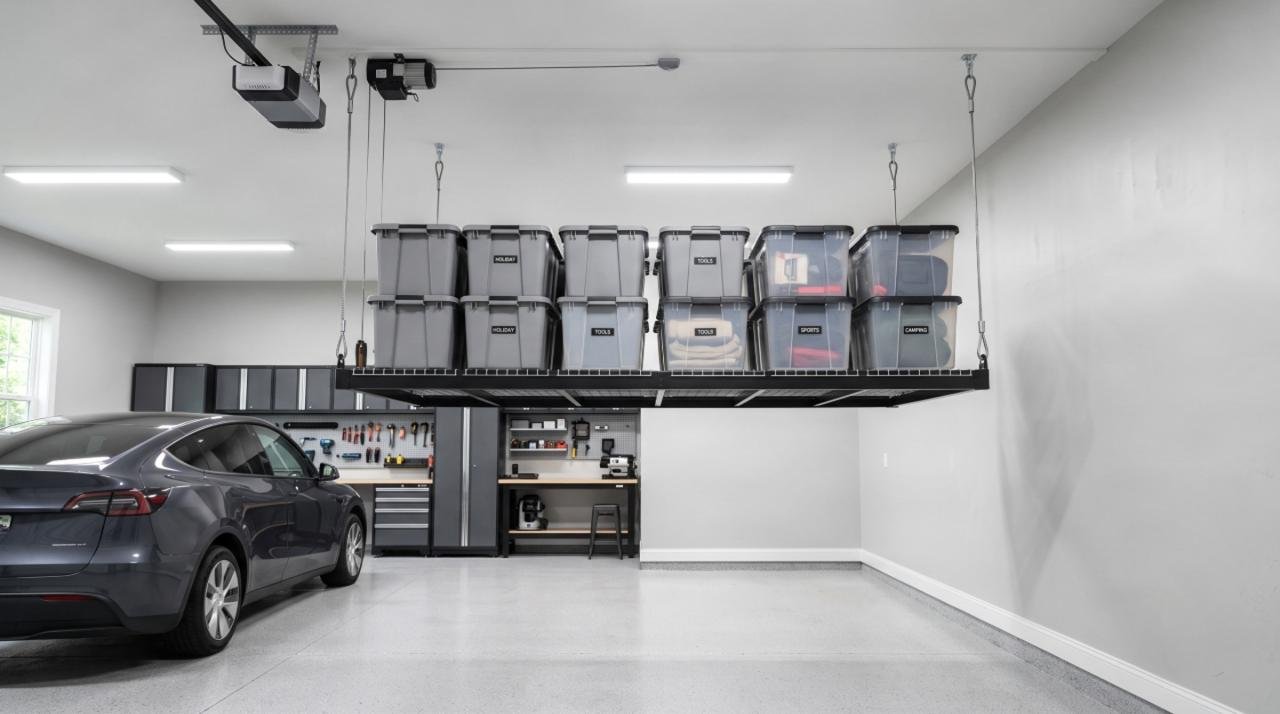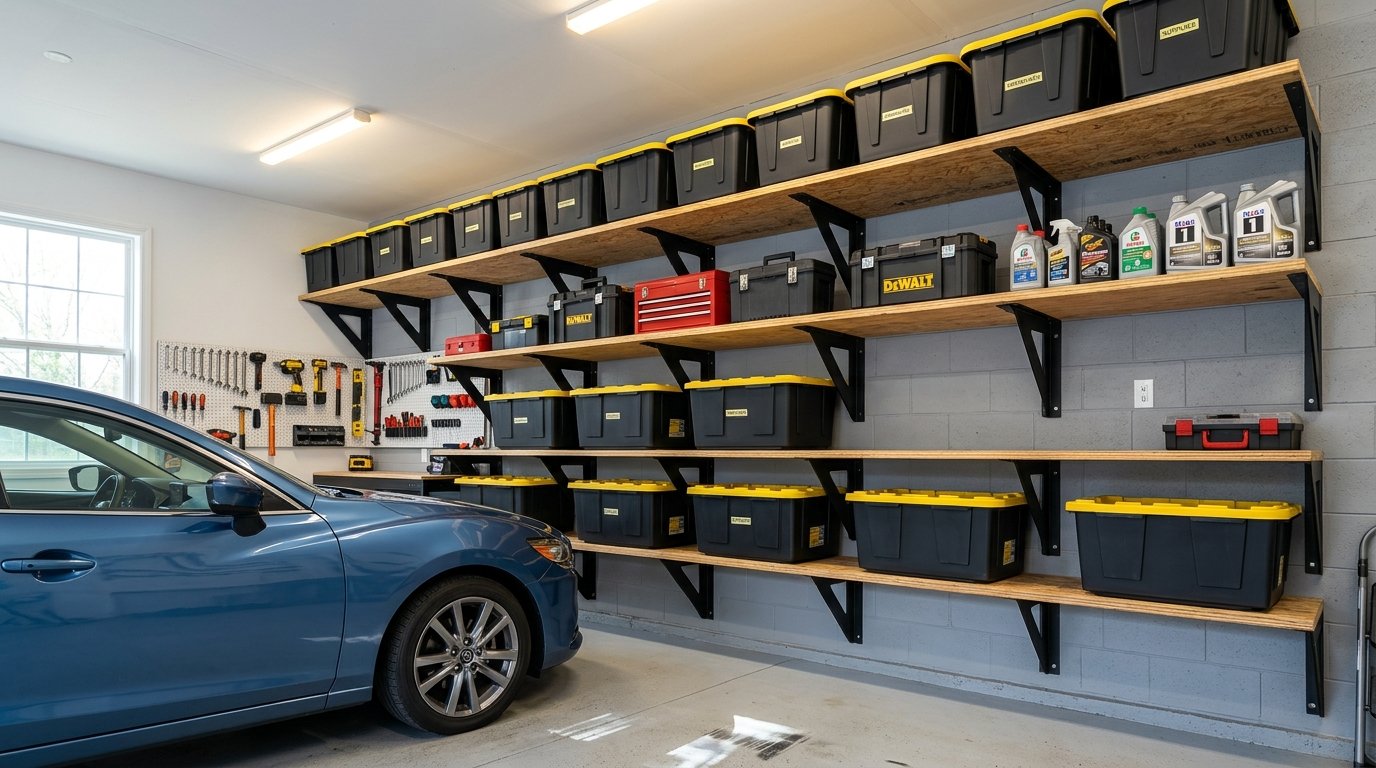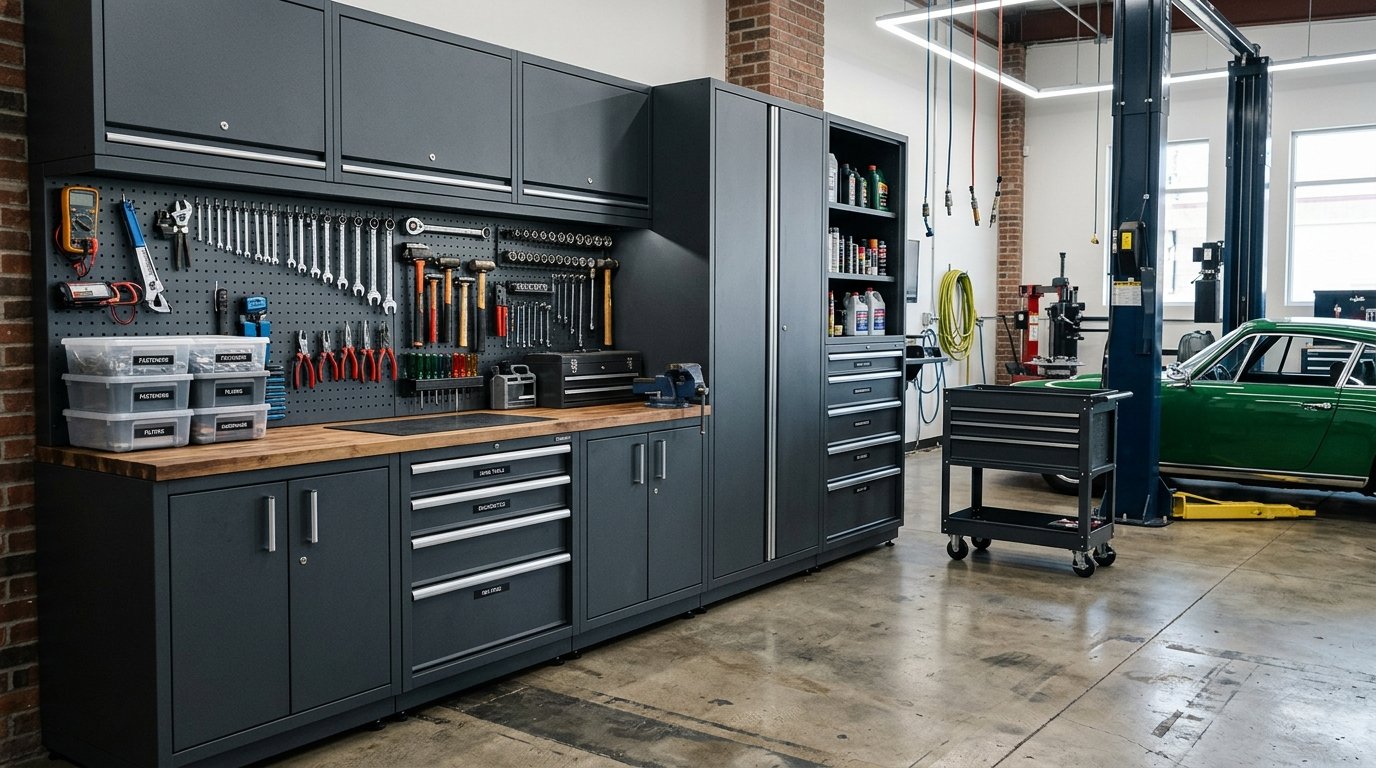
A wall organizer can turn a crowded garage, workshop, utility room, or shed into a safer work area. The right system keeps tools visible, protects floor space, and makes it easier to put items back after use. The wrong system can bend, pull loose, or send tools crashing down when a hook lifts out.
Before you buy, check four things: the load rating, the wall structure, the accessory design,. And the type of gear you need to store. A small steel panel works well for hand tools and magnetic accessories.
A full PVC slatwall suits broad storage. Horizontal aluminum rails are better for ladders and bulky outdoor equipment.
Quick Answer: How to Choose a Heavy-Duty Wall Organizer
For heavy workshop tools and garage gear, 20-gauge galvanized steel pegboards with slotted cam-locking hooks support 200+ lb per panel when anchored into 16-inch wall studs. Choose cellular PVC slatwall (50 to 75 lb per square foot) for broad wall storage, and horizontal aluminum track rails (holding up to 1,000 lb per rail) for heavy ladders and garden power equipment.
Key Takeaways
- Steel Pegboard Strength: 20-gauge cold-rolled steel panels resist blowouts and hold magnetic accessories without warping.
- Locking Slotted Hooks: Cam-locking tabs prevent tool hooks from lifting out every time you grab a hammer or wrench.
- Stud Anchoring Rule: Always drive mounting screws directly into wall framing studs to support heavy dynamic tool grabs.
- Track vs Slatwall: Use horizontal track rails for bulky ladders and PVC slatwall for flexible hand tool arrangements.
What Makes a Wall Organizer Heavy Duty?
A heavy-duty wall organizer must handle both stored weight and movement. A tool hanging quietly on a hook creates a static load. Pulling a hammer free, lifting a drill, or removing a ladder creates a dynamic load.
That short burst of force can be much higher than the item’s listed weight.
Material thickness matters. A 20-gauge cold-rolled steel pegboard resists bending and hole damage better than thin ⅛-inch panels. A ¼-inch heavy-duty hole pattern gives hooks more contact area and reduces tearing.
For large items, the strength of the rail, bracket, and wall screws matters as much as the panel itself.
Load ratings also depend on installation. A panel rated for 200+ pounds still needs suitable screws, solid framing, and even weight distribution. Never treat a product rating as permission to place the full load on one small hook.
Or one weak drywall anchor.
Wall Organizer System Comparison
| Wall Organizer System | Core Material & Gauge | Weight Capacity per Stud Run | Best Garage & Workshop Use |
|---|---|---|---|
| Galvanized Steel Pegboard | 20-gauge cold-rolled carbon steel | 200+ lb per 32″x16″ panel | Hand tools, power tool charging docks, wrenches, magnetic bars |
| Extruded Cellular PVC Slatwall | Solid cellular vinyl (0.75″ thick) | 50 to 75 lb per square foot | Full-wall coverage, modular sports gear, paint cans, garden hoses |
| Heavy-Duty Aluminum Track Rails | Extruded architectural aluminum | 1,000 lb per 4-foot rail section | Heavy ladders, wheelbarrows, leaf blowers, weed trimmers |
Steel Pegboard for Tools
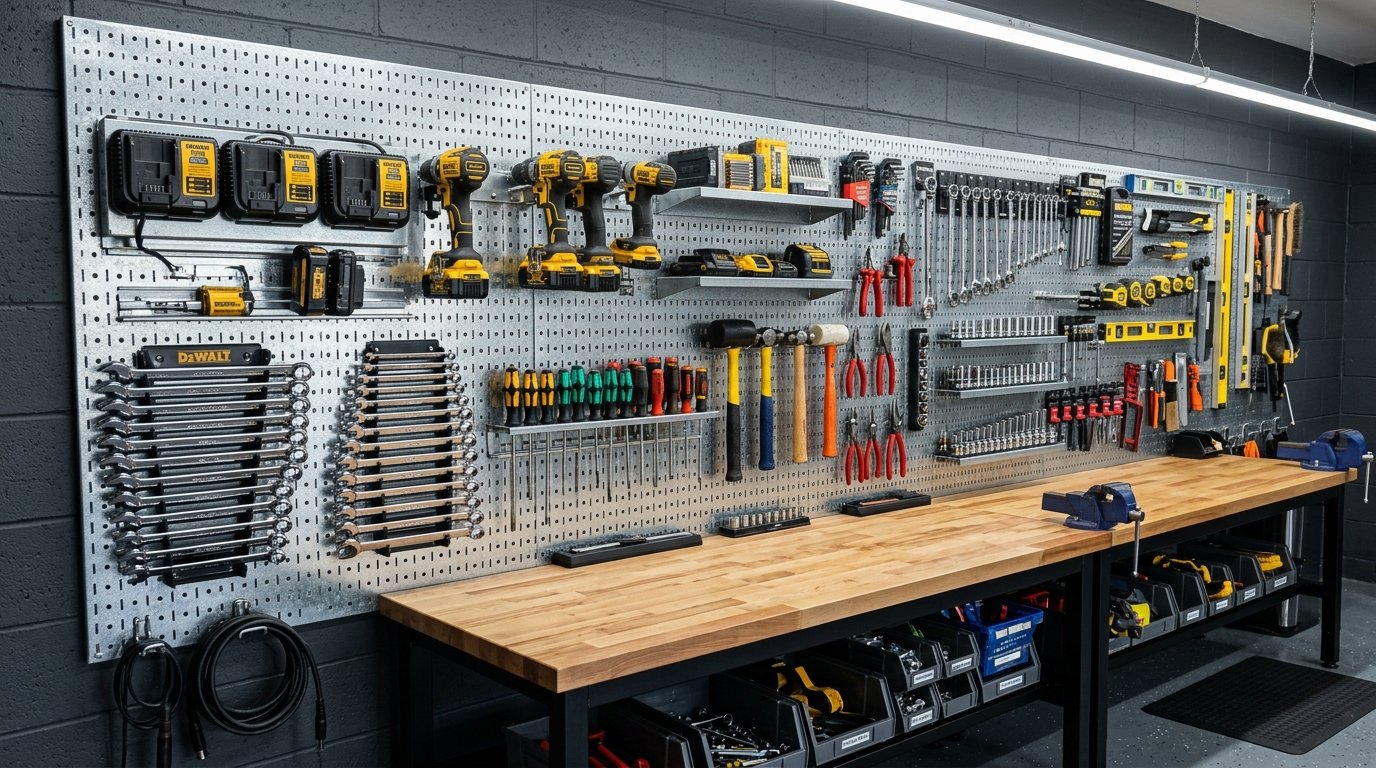
Steel pegboard is a strong choice for hand tools, small power tools, and workbench accessories. Common panel sizes include 16-by-32 inches and 32-by-32 inches. These sizes work well with wall framing placed 16 inches on center, so you can line up fasteners with studs.
Galvanized or powder-coated steel resists rust and everyday workshop wear. The steel surface also holds magnetic tool bars, magnetic cups, and small parts trays. That gives you storage options beyond standard hooks.
Choose Locking Hooks
Traditional wire hooks can pop out when you pull a tool forward. This happens because the hook moves upward as the tool leaves the board. Slotted hooks with cam-locking tabs sit firmly in place and resist vibration.
They’re a better choice for hammers, wrenches, drills, and frequently used tools.
Use ¼-inch heavy-duty hooks for demanding storage. Avoid thin ⅛-inch pegboard hooks for heavy items because their small contact points can damage the holes. Or bend under repeated use.
Add cantilevered baskets for gloves, tape, sockets, and other loose parts.
Use the Panel Space Well
Place tools near the area where you use them. Keep screwdrivers, pliers, and measuring tools beside the bench. Put drill docks near an outlet, but leave enough clearance for the charger and battery.
Store sharp blades and saws high enough to reduce accidental contact, while keeping them easy to reach.
Trace each tool’s outline on the panel with a paint marker. This creates a simple visual check. If an outline is empty, you’ll know what’s missing before you leave the garage or job site.
PVC Slatwall for Broad Storage
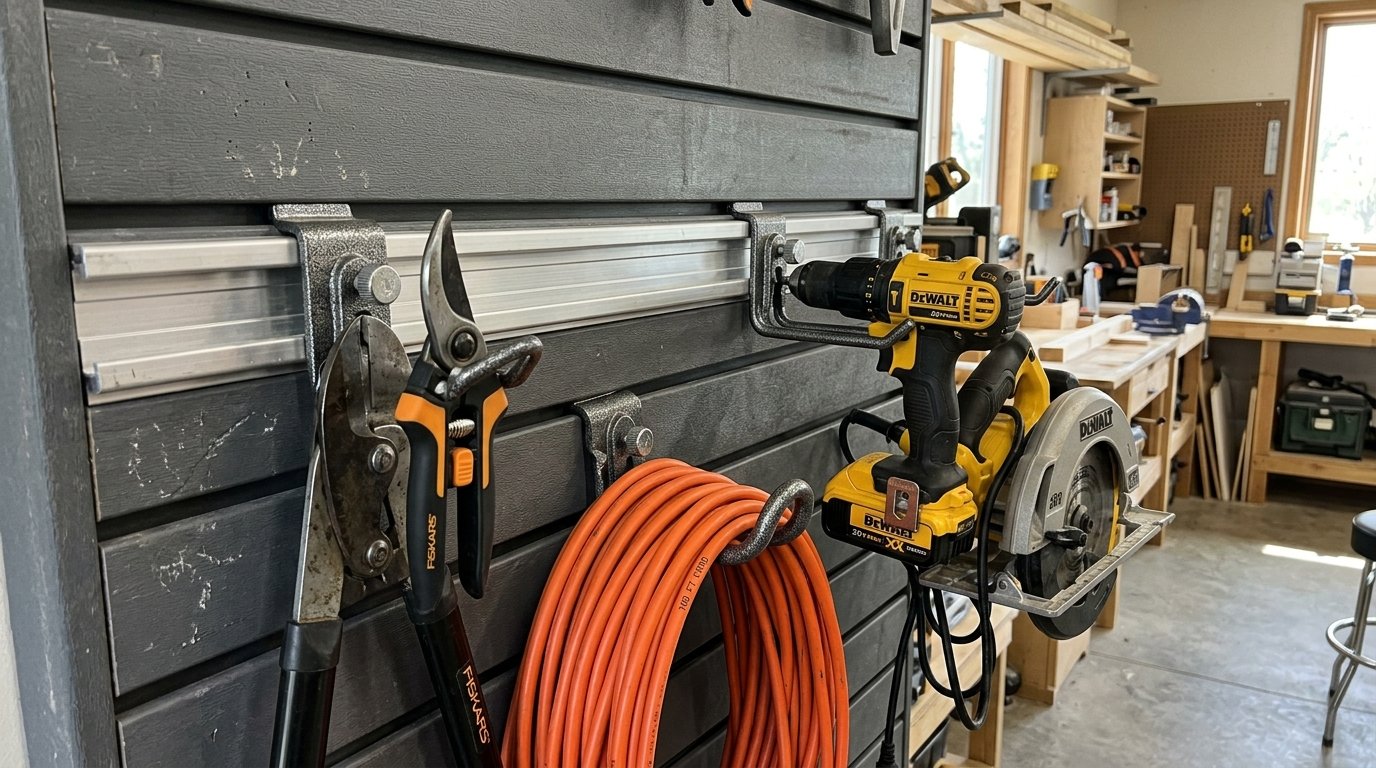
Extruded cellular PVC slatwall covers a large section of wall with fewer visible gaps. Its horizontal grooves accept shelves, baskets, hooks, and specialty holders. A 0.5 to 1-inch profile gives the system a solid feel,.
While the cellular structure keeps it lighter than many wood-based panels.
Typical PVC slatwall capacity ranges from 50 to 75 pounds per square foot, based on the product, bracket spacing,. And wall attachment. Use it for storage that needs frequent changes, such as sports bags, bins, paint cans, garden hoses, and seasonal gear.
PVC doesn’t provide the same magnetic function as steel. You’ll need separate hooks or baskets for small metal tools. It also relies on the groove and accessory bracket to carry the load, so use the manufacturer’s spacing rules.
Keep heavy items close to supported brackets instead of placing them at the center of a long unsupported span.
Aluminum Track Rails for Bulky Gear
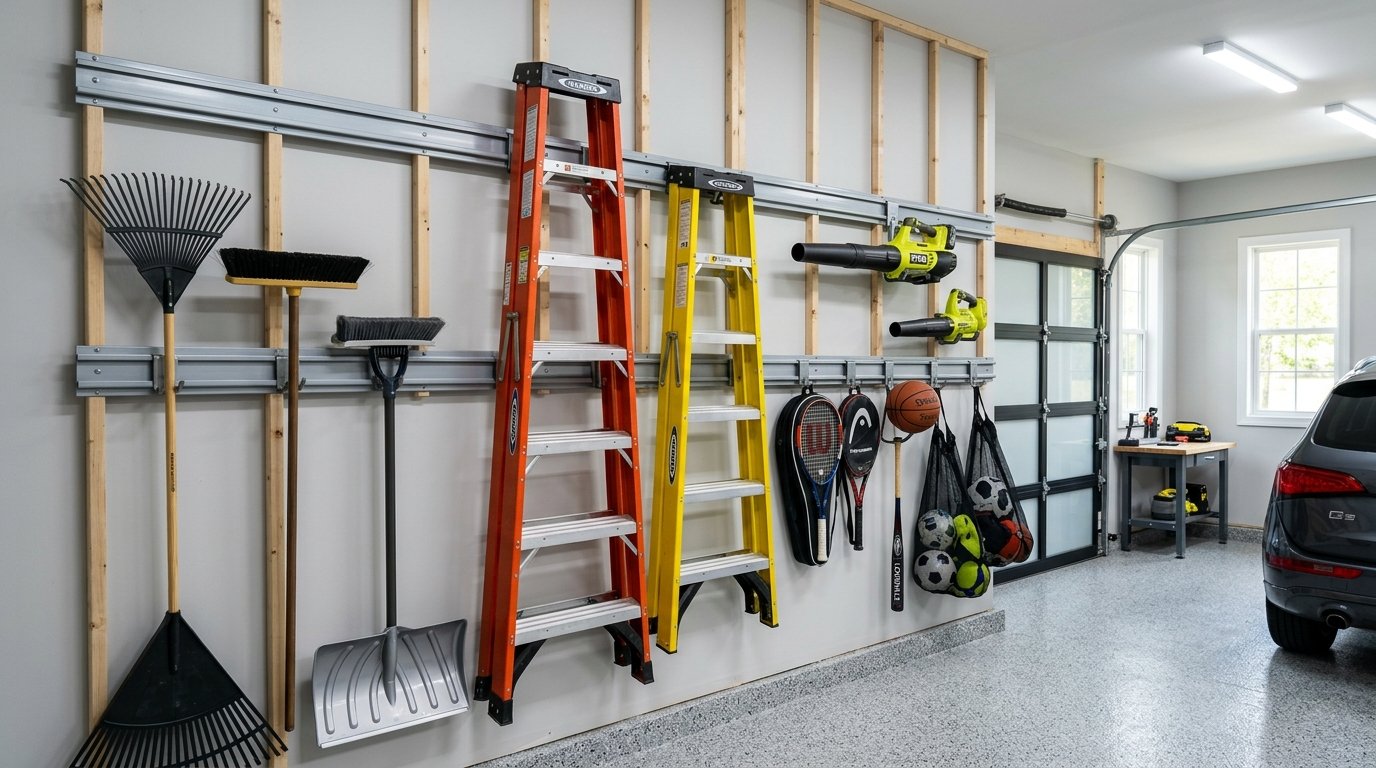
Horizontal aluminum track rails work well for equipment that’s too large for a pegboard. A four-foot rail can support up to 1,000 pounds when installed according to its instructions and fixed into suitable framing. Adjustable hooks let you change the position of a ladder, wheelbarrow, leaf blower, or weed trimmer without moving the rail.
Tracks concentrate weight along the rail and its mounting points. That makes screw placement critical. Spread heavy items across more than one hook, keep the center of gravity close to the wall,.
And check that each hook is fully seated before letting go.
Use padded hooks for painted ladders and equipment housings. Padding limits scratches and reduces sliding. Add a lower rail or floor stop for tall tools that could swing sideways when the wall is bumped.
How Load Distribution Changes
Each wall organizer handles force in a different way. Steel pegboard spreads weight through the panel and its mounting points. The holes.
And slots support many accessory positions, so you can place several hooks under one tool or group of tools.
PVC slatwall transfers force into its vertical supports and horizontal grooves. It works best when brackets are spaced as directed and the load stays close to the wall. Overloading one shelf can damage the groove or pull the panel away from its fasteners.
Track rails send force into a narrow line of screws. They’re strong for heavy gear, but the wall connection carries a large share of the load. This is why rail systems need careful framing checks before installation.
For published handling and storage guidance, review the Material Handling Institute technical standards. For workplace storage practices, consult the OSHA material storage safety standards.
Mounting a Wall Organizer Safely
Find and Mark Wall Studs
Use a stud finder, then confirm each stud with a small drill bit or finish nail. Mark the center of every stud across the planned installation area. In many garages, studs sit 16 inches on center, but older buildings and framed additions can vary.
Hold the panel, rail, or slatwall section in place and mark the fastener holes. Keep the organizer level. A small slope can cause hooks, bins, and shelves to shift during use.
Use the Right Fasteners
Choose screws that pass through the organizer and enter the stud by a useful depth. Follow the product instructions for screw size and spacing. Don’t rely on short screws that barely reach the framing.
Built-in flanges can allow direct mounting without furring strips. This saves wall depth and reduces the number of parts. Still, inspect the flange for full contact and avoid crushing it with excessive screw torque.
When Studs Aren’t Available
Snap-toggle anchors can work in drywall for light or moderate loads. They spread force across the back of the drywall better than basic plastic plugs. They’re still less suitable for repeated pulling, swinging equipment, or heavy tools.
If you can’t reach studs, add a properly secured plywood backer across several framing members. Mount the wall organizer to the backer, then transfer the load into multiple studs. This method gives you more mounting positions and makes future layout changes easier.
Plan Your Wall Organizer Layout
Start by measuring the clear wall width and height. Check for doors, windows, outlets, switches, pipes, and garage door movement. Leave room to lift tools off hooks.
A shelf placed too close to the ceiling may hold gear, but it won’t be easy to use.
Group items by task. Create one zone for vehicle tools, one for garden equipment, and one for bench work. Keep heavy gear between waist and chest height when possible.
Store light seasonal items higher up.
Leave a small gap between stored objects. Crowded hooks make tools hard to remove and can cause handles to collide. For a larger storage plan, use this garage tool storage systems guide.
Common Wall Organizer Mistakes
Buying by Appearance
A neat product photo doesn’t show the wall structure, fastener spacing, or accessory limits. Check the gauge, panel thickness, bracket type, and rated load before you buy.
Using One Hook for Too Much
A single hook may hold a tool, but several tools on one small hook can create a twisting force. Use two hooks for long or heavy items. Keep the load centered so it doesn’t pull the accessory sideways.
Ignoring Dynamic Loads
Repeatedly yanking tools from a hook can loosen fasteners over time. Locking hooks help, but they don’t replace proper anchoring. Inspect the panel and wall screws after the first week, then check them during routine garage maintenance.
Leaving No Room to Grow
Buyers often fill every opening on day one. Keep some empty space for new tools, replacement gear, and larger accessories. Modular systems are useful because you can move hooks and shelves as your needs change.
Wall Organizer Buying Checklist
- Measure the wall and mark all obstacles.
- Confirm stud spacing before choosing panel sizes.
- Check the material, gauge, thickness, and rated capacity.
- Choose ¼-inch hooks for heavy steel pegboard use.
- Use cam-locking tabs when tools will be pulled often.
- Match the system to the gear, not just the available wall area.
- Use plywood backing or snap-toggle anchors only when studs can’t be reached.
- Keep heavy items low and close to the wall.
- Leave space around handles, shelves, and charging docks.
- Inspect fasteners, hooks, rails, and panels on a regular schedule.
For shelf depth, bracket spacing, and load planning, see the metal shelves and brackets guide.
Frequently Asked Questions
What is better for garage storage, pegboard or slatwall?
Steel pegboard is better for hand tools, magnetic accessories, and compact workbench storage. Slatwall is better for full-wall coverage, bins, shelves, sports equipment, paint cans, and hoses. Choose pegboard when you need many small tool positions.
Choose slatwall when you need larger modular holders that can move along horizontal grooves.
How much weight can a heavy-duty metal wall organizer hold?
A 20-gauge steel pegboard can support 200+ pounds per 32-by-16-inch. Panel when it’s mounted into 16-inch wall studs with suitable fasteners. The real capacity depends on the panel, screws, hooks, wall condition, and load placement.
Spread heavy items across several hooks and avoid placing the full rating on one accessory.
How do you mount a wall organizer without wall studs?
For lighter loads, use snap-toggle anchors rated for the organizer and the intended weight. For heavy. Or frequently used tools, install a plywood backer secured to several studs, then mount the organizer to that backer.
Don’t use basic plastic drywall plugs for ladders, power equipment, or tools that you’ll pull free with force.
Why do standard pegboard hooks keep falling out?
Basic wire hooks can lift out when a tool moves upward during removal. Thin ⅛-inch holes and loose hook fits can make the problem worse. Replace them with ¼-inch hooks that use slotted cam-locking tabs.
These tabs hold the hook in place and reduce movement when you grab a hammer, wrench, or drill.
Final Selection Guide
Choose a steel pegboard for organized hand tools, magnetic storage, and charging docks. Choose cellular PVC slatwall for broad, flexible coverage and mixed garage gear and choose aluminum track rails for ladders, wheelbarrows, blowers, and other bulky equipment.
Whichever wall organizer you select, mount it into sound framing, follow the stated load limits, and plan for dynamic use. A strong panel can still fail when it’s paired with weak screws or poorly placed anchors. Good layout and careful installation will keep your tools secure, visible, and ready for the next job.

Callum Langham
Founder & Technical Storage Editor
Callum Langham is the founder and technical editor of Rack System. With over 12 years of hands-on field experience in warehouse logistics, garage organization, and industrial storage installations, Callum specializes in engineering safety standards, beam load calculations, and OSHA/RMI compliance. Every guide on Rack System is audited against verified steel gauge tolerances and municipal building codes.