A tool box on wheels can save time, reduce lifting, and keep your tools ready for the next job. The right model depends on where you work, how much weight you carry, and how far you need to roll the box.
A steel roller cabinet works well in an auto shop, while a resin stackable box handles rough jobsite travel better.
Before you buy, check the frame, wheel type, drawer slides, locking system, and rated load. A box may look strong but still perform poorly when its casters meet floor seams, ramps, or loose debris. This guide explains the main designs and key specifications.
And practical ways to choose a tool box in wheels that fits your work.
Quick Answer: How to Choose a Tool Box on Wheels
A heavy-duty tool box in wheels uses 16-to-18 gauge double-wall welded steel and 5×2 inch polyurethane locking swivel casters rated for 1,200 to 2,500 lb static loads (1,000 lb rolling capacity). Look for 100 to 200 lb ball-bearing drawer slides with soft-close detents, tubular barrel locks, and integrated power strips. For jobsite transport, choose modular structural polypropylene resin boxes with 9-inch rubber all-terrain wheels.
Key Takeaways
- Static vs Dynamic Caster Ratings: Static capacity drops by 50% when rolling across floor seams and shop debris.
- Steel Gauge Construction: Double-wall 16-to-18 gauge steel prevents cabinet racking and drawer misalignment under heavy loads.
- Ball-Bearing Slide Detents: Positive drawer detents prevent heavy socket drawers from rolling open when maneuvering ramps.
- Jobsite Resin vs Steel Chests: Polypropylene resin absorbs impacts in truck beds; steel cabinets maximize workshop capacity.
What Is a Tool Box in Wheels?
A tool box in wheels is a portable storage unit fitted with casters or large wheels. It may have drawers, enclosed compartments, open trays, or stackable sections. The design ranges from a compact rolling box for home repairs to.
A large steel cabinet that holds hundreds of pounds of hand tools.
These products usually fall into three groups:
- Steel roller cabinets: Enclosed drawer cabinets for workshops, garages, and auto repair bays.
- Modular jobsite boxes: Stackable resin cases with pull handles and large rubber wheels.
- Mobile service carts: Open-frame carts that keep frequently used tools within reach.
Choose the system based on movement and access. An enclosed cabinet protects tools from dust and unauthorized access. A service cart gives faster access during repairs.
A modular box is easier to load into a truck and carry across unfinished surfaces.
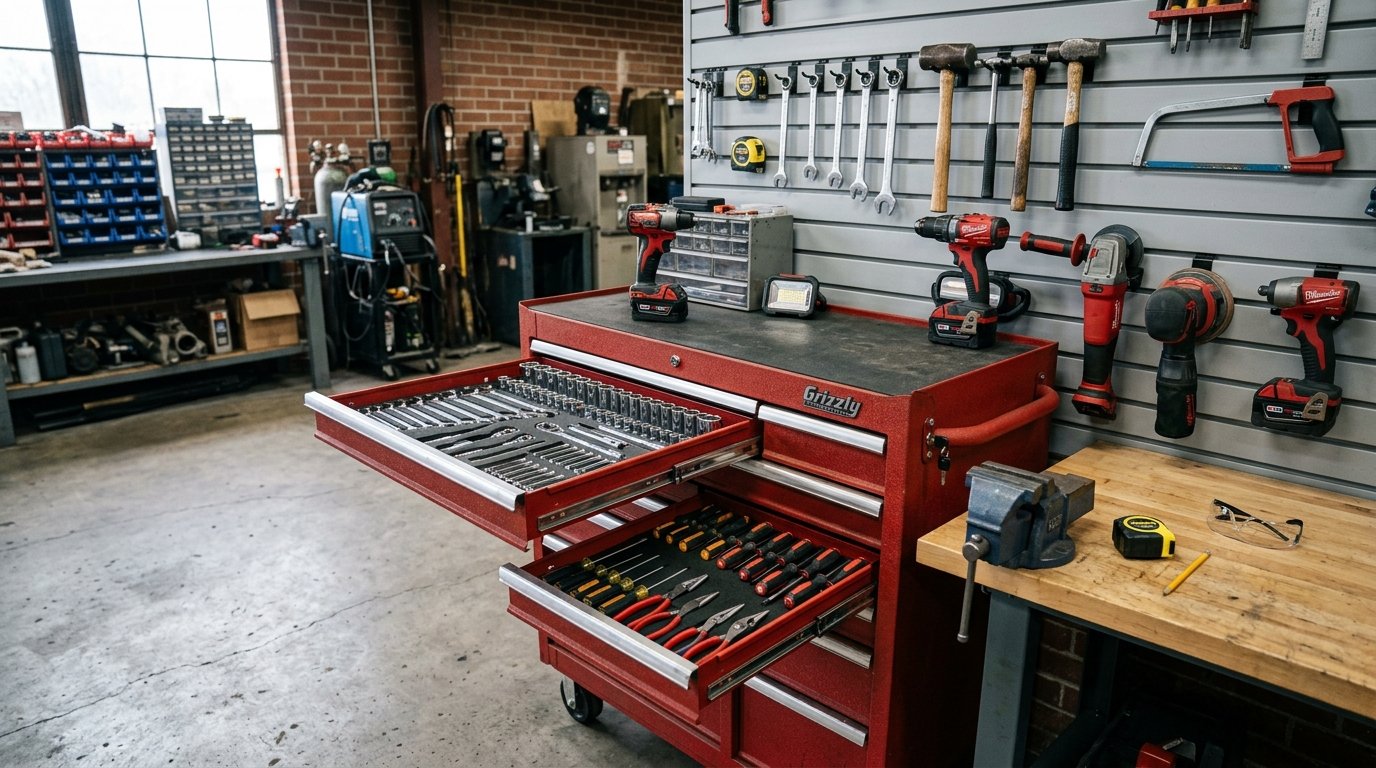
Compare Rolling Tool Box Types
| Mobile Storage System | Construction & Wheels | Weight Capacity (Rolling / Static) | Best Storage Application |
|---|---|---|---|
| Heavy-Duty Steel Roller Cabinet | 16 to 18-gauge double-wall steel / 5″ polyurethane casters | 1,000 lb rolling / 1,200 to 2,500 lb static | Professional auto shop mechanics, dense socket sets, air tools |
| Modular Stackable Jobsite Box | Impact-resistant polypropylene resin / 9″ rubber all-terrain wheels | 250 to 350 lb rolling load | Contractors, jobsite transport, power tools, cordless batteries |
| Mechanic Mobile Service Cart | 18-gauge steel frame / 4″ swivel locking casters | 400 to 600 lb rolling load | Quick diagnostic repair, daily maintenance, portable tray storage |
Steel Roller Cabinets for Workshops
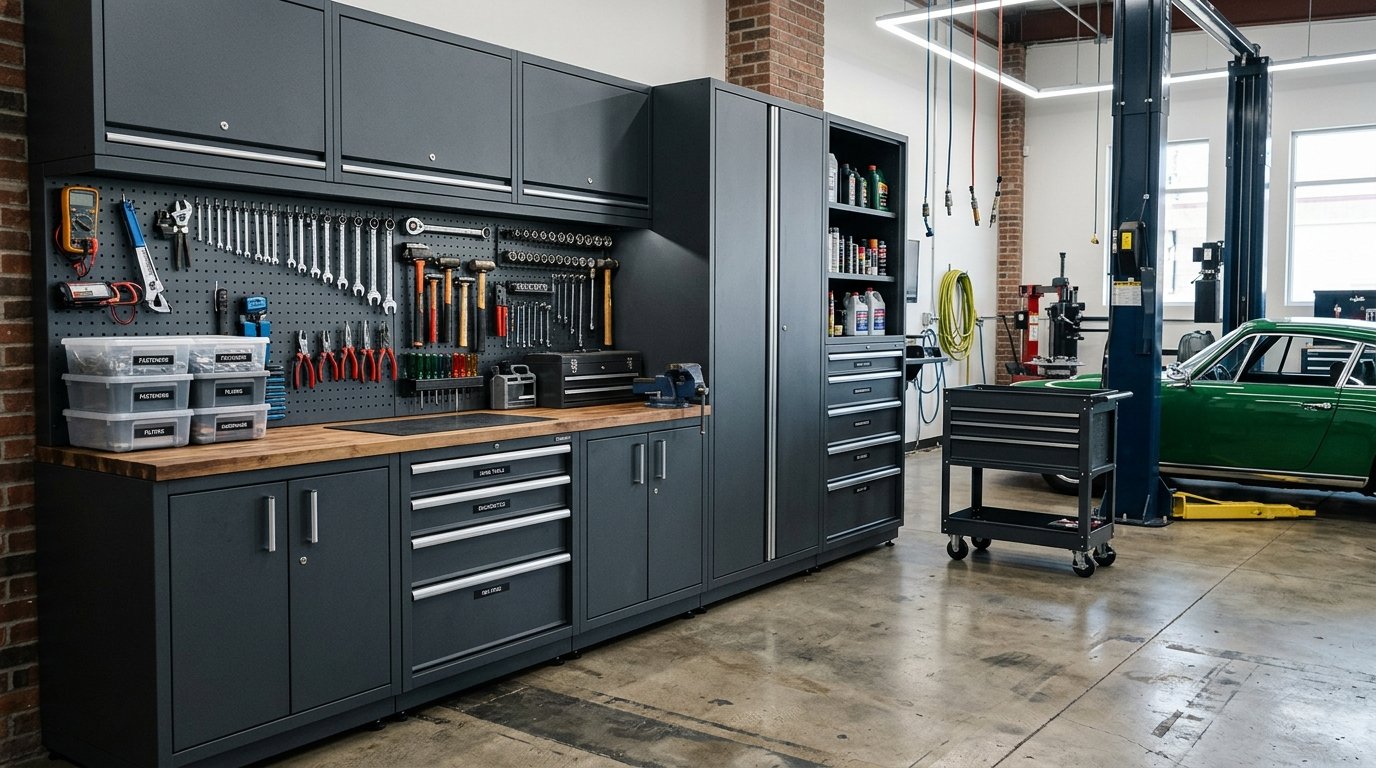
Steel roller cabinets are built for high tool density. Most quality models use 16-to-18 gauge welded steel, often with double-wall panels at the sides and front. Thicker steel helps the cabinet resist twisting when drawers carry sockets, impact guns, and large wrenches.
Look for full-width drawer pulls, reinforced drawer fronts, and a rigid lower frame. A cabinet that flexes when you push it can cause drawer gaps, caster stress, and poor alignment. Welded joints generally hold shape better than thin folded panels joined with a few screws.
Drawer slides and load ratings
Ball-bearing slides commonly support 100 to 200 pounds per drawer. That rating applies to a drawer loaded evenly. A deep drawer filled with sockets can place most of its weight near the front, increasing stress on the slides.
And mounting points.
Soft-close slides help control the final part of the closing motion. Positive detents keep drawers shut while the cabinet rolls over a ramp or floor seam. If the box has no detent, a heavy drawer can move open and shift the center of gravity.
Check the slide action before purchase. Pull each drawer fully open and watch for sagging, binding, or side-to-side movement. A drawer should stay level and close without a hard shove.
You can find more cabinet sizing details in this garage tool storage systems guide.
Best uses for steel cabinets
Steel cabinets suit permanent or semi-permanent shop storage. They hold large socket collections, electrical test equipment, air tools, fasteners, and spare parts hey also offer more drawer space than most modular systems.
They aren’t the easiest choice for stairs, gravel, or frequent truck loading. Steel adds weight before you place a single tool inside. If you move the box across rough ground every day, large rubber wheels and a lighter case will usually work better.
Modular Resin Boxes for Jobsites
Modular systems use impact-resistant structural polypropylene resin. Their sections latch together, so you can combine a rolling base, tool case, organizer, and small parts box. A telescoping metal handle and 8-to-9 inch rubber wheels make the lower unit easier to pull across uneven ground.
Resin cases handle bumps in truck beds and contact with concrete better than thin sheet steel. They won’t rust, and dents are less of a concern. Their main limits are drawer capacity, heat exposure, and storage volume.
Many modular cases use lift-out trays instead of full-extension drawers, so large hand-tool collections may need several boxes.
When modular storage makes sense
Choose a modular tool box in wheels if you work at changing locations. Electricians, remodelers, installers, and maintenance crews can load the system into a van,. Roll it over a threshold, and separate the sections at the work area.
Large wheels matter here. An 8 or 9 inch rubber wheel rolls over cords, small stones, door thresholds,. And floor joints more easily than a small shop caster.
Check the handle height and locking points. A loose telescoping handle makes heavy loads harder to control and can damage the case joints.
Modular boxes are a good buy for jobsite transport. They aren’t the best replacement for a large shop cabinet when you need many shallow drawers and permanent tool access.

Why Caster Ratings Can Mislead You
Caster labels often show a static capacity. is the weight a caster can support while standing still on a smooth surface. Rolling capacity is lower because movement creates impact, torque, and vibration.
For example, a four-caster cabinet rated for 2,000 pounds in a. Stationary position may have a practical rolling capacity near 1,000 pounds. The load won’t stay evenly shared as the cabinet crosses a seam.
One caster can take more force while another briefly loses contact.
How to check caster quality
- Look for 5 by 2 inch polyurethane casters on steel roller cabinets.
- Choose locking swivel casters at the front for steering and parking.
- Check that the caster plates are bolted or welded to reinforced mounting points.
- Inspect the wheel for a sealed bearing and a smooth turning surface.
- Use larger rubber wheels for gravel, thresholds, and unfinished floors.
Polyurethane wheels roll quietly and resist many shop chemicals. They work well on smooth concrete. Rubber wheels absorb more shock.
And provide better traction on rough surfaces, but they can leave marks or wear faster under very heavy loads.
Don’t fill a cabinet to its advertised maximum and then push it across a ramp. Keep heavy tools low, close the cabinet drawers, and use both hands on the handle. For workplace storage practices, review the OSHA material storage safety standards.
Features That Add Daily Value
Locks and drawer security
A tubular barrel lock gives better protection than a basic wafer lock. Some cabinets use an internal lock bar that secures every drawer with one key. Check the key position.
And make sure the lock doesn’t block the top drawer when the lid or work surface is open.
Locks won’t stop a determined thief, but they can prevent casual access and keep drawers closed during movement. A separate tool chest lock can also help when the box stays in a shared garage or service bay.
Power and charging access
Integrated power strips and USB ports are useful for cordless tool users. You can charge batteries inside the cabinet and keep a phone or inspection light powered at the bench. Check the cord length, outlet spacing, and circuit rating before connecting chargers and heated tools.
Power components should sit away from metal edges and areas that collect oil or water. Don’t treat a built-in strip as a substitute for safe electrical practice. Keep cords clear of casters and close the cabinet before moving it.
Work surfaces
A solid wood or rubberwood top turns a roller cabinet into a small workbench. Wood reduces noise when you set down parts and gives you a surface for assembly, measuring, or inspection. Check the top’s fasteners and finish, especially if you’ll use solvents or cutting fluids.
A rubber mat helps stop parts from sliding. It also protects the surface from scratches and keeps small components from rolling into a floor drain.
How to Size Your Rolling Tool Box
Start with the tools you own, then allow room for the next few years of purchases. Group tools by type and measure the largest items. Socket rails, cordless drills, torque wrenches, and cases often need more depth than their basic dimensions suggest.
Measure the storage location
Measure the doorway, work aisle, vehicle opening, and parking area. Leave enough clearance to open drawers fully. A cabinet that fits between two walls may still be difficult to use if its drawers hit a bench.
Or vehicle door.
Check the loaded height as well. A tall box can be hard to move through a low garage door or under shelving. Make sure the handle doesn’t hit overhead lights, pipes, or the raised door track.
Set a realistic load plan
Put heavy tools in the lowest drawers. Place common hand tools in the middle and small items near the top. This layout lowers the center of gravity and reduces tipping risk.
Separate metal parts from electronic tools and battery packs. Use drawer liners, dividers, and small bins to stop tools from sliding during movement. A loaded box should roll straight without pulling sharply to one side.
Service Carts Versus Rolling Chests
A service cart has open shelves, trays, or pegboard panels. It gives fast access during inspections, oil changes, production work, and daily maintenance. You can see the tools at a glance and move the cart close to the equipment.
A rolling chest has enclosed drawers and panels. It protects tools from dust, sparks, and casual handling. It also gives you better control over small parts and expensive hand tools.
Pick a service cart for speed and visibility. Pick a chest for security, organization, and higher tool density. Some workshops use both, keeping the main collection in a chest.
And placing a small set of daily tools on a cart.
Safety and Maintenance Checks
Inspect the wheels and frame once a month, or more often in a busy shop. Tighten loose caster bolts, check for damaged welds, and remove thread, wire, or debris from the wheel bearings. Replace a caster if it wobbles, binds, or has a cracked wheel.
Keep drawers below their rated load. Clean slide tracks and use the lubricant recommended by the manufacturer. Don’t force a drawer that has shifted off its track.
Lock the casters before opening several drawers. On a slope, position the cabinet across the slope instead of pointing it downhill. Push from the handle rather than pulling from the side.
Keep your feet clear of the wheels and never ride on a rolling tool box.
For storage design, material choices, and cabinet load information, read this metal garage cabinets guide. For industry handling references, see the Material Handling Institute technical standards.
Frequently Asked Questions
What is the difference between a rolling tool chest and a service cart?
A rolling tool chest uses enclosed drawers and cabinets for protected storage. A service cart uses open trays or shelves for quick access. Chests hold more tools.
And provide better security, while carts work well for repairs that use the same tools throughout the day.
How much weight can a tool box in wheels safely hold?
Heavy steel models may list 1,200 to 2,500 pounds of. Static capacity, with about 1,000 pounds as a practical rolling limit. Service carts often handle 400 to 600 pounds while moving.
Modular resin boxes commonly support 250 to 350 pounds when rolling. Follow the manufacturer’s rating and reduce the load for ramps, seams, and rough floors.
Are modular stackable rolling tool boxes worth the money?
Yes, if you move tools between vehicles, jobsites, and buildings. Their large rubber wheels, pull handles, and stackable sections make transport simple. A steel cabinet may provide better value for a fixed workshop because it offers more drawers and higher storage density.
What size wheels are best for moving a tool box over rough floors?
Use 8 to 9 inch rubber wheels for gravel, thresholds, and uneven concrete. For smooth shop floors, 5 inch polyurethane casters offer easy steering and good load support. Small 4 inch casters suit light service carts, but they can catch on seams and debris.
Final Buying Checklist
- Choose welded 16-to-18 gauge double-wall steel for a heavy workshop cabinet.
- Choose structural polypropylene resin for frequent jobsite transport.
- Confirm rolling capacity, not just static capacity.
- Look for 100 to 200 pound ball-bearing slides on loaded drawers.
- Choose positive drawer detents for ramps and uneven floors.
- Pick 5 inch polyurethane casters for smooth shops.
- Pick 8 inch or larger rubber wheels for rough ground.
- Check the lock, handle, work surface, power strip, and caster mounts.
- Measure every doorway, aisle, vehicle opening, and storage bay.
- Keep heavy tools low and never exceed the rolling load rating.
The best tool box in wheels matches your work surface, travel needs, and tool weight. Steel cabinets give you dense, secure workshop storage. Modular resin boxes make jobsite movement easier.
Service carts keep daily tools visible and close at hand. Focus on wheel quality, frame strength, drawer support, and safe load ratings, and you’ll get storage that works for years.

Callum Langham
Founder & Technical Storage Editor
Callum Langham is the founder and technical editor of Rack System. With over 12 years of hands-on field experience in warehouse logistics, garage organization, and industrial storage installations, Callum specializes in engineering safety standards, beam load calculations, and OSHA/RMI compliance. Every guide on Rack System is audited against verified steel gauge tolerances and municipal building codes.