A garden tool organizer keeps shovels, rakes, trimmers, hoses, and hand tools off the floor and ready to use. The right system also protects tool handles and reduces trip hazards. And gives you more usable space in a garage, shed, or outdoor storage area.
Start by counting your tools, checking their weight, and measuring the available wall or floor space. A wall-mounted steel rail works well for heavy tools and narrow sheds. A freestanding corner tower suits renters and storage areas where drilling isn’t allowed.
A rolling cart makes sense when you’ll carry tools around a large yard.
Quick Answer: How to Choose a Garden Tool Organizer
The best garden tool organizer combines a wall-mounted powder-coated steel gear track with rubber-dipped double hooks. Heavy-duty steel rail racks hold 300 to 450 lb total (50 lb per hook) when anchored into 16-inch on-center 2×4 studs using 1/4-inch by 2.5-inch lag screws. For renters or small garden sheds, freestanding corner towers hold 20 to 30 long-handled yard tools without drilling wall anchors.
Key Takeaways
- Wall Track vs Corner Tower: Steel wall rails save floor space and hold 450 lb; corner floor towers require zero wall drilling.
- Stud Mounting Physics: Heavy weed eaters and shovels require 1/4″ lag screws driven directly into 2×4 wall studs.
- Rubber-Dipped Hook Grip: Vinyl or rubber coating prevents long-handled fiberglass tools from slipping off brackets.
- Rust-Resistant Finish: Powder-coated steel tracks resist moisture and rust in unheated outdoor garden sheds.
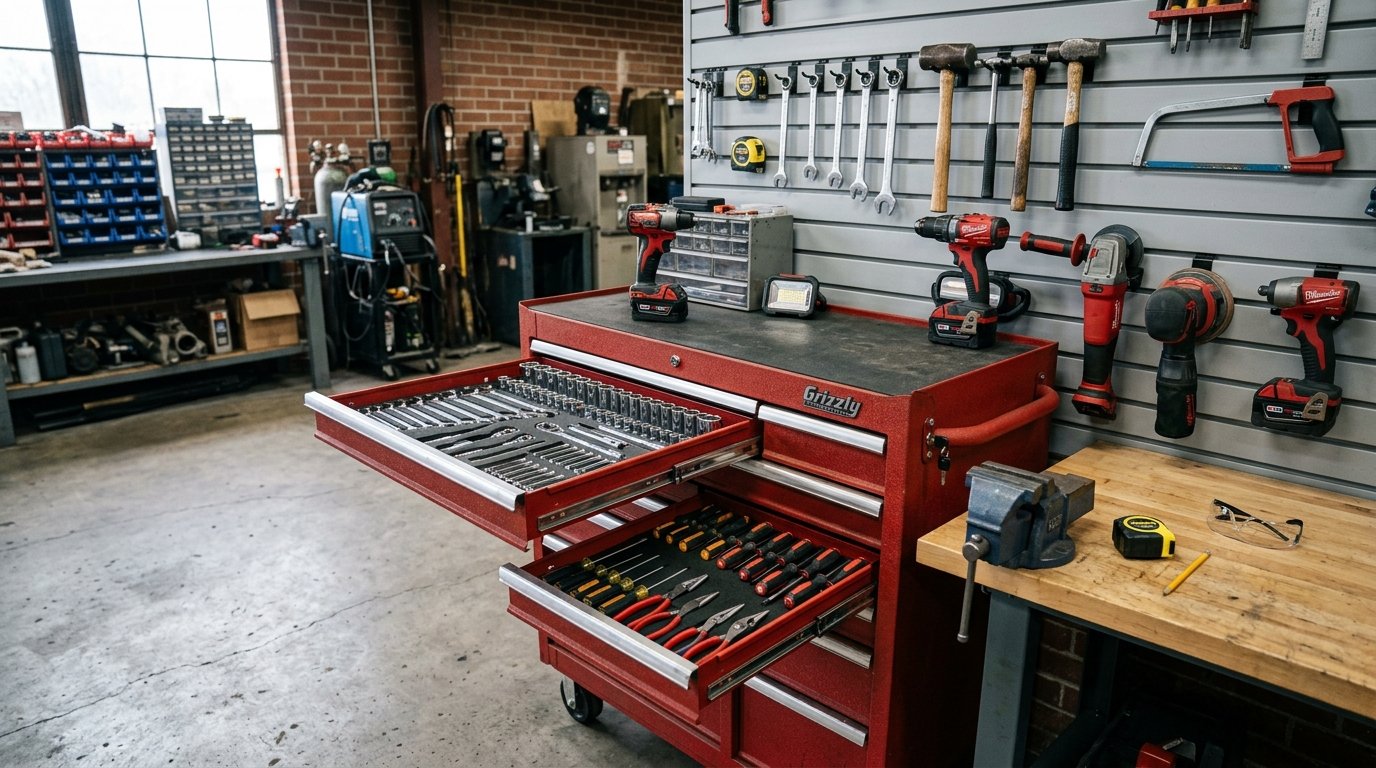
Compare Garden Tool Organizer Types
Each organizer type solves a different storage problem. Wall tracks use vertical space and keep tools visible. Corner towers provide many slots without wall work.
Rolling carts bring supplies and equipment close to the job.
| Organizer System Type | Mounting Style | Weight Capacity (Total / Slot) | Best Garden Storage Use |
|---|---|---|---|
| Wall-Mounted Steel Rail Track | Lag bolts into 16-in O.C. 2×4 studs | 300 to 450 lb total (50 lb per hook) | Weed eaters, heavy shovels, axes, extension ladders |
| Freestanding Corner Tool Tower | Floor standing / corner frame | 100 to 150 lb total (20 to 30 tool slots) | Rakes, brooms, hoes, small hand trowels, garden pruners |
| Mobile Rolling Yard Tool Cart | 4-wheel locking caster cart | 150 to 200 lb total | Portable yard maintenance, hoses, sprayers, soil bags |
Wall-mounted steel rail tracks
A steel rail track is usually the strongest choice for a garage or shed wall. The track spreads the load across several mounting points, while adjustable hooks let you set spacing for each tool. Rail lengths commonly range from 48 to 64 inches, so you can match the system to the wall.
Use double hooks for heavy tools and wide handles. Single hooks work well for pruners, hand saws, and smaller equipment. Staggered hook depths stop long handles from colliding.
And make it easier to lift one tool free without moving the others.
A wall track also saves floor space. You can mount it above a workbench, beside a shed door,. Or on a side wall that would otherwise remain unused.
Keep heavy tools low enough for safe lifting, and place light hand tools at eye level.
Freestanding corner tool towers
A corner tower stands on the floor and usually holds 20 to 30 long-handled tools. It fits neatly where two walls meet, so it uses less floor area than a wide rack. Most models support 100 to 150 pounds, which suits rakes, brooms, hoes, shovels, and smaller garden tools.
This type works well for renters because it doesn’t require wall anchors. It’s also useful when shed walls are made from thin panels, masonry, or damaged timber. Set the tower on a level floor, then check that the frame doesn’t rock before loading it.
Corner towers have limits. They take floor space, and their lower slots can collect dirt and water. Put a rubber mat beneath the frame if wet tools will go back into storage.
Keep the heaviest tools in the lower slots so the tower stays stable.
Mobile rolling yard tool carts
A mobile cart is useful when you move tools between a shed, greenhouse, driveway, and garden beds. Four locking casters help the cart roll over a smooth floor, while the locks stop it from moving during use. Typical capacity ranges from 150 to 200 pounds.
Use a cart for hoses, sprayers, soil bags, fertilizer, hand tools, and battery equipment. It can also serve as a staging point during a large yard project. Carts aren’t as space-efficient as wall tracks, and rough ground can make them hard to push.
Choose large wheels if the cart will cross gravel or uneven concrete.
Choose Capacity by Tool Weight
Don’t choose a garden tool organizer by slot count alone. A rack with 30 hooks may carry less weight than a rack with 12 heavy-duty hooks. Make a list of your largest items first, including gas trimmers, battery edgers, leaf blowers, axes, and extension ladders.
Wall-mounted systems commonly support 250 to 400 pounds, with 50 pounds per hook. Heavy-duty tracks can reach 300 to 450 pounds total when the rail and wall structure are rated for that load. The stated capacity only applies when the track is installed correctly and the weight stays within each hook’s limit.
Gas trimmers and edgers place a larger load on a hook than rakes or brooms. Their engines create a deep, uneven load, so use a broad double hook with a rubber or vinyl coating. Hang the tool by a strong frame section, not by a thin plastic guard or trigger housing.
Leave spare capacity for future tools. A rack loaded to its limit is harder to use,. And crowded hooks can cause tools to fall when one item is removed.
A practical target is to use about 70 to 80 percent of the listed capacity.
Check Materials and Finish
Powder-coated steel rails
Heavy-gauge steel gives a rail the stiffness needed for large tools. Powder coating adds a hard finish that helps resist scratches, moisture, and rust. This matters in an unheated shed where condensation forms on cold metal.
Look for fully coated rails, sealed mounting holes, and hardware suited to the wall material. A coating isn’t a license to leave the rack soaked. Wipe off wet tools when you can, and repair deep chips before rust spreads beneath the finish.
Rubber-coated hooks
Rubber or vinyl hook covers protect fiberglass and painted handles from scratches. They also add grip, which helps stop a long-handled tool from sliding sideways or falling off the bracket.
Check the hook opening before you buy. A narrow hook may not fit a thick shovel shaft or a trimmer frame. Double hooks are useful for tools with an offset shape, while deep cradles work better for hoses and cords.
Wall Mounting: Studs and Fasteners
A secure garden tool organizer depends on the wall behind it. Drywall anchors are suitable for light hand tools, but they aren’t a safe choice for heavy shovels, trimmers, or ladders. Mount the rail into structural wood studs whenever possible.
Most residential walls use studs spaced 16 inches on center. A typical heavy-duty installation uses 1/4-inch by 2.5-inch lag screws driven into 2×4 studs. The screw must pass through the rail, wall covering, and into solid wood.
Don’t rely on the drywall thickness to provide holding power.
How to install a wall rail
- Measure the wall: Mark the rail height and check that doors, windows, lights, and shelves won’t interfere.
- Find the studs: Use a stud finder, then confirm each location with a small pilot hole or a measurement from a known corner.
- Level the rail: Hold the track in place and mark every mounting hole that lines up with a stud.
- Drill pilot holes: Use a bit suited to the lag screw’s core diameter. Pilot holes reduce splitting and help keep the screws straight.
- Drive the lag screws: Tighten them firmly into the studs, but don’t crush the rail or strip the screw head.
- Test the rail: Pull down and outward on the track before hanging tools. Add a mounting point or revise the location if it flexes.
- Load it slowly: Start with light tools, then add heavier items while checking for movement.
Wall loads create both downward shear and outward pull. A trimmer hanging close to the wall places less stress on the fastener than a long ladder projecting several inches. Keep heavy items close to the rail, and use a second support point for long ladders or awkward equipment.
For more help with load ratings and wall hardware, see this garage tool storage systems guide. You can also review the metal shelves and brackets guide.
Organize Tools for Faster Access
Group tools by task, not just by size. Put digging tools together, pruning tools together, and cleanup tools together. This cuts the time spent searching and makes it easier to spot a missing item.
- Place shovels, spades, and post-hole tools on strong lower hooks.
- Keep rakes, brooms, and hoes in a separate group with their heads facing the same direction.
- Hang axes and hatchets where children can’t reach them, with blades covered.
- Store pruners, gloves, and hand trowels in a small bin or shallow shelf near the main rack.
- Use a dedicated hose hanger or cart instead of forcing a heavy hose onto a small tool hook.
- Leave space beside the rack for ladders and long poles.
Label hook groups if several people use the shed. A simple label such as “dig,” “prune,” or “water” helps everyone return tools to the same place. Keep a clear path from the door to the rack, and don’t place sharp tools at shoulder height.
Use a Rack in a Damp Shed
A damp shed needs rust-resistant storage. Powder-coated steel is a strong choice because its finish shields the metal from regular humidity and light condensation. Vinyl-coated hooks add another layer of protection at the contact points.
Ventilation still matters. Open vents when weather allows, avoid placing the rack against a wall that stays wet,. And fix roof leaks before installing storage.
Don’t hang muddy tools against the rail for long periods. Rinse soil off, dry the tool, and inspect the rack for chipped coating.
If the shed has severe moisture, choose stainless steel hardware or hardware with a corrosion-resistant finish. Inspect lag screw heads and mounting plates twice a year. Replace any fastener that shows deep corrosion or a loose fit.
Technical storage practices can be checked through the Material Handling Institute technical standards. For workplace storage areas, review the OSHA material storage safety standards.
Wall Track or Corner Tower?
Choose a wall track when you own the property, have sound studs, and need to store heavy equipment. It provides strong load capacity, uses vertical space, and keeps the floor clear for a mower or wheelbarrow.
Choose a corner tower when you can’t drill, the wall surface isn’t strong enough,. Or most of your tools are light and long-handled. It takes longer to remove a tool from a crowded tower, but setup is quick.
And the frame can be moved later.
For a large property, use both. Put heavy equipment on a wall rail, then place a corner tower near the shed entrance for daily-use rakes. And brooms.
A small rolling cart can hold supplies during work and return to the shed afterward.
Common Buying Mistakes
Ignoring the wall structure
A high weight rating won’t help if the rail is attached to weak paneling. Find studs first, and use the fasteners specified for the system.
Filling every slot
Too many tools make access difficult and can push hooks beyond their load rating. Leave working space between bulky items.
Buying shallow hooks
Short hooks may hold a broom, but they won’t safely support a gas trimmer or wide shovel handle. Match hook depth and shape to the tools you own.
Skipping maintenance
Dust, soil, and moisture wear down finishes. Wipe the rack, tighten loose hardware, and replace damaged hook covers before a tool slips.
Frequently Asked Questions
What is the best way to organize garden tools in a garage or shed?
Use a wall-mounted steel rail for heavy tools and a corner tower for light long-handled tools. Place frequently used items near the door, keep sharp tools secure, and group tools by task. A rolling cart works well for hoses, sprayers, soil bags, and equipment that moves around the yard.
How do I securely mount a garden tool organizer to wall studs?
Find the 2×4 studs, level the rail, drill pilot holes, and drive 1/4-inch by 2.5-inch lag screws into solid wood. Use every available mounting hole that lines up with a stud. Test the empty rail for movement before adding heavy tools.
What materials are best for outdoor shed garden tool racks?
Heavy-gauge powder-coated steel is a strong choice for rails and frames. Rubber or vinyl-coated hooks add grip and protect tool handles. Use corrosion-resistant screws and inspect the finish after wet seasons.
Can a garden tool organizer hold heavy gas trimmers and edgers?
Yes, a heavy-duty wall rail can hold gas trimmers. And edgers when its hooks support at least 50 pounds and the rail is anchored into studs. Use deep, rubber-coated double hooks, keep the equipment close to the wall, and stay within the total rack rating.
Final Selection Checklist
Before buying a garden tool organizer, measure the available wall and floor area. Count your tools, estimate the weight of your heaviest items, and check the material of the mounting surface. Pick a wall track for high capacity.
And clear floors, a corner tower for drill-free storage, or a rolling cart for portable yard work.
Look for powder-coated steel, rubber-dipped hooks, adjustable spacing, and clear load ratings. Install heavy systems into studs with suitable lag screws. With the right layout.
And regular checks, your tools will stay safer, cleaner, and easier to grab when the work starts.

Callum Langham
Founder & Technical Storage Editor
Callum Langham is the founder and technical editor of Rack System. With over 12 years of hands-on field experience in warehouse logistics, garage organization, and industrial storage installations, Callum specializes in engineering safety standards, beam load calculations, and OSHA/RMI compliance. Every guide on Rack System is audited against verified steel gauge tolerances and municipal building codes.