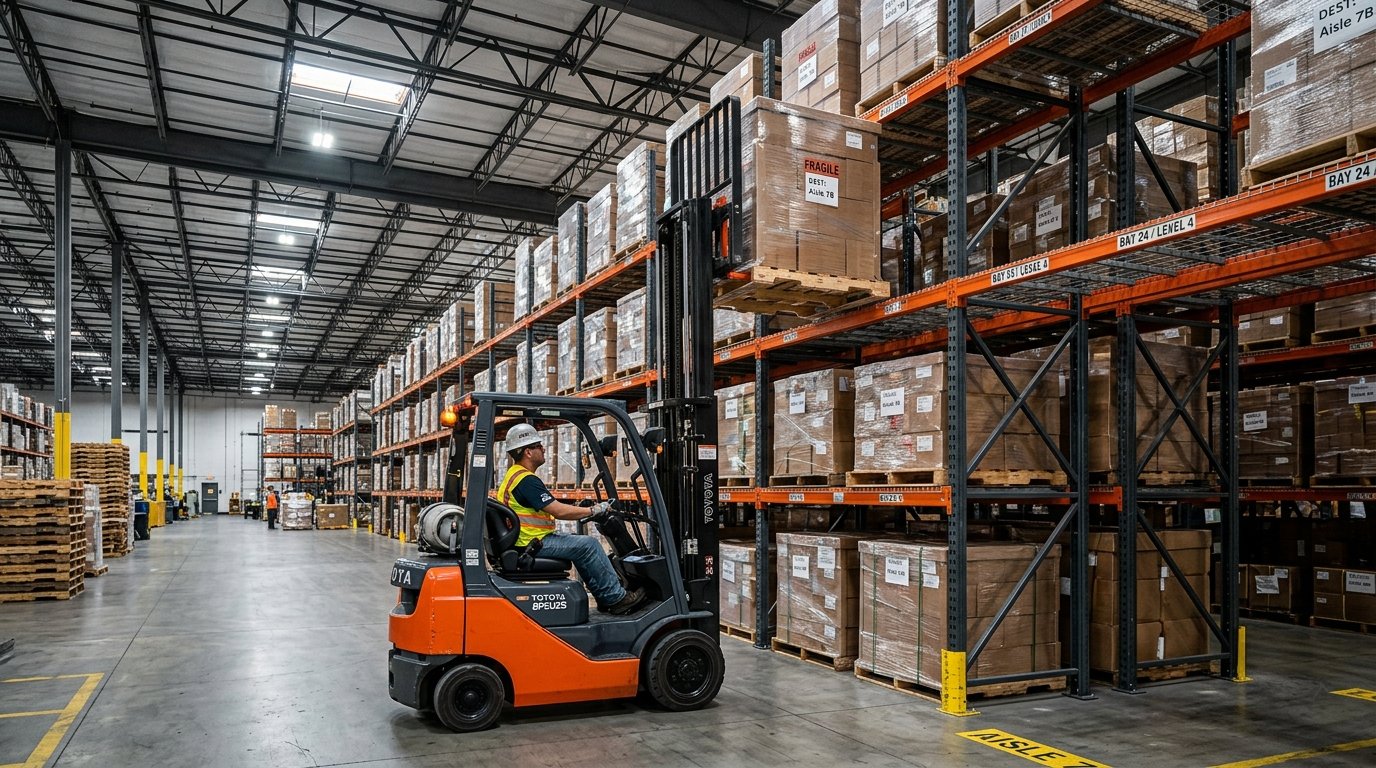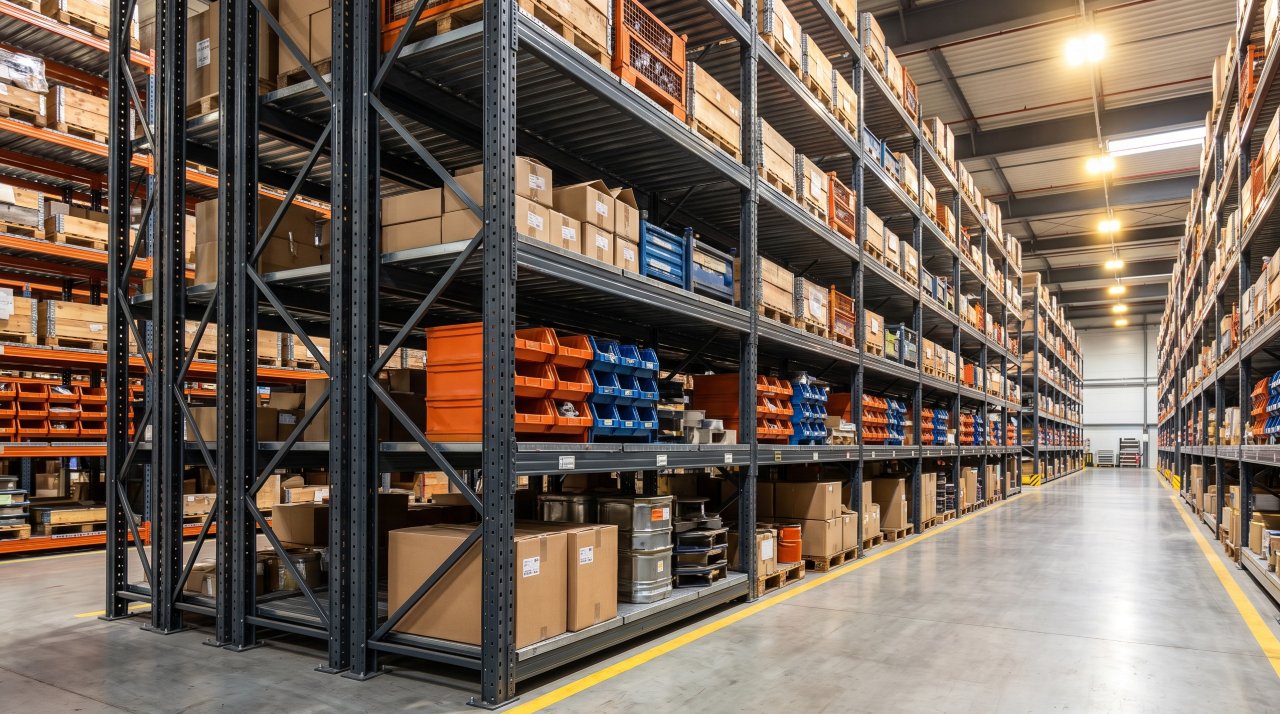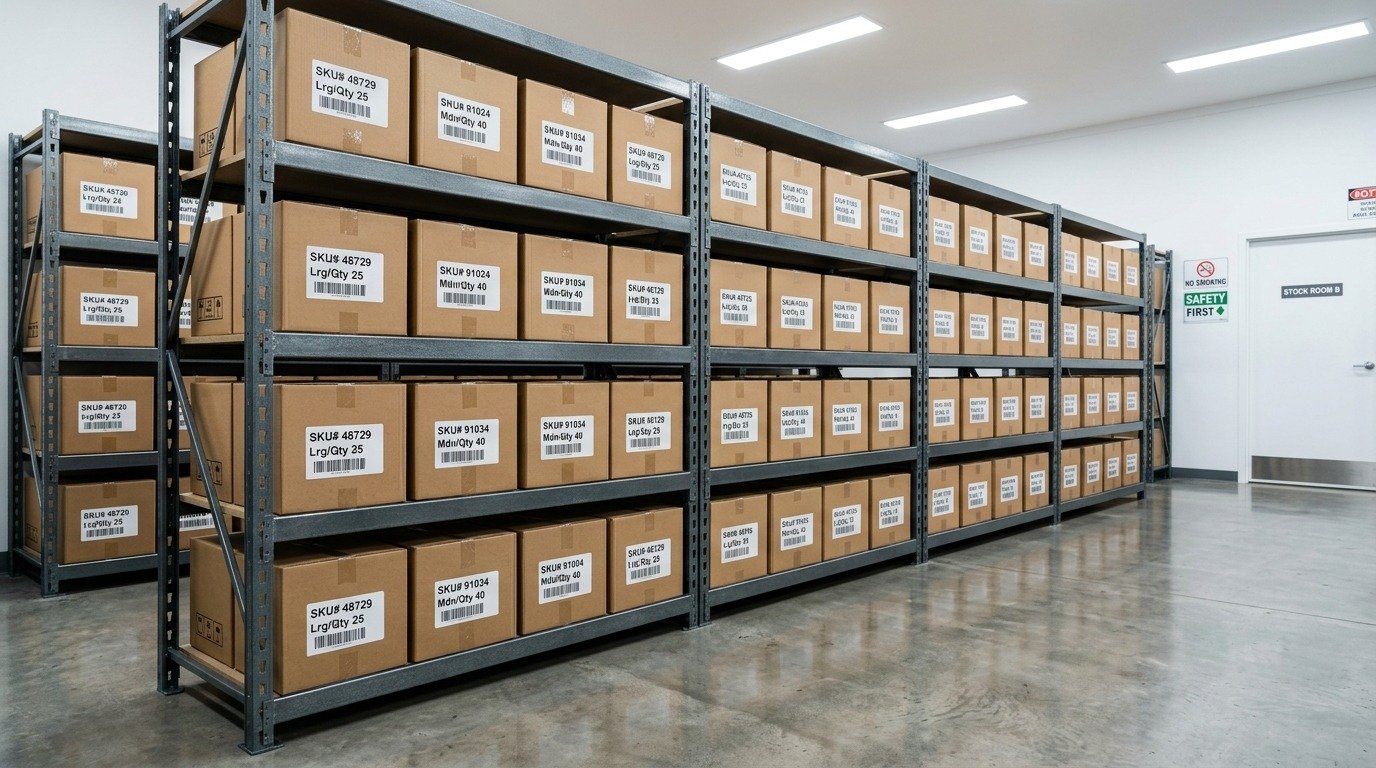
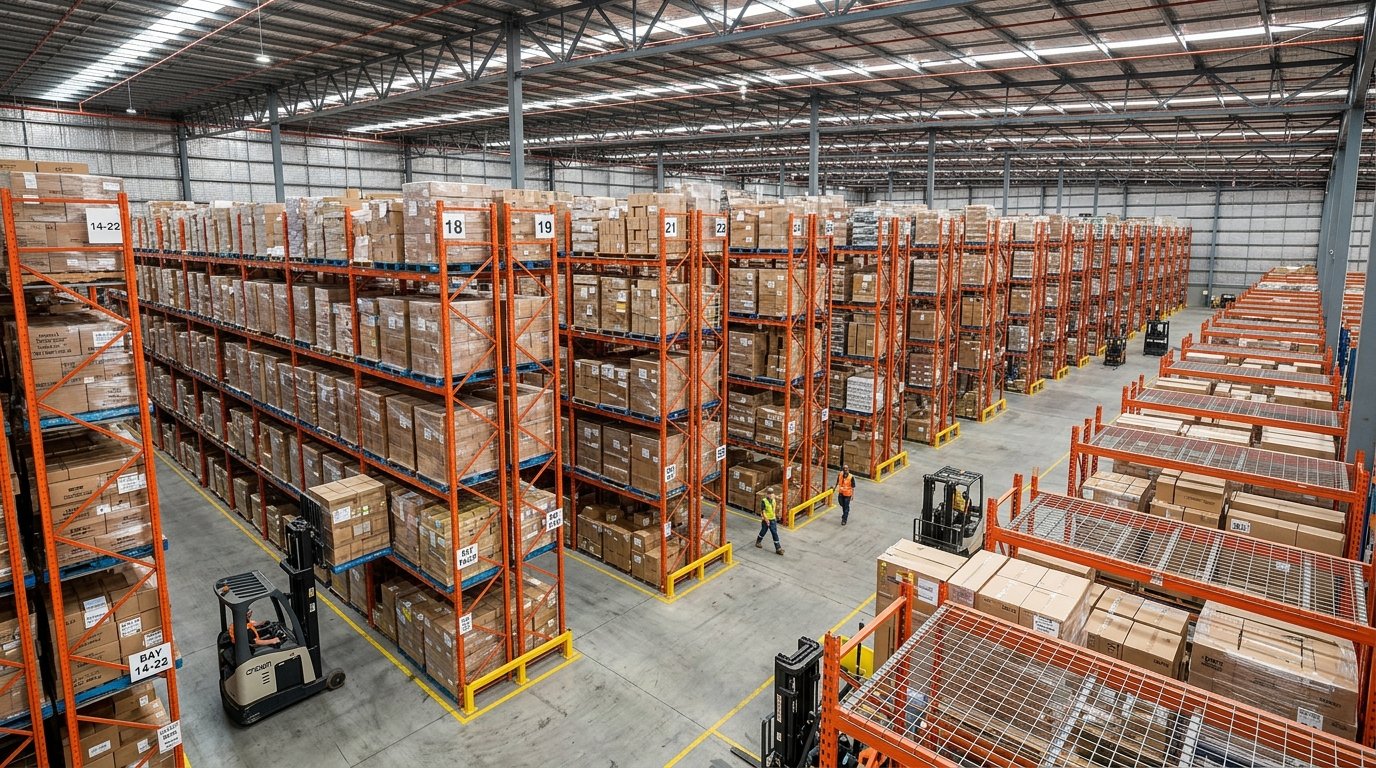
Industrial shelving gives warehouses, workshops, stockrooms, and maintenance areas a safe way to store loose goods. The right system can hold small parts, boxed inventory, tools, archive files,. And heavy machine components without taking up unnecessary floor space.
Choosing a shelf system isn’t just a matter of picking the largest weight rating. You’ll need to check the load per shelf, shelf depth, steel gauge, decking, assembly method, row layout, and required bracing. You’ll also need to separate evenly distributed loads from concentrated loads.
Since a shelf rated for uniform weight may not support the same weight placed in one small area.
Quick Answer: How to Spec Industrial Shelving
Industrial shelving is categorized into clip-style steel, boltless rivet, bulk rack, and wire shelving. Light-duty units hold up to 500 lb UDL, medium-duty units support 500 to 2,000 lb UDL per shelf, and heavy-duty bulk racks handle up to 4,000 lb per level. Select 14-to-16 gauge steel for heavy warehouse loads and use starter units (4 posts) combined with cost-saving adder units (2 posts) for long row runs.
Key Takeaways
- Load Rating Categories: Light-duty (<500 lb UDL), Medium-duty (500 to 2,000 lb UDL), and Heavy-duty bulk rack (up to 4,000 lb per level).
- Starter vs Adder Math: Starter units use 4 independent posts, while Adder units save money by sharing 2 posts with adjacent bays.
- Assembly Connection Types: Clip-style offers 1-inch shelf adjustment; boltless rivet drop-in provides fast tool-free setup.
- Bracing & Stability: Heavy-duty rows require side and back X-sway bracing or rigid box frames to prevent racking collapse under load.
What Is Industrial Shelving?
Industrial shelving is a steel storage system built for regular commercial or warehouse use. It generally uses upright posts, horizontal shelves, braces, and a decking surface. Most systems are designed for hand-loaded goods, so workers can place or remove items without a forklift.
Ratings are usually stated as UDL, or uniform distributed load. A 1,500-pound UDL shelf rating means the shelf can support 1,500 pounds spread across its full surface. It doesn’t mean one 1,500-pound motor can safely sit in the center.
Point loads may require a different shelf, added support, or a rack system designed for that item.
Industrial shelving differs from household shelving in its steel thickness, connection design, load testing, bracing, and service life. A home unit may work for light storage, but it often lacks the capacity. And stability needed for a busy warehouse or shop.
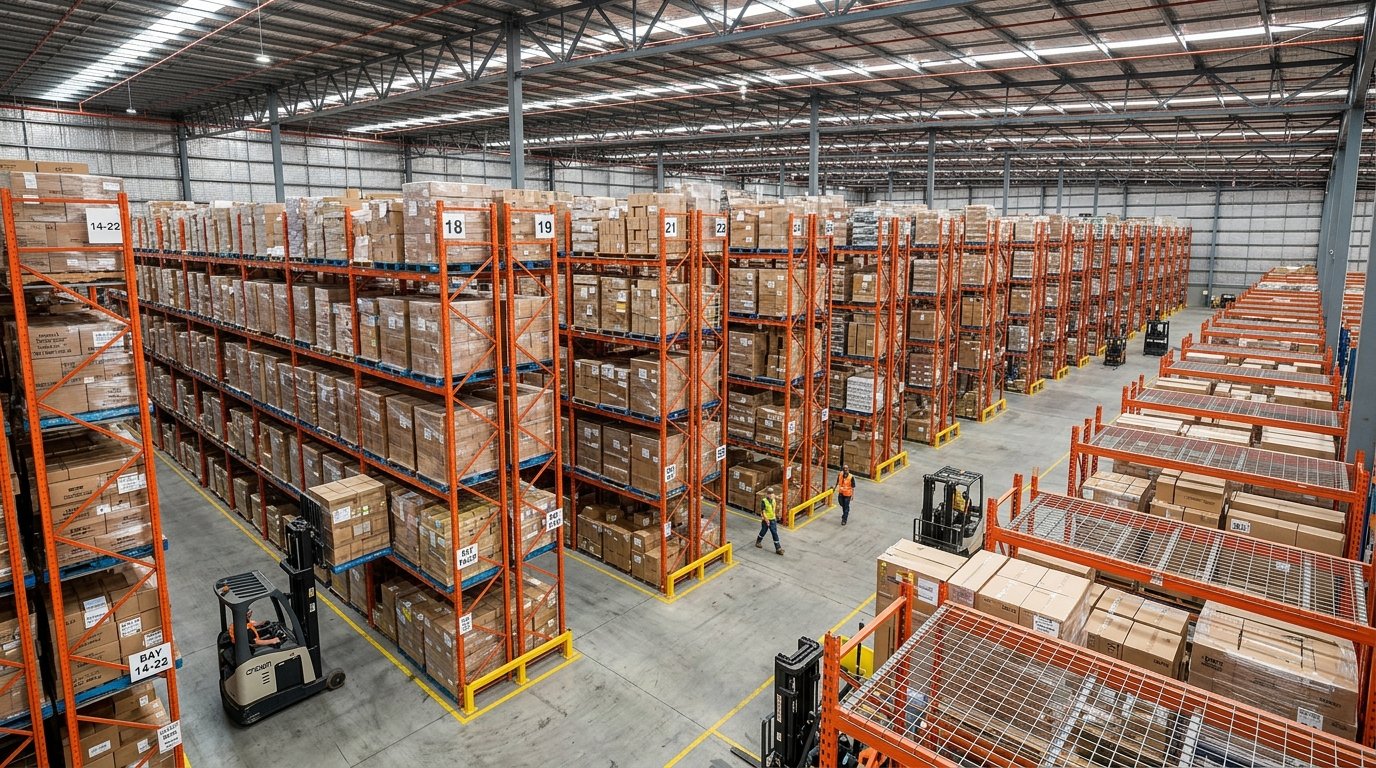
Four Main Types of Industrial Shelving
Clip-Style Steel Shelving
Clip-style steel shelving uses upright posts with punched slots and shelves supported by clips. Shelf levels can usually be adjusted on 1-inch centers. That makes this format useful when box heights change often or workers need to adjust shelf spacing for new stock.
Clip-style units commonly use 18 to 22-gauge steel and support light to moderate loads. They work well for fasteners, hand tools, small parts, archive boxes, and packaged stock. Assembly is straightforward, but each clip must sit correctly in its slot.
A poorly seated clip can reduce shelf stability.
Boltless Rivet Shelving
Boltless rivet shelving uses rivets on the beams and keyhole slots in the upright posts. The beams drop into place, so most units can be assembled without nuts, bolts, or power tools. A rubber mallet may help seat the connections.
This system is a strong choice for medium-duty storage. It can use particle board, steel, or wire decking, depending on the product. Rivet shelving often supports 500 to 2,000 pounds per shelf under a UDL rating.
It’s useful for boxed inventory, tools, containers, and maintenance supplies.
Check the beam connection after assembly. The rivet should be fully seated, and the upright should remain straight. Add braces or a rigid frame if the unit will be tall, heavily loaded, or placed in a high-traffic area.
Bulk Rack Shelving
Bulk rack shelving is built for large, heavy items that are loaded by hand. It commonly uses structural steel uprights, heavy beams, and particle board, steel, or wire decking. Heavy span systems can support 2,000 to 4,000 pounds per level when the load is properly distributed.
Bulk rack works well for machinery parts, large cartons, long components, drums, and palletized hand-loads. It gives you more shelf width and depth than standard small-parts shelving. Because the loads are heavier, the rack must have proper bracing and must be installed on a suitable floor.
Wire Shelving
Wire shelving uses open mesh shelves, often with adjustable posts and clip connectors. Air can move through the shelf levels, which helps in areas where dust control, drainage, or ventilation matters. The open design also allows sprinkler water and light to pass through more easily than solid decking.
Wire shelving is common in food service storage, clean areas, medical supply rooms, parts rooms, and general stockrooms. It’s easy to clean and helps workers see stored goods. Check the actual load rating, since wire shelf capacity varies by shelf width, depth, post design, and beam support.
Industrial Shelving Comparison
| Shelving System | Steel Gauge | UDL Shelf Rating | Best Industrial Use |
|---|---|---|---|
| Clip-Style Steel Shelving | 18 to 22-gauge steel | 400 to 800 lb per shelf | Small parts, hardware, archive files |
| Heavy-Duty Rivet Shelving | 14 to 16-gauge steel | 1,000 to 1,800 lb per shelf | Heavy boxed inventory, tools, equipment |
| Bulk Rack Heavy Span | 14-gauge structural steel | 2,000 to 4,000 lb per level | Palletized hand-loads, heavy machinery parts |
Use this table as a starting point, not as a replacement for the manufacturer’s data sheet. A shelf rating can change with the unit width, depth, number of levels, beam position, decking type, and connection style.
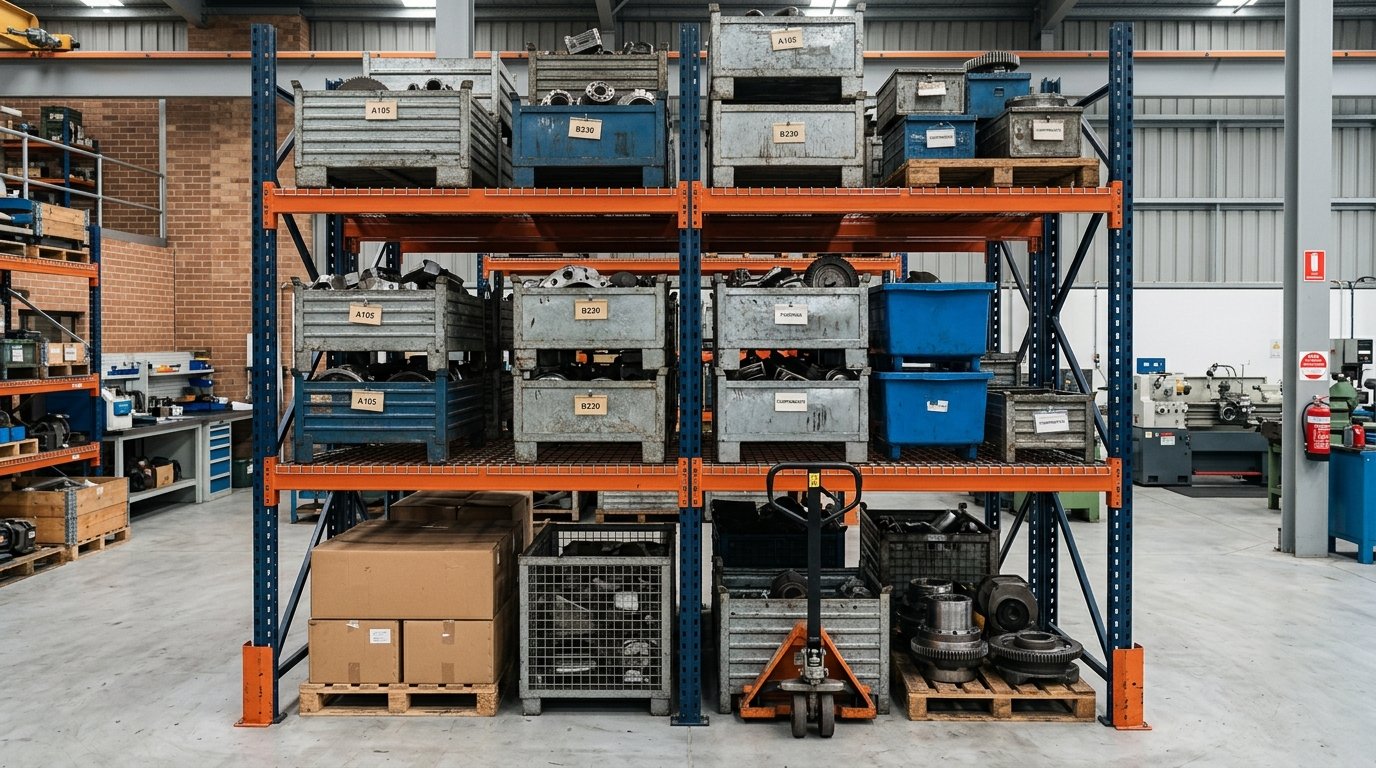
How Load Ratings Work
Load planning starts with the total weight on each shelf. Add the weight of every box, bin, tool, or component that will sit on one level. Then compare that total with the shelf’s UDL rating.
For example, six cartons weighing 180 pounds each create a 1,080-pound load. A shelf rated for 1,200 pounds UDL appears to have enough capacity,. But you still need to check how the cartons sit.
If the boxes are grouped in the middle, the shelf may see a concentrated load rather than an even load.
Keep these points in mind:
- Use the lowest rating shown for the exact shelf size and configuration.
- Count the weight of containers, pallets, bins, and decking where required.
- Keep heavy products low to reduce the chance of a tip or falling load.
- Don’t exceed the shelf rating even for a short period.
- Check post capacity separately from shelf capacity.
- Inspect beams for deflection, dents, cracked welds, or damaged connectors.
Post capacity matters because the uprights carry the combined weight of every shelf above them. A unit with five levels rated at 1,000 pounds each may place up. To 5,000 pounds on the frame, before accounting for the unit’s own weight.
The post rating, frame design, bracing, and floor condition must support that total.

Choosing Steel Gauge and Decking
Steel gauge describes material thickness. A lower gauge number generally means thicker steel. Heavy-duty shelving often uses 14 to 16-gauge steel, while lighter clip-style systems may use 18 to 22-gauge steel.
Gauge alone doesn’t determine capacity. The shape of the beam, shelf span, reinforcement, welds, post profile, and connection points also affect performance. Use the published rating for the complete shelf assembly instead of choosing based on gauge alone.
Decking Options
Particle board: This is a common, affordable option for cartons and general stock. It provides a solid surface, but moisture can cause swelling or damage. Use it in dry areas unless the product has a suitable moisture-resistant finish.
Steel decking: Steel shelves handle regular industrial use and resist impact better than many wood products. They’re a good fit for tools, parts, and containers that may be placed on shelves with force.
Wire decking: Wire mesh allows airflow and improves visibility. It’s useful in areas that need drainage or easy cleaning. Small parts may need bins or a shelf liner to stop them from falling through the mesh.
Pick decking based on the stored goods, cleaning needs, moisture exposure, and point loads. A narrow machine foot may need a solid surface. Or a support plate even when the shelf’s UDL rating is high.
Starter and Adder Unit Planning
A starter unit is a standalone shelving section with four independent posts. It can support its own shelves without connecting to another section. An adder unit typically has two posts and attaches to a starter or an existing section.
Adder units reduce material cost because adjacent sections share posts. This saving can be significant in long rows. For example, a four-section run may use one starter and three adders instead of four separate four-post units.
Plan the row before placing an order. Measure the wall, aisle, doors, columns, sprinkler lines, and equipment clearance. Confirm that the adder connection is compatible with the starter system.
Don’t mix connection styles just because the dimensions appear similar.
Use standalone starter units at the ends of a row when the layout may change. Use adders for fixed runs where the sections will stay connected. If a row needs to be moved often, individual starter units may offer more flexibility despite the higher initial cost.
Bracing and Stability Rules
Heavy loads create more than a vertical capacity issue. A tall shelving row can sway from uneven loading, impacts, vibration, or an uneven floor. Bracing keeps the frame square and limits side-to-side movement.
Heavy-duty rows generally need side and back X-sway bracing or rigid box frames. Follow the supplier’s instructions for brace placement and maximum height. A brace that’s missing, bent, or installed in the wrong position can reduce the system’s stability.
Anchor shelving when the product instructions or site conditions call for it. Anchoring may be needed for tall units, seismic areas, forklift traffic, uneven floors, or units located near work areas. Keep aisles clear and protect exposed uprights with guards where powered equipment operates.
Review the OSHA material storage safety standards before setting up a storage area. For design references, testing information, and material handling guidance, consult the Material Handling Institute technical standards.
Installation Checklist
Good installation starts before the first post is assembled. Use this checklist:
- Confirm the floor is level, clean, and strong enough for the planned load.
- Check the shelf width, depth, and height against the room measurements.
- Read the assembly instructions for the exact model.
- Sort posts, beams, clips, rivets, braces, decking, and hardware.
- Build starter units first, then connect adder units if the design uses them.
- Seat every clip or rivet fully before adding the next shelf.
- Install all required back, side, or rigid bracing.
- Check that each shelf is level and that the frame is square.
- Install anchors, guards, or wall ties where specified.
- Add clear load labels before placing inventory.
Don’t modify posts, drill new holes, cut braces,. Or weld extra supports without approval from the manufacturer or a qualified engineer. Changes can affect the tested capacity and may create weak points.
Where Industrial Shelving Works Best
Use clip-style shelving for small parts rooms, hardware storage, archives, and light cartons. Adjustable shelf levels make it easier to store mixed box sizes.
Use rivet shelving for medium-weight inventory that needs quick assembly and a solid frame. It works well in maintenance shops, distribution stockrooms, retail back rooms, and parts departments.
Use bulk rack for large, heavy goods that need wide or deep shelves. It’s suited to equipment parts, large containers, long products, and hand-loaded pallet goods. Leave enough aisle space for safe lifting and item removal.
Use wire shelving in clean, ventilated, damp, or temperature-sensitive areas. It’s a practical choice for supplies that need visibility and airflow.
For larger storage plans, review this guide to heavy duty industrial shelving. If your operation needs pallet storage or forklift access, compare it with industrial storage racks.
Buying Mistakes to Avoid
Using the Maximum Rating as a Target
A maximum rating isn’t a recommended daily target. Leave practical capacity for changes in inventory, uneven placement, and handling damage. Use the correct rating for the shelf span and decking, not a similar model listed in a general catalog.
Ignoring Shelf Depth
A shelf that’s too shallow can leave goods unstable. A shelf that’s too deep can create hidden stock, poor access, and unsafe reaching. Measure the product footprint and add enough clearance for labels and hand access.
Skipping Bracing
Bracing isn’t decorative. It controls sway and helps keep the frame square. Install every required brace before loading the unit.
Mixing Parts From Different Systems
Posts, clips, beams, and shelves from different brands may look similar but have different dimensions and ratings. Use approved components from one compatible system.
Failing to Label Shelves
Clear labels show workers the maximum permitted load. Add labels at eye level and update them when shelf levels, decking, or inventory change.
Frequently Asked Questions
What are the different types of industrial shelving and their uses?
The four main types are clip-style steel, boltless rivet, bulk rack, and wire shelving. Clip-style steel suits small parts, hardware, and files. Rivet shelving handles medium-duty boxed goods, tools, and equipment.
Bulk rack supports large and heavy items. Wire shelving works well where airflow, drainage, visibility, or easy cleaning matters.
How do I choose the right industrial shelving for my needs?
Start with the weight and size of the stored goods. Calculate the UDL for each shelf, then check the post capacity and the full unit rating. Select the shelf depth, decking, steel gauge, and assembly style that match the work area.
Also check aisle width, floor condition, bracing, anchoring, and future inventory changes.
What is the difference between starter and adder units in industrial shelving?
A starter unit has four posts and works as a standalone section. An adder unit has two posts and connects to an adjacent section, allowing both units to share posts. Adders cost less for long fixed rows, while starters offer more flexibility for separate units or layouts that may change.
How much weight can industrial shelving hold?
Light-duty shelving generally holds less than 500 pounds UDL per shelf. Medium-duty shelving supports about 500 to 2,000 pounds UDL per shelf. Heavy-duty bulk rack can support up to 4,000 pounds per level.
The actual capacity depends on the shelf dimensions, steel, decking, frame, bracing, connections, and load placement.
Final Selection Checklist
Before ordering industrial shelving, write down the heaviest item, total load per level, product dimensions, shelf count, required access,. And room measurements. Then confirm the manufacturer’s rating for the complete configuration.
Choose starter units for standalone sections and adders for connected rows. Use 14 to 16-gauge steel for demanding warehouse loads, select decking that suits the product, and install all required bracing. With those checks in place, you’ll have a storage system that fits the work area and supports safer daily handling.

Callum Langham
Founder & Technical Storage Editor
Callum Langham is the founder and technical editor of Rack System. With over 12 years of hands-on field experience in warehouse logistics, garage organization, and industrial storage installations, Callum specializes in engineering safety standards, beam load calculations, and OSHA/RMI compliance. Every guide on Rack System is audited against verified steel gauge tolerances and municipal building codes.