Quick Answer: Selecting a Shoe Rack with Doors
A shoe rack with doors is an enclosed storage cabinet designed to conceal footwear clutter, block household dust, and maintain clean entryway sightlines. The five primary door styles are slatted louvered doors, slim tilt-out drop-down drawers, sliding barn doors, tempered glass display fronts, and ventilated steel lockers. Proper sizing requires a minimum internal shelf depth of 13 to 14 inches (33 to 35 cm) to fit adult shoes up to men’s size 13 flat against the shelves, or 7 to 9.5 inches for angled drop-down compartments. Passive ventilation features, including open-slat louvers and rear metal air grommets, are critical to prevent moisture entrapment, mold growth, and trapped bacterial odors.
Key Takeaways
- The 13-Inch Depth Rule: Standard hinged-door cabinets must provide at least 13 inches of usable interior shelf depth, or larger footwear will prevent the doors from latching shut.
- Mandatory Air Circulation: Sealed airtight shoe cabinets trap sweat moisture from worn footwear. Always choose slatted louver doors or units with rear cut-out ventilation ports.
- Space-Saving Tilt-Out Drawers: For narrow corridors under 36 inches wide, drop-down tilt-out compartments store footwear vertically in a cabinet only 7 to 9.5 inches deep.
- Anti-Tip Wall Anchoring: Tall, narrow shoe cabinets must be anchored into solid wall studs with anti-tip brackets to prevent dangerous forward tipping under load.
The Open Rack vs. Enclosed Cabinet Dilemma
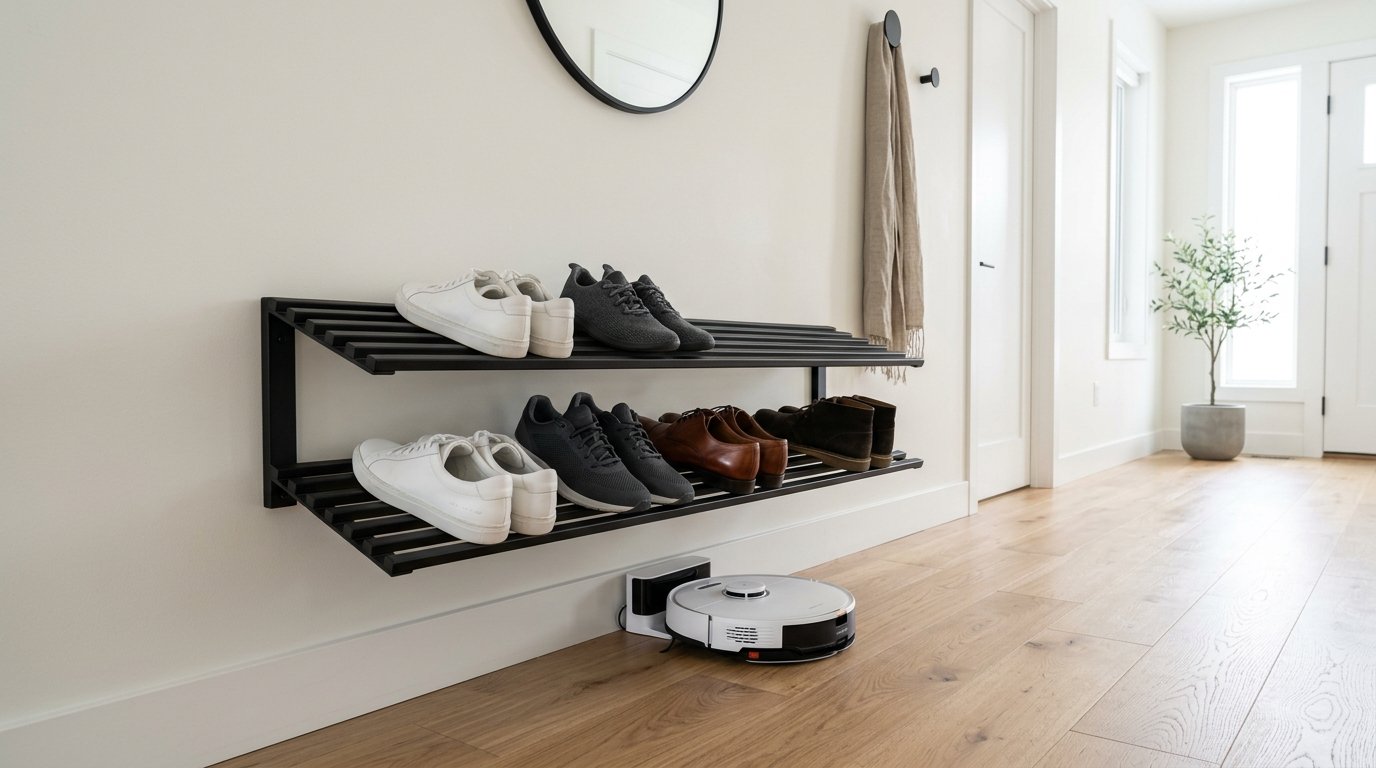
Open metal and wire shoe racks offer outstanding natural airflow and rapid grab-and-go convenience. However, an open shoe rack in a main foyer exposes every muddy sneaker sole, scuffed work boot, and disordered shoe pair directly to arriving guests. For comparing open multi-tier options, review our shoe rack for entryway sizing guide.
Investing in a shoe rack with doors transforms an untidy entry zone into an architectural furniture focal point. Enclosed cabinets hide visual clutter behind textured wood, clean laminates, or painted steel panels. Cabinets also protect high-end leather footwear from airborne dust, household pet chewing, and direct sun fading.
The core challenge of enclosed shoe storage is moisture management. The human foot produces up to four ounces of perspiration during an active workday. Storing damp footwear inside an unventilated wooden box creates a breeding ground for bacterial odor and leather mildew.
5 Architectural Door Styles for Shoe Storage
How the cabinet doors open dictates the clearance required in your hallway or mudroom. Different mechanical door designs solve distinct spatial and functional challenges. For heavy-duty metal alternatives, explore our metal shoe rack steel tier guide.
1. Louvered and Slatted Doors
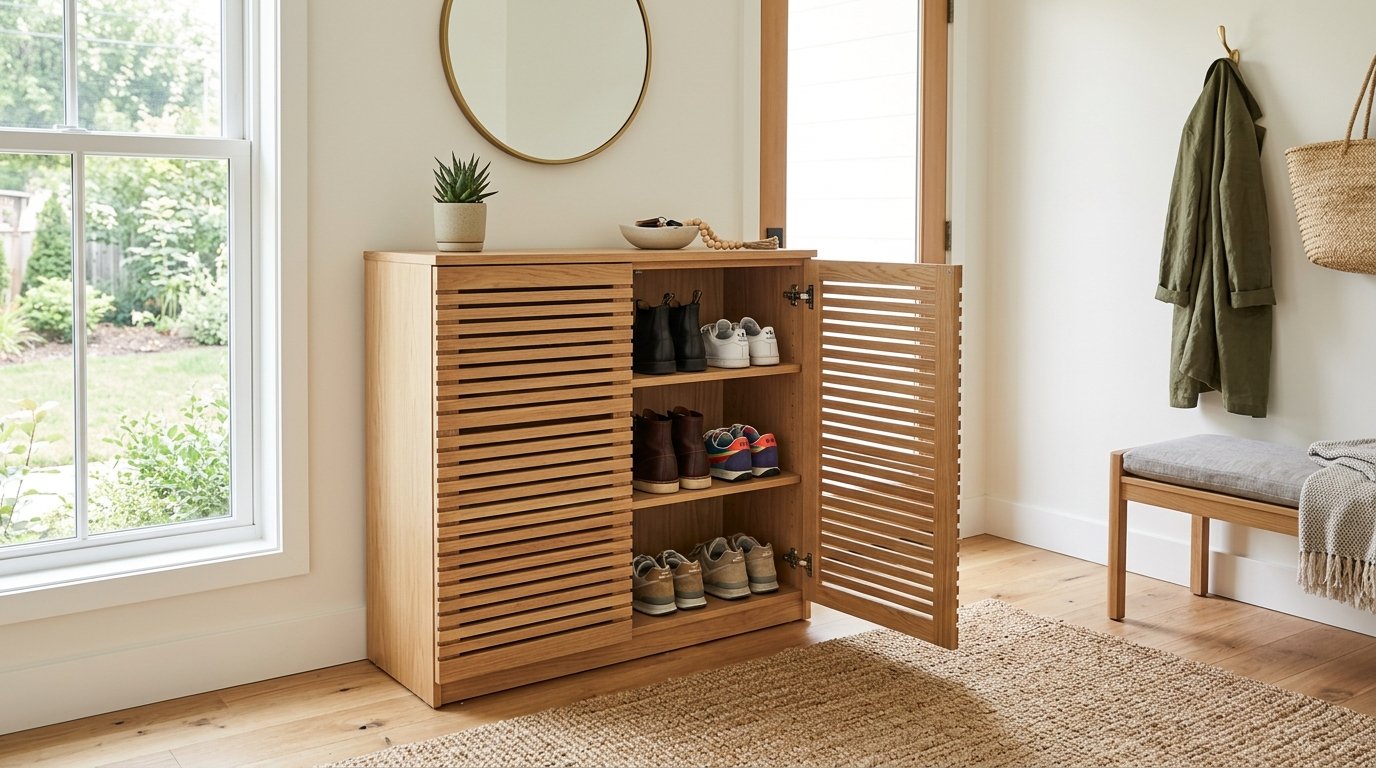
Louvered doors feature horizontal angled wooden slats set into a sturdy perimeter frame. This classic shutter design provides uninterrupted passive airflow while maintaining complete visual privacy for the footwear inside.
Because ambient air enters through the lower louvers and exits through the upper slats, moisture evaporates continuously. Louvered shoe cabinets represent the ideal choice for warm, humid climates and high-traffic family mudrooms.
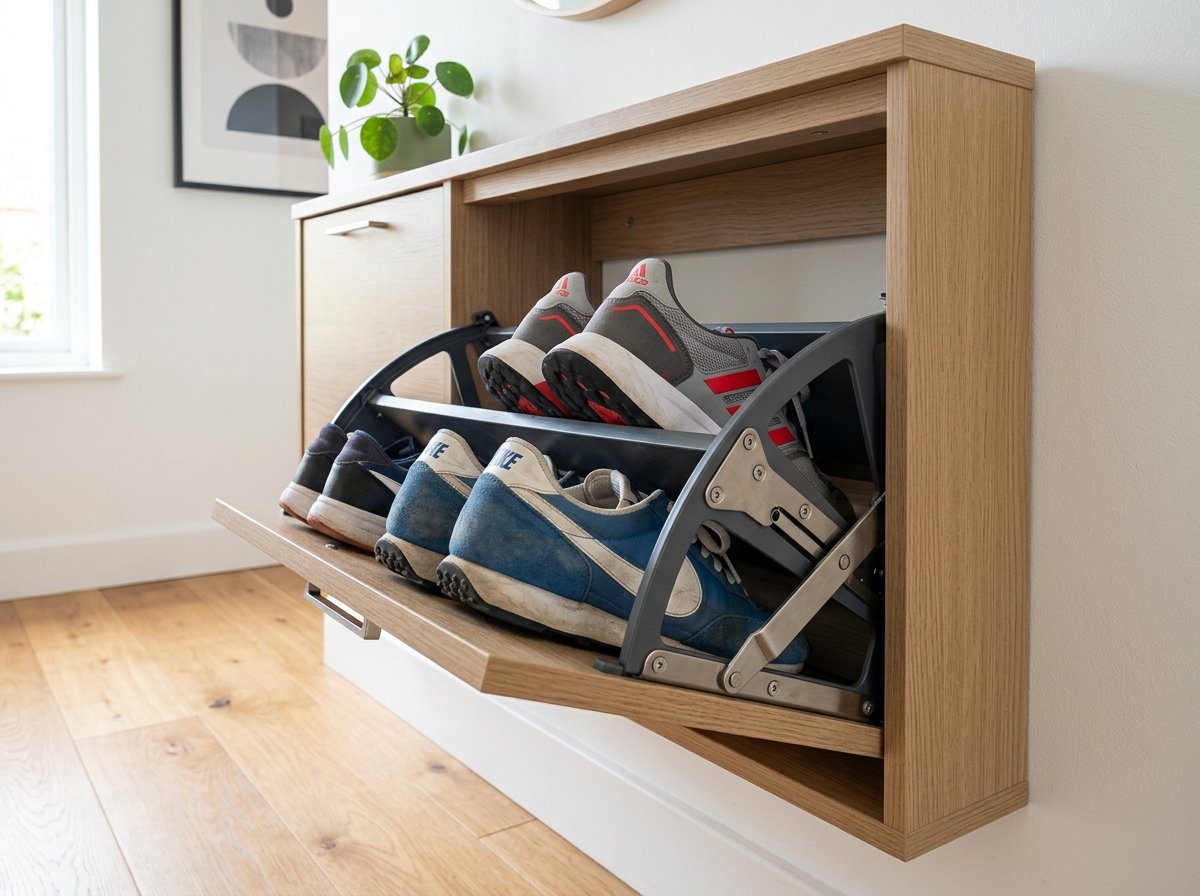
2. Drop-Down Tilt-Out Drawers
Drop-down shoe cabinets dispense with traditional horizontal shelves entirely. Instead, molded plastic or stamped steel divider trays pivot outward on side-mounted trunnion pins.
Shoes slide in vertically by their heels, resting on an angle. This vertical orientation allows manufacturers to compress the cabinet depth down to a remarkable 7 to 9.5 inches, making tilt-out cabinets the premier choice for narrow apartment hallways.
3. Sliding Barn and Pocket Doors
Traditional swinging cabinet doors require at least 14 to 18 inches of clear floor radius to open fully. In compact entry vestibules, a swinging door can easily collide with entry doors or block foot traffic.
Sliding doors glide along top-hung metal tracks or recessed bottom nylon rollers. Because the doors stay parallel to the cabinet frame, you retain full access to your shoes without occupying an extra inch of walkway space.
4. Tempered Glass Display Doors
Sneaker collectors and luxury shoe enthusiasts frequently choose framed tempered glass doors. Glass fronts protect collectible footwear from airborne dust while presenting a boutique showroom display.
High-end glass cabinets include perimeter magnetic dust seals and integrated low-voltage LED accent lighting. To avoid heat accumulation, quality glass display cabinets incorporate discreet rear ventilation vents.
5. Industrial Steel Locker Doors
For garages, basements, and heavy utility mudrooms, powder-coated cold-rolled steel cabinets provide unmatched impact durability. Steel lockers feature stamped horizontal door louvers that circulate air freely.
Steel shelving inside these units will not warp or delaminate when wet winter boots or muddy hiking shoes are stored inside. For rugged outdoor boot options, compare our shoe rack for garage boot storage guide.
Shoe Cabinet Door Styles & Specification Comparison
Evaluate enclosed shoe storage options across depth requirements, air circulation ratings, and shoe pair capacities. For bench-style seating options, review our shoe rack bench weight capacity guide.
| Door Mechanism | Exterior Depth | Ventilation Level | Capacity (Pairs) | Best Shoe Profiles | Odor Control |
|---|---|---|---|---|---|
| Louvered Slatted Doors | 14″ to 16″ | Excellent (Continuous) | 16 to 24 pairs | Athletic sneakers, leather dress shoes | High natural dispersion |
| Drop-Down Tilt-Out | 7″ to 9.5″ | Moderate (Top gaps) | 12 to 18 pairs | Low-profile flats, running shoes | Requires odor sachets |
| Sliding Track Doors | 15″ to 17″ | Low to Fair | 18 to 28 pairs | General mixed family footwear | Needs rear vent ports |
| Tempered Glass Fronts | 14″ to 16″ | Sealed (Low) | 12 to 20 pairs | Collectible sneakers, luxury heels | Requires dry shoes only |
| Steel Locker Style | 14″ to 18″ | Very Good (Stamped vents) | 16 to 32 pairs | Heavy work boots, cleats, mud shoes | High airflow, washable |
Sizing & Ergonomics: Internal Shelf Depth Rules
The single most frequent customer complaint regarding shoe cabinets is that the doors will not close properly over adult footwear. Inexpensive budget cabinets frequently skimp on material by manufacturing unit depths of only 11 to 12 inches.
Consider the physical geometry of standard adult shoes. A men’s US size 10 shoe measures approximately 11.5 inches in total outsole length. A men’s size 12 or 13 athletic shoe measures 12.5 to 13 inches long.
When you account for the thickness of the cabinet back panel and the inner door face, a cabinet with an exterior depth of 12 inches leaves barely 11 inches of clear shelf space. For standard horizontal shelving, insist on a minimum interior depth of 13 to 14 inches (33 to 35 cm). If shelf depth is limited, shoes must be placed sideways, halving your storage capacity.
Preventing Odor and Mildew: Passive Ventilation Engineering
Trapping damp shoes behind solid flush doors creates rapid humidity buildup. Trapped moisture degrades shoe leather, breaks down synthetic adhesives, and creates persistent foul odors.
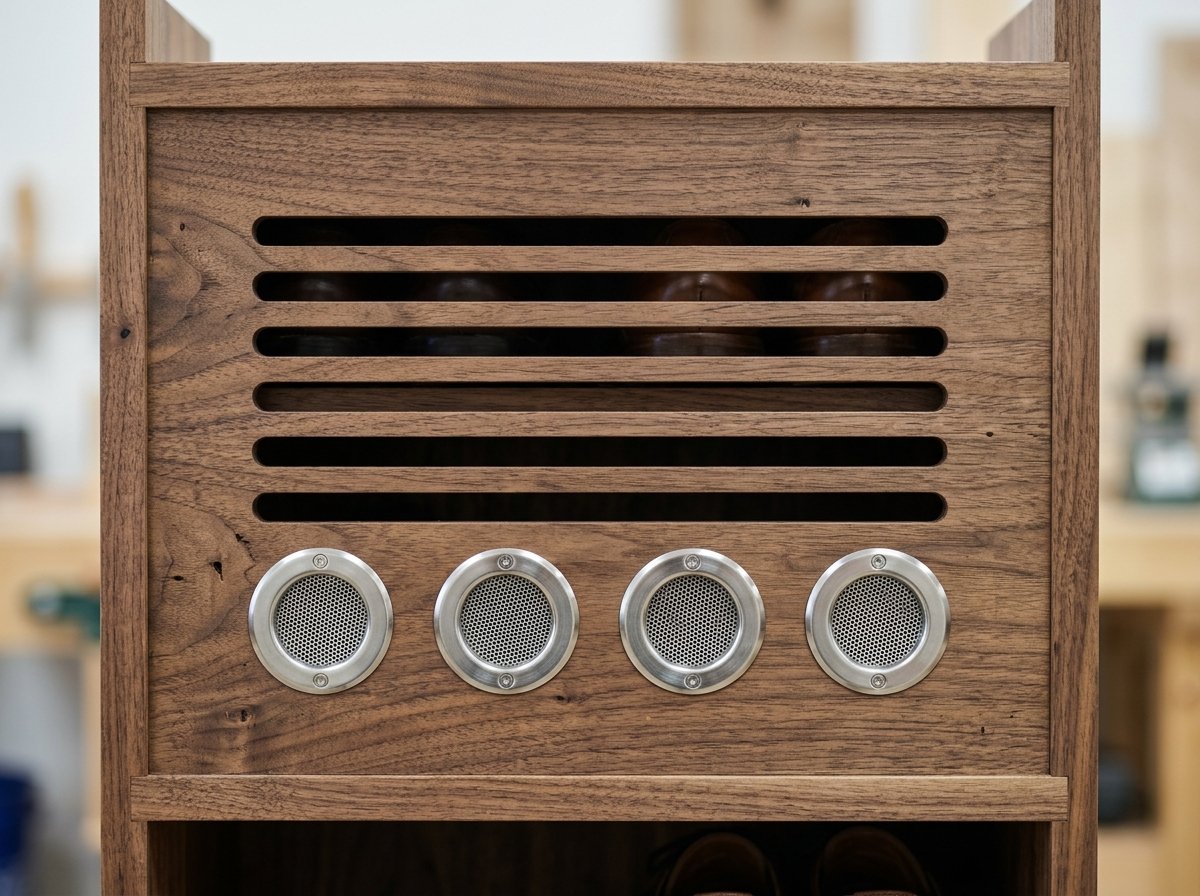
When selecting or assembling a shoe cabinet, verify the presence of dedicated ventilation channels. Premium cabinets incorporate precision rear ventilation slots or circular metal mesh grommets set into the back fiberboard. These vents allow warm, humid air to escape out the back while cool ambient room air enters through bottom door reveals.
To further protect stored footwear, place natural red cedar blocks or activated charcoal packets inside each shelf tier. Cedar naturally absorbs ambient humidity while releasing natural aromatic oils that deter clothing moths.
Anti-Tip Safety Standards & Wall Anchoring
Shoe cabinets are inherently tall and narrow pieces of furniture. A typical four-tier shoe cabinet stands 36 to 48 inches high with a base depth of merely 9 to 14 inches. This high center of gravity creates a severe tip-over hazard.
Under the mandatory federal safety standards established by the Consumer Product Safety Commission (CPSC) anti-tip safety standards (the STURDY Act), clothing and storage units must resist forward tipping forces. On drop-down tilt-out cabinets, opening two loaded drawers simultaneously shifts the weight outward, pulling the cabinet forward.
Every shoe cabinet must be anchored directly into solid wall studs using heavy-duty nylon anti-tip straps or steel L-brackets. When studs do not align with cabinet mounting brackets, use heavy-duty metal toggle bolts rated for at least 75 pounds of shear force rather than plastic expansion plugs. For drop-front container organization inside closets, see our closet storage bins sizing guide.
Material Selection: Solid Hardwood vs. Engineered Board vs. Steel
Shoe storage cabinets experience daily mechanical wear, muddy soles, and fluctuating humidity levels. The materials used in construction dictate structural longevity:
- FSC-Certified Solid Hardwood (Oak, Walnut, Pine): Provides unmatched structural rigidity and fastener holding strength. Hardwood frames resist racking forces and can be refinished after years of scuff marks, complying with Forest Stewardship Council (FSC) certified timber guidelines.
- High-Density Engineered MDF / Particleboard: Cost-effective and dimensionally stable against seasonal wood movement. Ensure all exposed edges feature thick melamine or PVC edge-banding; raw particleboard swells and disintegrates rapidly if wet shoes rest against it.
- Cold-Rolled Powder-Coated Steel: Built to commercial durability standards governed by the American National Standards Institute (ANSI/BIFMA) furniture standards. Steel cabinets are completely impervious to moisture, easy to wash, and ideal for high-wear mudrooms.
5 Common Buying Mistakes to Avoid
Before purchasing your enclosed shoe storage unit, review these five common procurement pitfalls:
- 1. Ignoring Door Swing Clearances: Measuring only the cabinet footprint without calculating the 14-inch forward arc of swinging doors frequently results in blocked front entrance doors.
- 2. Buying Insufficient Internal Depth: Selecting an 11-inch deep cabinet prevents adult sneakers from fitting straight on shelves, forcing awkward diagonal placement.
- 3. Choosing Unventilated Solid Doors: Trapping wet athletic shoes inside airtight cabinets results in rapid mildew growth and unpleasant odor accumulation.
- 4. Overlooking Boot Clearance: Standard fixed shelves spaced 7 inches apart cannot accommodate 10-inch ankle booties or 16-inch winter boots. Always select units with adjustable shelf pegs.
- 5. Skipping Anti-Tip Anchoring: Leaving narrow shoe cabinets unanchored creates severe crushing hazards for young children and pets.
Frequently Asked Questions
How do you keep a shoe rack with doors from smelling?
Preventing odors in enclosed shoe cabinets requires continuous airflow and moisture control. Choose cabinets with louvered slatted doors or rear perforated ventilation grommets so air circulates naturally. Never store soaking wet footwear inside closed cabinets; allow wet shoes to air dry on an open boot tray before placing them inside. Place natural cedar shoe trees, activated bamboo charcoal packets, or baking soda sachets on each shelf tier to neutralize residual odors.
Can men’s size 12 or 13 shoes fit in a shoe cabinet with doors?
Yes, but only if the cabinet provides at least 13 to 14 inches (33 to 35 cm) of clear internal shelf depth. Many compact budget shoe cabinets provide only 11 inches of internal depth, which causes larger shoe toes or heels to stick out and block the doors from closing. For narrow cabinets under 10 inches deep, select drop-down tilt-out cabinets where shoes are held vertically on an angle.
What is the best shoe cabinet for a very narrow hallway?
Drop-down tilt-out shoe cabinets are the best option for narrow entryways and corridors under 36 inches wide. Because shoes are stored vertically within pivoting compartments rather than flat on deep shelves, tilt-out cabinets require an exterior depth of only 7 to 9.5 inches. Sliding barn door cabinets are another excellent option, as sliding doors eliminate swinging door clearance issues entirely.
Are shoe cabinets with doors safe around young children?
Enclosed shoe cabinets are safe only when properly anchored to the wall. Because shoe cabinets are tall and exceptionally slim, opening multiple compartments or climbing on bottom shelves can easily cause the unit to tip forward. Always secure your cabinet into wooden wall studs using heavy-duty anti-tip furniture safety straps or metal L-brackets in compliance with CPSC STURDY Act guidelines.

Callum Langham
Founder & Technical Storage Editor
Callum Langham is the founder and technical editor of Rack System. With over 12 years of hands-on field experience in warehouse logistics, garage organization, and industrial storage installations, Callum specializes in engineering safety standards, beam load calculations, and OSHA/RMI compliance. Every guide on Rack System is audited against verified steel gauge tolerances and municipal building codes.