Quick Answer: How to Choose the Right Closet Storage Bins
The best closet storage bins match your exact shelf depth and access frequency. For standard 12-inch wire or melamine closet shelving, select bins measuring 10.5 to 11.5 inches deep to eliminate dangerous front overhang. For upper shelves higher than eye level, choose clear acrylic drop-front magnetic door boxes rather than top-lidded bins; drop-front designs allow single-handed sweater or shoe retrieval without unstacking. Pair fabric storage cubes with rigid interior bottom boards and reinforced pull handles, and always install flat acrylic shelf liners on ventilated wire racks to prevent container tipping.
Key Takeaways
- Shelf Depth Alignment (12″ vs. 14″–16″): Measure shelf depth before purchasing; standard builder-grade wire shelves are 12 inches deep, while custom walk-in cabinets measure 14 to 16 inches deep. Bins exceeding shelf depth tip forward under heavy loads.
- Eliminating the “Stacking Penalty”: Stacking top-lidded bins on high shelves creates a chore barrier; clear drop-front boxes provide direct frontal access to folded garments and shoes without moving upper containers.
- Textile Breathability: Natural fibers like wool, silk, and cashmere require breathable canvas or linen bins to prevent moisture condensation and mold; synthetic non-woven polyester traps stagnant air.
- Wire Shelf Liner Requirement: Ventilated wire rungs cause fabric bins to snag and sag; installing 0.030-inch polypropylene or acrylic shelf liners creates a smooth, continuous glide surface.
The Science of Vertical Closet Space Optimization
In most residential closets, vertical square footage is squandered. Traditional closet layouts feature a single clothes rod beneath a lone 12-inch shelf, leaving feet of open dead space above. Installing closet storage bins bridges the gap between hanging clothes and the ceiling, transforming chaotic upper shelves into high-density storage compartments.
However, successful closet organization requires more than buying matching containers. Bins that are too deep overhang shelf lips, risking falling onto heads below. Overly heavy bins bend unsupported wire rungs, while opaque, top-lidded containers create a frustrating “stacking penalty” where retrieving a single winter scarf requires unstacking multiple heavy boxes. Choosing the right closet storage bins requires evaluating dimensional fit, container rigidity, and textile preservation mechanics.
The 4 Primary Types of Closet Storage Bins
Selecting container materials should align with what you store and where the bin sits in your closet hierarchy. The four primary bin categories each solve distinct organization challenges.
1. Clear Acrylic and Polycarbonate Drop-Front Bins
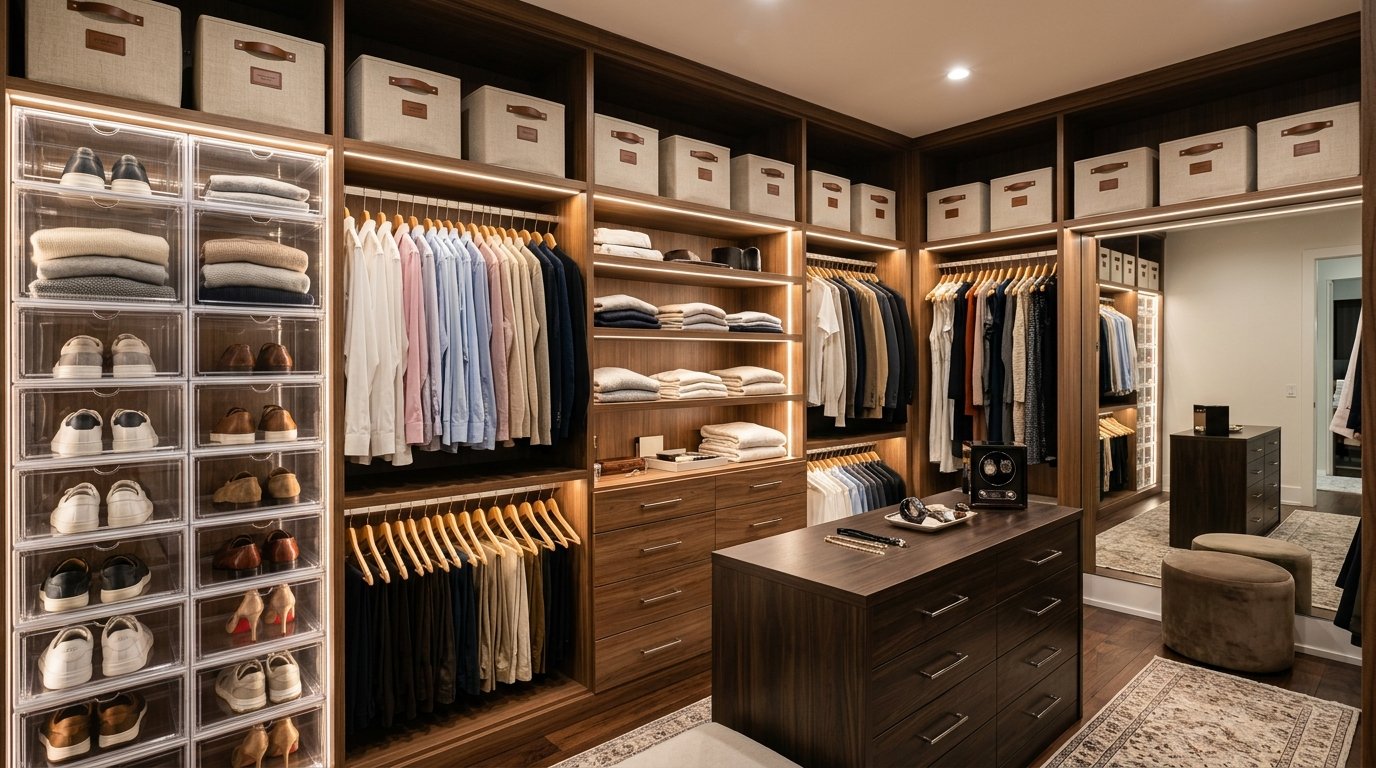
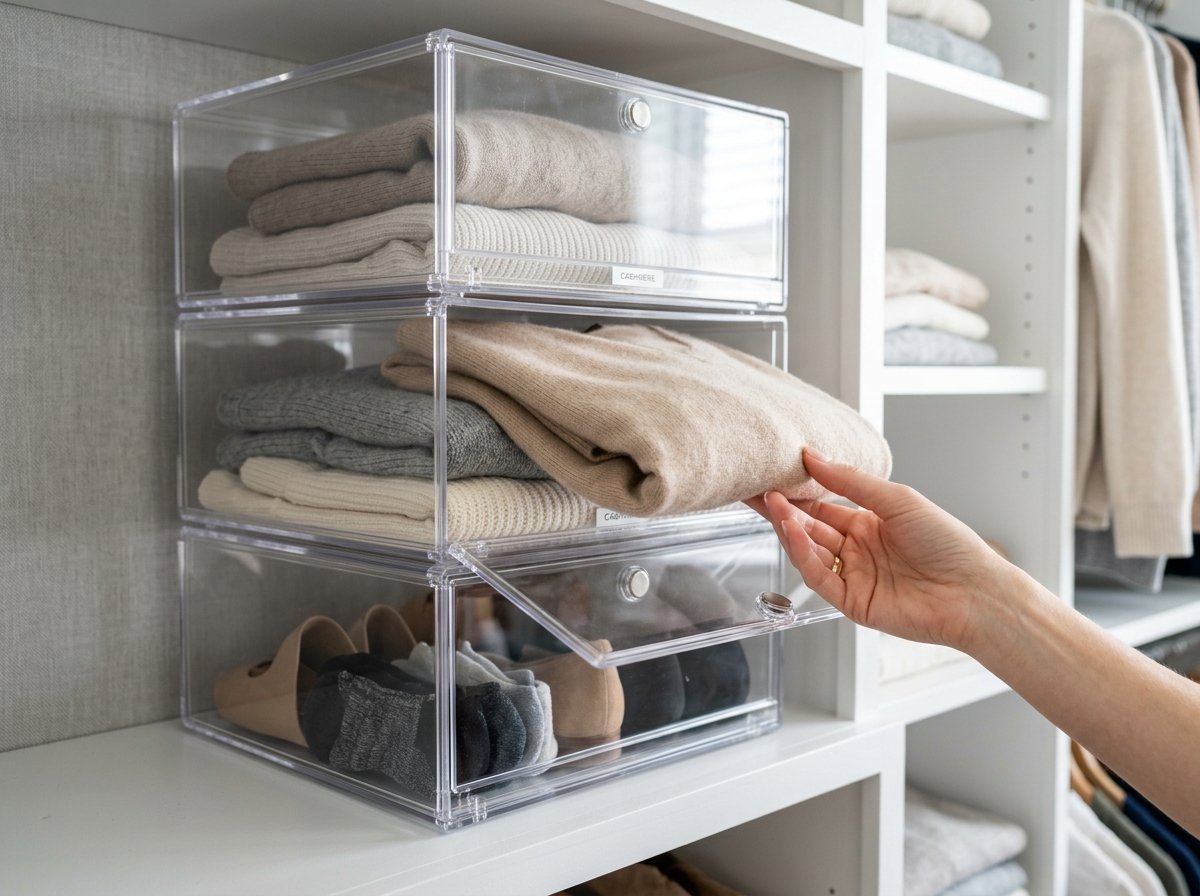
Rigid clear polymer boxes are the premier choice for visual organization. Engineered with front-hinged or magnetic-catch drop-down doors, these boxes allow complete visibility from floor level.
- Material Specs: Injection-molded clear acrylic or high-impact polycarbonate measuring 2.5mm to 3.5mm thick, featuring interlocking top and bottom alignment grooves.
- Access Advantage: You can stack boxes four or five units high on an upper shelf and open the magnetic front door of the bottom box to pull out a sweater or pair of sneakers with zero unstacking.
- Best Applications: Designer sneakers, luxury leather handbags, folded cashmere sweaters, and organized accessory collections that require dust protection with immediate visual recognition.
- Limitations: Higher cost per unit compared to fabric cubes and non-breathable (ventilation holes are required for footwear).
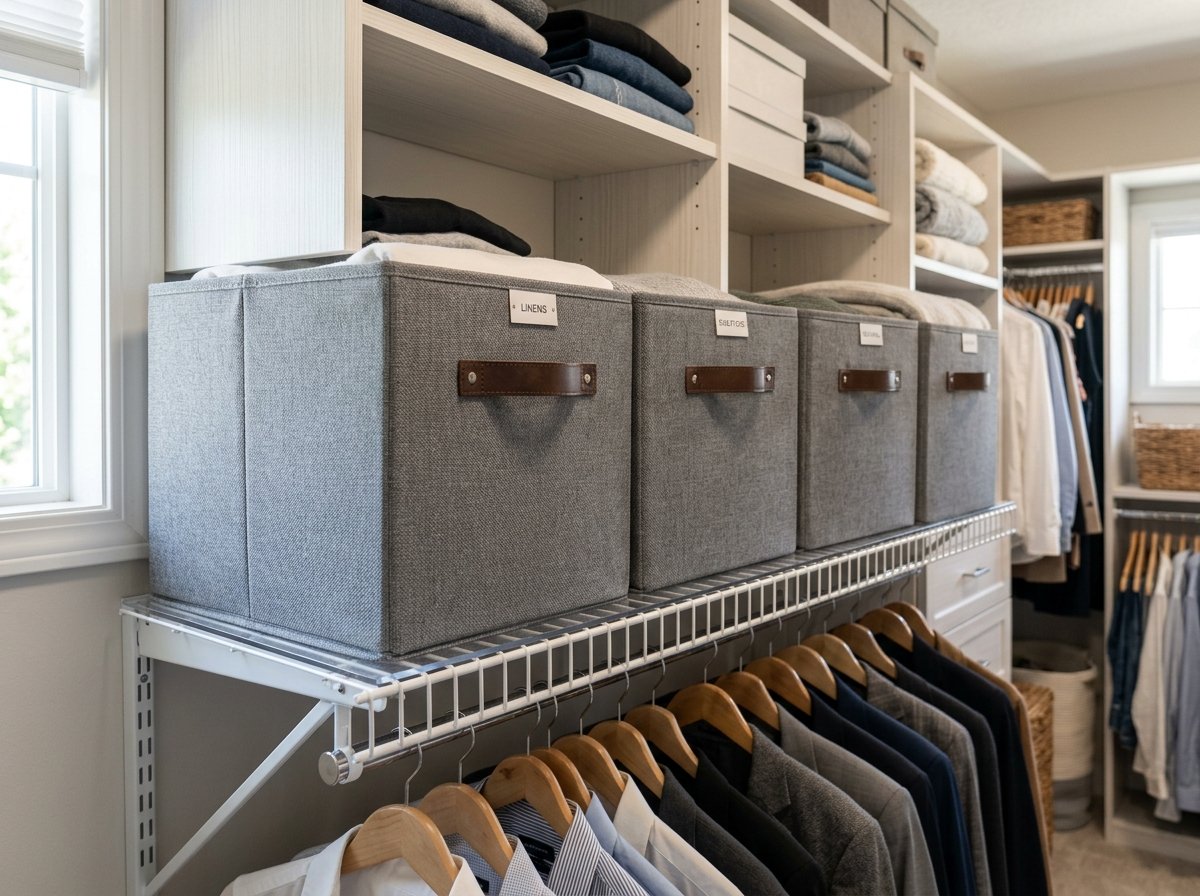
2. Reinforced Fabric Cubes and Linen Bins
Fabric storage bins provide clean aesthetic uniformity while softening the visual appearance of open walk-in wardrobes and reach-in closets.
- Structural Reinforcement: Quality fabric bins utilize heavy 300D to 600D polyester canvas, blended cotton-linen, or woven heather fabric wrapped around 2mm to 3mm dense paperboard or moisture-resistant MDF core panels.
- Handle Engineering: Look for riveted leather or double-stitched webbed cotton handles. Glued or single-stitched handles tear off when pulling heavy bins down from top shelves.
- Best Applications: T-shirts, athletic apparel, scarves, seasonal bedding, socks, and infant clothing.
- Limitations: Not stackable without an external cubby shelf or internal metal wire folding frame. Lightweight cardboard cores warp if stored in high-humidity bathrooms or unconditioned closets.
3. Heavy-Duty Polypropylene Plastic Modular Bins
When storing dense, heavy items or seasonal bedding in walk-in master closets, solid polypropylene (PP) modular bins provide structural rigidity and moisture resistance.
- Construction: Impact-resistant polypropylene plastics (BPA-free) featuring reinforced corner ribbing and snap-tight latched lids.
- Stacking Strength: Solid plastic bins support 30 to 50 pounds of vertical stacking load per lid without buckling, making them ideal for heavy winter blankets, ski gear, and heavy denim.
- Environmental Protection: Gasket-sealed models prevent dust mites, humidity, and fabric pests from reaching precious natural textiles.
4. Woven Natural Fiber Baskets (Seagrass, Water Hyacinth & Cotton Rope)
Natural woven baskets introduce organic texture and warmth to luxury closet designs and open dressing rooms. For complementary entryway shoe storage layouts, see our shoe rack for entryway buyer guide.
- Features: Handwoven over rigid metal wire subframes with removable, washable cotton fabric liners.
- Breathability: Unmatched natural air circulation that prevents musty odor buildup.
- Best Items: Throw blankets, laundry sorting, daily scarves, and soft accessories.
- Limitations: Rough raw fibers can snag delicate silk or lace unless paired with smooth fabric liners.
Dimensional Sizing: Matching Bins to Shelf Depth
The single most common closet organizing mistake is buying bins that do not match the physical dimensions of your shelving framework. For structural load and bracket guidelines, consult our wire closet shelving mounting guide and our commercial wire rack shelving sizing guide.
The 12-Inch Builder-Grade Wire Shelf Standard
Over 80% of standard home closets feature 12-inch deep vinyl-coated ventilated wire shelving. When shopping for 12-inch shelves:
- Maximum Bin Depth: Never exceed 11.5 inches of exterior container depth. Standard 13×13-inch cube organizer bins will overhang the front wire rail by more than an inch, tipping forward whenever an item is pulled.
- Recommended Bin Footprint: Look for bins labeled 11″L x 10.5″W x 9″H or Medium Shoe Boxes (11.5″ x 7.5″).
- Wire Shelf Liners: Always install rigid 0.030-inch clear polypropylene shelf liners. Without liners, fabric bin bottoms sag between wire rungs, creating friction that snags canvas fabric and causes tall containers to lean.
The 14-Inch to 16-Inch Custom Wood Shelf Standard
Custom built-in closets (such as California Closets, Elfa, or IKEA PAX) typically feature shelf depths of 14, 16, or 20 inches:
- 14-Inch Shelves: Perfectly fit standard 13-inch modular fabric cubes (13x13x13 inches) and standard men’s drop-front sneaker boxes.
- 16-Inch to 20-Inch Deep Shelves: Accommodate extra-deep sweater chests and large linen bins (15 to 18 inches deep). Placing shallow 10-inch bins on a 16-inch shelf wastes valuable storage volume behind the container.
Vertical Headroom Clearances
To ensure comfortable retrieval, always leave at least 1.5 to 2 inches of vertical clearance between the top of your bin and the underside of the shelf above. A bin that fits too tightly against the upper shelf requires jarring forceful pulling, scuffing paint and damaging the container rim.
Textile Preservation: Ventilation, Fabric Pests & Moisture
Closets are enclosed, dark, and often unventilated environments where humidity and pests can permanently ruin fine clothing. When storing garments in closet bins, adhere to textile science best practices established by the Utah State University Extension clothing preservation guidelines, American National Standards Institute residential storage standards, and OSHA general housekeeping and overhead storage safety rules.
Breathable vs. Airtight Storage
- Natural Wool and Cashmere: Wool fibers contain residual natural lanolin and must breathe. Storing wool in unventilated, airtight plastic bins in a humid closet traps condensation, leading to mildew odors. Store clean woolens in breathable cotton or linen canvas bins, accompanied by natural red cedar blocks to repel clothes moths (Tineola bisselliella).
- Synthetic Fibers and Linens: Cotton sheets, polyester activewear, and synthetic outerwear store well in clear polypropylene or acrylic bins with snap lids that keep dust and pet dander off clean laundry.
- Leather Handbags and Shoes: Never seal leather goods in airtight plastic bags or containers. Trapped moisture degrades leather finishes and promotes fungal blooming. Use breathable fabric dust bags inside open-topped fabric bins or ventilated acrylic display cases.
Closet Storage Bin Materials & Sizing Specs
| Bin Material | Ideal Shelf Depth | Stackability | Best Contents |
|---|---|---|---|
| Clear Acrylic Drop-Front | 12″ to 14″ | High (Interlocking base, 4–5 units) | Sneakers, designer shoes, folded cashmere, luxury handbags |
| Reinforced Fabric Cubes | 11″ (wire) or 13″ (wood) | Low (Requires cubby divider frame) | T-shirts, denim, socks, scarves, baby clothing |
| Solid Polypropylene w/ Lids | 14″ to 18″ | High (30–50 lbs vertical load) | Heavy winter blankets, extra pillows, dense seasonal apparel |
| Woven Natural Seagrass | 12″ to 16″ | Moderate (If reinforced with wire frame) | Open walk-in display, throw blankets, daily accessories |
| Zippered Fabric Under-Bed Cases | Floor / Under-bed (24″+) | Low (Soft sides) | Off-season heavy coats, formal gowns, guest duvets |
System Integration: Bins with Racks and Rolling Carts
A truly organized wardrobe integrates static shelf bins with mobile storage components. In larger dressing rooms and walk-in closets, pairing upper shelf containers with a commercial garment rack streamlines seasonal clothing rotation. For staging outfits or rotating winter wardrobes into storage, review our guide on commercial rolling clothing racks.
- The Top-Down Organizing Hierarchy:
- Top Upper Shelves (High Reaching): Long-term seasonal storage in labeled fabric or polypropylene bins (winter woolens in summer, beachwear in winter).
- Eye-Level Shelves: Clear drop-front acrylic boxes for daily folded sweaters, active footwear, and structured clutches.
- Mid-Level Clothes Rods: Hanging shirts, blazers, and dresses.
- Floor / Bottom Shelves: Open-topped baskets for laundry hampers or shoe rack organizers.
- Labeling Standards: Never skip labeling on high bins. Use metal clip-on bookplate label holders or thermal adhesive label tape with high-contrast text. Clear labeling eliminates the need to pull down multiple bins just to find a specific item.
Frequently Asked Questions
What size bins fit on a 12-inch closet shelf?
For standard 12-inch deep closet shelves (especially vinyl wire shelving), look for bins with an exterior depth of 10.5 to 11.5 inches, a width of 10 to 13 inches, and a height of 8 to 10 inches. Standard 13×13-inch cube organizer bins will overhang a 12-inch shelf by more than an inch, causing the front edge to tip downward whenever the bin is pulled forward.
Are clear plastic or fabric bins better for closets?
Clear plastic bins are superior for upper shelves and items you need to identify instantly without unstacking, such as shoes, accessories, and folded knitwear. Fabric bins are better for aesthetic uniformity, concealing visual clutter, and storing breathable natural textiles like wool blankets, casual t-shirts, and socks. High-end closets often combine both: fabric cubes on open high shelves and clear drop-front boxes at eye level.
How do you keep storage bins from sliding or sagging on wire closet shelves?
To prevent bins from sagging between wire rungs or tipping on uneven wire rails, install rigid, cut-to-fit clear plastic or acrylic shelf liners (typically 0.030-inch thick polypropylene). Shelf liners provide a flat, continuous solid surface that allows fabric bins to glide smoothly without catching on wire welds, while preventing small items from dropping through to clothing hanging below.
How do you prevent clothes from smelling musty in closet bins?
To prevent musty odors, ensure clothing is completely clean and dry before storage, as residual body oils and moisture feed mildew. Store natural fibers in breathable cotton or linen canvas bins rather than airtight plastic containers. Place natural red cedar wood blocks or lavender sachets inside the bins to absorb excess ambient moisture and naturally repel moths. Avoid chemical mothballs, which leave permanent petrochemical odors in clothing fabrics.

Callum Langham
Founder & Technical Storage Editor
Callum Langham is the founder and technical editor of Rack System. With over 12 years of hands-on field experience in warehouse logistics, garage organization, and industrial storage installations, Callum specializes in engineering safety standards, beam load calculations, and OSHA/RMI compliance. Every guide on Rack System is audited against verified steel gauge tolerances and municipal building codes.