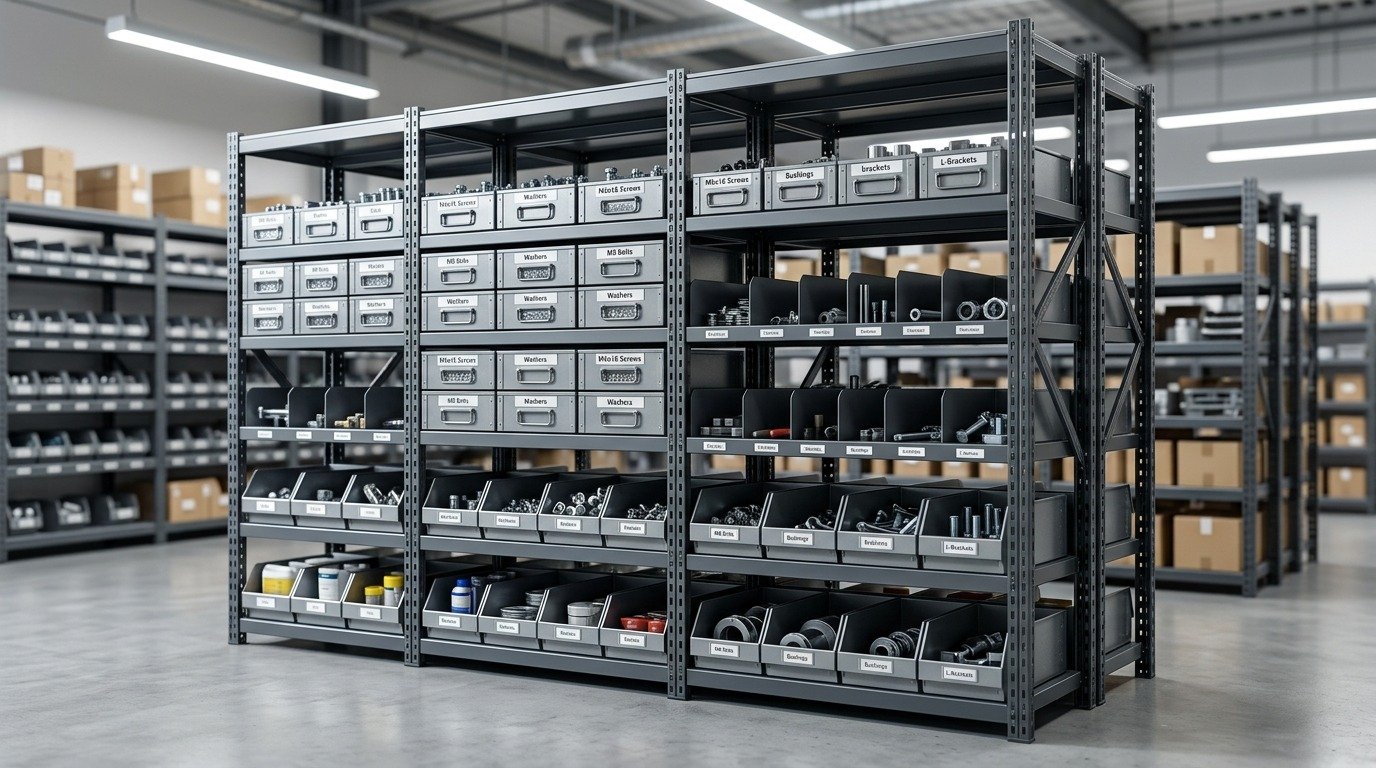
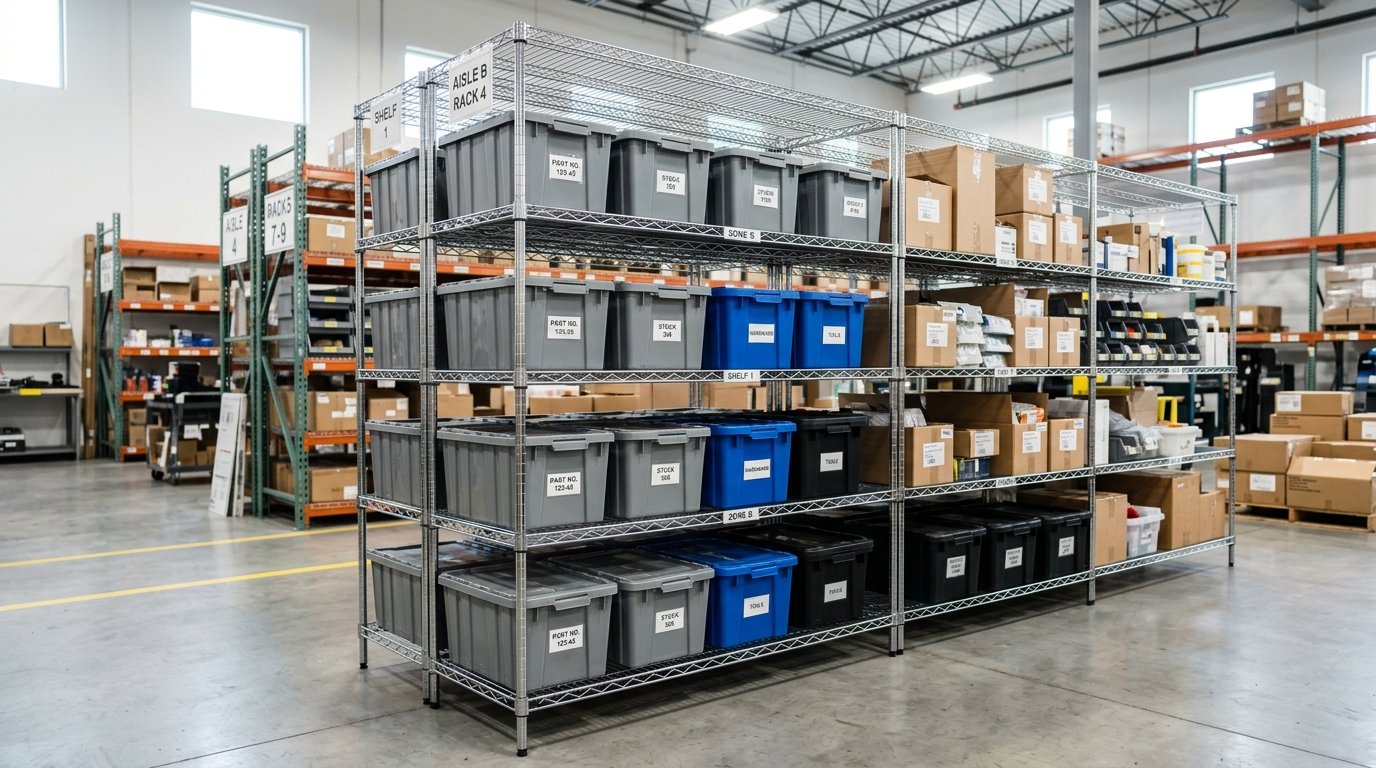
The right unit depends on more than shelf size. You’ll need to match the finish to the environment, check the uniform distributed load (UDL), choose between stationary. And mobile construction, and confirm that the shelf spacing suits your inventory.
This guide covers the main wire rack shelving types, dimensions, load ratings, locking system, and installation points.
Quick Answer: Wire Rack Shelving Specs & Load Ratings
Commercial wire rack shelving features 1-inch diameter 16-gauge steel posts and plastic split-sleeve wedge locks holding 600 to 800 lb UDL per shelf on stationary units (up to 3,200 lb total). Adding mobile swivel casters reduces total unit capacity to 500 to 1,000 lb. Chrome plating fits dry retail stockrooms, green or black epoxy coatings meet NSF Standard 2 for walk-in coolers, and 304 stainless steel handles harsh chemical washdowns.
Key Takeaways
- Stationary vs Mobile UDL: Stationary 4-post units hold up to 800 lb per shelf; adding casters reduces total unit capacity by 50 to 60%.
- NSF Standard 2 Compliance: Green or black epoxy coatings prevent rust and corrosion in walk-in coolers and food service areas.
- Split-Sleeve Wedge Locks: Downward weight wedges plastic sleeves tighter against 1-inch grooved posts for tool-free stability.
- Mesh Wire Density: Standard 0.788-inch wire rung spacing supports small bottles and cans without tipping over.
What Is Wire Rack Shelving?
Wire rack shelving is a modular storage system made from wire shelves, vertical posts, and connectors. Most commercial systems use 1-inch diameter, 16-gauge steel posts. Grooved rings appear at 1-inch intervals along each post, so you can set shelf heights without drilling holes.
Or using bolts.
Each shelf rests on plastic split-sleeve wedge locks. The sleeve fits around the post, then the shelf slides over it. As weight presses down, the shelf pushes the sleeve against the post.
This downward friction creates a firm connection. You can assemble the rack with a rubber mallet,. And you can reposition shelves by lifting them and moving the sleeves.
Wire rack shelving also offers strong visibility. Staff can see labels and stock from several sides, which can reduce time spent searching for supplies. The open shelf surface supports air circulation in coolers.
And helps sprinkler water reach stored goods during a fire emergency, subject to local fire code and storage rules.
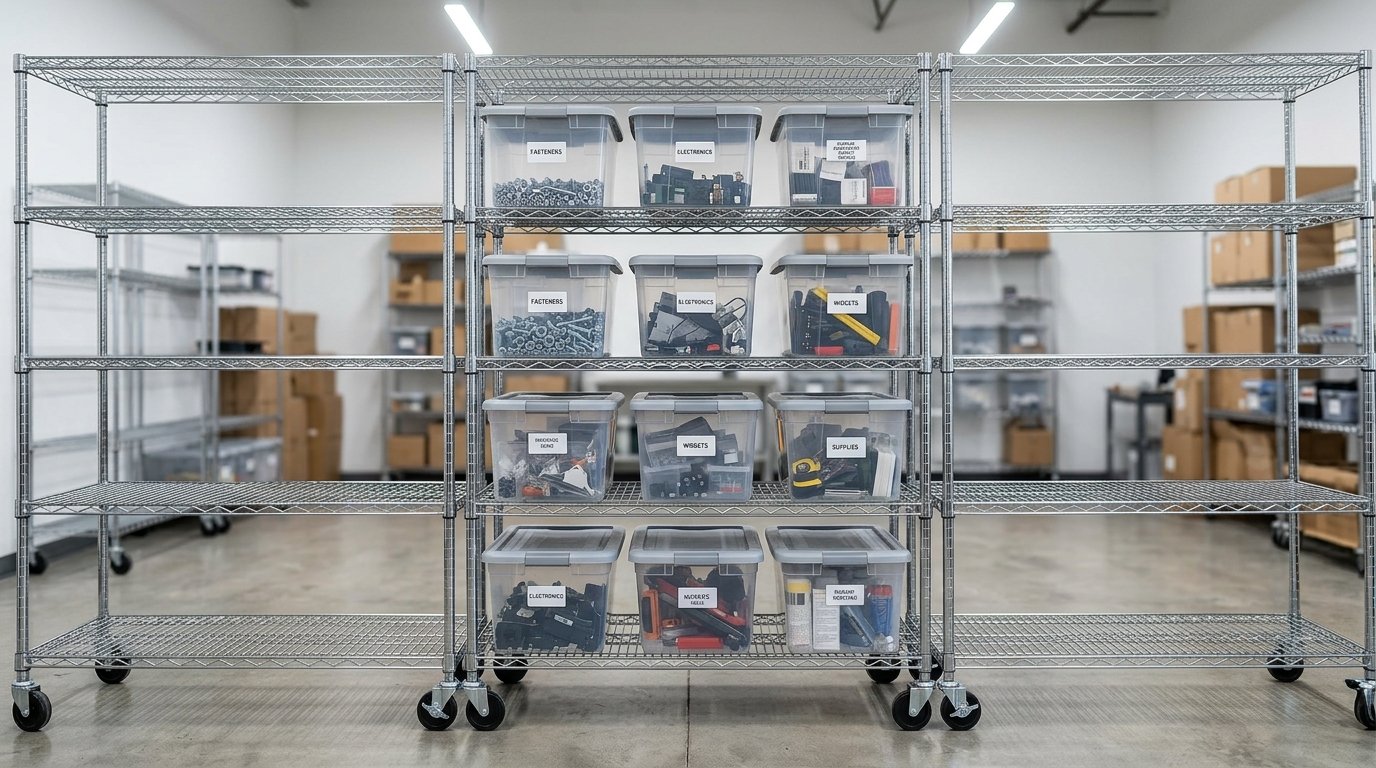
Wire Rack Shelving Sizes
Commercial wire shelving comes in standard sizes that fit most storage layouts. Common widths include 24, 30, 36, 42, 48, 54, 60, and 72 inches. Common depths include 14, 18, 21, and 24 inches.
Measure the available area before ordering. Record the wall-to-wall width, floor-to-ceiling height, door swing, aisle space, and clearance around pipes or refrigeration equipment. A shelf that fits the wall may still block a door or leave too little room for a loaded cart.
How to Choose Shelf Width
- 24 to 36 inches: Useful for narrow closets, small supply rooms, and short runs.
- 42 to 48 inches: A common choice for stockrooms, kitchens, and general commercial storage.
- 54 to 60 inches: Provides more storage per bay while keeping items within reach.
- 72 inches: Works for long, heavy-duty runs, but the load rating and shelf support must be confirmed.
Choose shelf depth based on the items you’ll store. An 18-inch shelf suits smaller containers and cartons. A 24-inch shelf gives larger boxes more support, but it may make rear items harder to reach.
Don’t use deep shelving as a reason to stack items in front of one another.
Wire Rack Shelving Finishes
The finish affects corrosion resistance, cleaning needs, service life, and purchase cost. Select the finish based on the room, not just the appearance.
| Finish / Construction | Environmental Rating | UDL Load Limit (Per Shelf) | Best Storage Application |
|---|---|---|---|
| Chrome-Plated Steel | Dry indoor commercial / retail | 600 to 800 lb UDL | Stockroom inventory, retail display, dry boxes |
| Green / Black Epoxy Coated | NSF Standard 2 wet-room / cooler | 600 to 800 lb UDL | Walk-in coolers, food prep, high humidity |
| 304 Stainless Steel | Sanitary / chemical resistant | 800 lb UDL | Cleanrooms, pharmaceutical, harsh chemical washdown |
Chrome-Plated Steel
Chrome-plated wire rack shelving fits dry commercial and retail areas. It has a clean appearance and works well for boxes, packaged goods, apparel stock, and general supplies. Chrome is a poor choice for constant moisture, standing water, salt exposure, or aggressive cleaning chemicals.
If the plating gets damaged, exposed steel may start to rust.
Epoxy-Coated Steel
Green or black epoxy-coated shelving is made for humid areas, wet rooms, and walk-in coolers. These finishes provide added protection against rust and corrosion. Many commercial products carry NSF Standard 2 approval for food service applications,.
But you should verify the certification for the exact product before purchase.
Epoxy-coated wire rack shelving is a strong choice for restaurants, bakeries, grocery storage, and food preparation areas. Clean spills quickly, keep shelf feet out of standing water, and follow the manufacturer’s cleaning instructions.
304 Stainless Steel
304 stainless steel provides strong corrosion resistance and supports sanitary cleaning routines. It’s used in laboratories, pharmaceutical areas, cleanrooms, hospitals, commercial kitchens, and facilities that use chemical washdowns. Stainless steel costs more than chrome or epoxy-coated steel, but it can be a better long-term choice in harsh rooms.
Antimicrobial Coatings
Some wire shelving products include an antimicrobial coating. This coating can add protection against bacterial growth on the surface,. But it doesn’t replace cleaning, disinfection, or safe food handling.
Check the product documentation for the tested organisms, coating limits, and approved cleaning agents.
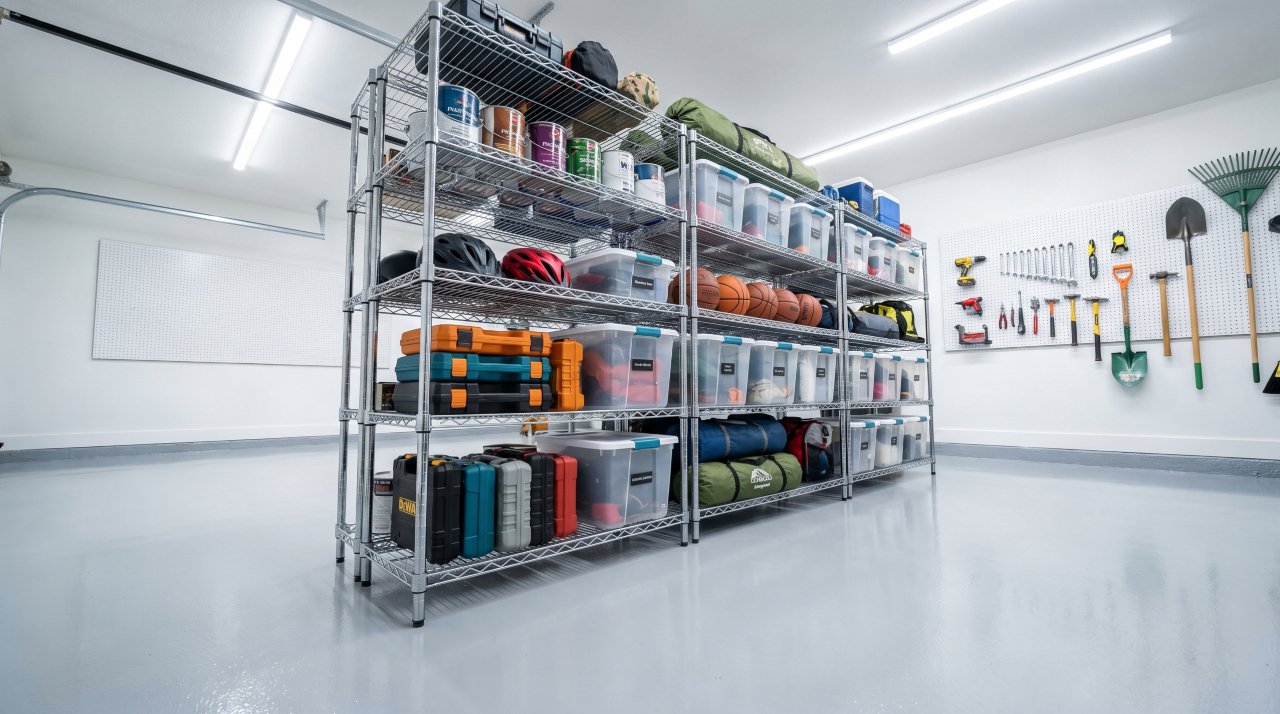
Wire Rack Shelving Weight Capacity
Stationary commercial wire rack shelving usually supports 600 to 800 lb UDL per shelf. UDL means the weight is spread across the full shelf surface. A four-post unit may support 2,000 to 3,200 lb in total, depending on the shelf, post, connector, and manufacturer rating.
Don’t treat the shelf rating as a point-load rating. A 700 lb shelf rating doesn’t mean you can place a 700 lb machine in the center. Concentrated weight can bend wires, distort the shelf frame, or reduce stability.
Use a load-spreading panel when storing dense equipment or small heavy parts.
Mobile units have a lower capacity because casters add movement and change the load path. Mobile wire shelving commonly has a total unit rating of 500 to 1,000 lb. Research data shows a capacity reduction of about 40 to 50 percent compared with.
A similar stationary unit, while some products show a 50 to 60 percent reduction.
For safe purchasing, use the lowest rating shown for the complete unit. Check the shelf capacity, post capacity, caster capacity, wheel rating, and manufacturer’s total unit limit. Your final rating can’t exceed the weakest component.
For more load calculations, see this wire rack weight capacity guide.
Mobile Wire Shelving vs Stationary
Stationary Shelving
Stationary wire rack shelving sits on leveling feet or adjustable feet. It provides the highest load rating and works well for fixed stock storage. Leveling feet can compensate for uneven floors and help keep the frame stable.
Anchor tall units when required by local rules, site policy, or the manufacturer. Anchoring is especially useful in seismic areas, public spaces, busy aisles,. And locations where carts or powered equipment may strike the rack.
Mobile Shelving
Mobile shelving uses swivel casters, often with brakes. It can help staff move supplies for cleaning or rearrange a work area. Mobile racks work best when loads are moderate and the floor is smooth, level, and free of thresholds.
Lock the casters before loading or unloading. Push the unit from a low, central point instead of pulling it from the top. Keep the heaviest items on the bottom shelf to reduce the risk of tipping.
Never move a loaded rack faster than staff can control it.
Split-Sleeve Wedge Lock Systems
Split-sleeve wedge locks make adjustable wire shelving fast to assemble. Each sleeve has two halves that fit around a grooved post. The shelf collar sits over the sleeve, and downward pressure tightens the connection.
This design differs from a bolt-based system. You don’t need a wrench to change shelf height, and there are no bolts to strip or lose. The connection becomes firmer as the shelf carries weight.
Still, the shelf must be seated evenly on all four sleeves.
How to Adjust Shelf Height
- Remove stored items from the shelf.
- Lift the shelf clear of the wedge locks. Use two people for long or heavy shelves.
- Remove each split sleeve from its post groove.
- Place all four sleeves at the same height.
- Lower the shelf onto the sleeves and tap the shelf frame with a rubber mallet.
- Check that the shelf is level before replacing the load.
Don’t place a sleeve between grooves or use damaged sleeves. Replace cracked plastic parts before loading the rack. A missing sleeve can create an uneven load and may cause the shelf to shift.
Choosing Shelving for Commercial Kitchens
For a commercial kitchen, choose NSF Standard 2 wire shelving for restaurants when the. Rack will sit in a cooler, prep area, wash area, or other damp location. Green or black epoxy-coated steel resists corrosion in humid conditions and supports routine cleaning.
Choose 304 stainless steel for frequent chemical washdowns, high sanitation requirements, pharmaceutical work,. Or locations where corrosion resistance matters more than price. Chrome-plated steel can work in a dry pantry or packaged-goods room,.
But it shouldn’t be used beside spray sinks or in wet storage.
Keep food and supplies at least several inches off the floor. Leave enough space between stored goods and walls for inspection and cleaning. Don’t store food directly against a wall unless local health rules allow it.
Confirm local health department requirements before installing shelving in a food area.
Installation and Safety Checklist
- Inspect posts, shelves, feet, casters, and sleeves before assembly.
- Place the rack on a clean, level floor.
- Set all four wedge locks at matching heights.
- Tap shelves into position with a rubber mallet.
- Use leveling feet to correct minor floor differences.
- Keep heavy products on lower shelves.
- Center loads instead of placing all weight at one edge.
- Don’t exceed the shelf or total unit rating.
- Lock mobile casters before loading or picking stock.
- Anchor tall units when site rules or the manufacturer calls for it.
- Inspect for bent wires, loose sleeves, rust, and damaged casters.
Storage must stay stable and organized. OSHA’s OSHA material storage safety standards include requirements for secure storage, clear aisles, and safe material handling. You can also review guidance from the Material Handling Institute technical standards.
Wire Rack Shelving for Closets
Wire closet shelving uses the same basic benefits as commercial wire rack shelving, but closet systems often have lighter ratings. And different mounting methods. Check the manufacturer’s rating before storing books, tools, canned goods, or other dense items.
Measure closet width, depth, door clearance, baseboards, and shelf height. Use shorter shelf spans for heavy loads and add support brackets when the product calls for them. A closet shelf should stay level when loaded, with no visible bowing.
For planning closet dimensions and load limits, read this wire closet shelving guide.
Frequently Asked Questions
What is the weight capacity of wire rack shelving?
Stationary commercial wire rack shelving usually holds 600 to 800 lb UDL per shelf. Four-post units can support about 2,000 to 3,200 lb total. Mobile units commonly support 500 to 1,000 lb total because casters reduce the safe dynamic load.
Always follow the rating for the exact shelf and complete unit.
What are the different finish types for wire rack shelving?
The main finishes are chrome-plated steel, green or black epoxy-coated steel, 304 stainless steel, and antimicrobial-coated steel. Chrome fits dry indoor areas. Epoxy is suited to wet rooms and coolers, especially products approved to NSF Standard 2.
Stainless steel suits sanitary rooms and chemical washdowns. Antimicrobial coatings add surface protection but don’t replace cleaning.
Which wire rack shelving is best for commercial walk-in coolers?
Green or black epoxy-coated wire rack shelving is a common choice for commercial walk-in coolers because it resists moisture. And corrosion. Select a product with NSF Standard 2 approval when food service rules require it.
Choose 304 stainless steel when the cooler needs frequent harsh cleaning or has a higher corrosion risk.
How do you adjust height on wire rack shelving with split sleeves?
Remove the load, lift the shelf, move each plastic split sleeve to the. Same groove on all four posts, then lower the shelf back onto the sleeves. Tap the shelf into place with a rubber mallet.
The grooved posts and wedge locks allow tool-free adjustment, but damaged sleeves must be replaced before use.
Final Buying Checks
Before ordering wire rack shelving, confirm the room conditions, shelf dimensions, load requirements, finish, and mobility needs. Use stationary units for the highest capacity and mobile units for controlled movement. Choose epoxy for humid food areas, stainless steel for harsh sanitation work, and chrome for dry commercial storage.
Check that the shelf spacing suits your containers and that the wire density supports small items. And the complete unit fits the planned location. Standard 0.788-inch wire spacing helps keep bottles and cans from tipping through the shelf surface.
With the right finish, load rating, and setup, wire rack shelving can provide dependable storage for years.

Callum Langham
Founder & Technical Storage Editor
Callum Langham is the founder and technical editor of Rack System. With over 12 years of hands-on field experience in warehouse logistics, garage organization, and industrial storage installations, Callum specializes in engineering safety standards, beam load calculations, and OSHA/RMI compliance. Every guide on Rack System is audited against verified steel gauge tolerances and municipal building codes.