

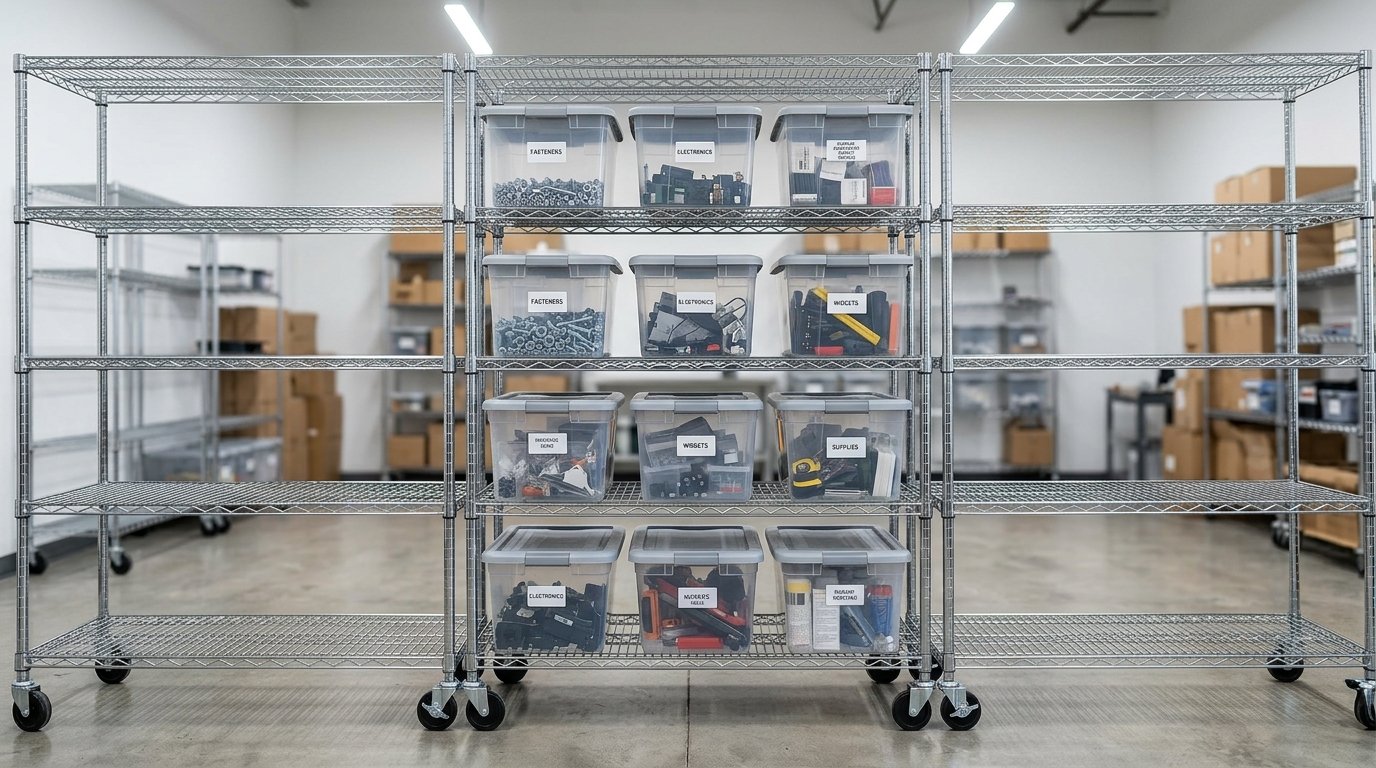
A wire rack gives you open, adjustable storage for stockrooms, kitchens, garages, coolers, laboratories, and retail spaces. Its open shelves let air, light,. And sprinkler water pass through, while the adjustable design makes it easier to fit items of different heights.
Still, a wire rack isn’t just a set of shelves and posts. The post size, shelf span, finish, locking system, and caster rating all affect how well it will work.
Many listings claim that a shelf can hold 600 to 800 pounds, but that figure has conditions. It normally applies to a standard 48-inch shelf with a 1-inch commercial-duty post, a stationary rack,. And a uniformly distributed load.
If you place the rack on casters, stack heavy items in one spot,. Or use a 3/4-inch residential post, the safe capacity can change.
This guide explains how wire rack systems work, how to choose the right finish, how to calculate capacity,. And how to assemble and inspect your rack.

Quick Answer: Wire Rack Sizing & Weight Capacity
Standard 48-inch chrome wire shelf racks with 1-inch diameter steel posts hold 600 to 800 lb UDL (Uniformly Distributed Load) per shelf stationary. Plastic split-sleeve wedge locks hold shelves in place using downward friction force. Chrome plating is rated for dry retail and stockrooms, while green or black epoxy coatings carry NSF Standard 2 wet-room ratings for walk-in coolers and high-humidity areas. Adding mobile casters reduces overall unit capacity to 500 to 1,000 lb total.
Key Takeaways
- Post Diameter Rating: Commercial 1-inch posts support 600 to 800 lb per shelf, whereas 3/4-inch posts are rated for light residential storage.
- NSF Environment Ratings: Chrome plating is dry-room only; green epoxy coating carries NSF Standard 2 rating for walk-in coolers and wet storage.
- Split Sleeve Friction: Downward weight wedges the plastic split sleeves tighter against the post grooves for secure tool-free adjustment.
- Caster Weight Reduction: Adding swivel casters drops total unit capacity from 2,400 lb stationary down to the caster kit rating (typically 500-1,000 lb).
What Is a Wire Rack?
A wire rack is a freestanding shelving unit made from steel posts and wire shelves. The shelves usually have a rectangular frame with welded cross wires, while the posts have regular grooves or adjustment marks. Plastic split sleeves grip each post, and the shelf rests on those sleeves.
This structure gives you several practical benefits:
- Open wire allows air to circulate around stored goods.
- Dust and spills are easier to spot than on solid shelves.
- Shelves can be raised or lowered without drilling.
- The rack is lighter than many solid steel shelving systems.
- Many shelves, casters, dividers, and baskets are interchangeable within a product line.
Wire shelving works best when loads are spread across the shelf surface. It isn’t a substitute for pallet rack beams and wire decking. A pallet rack wire deck may carry 2,500 to 2,700 pounds uniformly distributed.
But it’s made to sit inside pallet rack frames. A standard freestanding wire rack has a much lower rating.
Common Wire Rack Sizes
Most racks use shelves between 18 and 24 inches deep. Common widths include 24, 36, 48, and 60 inches. Height often ranges from 54 to 86 inches, though shorter units work better under counters.
And taller units can use more vertical space.
A 48-inch shelf is a useful benchmark for capacity comparisons. A standard commercial chrome shelf with a 1-inch post often carries 600 to 800 Pounds per shelf when the load is spread evenly and the unit stays stationary.
Longer or deeper shelves can flex more, so you shouldn’t apply the same rating to every size.
Measure the space before ordering. Record the clear width, depth, ceiling height, door swing, aisle space, and any wall or pipe obstructions. Leave room to move items in and out.
A rack that fits tightly on paper may be hard to load or unsafe to access.
1-Inch and 3/4-Inch Posts
Post diameter is one of the clearest differences between commercial and light-duty wire racks.
A 1-inch round steel post, often made with 12-gauge steel, is the commercial-duty standard. It gives the unit better lateral stability, less flex, and stronger support for heavy shelves and accessories. This post size is common on foodservice and NSF-listed shelving.
A 3/4-inch post is lighter and often appears on residential, closet, or basic garage shelving. It can work for boxes, clothing, small tools, and household supplies, but it usually has a lower load rating. It may also wobble more when the rack is tall or heavily loaded.
Don’t compare shelf ratings without checking the complete system. A shelf may look similar across two product lines, but the post, sleeve, frame, and connection can have different limits.
Wire Rack Load Ratings Explained
Manufacturers usually state capacity as a UDL, or uniformly distributed load. This means the weight is spread across the full shelf area instead of sitting in one small location.
For example, a 48-inch chrome shelf rated at 800 pounds per shelf may support boxes spread from end to end. It may not safely support an 800-pound machine placed at the center. A concentrated point load creates more stress on the wires and shelf frame.
How to Calculate Stationary Capacity
Start with the shelf rating and the number of loaded shelves. If a rack has three shelves rated at 800 pounds each, the simple stationary calculation is:
3 shelves × 800 pounds = 2,400 pounds total shelf capacity
This number assumes the load is evenly distributed, the posts and the frame carry the same rating, the floor is level, and the rack is assembled correctly. The rack itself also adds weight.
But shelf ratings generally refer to the stored load, so check the manufacturer’s terms before making a final calculation.
Keep heavy items on lower shelves. This lowers the center of gravity and reduces the chance of tipping. If the rack will be in a public area, near a workstation.
Or in an earthquake-prone location, add the recommended wall or floor restraint.
Point Loads Need Extra Care
Small feet, metal legs, and machinery can push a large force into a small section of wire. Place a solid support board or approved shelf liner over the wires when you need a more stable surface. The board must fit correctly and must not block required drainage, cleaning access, or air movement in a cooler.
Never assume that a shelf’s total UDL rating covers a single point load. Ask the supplier for a point-load rating when you plan to store equipment, kegs, dense parts, stone products. Or other compact heavy items.
Wire Rack Finishes and Environments
The finish affects corrosion resistance, cleaning, appearance, and the places where you can use the rack. Chrome works well in dry storage, while epoxy and stainless steel suit wetter or harsher conditions.
| Wire Rack Finish | NSF Rating | UDL Shelf Rating | Best Environment |
|---|---|---|---|
| Chrome Plated Steel | NSF Standard 2 (Dry) | 600 to 800 lb per shelf | Dry retail, stockrooms, pantries |
| Green/Black Epoxy | NSF Standard 2 (Wet) | 600 to 800 lb per shelf | Walk-in coolers, freezers, wet prep |
| 304 Stainless Steel | NSF Standard 2 (Chemical) | 800 to 1,200 lb per shelf | Medical labs, washdown areas, coastal |
Chrome-Plated Steel
Chrome is a common choice for dry storage, retail displays, pantries, and general stockrooms. It has a clean appearance and usually costs less than stainless steel. It may handle light dampness, but regular wet exposure can cause pitting, rust, or flaking at scratches and cut edges.
Don’t use chrome in a constantly wet cooler. Or in a space that receives frequent washdown unless the product has a rating that supports that use. Dry the rack after cleaning, and don’t let water sit around the post feet.
Epoxy-Coated Steel
Green or black epoxy coating adds protection in wet, cool, and humid areas. This finish is common in walk-in coolers, freezers, beverage areas, and wet preparation rooms. A product with an NSF Standard 2 wet rating is made for regular cleaning.
And sanitizing when you follow the care instructions.
Epoxy can still be damaged by deep scratches, harsh chemicals, and poor cleaning methods. Inspect exposed steel after damage and replace parts that show active corrosion.
304 Stainless Steel
304 stainless steel suits medical rooms, laboratories, coastal locations, and areas that need frequent washdown. It resists corrosion better than chrome or painted steel, but it isn’t immune to staining. Strong chemicals, salt deposits, and trapped moisture can still affect the surface.
Use the cleaning agent and contact time listed by the manufacturer. Don’t mix chemical products, and rinse residues from the rack when the cleaning procedure calls for it.
For foodservice. And sanitation requirements, review the NSF Food Sanitation Equipment Standards before selecting a finish or product listing.

How Split-Sleeve Locks Work
Most commercial wire racks use a plastic split-sleeve wedge lock. The sleeve has two halves that fit around the post. When you push the shelf down, the shelf cone presses against the sleeve and wedges it tightly against the post.
This is a friction-based connection, not a welded joint. Downward force helps the sleeve grip the post, but the sleeve must be fully seated. If one half is installed upside down, the shelf isn’t pressed down evenly,.
Or the post groove is dirty, the connection may not lock correctly.
Assembly Steps
- Place the four posts on a level surface with the feet or casters attached.
- Find the height mark for the lowest shelf and fit one split sleeve around each post.
- Make sure every sleeve is at the same height and sits in a matching groove.
- Lower the shelf over the posts. Keep the shelf level as it contacts all four sleeves.
- Press down on the shelf frame, or tap it gently with a rubber mallet and a wood block.
- Repeat the process for each shelf, working from the bottom upward.
- Check that the rack doesn’t rock before loading it.
Shelves can feel slightly loose when the rack is empty and tighter after loading. That’s normal for a wedge-lock design. A shelf shouldn’t slide freely up or down after you seat it.
If it does, remove it and check the sleeve position, shelf cone, and post groove.
Stationary Wire Rack or Mobile Rack?
Casters make a wire rack easier to reposition, but mobility comes with a major capacity penalty. The casters are often the weakest part of the system.
A stationary rack might have three shelves rated at 800 pounds each, giving a calculated total of 2,400 pounds. A caster kit for the same rack may limit the complete unit to 500 to 1,000 pounds total. In that case, the caster rating controls the system, not the shelf rating.
| Setup | Example Rating | What Controls Capacity |
|---|---|---|
| Stationary rack | 3 × 800 lb shelves = 2,400 lb | Lowest rated rack component |
| Rack on casters | 500 to 1,000 lb total | Caster kit and floor conditions |
The caster rating applies to the entire assembled rack, including the rack’s own weight. It doesn’t mean each caster can carry the listed value while the complete unit carries four times that amount. Follow the supplier’s total capacity rating.
Use locking casters, and lock all of them before loading or unloading. Push the rack from the lower frame, not from a high shelf. Move it slowly across clean, level floors.
And don’t roll it over thresholds while heavily loaded unless the caster supplier approves that use.
Safety and Stability Checks
Good assembly is only the first safety step. Inspect the unit after installation and at regular intervals.
- Keep every post vertical and every shelf level.
- Place the rack on a firm, level floor.
- Keep the heaviest products on the lowest shelf.
- Don’t exceed the shelf or total rack rating.
- Use shelf liners when small or unstable items can fall through the wires.
- Secure tall racks to a wall or floor when the site conditions call for it.
- Don’t climb on shelves or use the rack as a ladder.
- Replace bent shelves, damaged posts, cracked sleeves, and faulty casters.
- Keep aisles, exits, electrical panels, and fire equipment clear.
Check the rack after a move, impact, overload, or major temperature change. In a cooler, look for corrosion around feet, welds, and scratched coating. In a dry stockroom, look for loose sleeves, bent wires, and shelves that no longer sit level.
Wire Rack Accessories
The right accessories can make storage safer and easier to use. Common options include shelf liners, dividers, label holders, wall brackets, posts, casters, baskets, and garment rails.
Choose accessories from the same product family whenever possible. A liner should sit flat without extending past the shelf edge. Dividers should fit the wire spacing and stay secure when products are removed.
Wall brackets must attach to a suitable wall structure, not just thin drywall.
For product dimensions, wire diameter, shelf capacity, and compatible parts, compare the McMaster-Carr commercial wire shelf specifications with the data from your chosen rack manufacturer.
How to Choose the Right Wire Rack
Use this process before you place an order:
- List the stored items: Record the weight, size, shape, and number of containers.
- Set the shelf count: Leave enough clearance to remove items without lifting them into the shelf above.
- Pick the post size: Use 1-inch posts for commercial loads and 3/4-inch posts for lighter household storage.
- Choose the finish: Match chrome, epoxy, or stainless steel to moisture and chemical exposure.
- Check the load rating: Confirm the rating applies to your shelf width, depth, shelf count, and setup.
- Decide on mobility: Use casters only when you need to move the rack, and use the lower caster capacity for your calculation.
- Plan restraints: Add wall or floor support for tall units, busy work areas, and locations with vibration or impact risk.
For a closer look at shelf sizes, post types, load limits, And assembly details, read this guide to heavy duty wire shelving. You can also review the wire shelving racks guide before comparing product specifications.
Wire Rack Care and Cleaning
Remove products before deep cleaning. Wipe shelves from top to bottom, clean the post grooves, and dry the feet and lower frame. Don’t use abrasive pads on chrome or stainless steel, since scratches can trap moisture and dirt.
In food areas, follow the site’s sanitation schedule and the finish manufacturer’s chemical instructions. In coolers, clean spills quickly so acids, salt, and food residue don’t remain on the coating. Keep cardboard, plastic wrap, and loose packaging from blocking airflow under or around the shelves.
Record inspections for commercial sites. A simple log can include the inspection date, shelf condition, sleeve condition, caster condition, and any repairs made. This helps staff spot repeated impacts or loading problems before they cause a failure.
Frequently Asked Questions
How much weight can a wire shelf rack hold per shelf?
A standard 48-inch chrome wire shelf with a 1-inch post typically holds 600 to 800 pounds per shelf when stationary. And loaded with a uniformly distributed load. The actual rating depends on the shelf size, post design, shelf position, and manufacturer’s test data.
A pallet rack wire deck can hold 2,500 to 2,700 pounds. But it isn’t the same product as a freestanding wire rack.
What is the difference between 1-inch and 3/4-inch wire shelving posts?
1-inch posts, often made from 12-gauge steel, are used for commercial-duty racks and provide better stability and load support. 3/4-inch posts are lighter-duty and are common in homes, closets, and basic garages. They can flex more under heavy loads and usually have lower shelf ratings.
Can wire shelving be used in wet or cool environments?
Yes, but the finish must match the exposure. Chrome is mainly suited to dry storage and light dampness. Green or black epoxy with an NSF Standard 2 wet rating is a better choice for coolers and freezers.
And wet prep areas. 304 stainless steel suits medical, laboratory, coastal, and chemical washdown locations.
Do mobile casters reduce wire rack weight capacity?
Yes. Casters can reduce a stationary rack’s capacity from a possible 2,400 Pounds to 500 to 1,000 pounds for the complete mobile unit.
The caster rating includes the rack’s own weight and all stored products. Use the lowest rating listed for the rack, shelves, and caster kit, and keep the load low when moving it.

Callum Langham
Founder & Technical Storage Editor
Callum Langham is the founder and technical editor of Rack System. With over 12 years of hands-on field experience in warehouse logistics, garage organization, and industrial storage installations, Callum specializes in engineering safety standards, beam load calculations, and OSHA/RMI compliance. Every guide on Rack System is audited against verified steel gauge tolerances and municipal building codes.