Over 50% of US homeowners say their garage is the most cluttered space in their home, according to the National Association of Home Builders. Yet it’s also the largest unused storage area most people have.
That gap is exactly why garage storage solutions matter.
If you’re tired of tripping over bins, digging for tools, or losing seasonal gear, you’re in the right place. This guide explains the best garage storage solutions for beginners, what actually works in 2026, and how to choose the right system for your space and budget.
By the end, you’ll know how to turn your garage from chaos into a clean, efficient storage zone.
Why Most Garages Stay Cluttered
Most people treat the garage like a dumping ground. Items pile up without a system.
A 2024 Home Innovation Research Labs report found that garages hold an average of 20–30% unused vertical wall space. That means the problem usually isn’t lack of square footage. It’s poor layout.
If you want lasting results, you need structure. That starts with choosing the right type of garage storage solutions for your space.
The 5 Core Types of Garage Storage Solutions
Every organized garage uses some mix of these five systems.
| Storage Type | Best For | Pros | Cons |
|---|---|---|---|
| Wall-mounted shelves | Bins, tools, supplies | Affordable, easy install | Limited weight capacity |
| Ceiling racks | Seasonal items | Uses unused overhead space | Harder access |
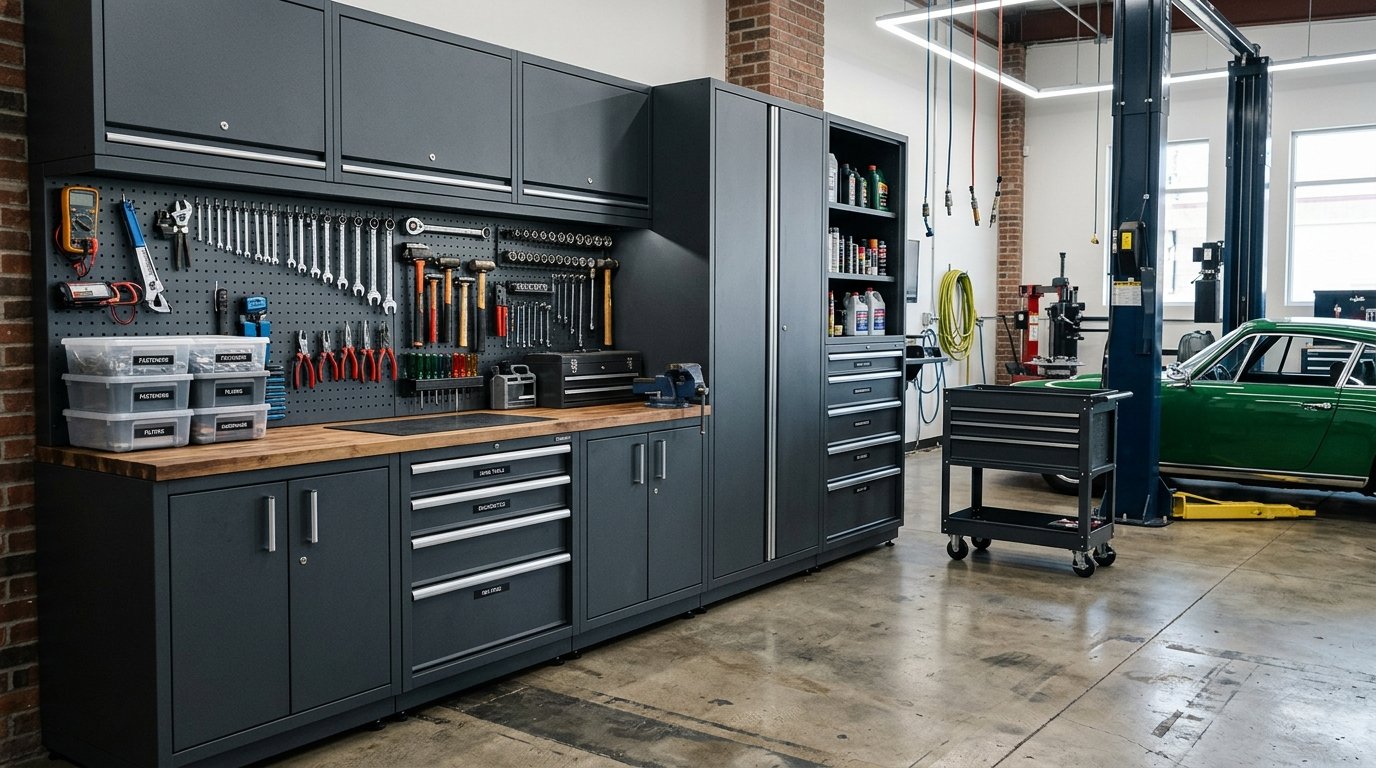
| Cabinets | Clean look, chemicals | Locks, hides clutter | Higher cost |
| Slatwall systems | Flexible tool storage | Adjustable hooks | Moderate install effort |
| Freestanding racks | Heavy equipment | High weight capacity | Takes floor space |
You don’t need all five. You need the right combination.
Wall Storage: The Biggest Upgrade You Can Make
Wall storage delivers the fastest results.
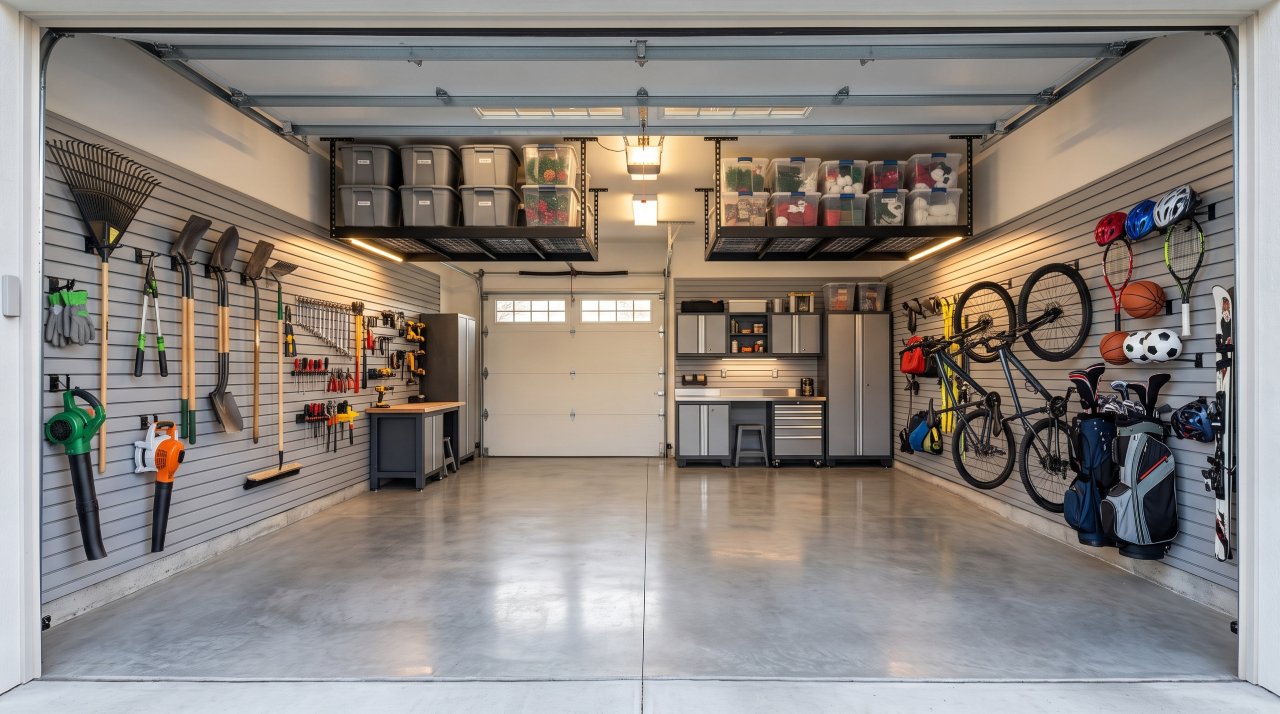
When you move items off the floor, you instantly gain usable square footage. Slatwall panels and track systems let you reposition hooks and baskets as your needs change.
The Garage Storage and Organization Guide by HGTV shows how vertical storage can double functional space. That flexibility makes wall systems ideal for beginners.
What to do:
Install shelves 18–24 inches above the floor. Store frequently used tools at eye level. Place rarely used items higher up.
Overhead Storage: Use the Ceiling
Your ceiling is wasted real estate.
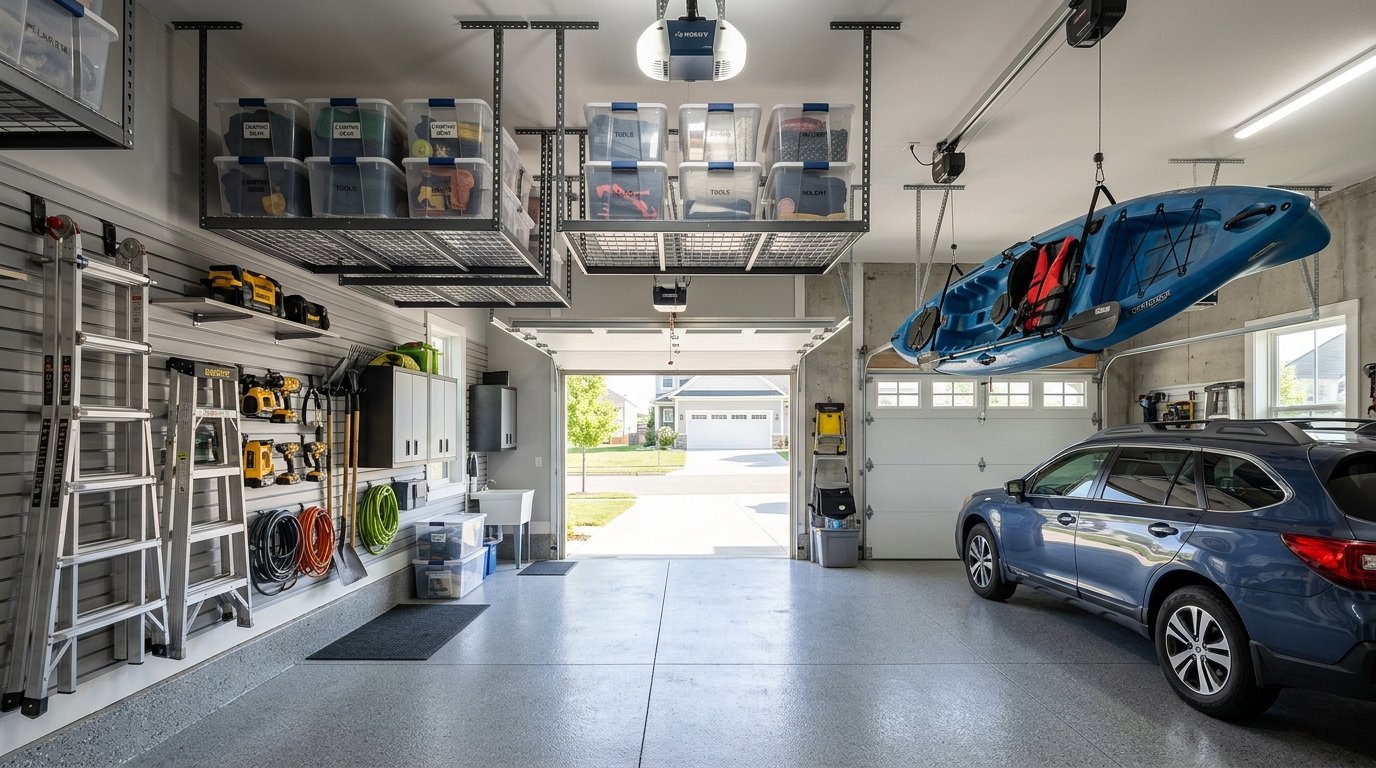
Overhead racks work best for holiday décor, camping gear, and storage bins you only access a few times a year. Many steel racks now hold 400–600 pounds.
According to Safe Garage Storage Practices from FEMA, heavy items must anchor into ceiling joists, not drywall. Safety matters more than convenience.
What to do:
Measure ceiling height before buying. You’ll need at least 16 inches of clearance above vehicle roofs.
Garage Cabinets: Clean, Safe, and Secure
Cabinets create a polished look.
They also keep chemicals, sharp tools, and automotive fluids away from kids and pets. That matters because the CDC reports thousands of accidental household poisonings each year linked to improper storage.
Steel cabinets last longer than particleboard in humid garages. Lockable doors add another layer of safety.
What to do:
Use cabinets for hazardous materials. Keep open shelving for safe, everyday items.
Slatwall and Modular Systems
Modular systems are growing in popularity in 2026.
Brands now offer adjustable track systems that let you move hooks without drilling new holes. That flexibility helps if you upgrade tools later.
What to do:
Start with one wall. Test layout before committing to the entire garage.
Garage Storage for Small Garages
Small garages require precision.
Most one-car garages measure about 12×20 feet. After parking, you may have less than 200 square feet left.
Here’s how you maximize it:
- Install vertical shelving up to the ceiling.
- Use fold-down workbenches.
- Choose narrow cabinets (12–16 inches deep).
- Mount bikes on wall hooks instead of floor stands.
Avoid deep shelving that blocks vehicle doors. Measure with your car parked inside.
Heavy-Duty Storage for Tools and Equipment
Power tools, lawnmowers, and compressors need stronger systems.
Industrial steel racks often support 1,000+ pounds per shelf. Look for 14–16 gauge steel construction for durability.
The Occupational Safety and Health Administration highlights secure storage to prevent falling objects in work areas. You can review their recommendations in the OSHA materials handling guidelines.
What to do:
Store heavy items on lower shelves. Anchor tall racks to wall studs.
Climate and Moisture Considerations
Garages aren’t climate-controlled in most homes.
Humidity can warp wood shelves and rust tools. In coastal or humid states, metal with powder coating resists corrosion better.
If you live in high-humidity areas, add a small dehumidifier. That protects tools and extends system lifespan.
Budget vs. Premium Systems
Garage storage solutions range from $200 DIY setups to $5,000+ custom systems.
Budget options work fine if you install them correctly. Premium systems offer thicker steel, custom fit, and higher weight limits.
The key question: Do you want temporary organization or a 10-year solution?
If you’re unsure, start mid-range and expand later.
Common Mistakes to Avoid
Many homeowners repeat the same errors.
They buy storage before decluttering. They ignore vertical space and they overload shelves beyond rated capacity. Another mistake involves poor layout planning. Sketch your garage first.
Step-by-Step: How to Plan Your Garage Layout
You don’t need design software.
Follow this simple process:
- Empty the garage.
- Group items by category.
- Measure wall and ceiling space.
- Assign zones: tools, sports, seasonal, automotive.
- Install storage from top down.
Working top down prevents rework later.
Real Example: 2-Car Garage Transformation
A Texas homeowner recently upgraded a standard 22×22 garage.
Before: Floor clutter, stacked bins, no wall systems.
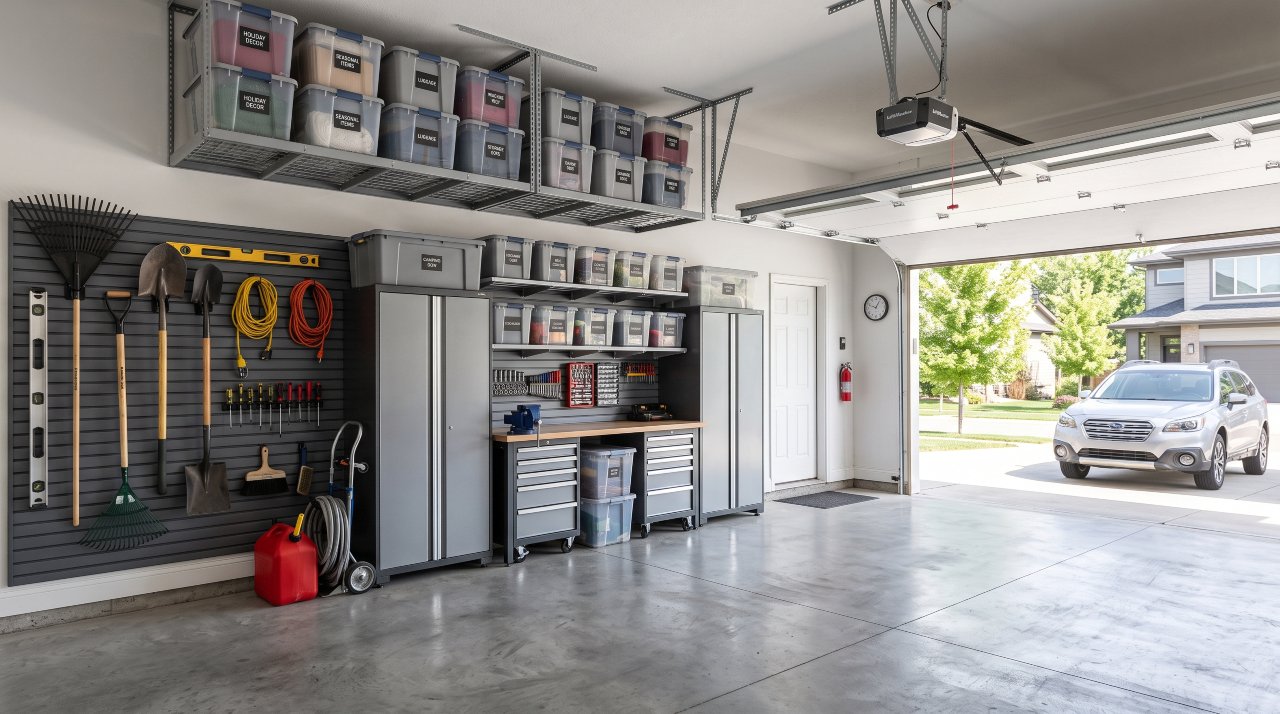
After: Two 4×8 overhead racks, one slatwall panel, three steel cabinets.
Total cost: $1,850.
Result: 70% more usable floor space.
The biggest improvement came from overhead storage. That freed wall space for tools.
Limitations You Should Know
No system is perfect. Overhead racks require solid joists. Cabinets reduce visible clutter but don’t reduce total volume. Cheap plastic shelves can bow under weight.
Installation takes time. Expect a full weekend for a complete setup. Being realistic prevents frustration later.
FAQ: Garage Storage Solutions
What is the cheapest way to organize a garage?
Wall-mounted shelves and heavy-duty plastic bins cost the least. Expect to spend $150–$300 for a basic setup. Focus on vertical storage first.
Are overhead garage racks safe?
Yes, when anchored into ceiling joists. Always follow manufacturer weight limits and installation instructions.
How much weight can garage shelving hold?
Light-duty shelves hold 200–400 pounds. Heavy-duty steel racks often support 1,000+ pounds per shelf.
What should not be stored in a garage?
Avoid storing sensitive electronics, important documents, or temperature-sensitive items. Extreme heat and cold can damage them.
Is it worth installing garage cabinets?
If you want a clean look and secure storage, yes. Cabinets protect hazardous items and reduce visual clutter.
The One Thing That Makes the Biggest Difference
Most garages don’t need more space. They need smarter structure.
When you use vertical and overhead areas properly, you free up floor space immediately. That single shift changes how your garage feels and functions.
Start small. Install one wall system this weekend. Measure first, anchor safely, and build from there.
If you want long-term results, choose durable materials and plan before buying. Your garage can work for you instead of against you.

Callum Langham
Founder & Technical Storage Editor
Callum Langham is the founder and technical editor of Rack System. With over 12 years of hands-on field experience in warehouse logistics, garage organization, and industrial storage installations, Callum specializes in engineering safety standards, beam load calculations, and OSHA/RMI compliance. Every guide on Rack System is audited against verified steel gauge tolerances and municipal building codes.