The average American garage holds over 300 pounds of stored items, yet fewer than one in four households can fit a car inside. That number comes from a survey by the National Association of Professional Organizers (NAPO), and if you’ve recently typed “garage organizers near me” into Google, you probably already feel that statistic in your bones.
You want a garage that works. You want to park your car again, find your tools without hunting, and stop tripping over last summer’s gear. This guide tells you exactly what garage organizers are, which types solve which problems, what they cost, and where you can find them, both locally and online. By the time you finish reading, you’ll know precisely what to buy and what to skip.
Let’s get to it.
What Are Garage Organizers?
Garage organizers are any system, product, or structure that stores, sorts, or mounts items in your garage. That definition sounds simple. In practice, though, “garage organizer” covers everything from a 12 peg board hook to a 6,000 custom cabinet wall, and knowing which one you actually need saves you both money and frustration.
The global garage storage market hit roughly $28 billion in 2025, according to Grand View Research on garage storage market growth, and it’s growing at around 7% per year. That growth tells you one thing: people are investing in their garages more than ever. Your garage isn’t just a parking spot anymore, it’s a workshop, a gym, a seasonal storage hub, and sometimes all three at once.
Why You Need a Zone Plan Before You Buy

Here’s where most beginners go wrong. They search “garage organizers near me,” drive to the nearest Home Depot, grab a set of wire shelves, get home, and realize the shelves don’t fit where they imagined, block the garage door track, or still leave the floor a mess.
The fix is a zone plan. Before you spend a dollar, divide your garage into functional areas on paper. This is what professional organizers do on every job, and it takes about 20 minutes.
Here are the four standard zones:
- Active Zone , Items you grab weekly (cleaning supplies, sports gear, backpacks). Store at eye level, near the house entry.
- Workshop Zone , Tools, hardware, and workbench supplies. Keep together near an outlet if possible.
- Seasonal Zone , Holiday decorations, camping equipment, and anything used a few times a year. Overhead or high shelves work perfectly here.
- Transition Zone, Bikes, strollers, and outdoor gear you move in and out. Keep it accessible, near the garage door.
Once your zones are mapped, buying becomes easy. Each zone points to a specific type of organizer.
The 7 Main Types of Garage Organizers
1. Wall-Mounted Shelving
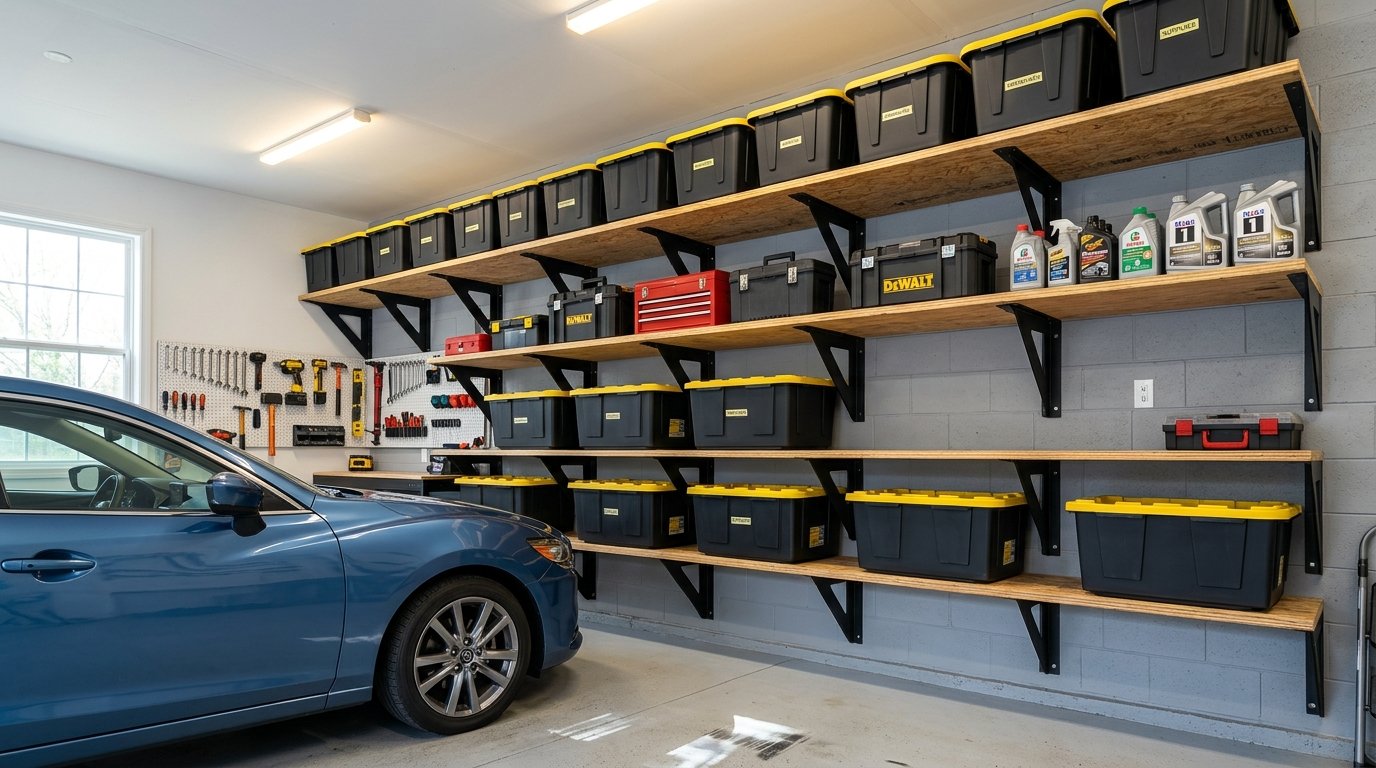
Wall-mounted shelving is the workhorse of any garage system. You mount brackets directly into wall studs, then set heavy-duty shelves across them. A good steel wall shelf holds 200 to 800 pounds per unit. That’s enough for large storage totes, tool boxes, or motor oil jugs.
This type fits perfectly in your Workshop Zone and Seasonal Zone. The downside? You need to find your studs, drill correctly, and use the right anchors. A shelf mounted in drywall alone will pull out of the wall, and that’s a mess and a safety hazard. Always anchor into wood studs or use appropriate toggle bolts for masonry walls.
You can find quality wall-mounted garage shelving systems at Lowe’s in-store or online with same-day pickup at most US locations.
2. Overhead Storage Racks
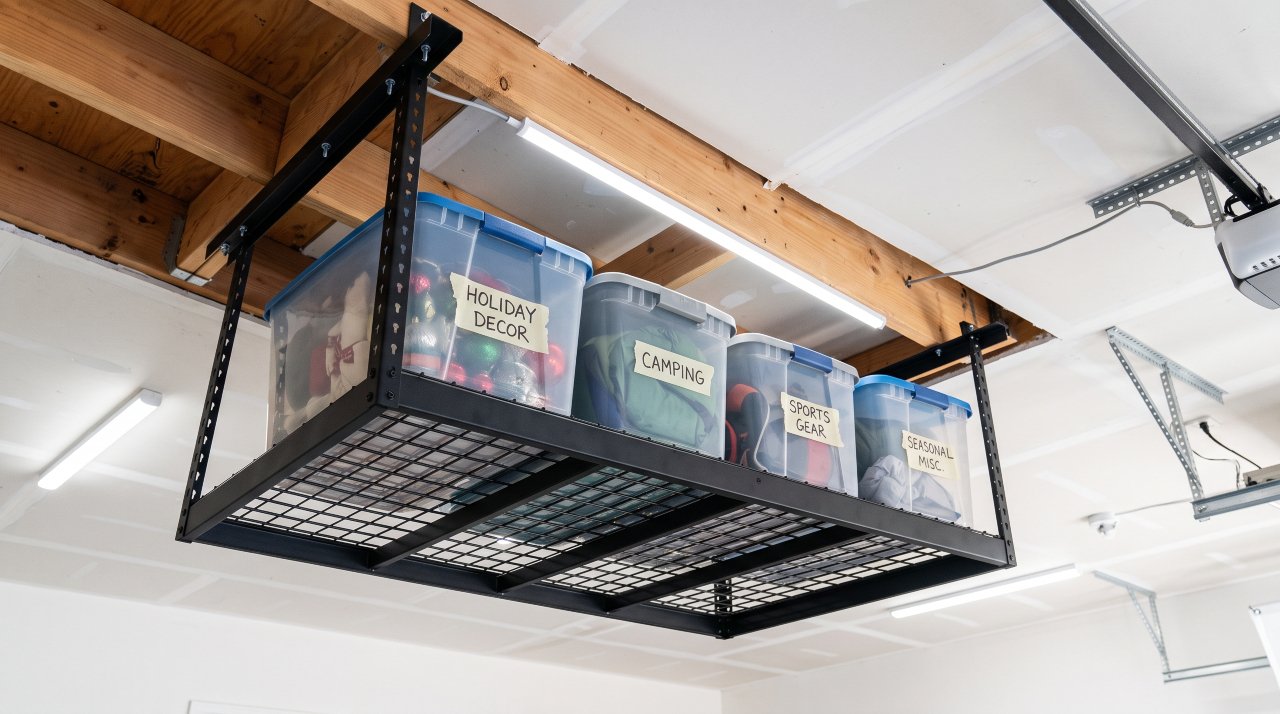
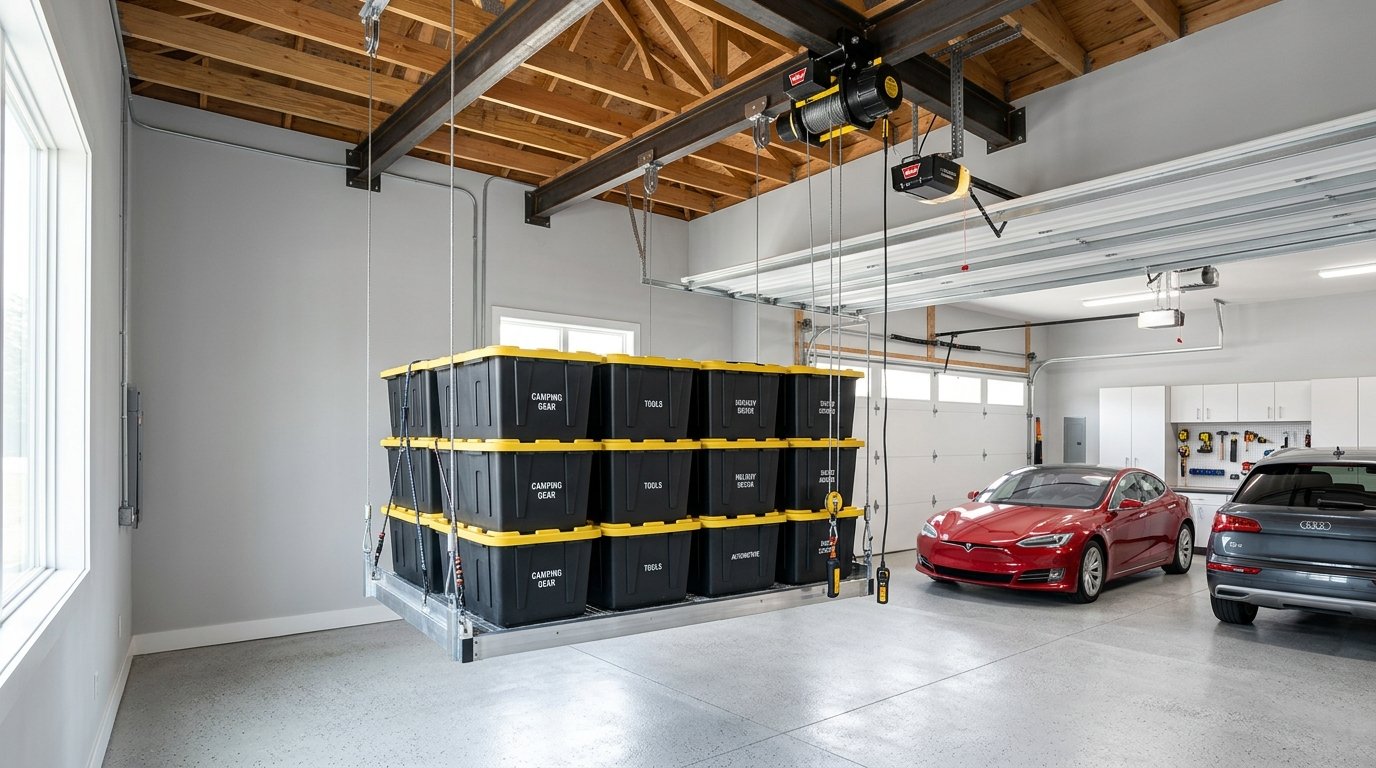
Overhead racks hang from your ceiling joists and use that dead space above your car. A standard 4×8 ft overhead rack holds 300 to 600 lbs and can store a season’s worth of holiday boxes, camping gear, or sporting equipment you don’t need every week.
These are ideal for your Seasonal Zone. They keep the floor completely clear. The honest limitation: installation takes real effort. You need to locate ceiling joists, drill lag bolts into them, and adjust the height so it clears your car’s roof. This is a two-person job, and on a garage with a 10-foot ceiling, you’ll need a sturdy ladder. Budget 2 to 4 hours for your first installation. Before you buy, read our full garage rack system guide to avoid the most common ceiling rack mistakes.
3. Slatwall Panels
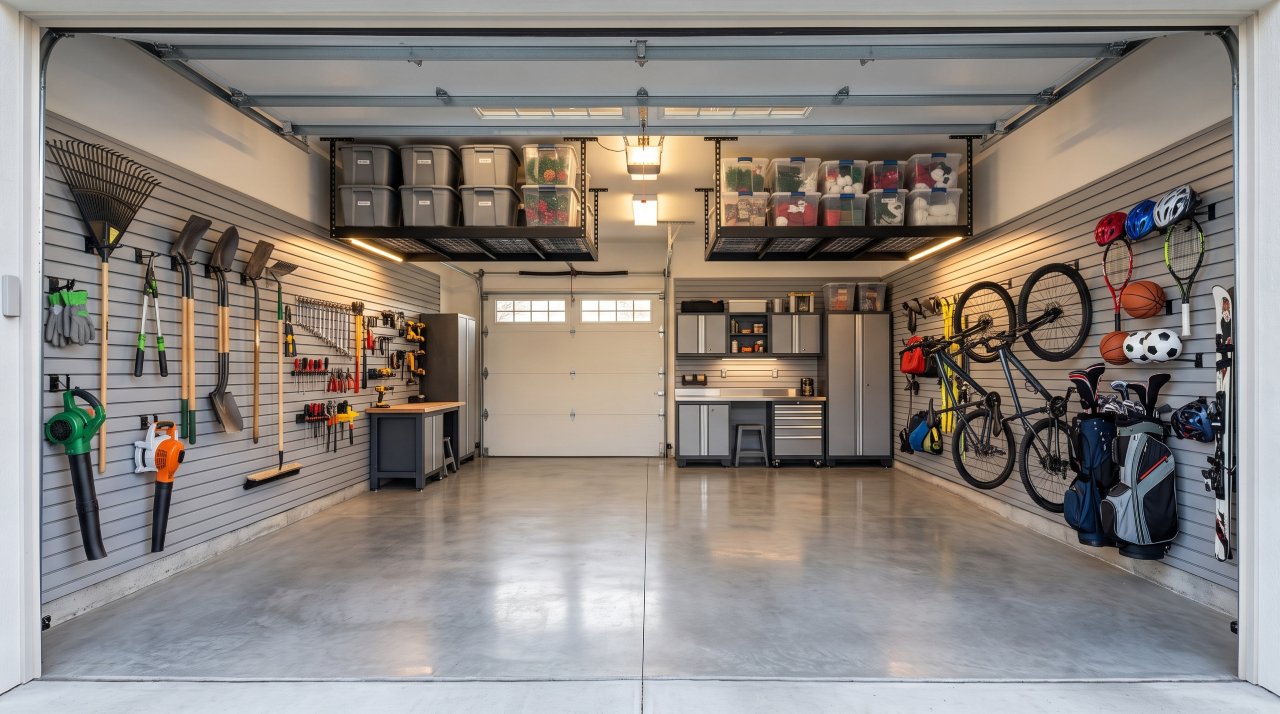
Slatwall panels are interlocking boards with horizontal grooves that accept a wide variety of hooks, baskets, and shelves. You mount the panels flat against your wall, then slide accessories in wherever you want them. No drilling new holes every time you rearrange.
Slatwall is the most flexible wall-organizer option you can buy. It’s perfect for your Active Zone, tools, garden hoses, sports gear, because you can rearrange it anytime. PVC slatwall resists moisture better than wood versions. The trade-off is upfront cost: a 4×8 ft slatwall panel kit runs 80 to 180 before accessories.
4. Pegboards
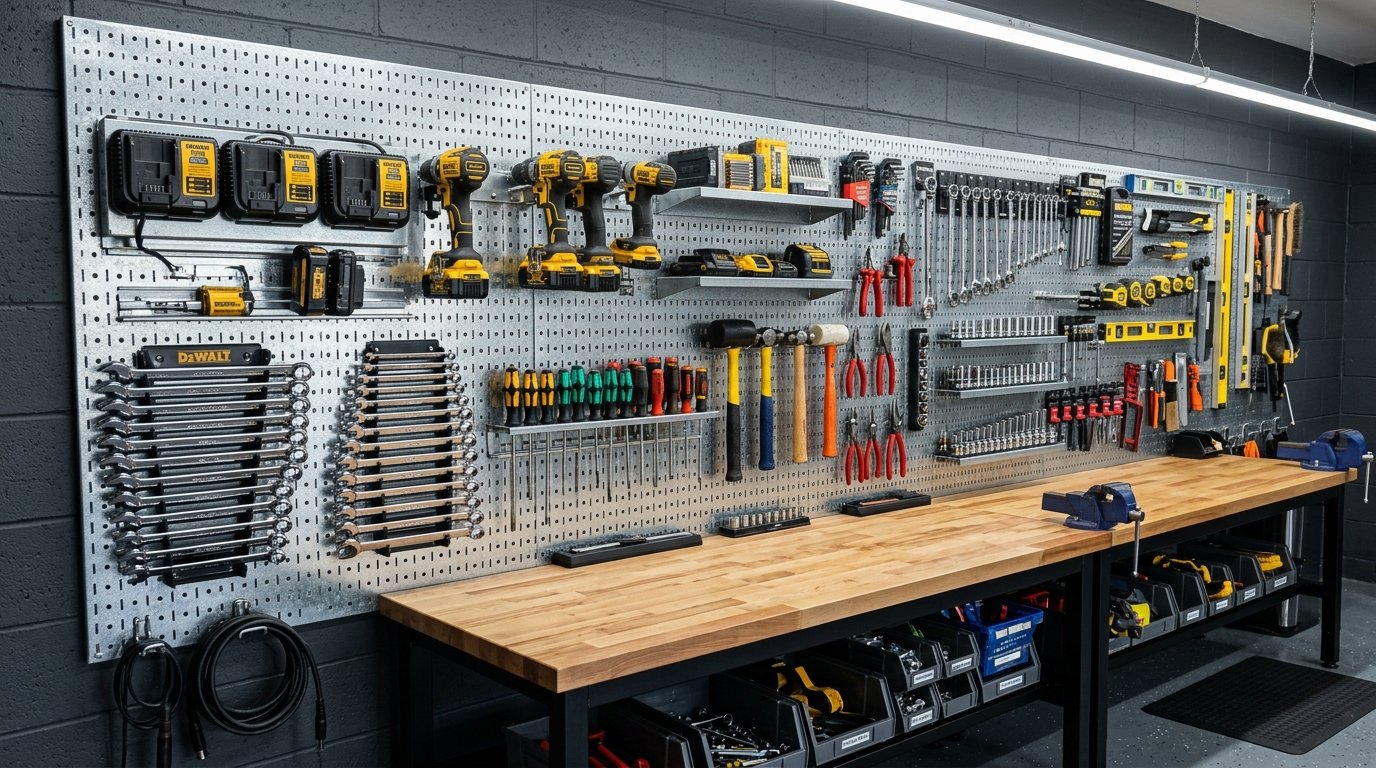
Pegboards are the classic tool-wall solution, and they’re still one of the best bang-for-your-buck garage organizers. A standard 4×4 ft pegboard with hooks runs 25 to 60. You can see exactly where every tool is, and hanging new items takes seconds.
The limitation is weight capacity. Standard pegboard hooks handle light to medium tools well. Don’t hang a heavy power tool directly from a single small peg, use a dedicated bracket or shelf for anything over 10 pounds. For a beginner setting up a Workshop Zone on a budget, pegboard is the smartest starting point.
5. Freestanding Shelving Units
Freestanding metal or resin shelving units don’t require any wall drilling. You assemble them on the floor and they stand on their own. A heavy-duty steel unit from a brand like Gladiator or Husky typically holds 2,000 lbs total across five shelves.
These are the best choice for renters or anyone who doesn’t want to put holes in walls. They’re also fully portable, if you move, they come with you. The drawback is floor footprint. Each unit takes up 2 to 4 square feet of floor space, which matters in a single-car garage.
6. Garage Cabinets
Lockable garage cabinets give you secure, enclosed storage. They keep chemicals away from kids, protect expensive tools from dust, and keep your garage looking clean. Steel garage cabinet sets range from 400forabasictwo−doorunitto2,400+ for a full modular wall system.
According to market research, garage cabinets account for around 38% of total garage storage product sales in North America, the biggest share of any single category. That popularity makes sense. Cabinets hide the clutter and protect what’s inside. The main downside is price. You’re paying significantly more per square foot of storage than you would with open shelving or pegboard.
7. Specialty Hooks and Racks
For bikes, ladders, garden hoses, and long-handled tools, simple specialty hooks solve the problem faster and cheaper than any full system. A heavy-duty bike hook runs 8 to 25. A ladder storage rack costs 30 to 70. A garden hose reel bracket runs 20 to 50.
Don’t overlook these. If your main problem is one or two bulky items eating floor space, a single specialty hook or rack fixes that problem for under $50, in about 15 minutes, with no planning required.
What Does a Garage Organizer Cost?
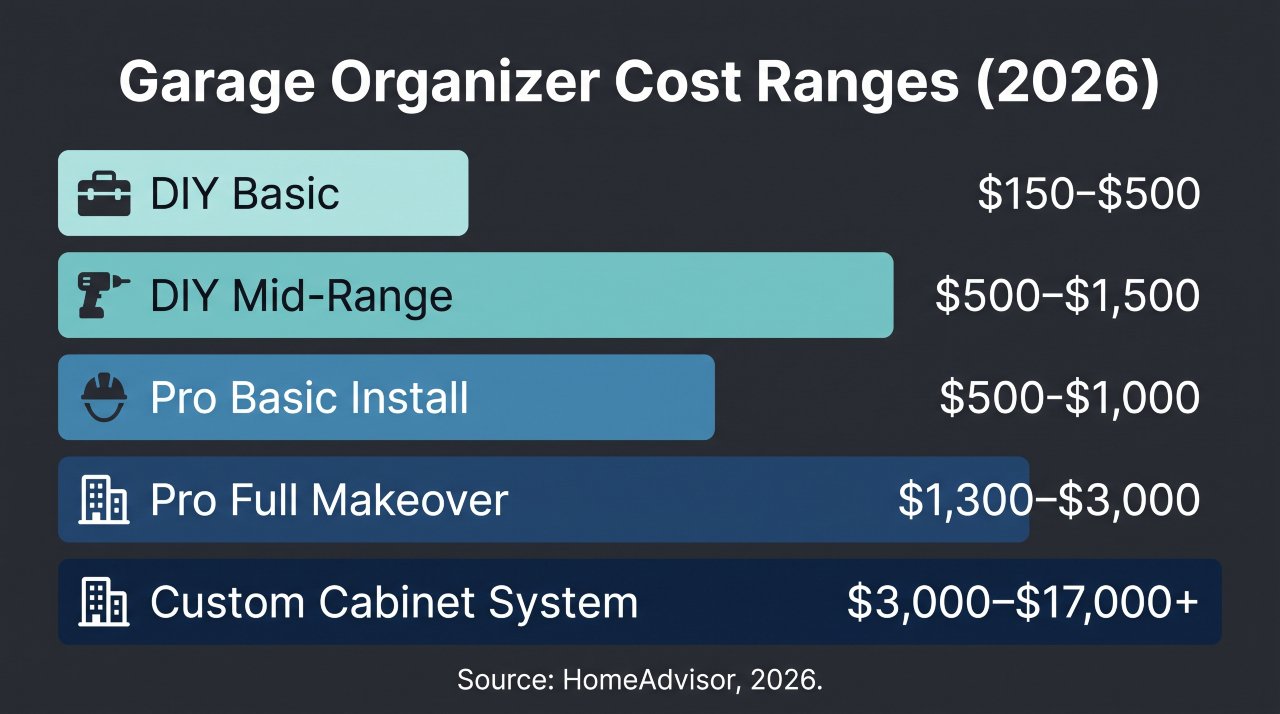
Cost is the question most articles gloss over. Here’s what you’re actually looking at in 2026, based on data from HomeAdvisor’s garage organization cost guide:
| Project Type | Typical Cost Range |
|---|---|
| DIY basic setup (shelves + hooks) | 150 to 500 |
| DIY mid-range (slatwall + shelving + overhead rack) | 500 to 1,500 |
| Professional installation (basic) | 500 to 1,000 |
| Professional installation (full makeover) | 1,300 to 3,000 |
| Full custom cabinet system (pro-installed) | 3,000 to 17,000+ |
The average US homeowner spending on a professional garage organizer install runs 1,300 to 1,450 for a mid-range project. For most beginners, a solid DIY setup in the 400 to 800 range covers 80% of the result at 20% of the custom cost.
Professionals charge 50 to 150 per hour for labor. If you’re handy with a drill and willing to spend a Saturday, you keep that money in your pocket.
Where to Find Garage Organizers Near You
When you search “garage organizers near me,” you’re really asking three questions: who sells them, who installs them, and how fast can I get started? Here are your options.
Retail stores with in-store pickup:
- The Home Depot , The widest selection of garage storage, including their own Husky brand. Use their website to check local store stock before you drive.
- Lowe’s , Strong selection of CRAFTSMAN VersaTrack wall systems and basic shelving. Same-day pickup available at most locations.
- Costco , Excellent for heavy-duty freestanding shelving units at competitive prices. Selection rotates, so check online first.
- Harbor Freight , Budget-friendly shelving and hooks. Good for beginners who want to test a zone before committing to a premium system.
Professional installation: Use Thumbtack to find garage organization pros near you. You can browse local pros, read reviews, and request quotes, many offer free in-home consultations. TaskRabbit is another option for assembly-only jobs (putting together prefab shelving units).
Online with fast shipping: Amazon, Wayfair, and brand-direct sites (Gladiator, SafeRacks, FlexiMounts) ship most garage organizers within 2 to 5 days. For large overhead racks, check if curbside delivery is included, some units ship in boxes exceeding 80 lbs.
DIY vs. Professional Installation: Which Is Right for You?
You don’t always need a pro. Here’s an honest breakdown.
Go DIY if:
- You’re comfortable with a drill and stud finder
- Your project is shelving, pegboard, or basic slatwall
- You want to spread the cost over a few weekends
- You’re renting and prefer freestanding units
Hire a professional if:
- You want ceiling-mounted overhead racks (anchoring into joists incorrectly is a real safety risk)
- You’re investing in a full custom cabinet wall
- Your garage has unusual layouts, masonry walls, or low clearance
- You want a warranty-backed installation
A word of honesty: overhead ceiling rack installation sounds simple in YouTube videos. In a real garage, locating joists above drywall, accounting for the garage door mechanism, and setting correct drop heights takes experience. A rack that falls with 400 lbs of storage on it causes serious damage. For ceiling work, the professional’s hourly rate is worth it.
How to Choose the Right System for Your Garage
Your garage size drives your system choice more than anything else. Here’s a quick framework:
One-car garage (under 200 sq ft): Wall-mounted systems are your best friend. You can’t spare floor space. Focus on slatwall or pegboard for tools, one set of wall shelves for bins, and a single overhead rack for seasonal items.
Two-car garage (200 to 400 sq ft): You have room for a combination. A wall of shelving or cabinets on one side, overhead racks for the center ceiling, and floor space for a workbench or freestanding tool chest. See our best garage storage systems reviewed for a side-by-side breakdown of the top brands at this size.
Three-car or larger (400+ sq ft): Custom cabinet systems become cost-effective at this scale. You can build dedicated zones with room to spare.
For any garage, measure your ceiling height before buying. Most overhead rack systems need at least 8 feet of ceiling clearance and require 3 to 4 inches of drop space below the joists. In garages with 7-foot ceilings, overhead racks may not be practical.
Common Mistakes Beginners Make (And How to Avoid Them)
Most beginners hit at least one of these, and you can skip all of them.
Buying before measuring. It sounds obvious. People do it constantly. Measure your wall lengths, ceiling height, and door clearance before you add anything to your cart.
Ignoring the garage door track. Wall-mounted systems on the sides of your garage need to clear the garage door track. Leave at least 2 inches of clearance, or the door won’t open correctly.
Putting everything at floor level. The floor is the most valuable real estate in a garage, because you walk across it. Push storage up, walls and ceiling first, floor last.
Skipping labels. An unlabeled bin becomes a mystery box in six months. Label every container the day you fill it. Clear bins with adhesive labels take about 30 seconds per bin and save you hours of hunting later.
Overloading plastic shelving. Basic plastic resin shelving is light-duty. Don’t stack 300 lbs of tile samples on a shelf rated for 150 lbs. Invest in steel shelving for anything heavy.
Frequently Asked Questions
What is the best type of garage organizer for beginners?
For most beginners, a combination of heavy-duty freestanding steel shelving and a pegboard or slatwall section works best. Freestanding shelving needs no drilling and moves if you change your mind. Pegboard handles tools cheaply and keeps everything visible. Start with these two, then add specialty hooks and overhead racks once your zones are defined.
Are garage organizers worth the money?
Yes, and the data backs that up. Over 80% of US homebuyers now consider garage storage an essential or desirable feature, according to market research cited by Grand View Research. A well-organized garage adds perceived value to your home, reduces time spent searching for items, and prevents damage from items stored incorrectly on concrete floors. Even a $200 DIY setup pays off quickly in the time and frustration it saves.
How do I find a garage organizer installer near me?
The fastest route is Thumbtack or TaskRabbit. Search “garage organizer” or “garage storage installation” with your ZIP code. You’ll see local pros with ratings, photos of past work, and quote request forms. Many professional garage companies (like Garage Living or Inspired Closets) also have location finders on their websites and offer free in-home consultations.
How do I organize my garage cheaply?
Start with what you already have. Repurpose old bookshelves, use clear plastic totes from dollar stores, and install basic wall hooks from any hardware store. A 25pegboardkit,15 in assorted hooks, and 10inadhesivelabelscanorganizeatoolwallforunder60. The real cost driver isn’t the gear, it’s buying the wrong gear before you have a plan.
What should I put in my garage first when organizing?
Declutter first, always. Pull everything out, sort into four piles (Keep, Donate, Sell, Trash), and only bring back what you actually use. Once you know exactly what you’re storing, your zone plan and product choices become obvious. Most people discover they can eliminate 20 to 30% of what was in the garage just by sorting it out.
Can a garage organizer work in a small one-car garage?
Absolutely. A one-car garage actually benefits the most from a good organizer system because space is tight. Focus on vertical storage, wall-mounted shelving and overhead racks, to keep the floor clear for your car. A well-designed one-car garage storage system can reclaim 60 to 80 sq ft of effective floor space.
Final Thoughts
The one thing worth remembering from everything you’ve just read: measure first, zone second, buy third. That order is the difference between a garage makeover that actually sticks and a pile of unused shelving units in the corner.
Your next step is concrete. Grab a tape measure and spend 20 minutes this weekend measuring your garage walls, ceiling height, and door clearance. Sketch four zones on paper. Then match each zone to the organizer type that fits it from this guide.
You don’t need the most expensive system. You need the right system for your space. Once you know that, finding garage organizers near you, at Home Depot, Lowe’s, Costco, or through a local pro, takes about 15 minutes.
Your car deserves to be parked inside. Let’s make it happen.

Callum Langham
Founder & Technical Storage Editor
Callum Langham is the founder and technical editor of Rack System. With over 12 years of hands-on field experience in warehouse logistics, garage organization, and industrial storage installations, Callum specializes in engineering safety standards, beam load calculations, and OSHA/RMI compliance. Every guide on Rack System is audited against verified steel gauge tolerances and municipal building codes.