Quick Answer: Key Buying Rules for Pallet Racks for Sale
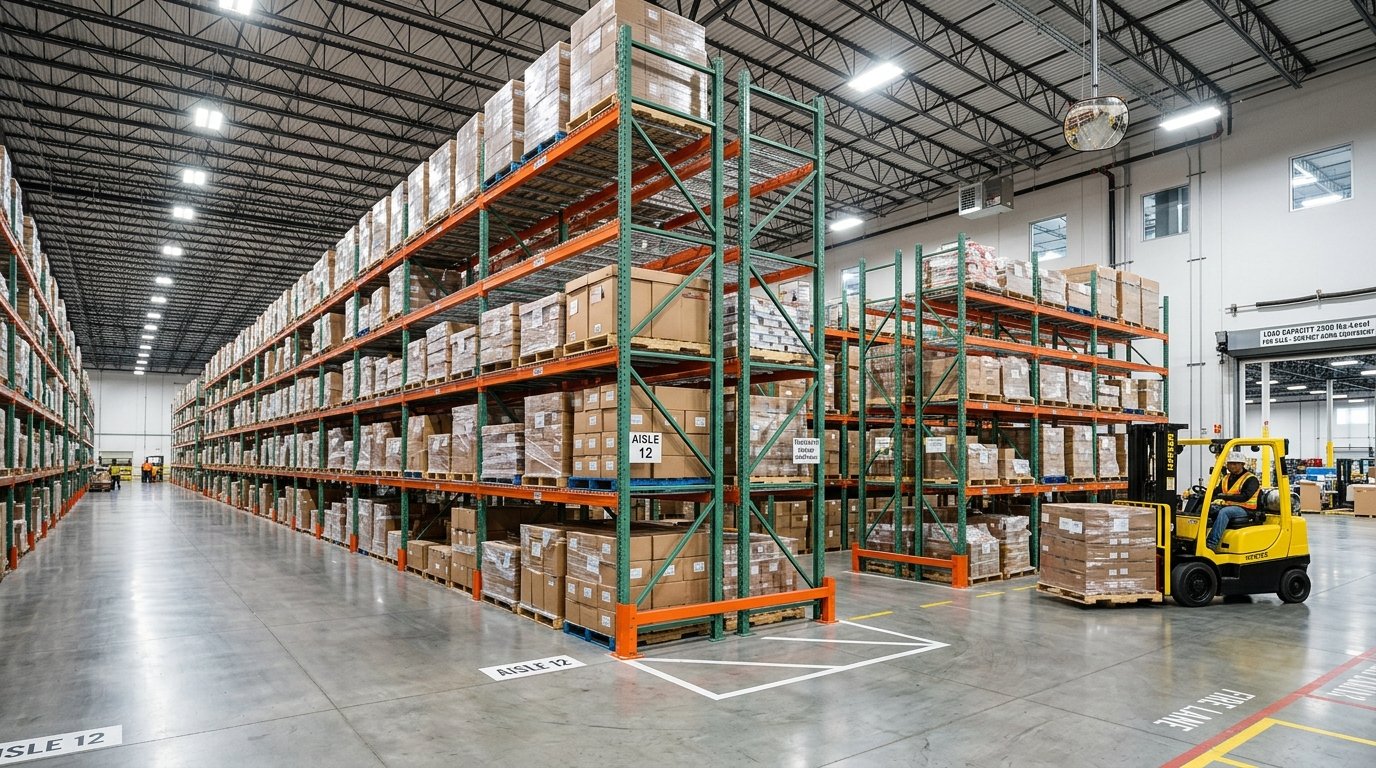
When evaluating pallet racks for sale, commercial buyers must configure rack rows using starter and adder bay architecture. A starter bay features two upright frames and load beams, while each connected adder bay requires only one additional upright frame, cutting upright steel procurement costs by 35% to 45% across continuous rows. Standard storage setups for standard 48×40-inch GMA pallets require 42-inch deep upright frames and 96-inch or 108-inch step beams. Every installation must adhere to RMI ANSI MH16.1 engineering standards, utilize concrete floor wedge anchors, and feature certified capacity placards displayed on every row end.
Key Takeaways
- Starter vs. Adder Geometry: Always purchase one starter bay per continuous rack row and convert all adjoining sections into adder bays that share center upright columns.
- 42-Inch Upright Standard: A 42-inch frame depth provides the mandatory 3-inch overhang in the front and rear when storing 48-inch long wooden pallets, ensuring the pallet stringers rest squarely on heavy-duty step beams.
- Beam Deflection Rating: Commercial step beams are engineered for uniform distributed loads (UDL) under the L/180 deflection rule (maximum 0.53-inch sag on an 8-foot beam under full capacity).
- Mandatory Concrete Anchors & Locks: OSHA 1910.176 mandates anchoring every upright baseplate to the slab with structural wedge anchors, backed by spring safety locking pins on every beam connector.
Understanding Pallet Rack Components: Uprights, Beams, and Decking
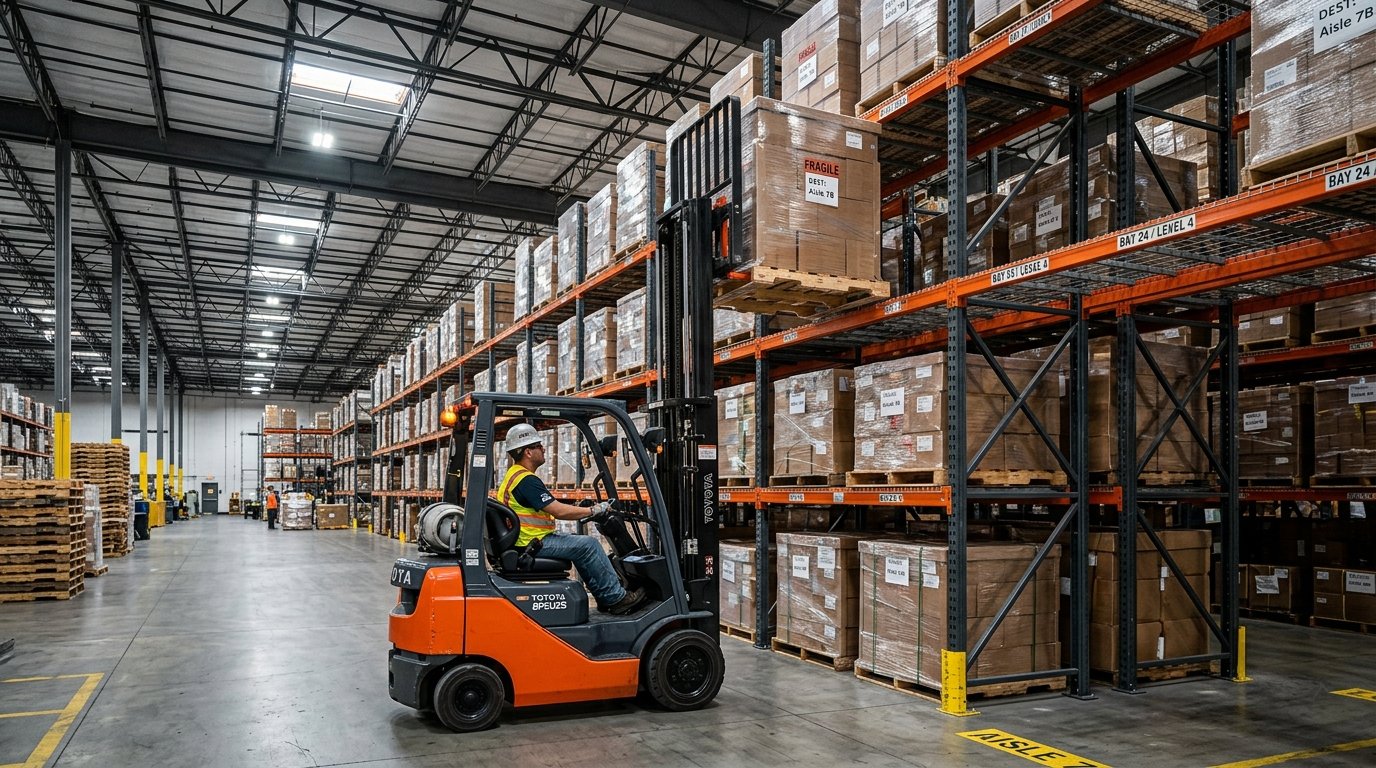
Warehouses, manufacturing plants, fulfillment centers, and commercial retail operations rely on selective pallet racking as the structural backbone of their storage infrastructure. When browsing listings for pallet racks for sale, buyers encounter hundreds of sizing combinations, gauges, and accessory packages. Selecting the wrong specifications can quickly result in costly shipping returns, severe safety hazards, or failed municipal fire and building inspections. For broader facility hardware guidelines, consult our warehouse racking supplies buyer guide.
Every standard selective rack bay consists of three primary structural components engineered to work together as an integrated system:
1. Upright Frames (Columns and Bracing)
An upright frame consists of two vertical steel columns joined together by factory-welded horizontal and diagonal steel bracing channels. The vertical columns feature punch patterns along their front faces—most commonly the universal teardrop punch pattern—spaced at 2-inch vertical increments. Upright frame depth must correspond directly with the depth of the pallets being stored, while upright height must balance warehouse ceiling clear height, forklift mast reach, and fire sprinkler clearance.
2. Horizontal Step Beams
Horizontal step beams connect front and rear upright columns across the bay opening to form rigid shelf levels. The term “step beam” refers to the built-in 7/8-inch internal recessed steel ledge along the top inside edge of the beam. This recessed step seats wire mesh decking panels, pallet support crossbars, or plywood shelf inserts flush with the top beam flange, preventing stored items from shifting during loading. Beam end connectors feature welded steel claws with round rivets or teardrop lugs that seat firmly into the column punchings.
3. Wire Mesh Decking Panels
Wire mesh decking drops into the step beam profile across each shelf level. A standard deck panel consists of heavy-gauge welded wire grid reinforced underneath with three or four steel channel supports that rest on the beam steps. Wire decking serves three essential purposes: it prevents broken pallets or loose cartons from falling through open beam gaps, distributes uneven point loads across both beams, and permits open water penetration from overhead fire sprinkler systems in compliance with NFPA 13 fire codes. To explore wire deck varieties, read our detailed guide on pallet rack accessories and wire decking.
Starter Bays vs. Adder Bays: How Bay Architecture Slashes Costs
The single most common mistake buyers make when purchasing pallet racks for sale is buying isolated standalone bays for a continuous row. In commercial warehouse engineering, rack runs are laid out using a starter-and-adder modular architecture.
The Starter Bay Foundation
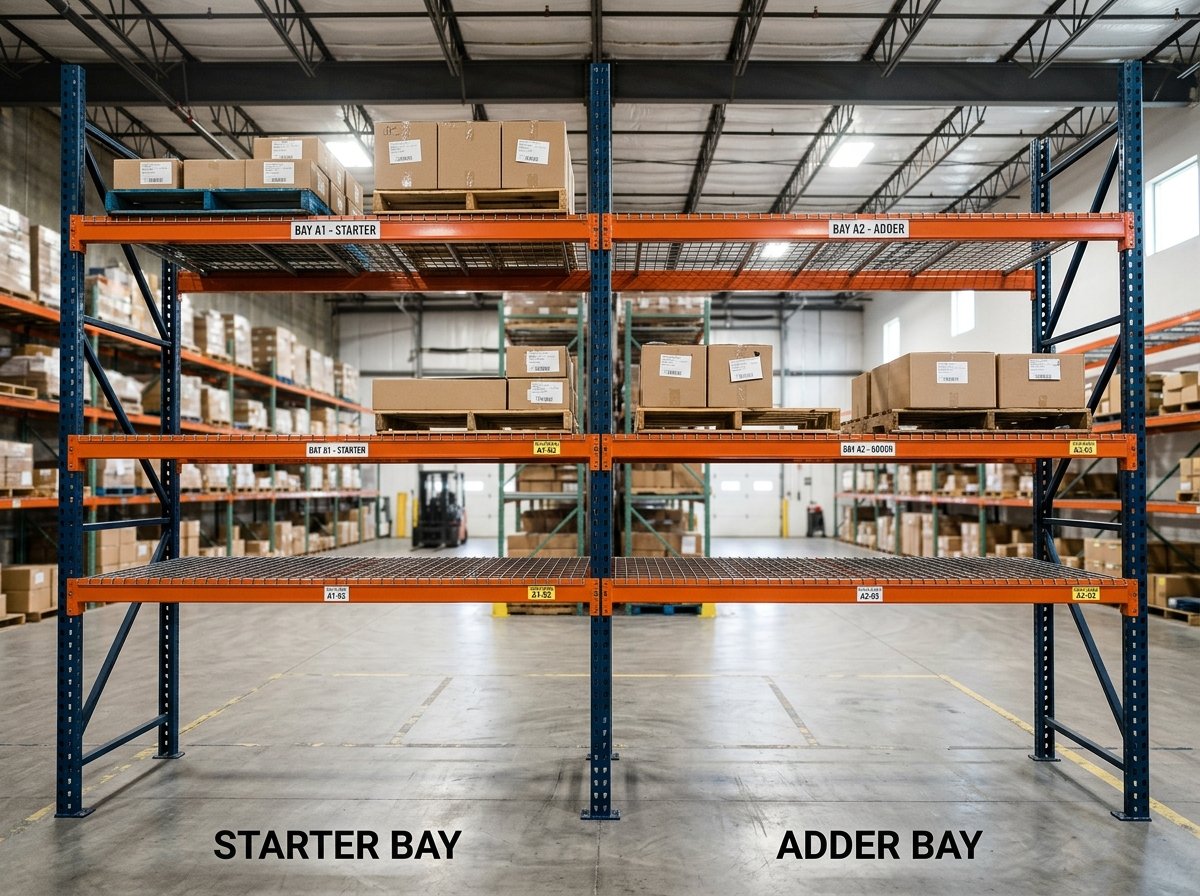
A starter bay is a standalone, four-legged structural unit composed of exactly two upright frames connected by pairs of horizontal load beams. Because it has two independent vertical end frames, a starter bay can stand completely alone in a warehouse. Every independent rack row begins with exactly one starter bay.
The Adder Bay Multiplier
An adder bay consists of only one upright frame and pairs of load beams. It cannot stand alone. Instead, the open ends of its load beams clip directly into the secondary punchings of the adjacent starter bay upright column. By sharing that common upright frame between adjacent bays, the adder bay extends the row at a significantly lower capital cost.
Calculating Upright Steel Savings
To understand the substantial financial savings of starter and adder bay planning, consider a continuous row of 10 pallet rack bays:
- Purchasing Independent Bays: 10 standalone bays × 2 upright frames each = 20 upright frames.
- Purchasing Starter + Adder Bays: 1 starter bay (2 uprights) + 9 adder bays (9 uprights) = 11 upright frames.
- Net Material Reduction: 9 fewer upright frames, slashing upright steel procurement costs by 45% across that single row.
Beyond the direct material purchase cost, eliminating 9 upright frames reduces total freight shipment weight, simplifies floor slab layout, reduces drilling for concrete floor wedge anchors by nearly half, and eliminates awkward double-column gaps that waste valuable warehouse aisle square footage. For detailed floor layout strategies, review our selective pallet racking layout and specs guide.
Load Capacity Rules for Shared Columns
While sharing upright frames saves thousands of dollars in steel, warehouse facility managers must account for cumulative column loading. The center upright frame shared between a starter bay and an adder bay supports beam levels from both sides simultaneously. Therefore, the total vertical load bearing on that shared column is double the load of an end frame. When specifying upright frame weight capacity, always calculate the maximum weight of all beam levels resting on both adjacent bays combined to ensure the column tube and baseplate weld meet engineering safety factors.
Pallet Rack Pricing Benchmarks and Cost Breakdown
Pricing for industrial pallet racks for sale fluctuates based on global steel prices, freight fuel surcharges, gauge thicknesses, and whether you procure brand-new factory steel or certified used inventory. Understanding baseline component costs enables procurement managers to evaluate quotes effectively and avoid overpaying.
| Component Description | Standard Dimensions / Specs | New Price Range | Used Price Range | Typical Savings |
|---|---|---|---|---|
| Teardrop Upright Frame (12 Ft) | 42″ Deep × 144″ High (3″x3″ Col) | $110 – $145 | $60 – $85 | 40% – 48% |
| Teardrop Upright Frame (16 Ft) | 42″ Deep × 192″ High (Heavy Duty) | $140 – $190 | $75 – $115 | 38% – 45% |
| Standard Step Beam (8 Ft) | 96″ L × 4.0″ H (~5,000 lbs/pair) | $38 – $52 | $22 – $32 | 35% – 42% |
| Heavy Step Beam (9 Ft) | 108″ L × 4.5″ H (~6,000 lbs/pair) | $48 – $65 | $28 – $38 | 38% – 44% |
| Wire Mesh Deck Panel | 42″ Deep × 46″ Wide (3-Channel) | $24 – $34 | $14 – $19 | 40% – 45% |
| Anchor Hardware & Pins | 1/2″ × 4-1/4″ Wedge Bolts & Pins | $3 – $6 / bay | N/A (Always buy new) | 0% (Safety item) |
New vs. Used Pallet Racking Economics
When searching for pallet racks for sale, commercial buyers frequently choose between brand-new steel and used liquidation stock. If you choose used racking, you can save 35% to 50% on hardware costs, but you must audit every piece for frame damage, column bow, and rusted welds before accepting delivery. For a complete structural inspection walkthrough, consult our used warehouse racking inspection checklist.
Freight and Shipping Multipliers
Industrial racking is heavy, bulky, and difficult to pack, making shipping a major portion of your final purchase order. A single 16-foot upright frame weighs between 75 and 110 pounds, while an 8-foot beam pair weighs approximately 45 to 60 pounds. Because upright frames cannot be broken down without cutting welds, orders exceeding 6 to 8 bays typically require dedicated flatbed freight rather than less-than-truckload (LTL) carriers. Always obtain freight quotes that include liftgate delivery or job-site flatbed offloading if your facility lacks an elevated loading dock.
Sizing and Capacity Specifications: Getting the Dimensions Right
Choosing proper racking dimensions requires matching pallet dimensions, forklift maneuverability, and ceiling clearances. Using incorrect dimensions can compromise forklift operations or overload structural members.
Why 42-Inch Frame Depth is Industry Standard
In North American commercial warehousing, more than 90% of stored goods travel on standard 48×40-inch GMA wooden pallets. When loaded onto a rack, pallets are placed with their 48-inch stringers running front-to-back.
By using a 42-inch deep upright frame, the front edge of the pallet overhangs the front beam by exactly 3 inches, and the rear edge overhangs the rear beam by 3 inches. This 3-inch overhang is an engineered safety requirement: it ensures the solid hardwood structural stringers of the pallet rest squarely on the structural steel step beams, rather than resting precariously on wire decking alone. Never use 48-inch deep frames for 48-inch pallets, as zero overhang causes pallets to fall between the beams if placed even an inch off-center.
Selecting Beam Length: 96-Inch vs. 108-Inch
Beam length determines how many pallets fit on each shelf level and how much clearance forklift drivers have when staging loads:
- 96-Inch Beams (Two-Pallet Bay): Accommodates two standard 40-inch wide pallets side-by-side with 4 inches of clearance between pallets and 3 inches between the pallet edge and each upright column. This is the most cost-effective, space-efficient configuration for standard palletized operations.
- 108-Inch Beams (Extended Clearance Bay): Accommodates two 40-inch wide pallets with generous 7-inch side clearances. This extra space is crucial if your products have irregular carton overhang, shrink-wrap bulge, or if forklift operators must move quickly in high-velocity cross-dock facilities.
- 144-Inch Beams (Three-Pallet Bay): Accommodates three standard 40-inch wide pallets side-by-side. While three-pallet bays reduce the total number of upright frames needed, they require much deeper beam profiles (5.5-inch or 6.0-inch vertical beam faces) to resist excessive mid-span deflection.
The Beam Vertical Spacing Capacity Rule
The total weight an upright frame can support is not fixed—it changes dramatically depending on the vertical spacing between shelf levels. An upright frame column is an engineered compression column. As the vertical distance between beam levels increases, the “unbraced length” of the column increases, which drastically lowers its maximum load rating:
- An upright column rated for 24,000 lbs with beam levels spaced every 48 inches.
- The exact same upright column rating drops to approximately 17,500 lbs if beam levels are spaced 72 inches apart.
- The rating drops further to 12,500 lbs if the bottom beam level is elevated to 96 inches to allow drive-in ground pallet staging.
Always verify the manufacturer’s engineering capacity table based on your specific vertical beam elevation spacing before loading pallets onto the frames.
Crucial Safety Codes and Inspection Before Buying
Installing commercial pallet racks introduces significant structural and life-safety liabilities. When inspecting pallet racks for sale, buyers must verify compliance with federal safety regulations and engineering design standards.
RMI ANSI MH16.1 Engineering Compliance
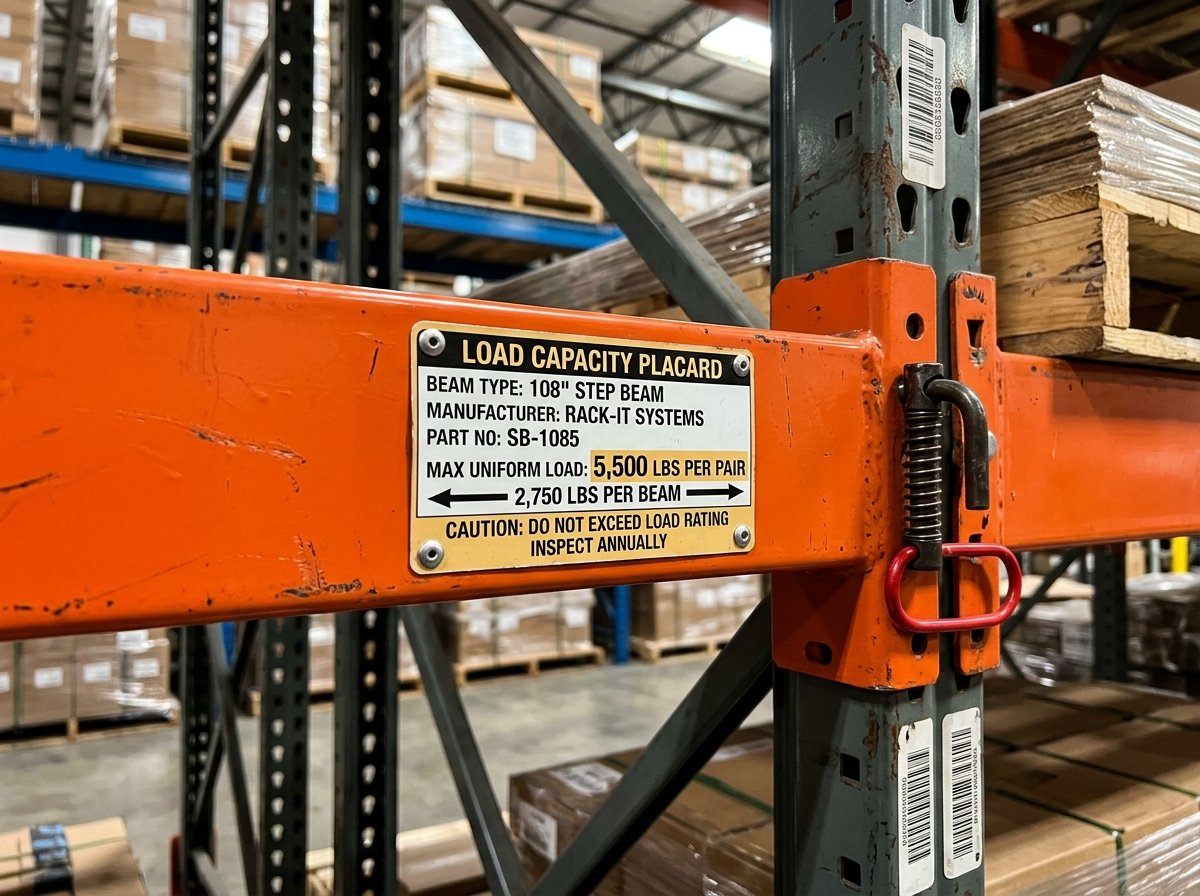
In the United States, commercial steel pallet racking must conform to design specifications established by the Rack Manufacturers Institute (RMI) ANSI MH16.1 standard and recognized by the American National Standards Institute industrial guidelines. These standards govern minimum yield strength for cold-formed steel, weld joint shear strength, seismic anchorage calculations, and mandatory load deflection ratios. Every rack row must display a permanent, durable capacity plaque at eye level specifying maximum allowable load per beam level and maximum bay load.
OSHA 1910.176 Enforcement Rules
Federal workplace safety regulators enforce warehouse storage safety under OSHA 1910.176 materials handling and storage standards and the General Duty Clause. Common citations issued for pallet racking include:
- Missing Slab Anchors: Every column baseplate must be bolted to the concrete floor with engineered wedge expansion anchors. Unanchored upright columns can walk, shift out of plumb, or kick out upon slight contact from a pallet jack or forklift outrigger.
- Disengaged Safety Pins: Every beam-to-column connector must feature a mechanical locking device capable of resisting an upward vertical force of 1,000 pounds per connection without dislodging. Missing locking pins are an immediate OSHA violation.
- Damaged Columns Left Unrepaired: Dented, twisted, or bowed upright columns must be isolated immediately, unloaded, and replaced or repaired using engineered bolted splice sleeves.
To establish safe operational protocols in your facility, review our comprehensive guide on racking system safety tips and OSHA compliance.
Complete Procurement Checklist for Buyers
Before issuing a purchase order for pallet racks for sale, complete this engineering checklist to ensure the hardware fits your facility and operational requirements:
- Warehouse Clear Ceiling Height: Measure the lowest ceiling obstruction—including roof trusses, HVAC ducts, lighting fixtures, and drop sprinkler pipes. The top pallet load must maintain at least 18 inches of clearance below fire sprinkler heads under NFPA rules.
- Forklift Mast Lift Height: Verify your forklift mast lift reach matches your highest desired beam shelf level. Account for the collapsed mast height to ensure forklifts can clear aisle doorways and rack overhead ties.
- Concrete Slab Verification: Standard industrial pallet racking requires a sound concrete floor slab with a minimum thickness of 4 to 6 inches and a compressive strength of at least 3,000 to 4,000 PSI. If installing high-density or seismic-zone racking, order a core-drill depth analysis.
- Aisle Width Requirements: Standard sit-down counterbalance forklifts require 12-to-13-foot clear aisle widths. Narrow-aisle reach trucks operate efficiently in 8.5-to-10-foot aisles, while very-narrow-aisle (VNA) turret trucks require 5.5-to-6-foot aisles guided by wire or floor rail systems.
- Aisle Protection Equipment: Add heavy-duty structural steel post protectors to the bottom of all aisle-facing column legs and install structural steel pipe bollards or wrap-around end-of-row guards to shield rack rows from forklift impact damage.
Frequently Asked Questions
What is the difference between a starter bay and an adder bay?
A starter bay is a standalone pallet rack unit consisting of two upright frames and load beams, capable of standing entirely on its own. An adder bay consists of only one upright frame and load beams; it attaches directly into the adjacent starter bay’s upright column, sharing that vertical frame. Using adder bays to build continuous rack rows saves up to 45% on upright steel costs compared to buying independent standalone bays.
How much weight can a standard pallet rack beam hold?
A standard 96-inch (8-foot) step beam typically supports between 4,000 and 6,000 pounds per pair (uniformly distributed load), which easily holds two 2,000-to-2,500-pound loaded pallets. Heavy-duty step beams with taller vertical profiles (such as 4.5-inch or 5.0-inch faces) can hold up to 8,000 pounds per pair. Beam capacities are always rated per pair under uniformly distributed loads—point loads or concentrated center weights require engineering derating.
Why are pallet rack upright frames usually 42 inches deep for 48-inch pallets?
Pallet rack upright frames are standardly engineered at 42 inches deep for standard 48×40-inch GMA pallets to provide an exact 3-inch overhang in both the front and back. This 3-inch overhang guarantees that the solid wooden stringers or blocks on the underside of the pallet rest securely on top of the front and rear steel step beams. A 48-inch deep frame would leave zero margin for placement error, creating a dangerous condition where pallets could slip off beams.
How thick does the concrete floor slab need to be for pallet racking?
Standard light-to-medium industrial pallet racking requires a solid concrete floor slab that is at least 4 to 6 inches thick, with a compressive strength rating of 3,000 to 4,000 PSI. For heavy-capacity warehouse installations, racks taller than 20 feet, or facilities located in active seismic zones, structural engineering calculations often require slabs 6 to 8 inches thick with specialized reinforcement to resist uplift and anchor pull-out forces.

Callum Langham
Founder & Technical Storage Editor
Callum Langham is the founder and technical editor of Rack System. With over 12 years of hands-on field experience in warehouse logistics, garage organization, and industrial storage installations, Callum specializes in engineering safety standards, beam load calculations, and OSHA/RMI compliance. Every guide on Rack System is audited against verified steel gauge tolerances and municipal building codes.