Garage Storage for Tools: A Practical Setup
Good garage storage for tools does more than clear the floor. It helps you find the right wrench, protect power tools from dust,. And put every item back in the same place.
A useful setup also keeps heavy gear low, sharp tools secure, and daily-use items close to your main work area.
You don’t need to buy every storage product on the market. Start by sorting your tools, checking your available wall space,. And choosing storage that matches the weight and size of your equipment.
A rolling cabinet may suit socket sets. And drills, while wall storage may work better for screwdrivers, clamps, and garden tools.

Start With a Tool Storage Audit
Before buying cabinets or wall panels, take every tool out of drawers, boxes, shelves, and random buckets. Group similar items on a clear floor or workbench. Make separate groups for hand tools, power tools, fasteners, automotive tools, lawn equipment, paint supplies, and safety gear.
This process shows how much storage you really need. It also exposes duplicate items and tools you haven’t used in years. Keep the tools you use often in the easiest locations to reach.
Store seasonal or specialist equipment in higher cabinets or deeper drawers.
Measure the garage before you shop. Record the length and height of each usable wall. Mark doors, windows, electrical panels, water heaters, and garage door tracks.
Leave enough space for the car, walking paths, and the full swing of cabinet doors. A storage plan that blocks a panel or narrows a walkway will cause trouble later.
For more ideas on sorting and placing equipment, read this guide to garage tool organization.
Choose Storage by Tool Type
Rolling Tool Cabinets
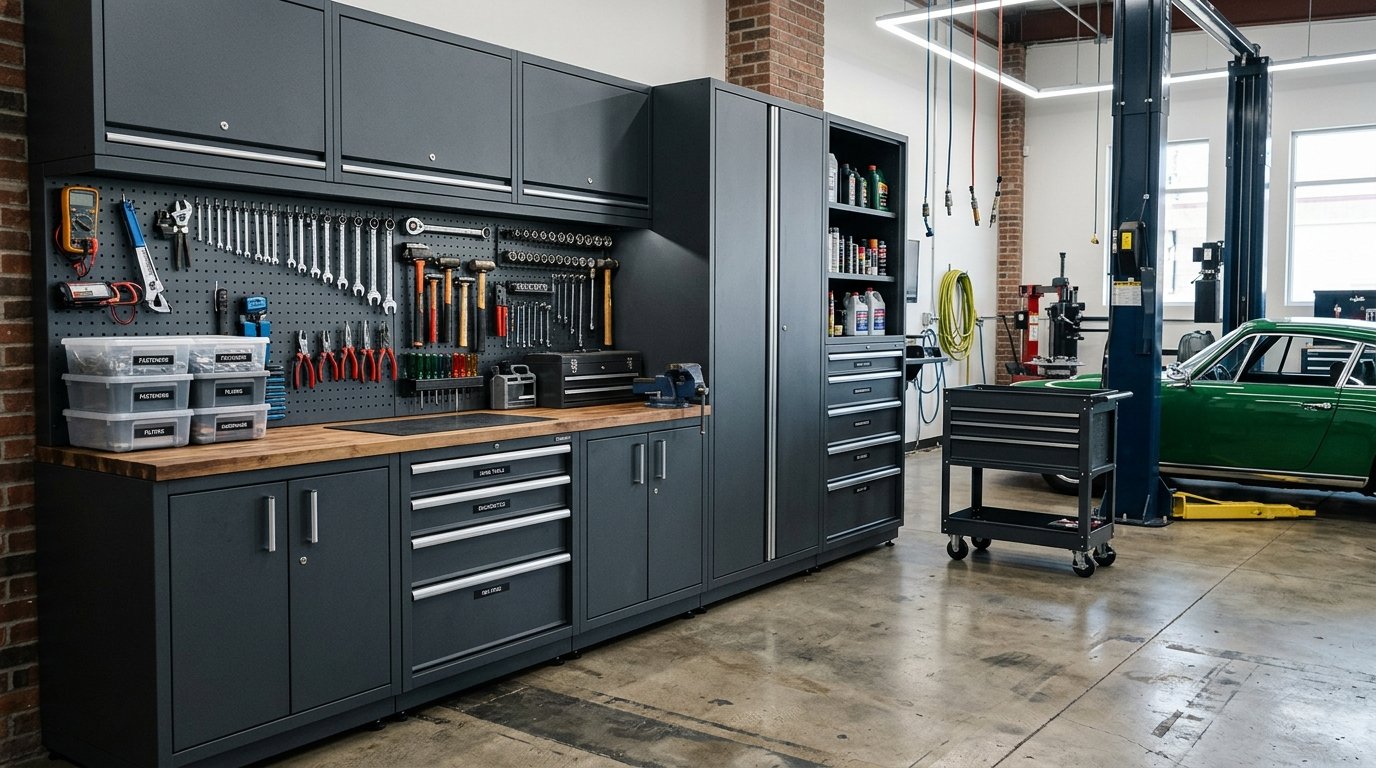
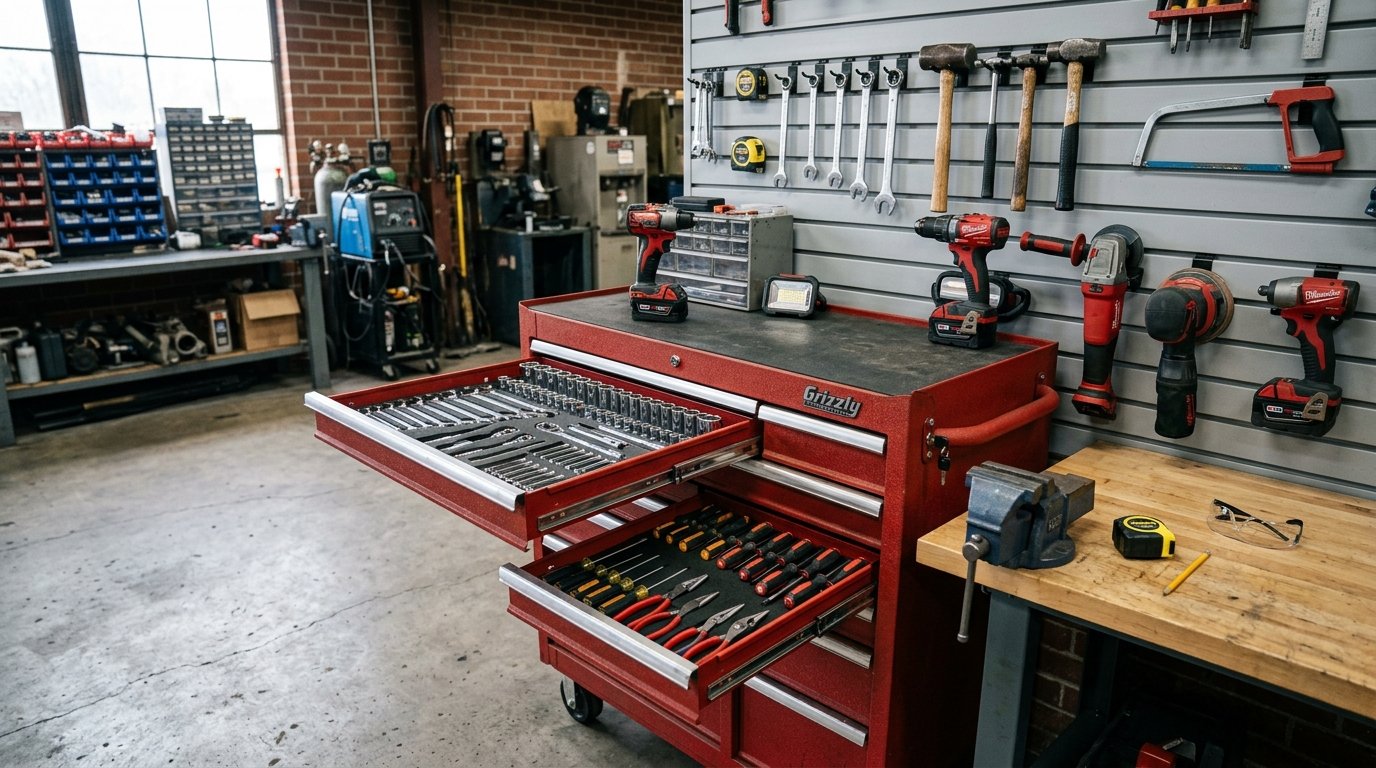
A steel tool cabinet gives you enclosed storage, strong drawers, and a work surface. It suits mechanics and homeowners with many hand tools. Deep drawers can hold socket rails, cordless drills, impact drivers, and boxed accessories.
Shallow drawers work well for bits, screwdrivers, measuring tools, and small fasteners.
Check the cabinet’s total load rating and the rating for each drawer. A cabinet may support a high total weight, but its top shallow drawer may hold much less. Look for full-extension drawer slides, locking drawers, and casters with brakes.
Lock the wheels before pulling out a loaded drawer.
Put heavy drawers near the bottom. This lowers the cabinet’s center of gravity and makes it less likely to tip. A loaded cabinet should sit on a level floor.
If your garage slab slopes, use suitable leveling methods and test the cabinet before storing expensive tools inside.
Pegboards for Small Hand Tools
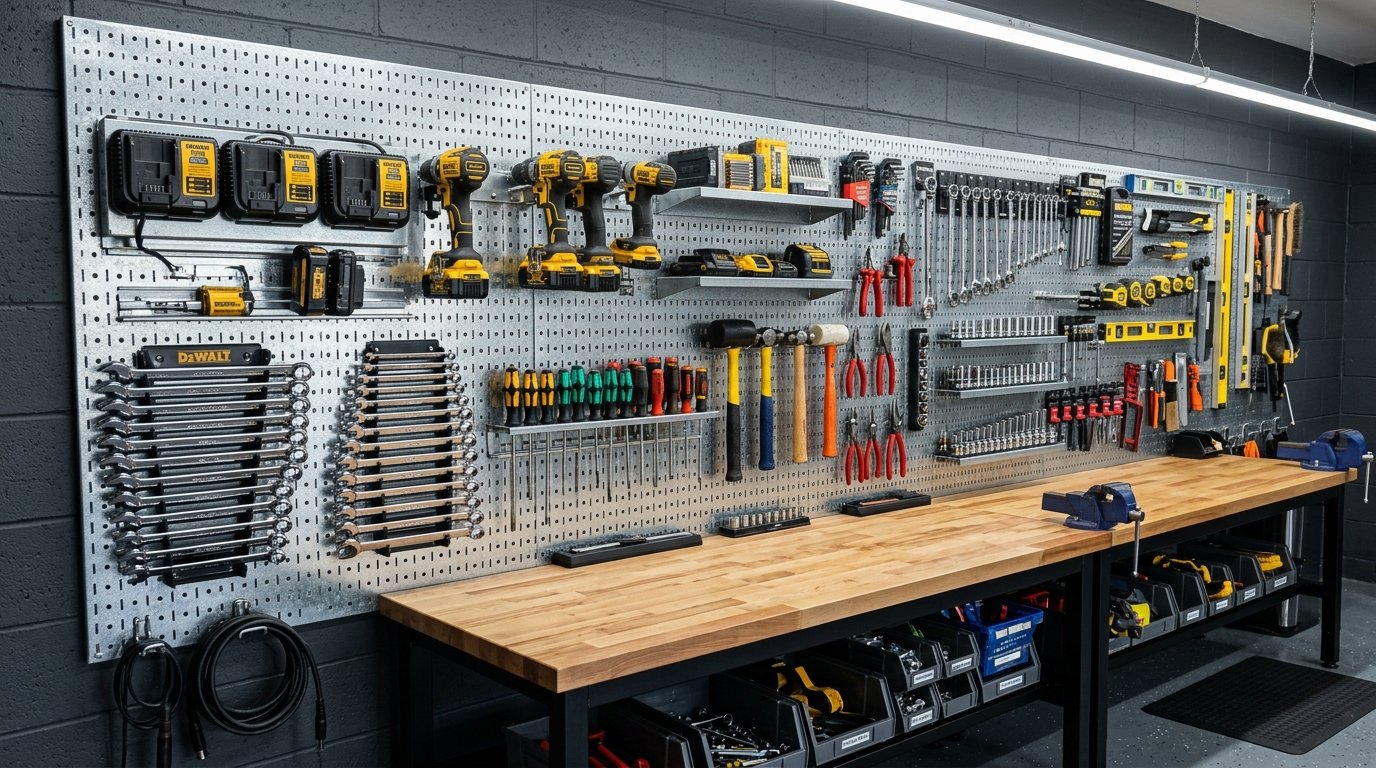
Pegboard keeps frequently used tools visible and easy to grab. It works well for pliers, screwdrivers, utility knives, small levels, and measuring tapes. Use hooks with locking tips or retainers so tools don’t fall when the board gets bumped.
Mount the board to a solid frame or wall studs. A thin sheet attached only to drywall may pull loose when loaded. Add spacers behind the board so hooks can sit fully in place.
For heavier items, install a plywood backer over the studs, then attach the pegboard to that support.
Leave gaps between tool outlines. If every tool sits tightly against the next one, returning an item becomes slow. You can trace tool shapes on the board with a marker, but keep the markings simple.
Labels work well when more than one person uses the garage.
Slatwall Panels for Long Tools
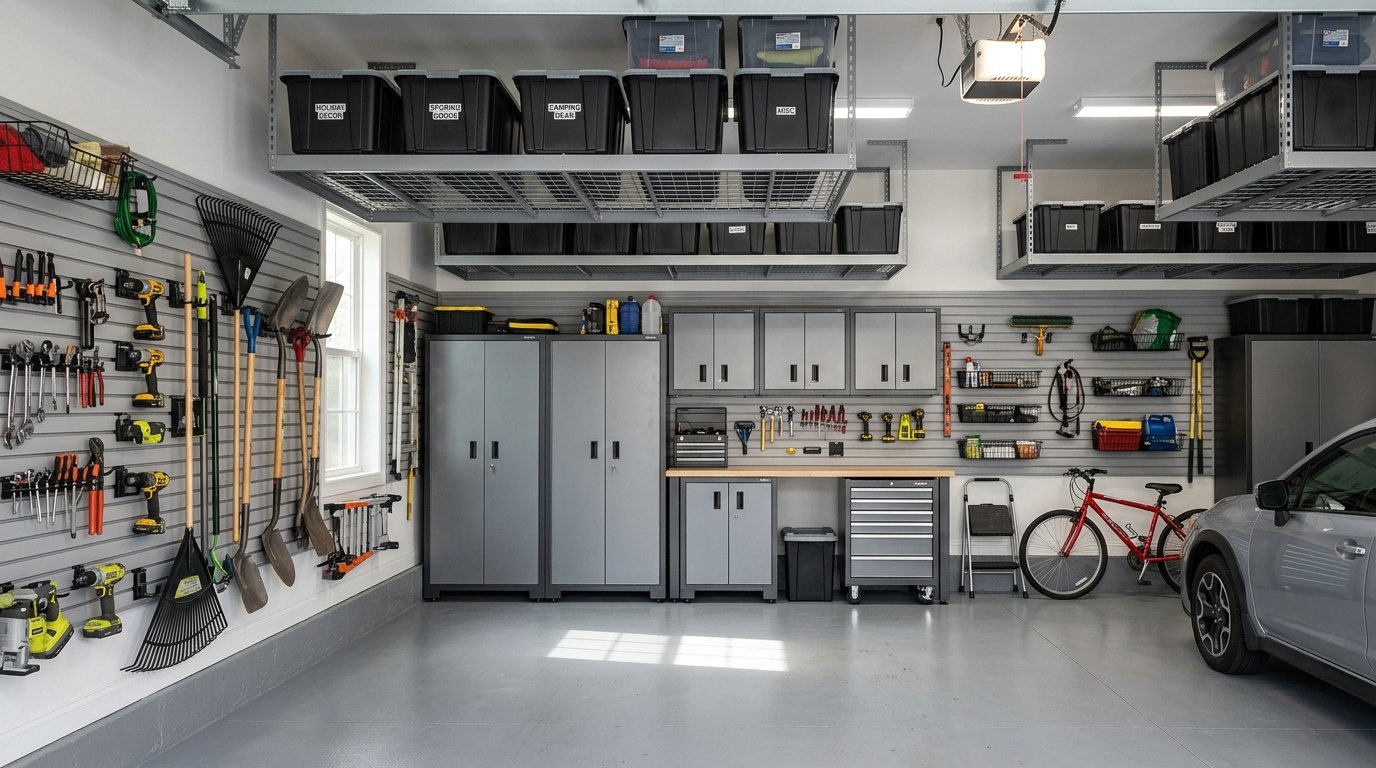
Slatwall panels use horizontal grooves to hold hooks, baskets, brackets, and shelves. This system suits leaf blowers, hedge shears, extension cords, hoses, and long levels. You can move the accessories without drilling new holes each time your storage plan changes.
Choose panels and brackets with a stated weight rating. Heavy garden equipment should attach to studs or a properly installed structural rail. Don’t hang a large blower from a small accessory hook made for light hand tools.
Use two support points for long or uneven items when one hook lets the tool twist.
Place long tools on a side wall or near the garage door. This keeps them out of the main work zone. Add a low basket for gloves, ear protection,.
And safety glasses so these items stay close to the equipment they support.
Open Shelves and Bins
Open shelves give you fast access to tool cases, storage bins, and larger supplies. They work well when you need to see what you own. Use clear bins for screws, anchors, blades, and electrical parts.
Label each bin on the front, on the lid.
Store heavy bins on lower shelves. Keep lighter boxes above shoulder height. Anchor tall shelving to the wall so it can’t tip when a child, pet, or person pulls on a box.
Choose shelves with a load rating that covers the shelf, supports, and stored items together.
Tool Storage Comparison
| Tool Storage Option | Mounting Style | Weight Limit | Best Stored Items |
|---|---|---|---|
| Steel Tool Cabinet | Rolling casters / floor | 500 to 1,500 lb total | Socket sets, hand drills, hammers |
| Pegboard System | Wall studs direct mount | 50 to 100 lb total | Frequently used screwdrivers, pliers |
| Slatwall Panel Set | Horizontal stud mount | 150 to 300 lb total | Heavy leaf blowers, cords, hedge shears |
Plan Zones Around Your Workbench
Your workbench should be the main point of your storage plan. Keep the tools used during repairs within one or two steps of the bench. A wall-mounted pegboard can hold daily hand tools.
A cabinet below the bench can store fasteners, blades, and small power tools.
Create a separate zone for messy work. Keep lubricants, car fluids, wire brushes, rags, and cleaning products in a cabinet or tray near the vehicle area. Store liquids in closed containers on a lower shelf.
Use a spill tray under bottles that could leak.
Set aside a charging zone for cordless tools. Use a shelf or cabinet with air space around chargers. Don’t cover vents or place chargers beside flammable liquids, oily rags, or loose metal objects.
Keep batteries away from direct sunlight and extreme heat.
A garden tool zone can sit near the garage door. Hang rakes, shovels, trimmers, and hoses so dirt stays near the entrance. A wall rail with individual hooks can keep handles upright and stop tools from sliding across the floor.
Use Vertical Space Safely
Garage walls often provide more storage space than the floor. Use wall height for items you don’t use every day, such as seasonal tools, spare parts, and empty cases. Keep a stable step stool nearby, and place rarely used items at a height you can reach without stretching.
Find the wall studs before installing heavy storage. A stud finder can help, but confirm the location with a small pilot hole. Use the fasteners recommended by the storage maker and match them to the wall material.
Drywall anchors have limits, and many are not suitable for cabinets filled with steel tools.
Don’t mount storage above a car where a dropped tool could cause damage. Avoid placing heavy equipment above a workbench unless the mounting system is rated for it. And the item has a secondary safety measure.
Wall cabinets should close securely, especially in homes with children.
Make Drawers and Bins Work Better
Use drawer liners to stop tools from sliding. Foam inserts can give each tool a fixed place, but simple trays work well for many garages. Group tools by task instead of placing every item by size.
For example, keep a basic electrical repair group together with wire cutters, strippers, a voltage tester, and insulated screwdrivers.
Put sockets on rails or in labeled trays. Store metric and standard sizes in separate rows. Mark the outside of each drawer with a short label.
This saves time when the drawer is closed and helps other people return tools correctly.
Use small removable bins inside deep drawers. Without dividers, small parts move to the back and become hard to find. Don’t fill a drawer so tightly that it won’t close or the slides begin to strain.
Leave a little open space for new items and easy access.
Pick Materials for Garage Conditions
Steel cabinets handle knocks and support heavy loads, but bare steel can rust in a damp garage. Look for a coated finish and wipe away moisture quickly. If the floor gets wet, use a raised base or keep the cabinet away from the leak area.
Plastic bins resist moisture and suit seasonal storage. They may crack in cold conditions or under heavy weight, so check their load rating. Clear plastic helps you see the contents, but opaque bins can protect light-sensitive items such as some adhesives and finishes.
Wood shelves can be useful and affordable. Use solid framing, seal exposed edges, and avoid placing them in areas that regularly get wet. Particleboard shelves can sag when loaded with heavy tools, especially across a wide span without a center support.
You can compare cabinets, chests, wall hooks, and other Home Depot tool storage options before buying. Check product dimensions, shipping details, assembly needs, and the stated weight rating.
Keep Tools Safe and Easy to Use
Store sharp blades in covers or closed containers. Keep saws, chisels, and utility knife blades away from loose hand tools. Place hammers and heavy drivers where they can’t fall from an open shelf.
Hang cords in large loops instead of tight coils, which can damage them over time.
Clean tools before putting them away. Wipe off grease, remove soil from garden tools, and dry metal surfaces. A small amount of rust prevention on exposed steel can help in humid garages.
Don’t store wet tools inside closed cases, since trapped moisture can cause corrosion.
Keep a clear path from the entrance to the workbench. Store cords against the wall and place floor cabinets where doors won’t block the walkway. Good storage should reduce trip risks, not create new ones.
Follow the OSHA hand. And portable tool rules when you use power tools or set up a work area. Inspect damaged cords, guards, handles, and switches before use.
Remove broken tools from service until they’re repaired or replaced.
Common Storage Mistakes to Avoid
Buying Before Measuring
A cabinet may fit its advertised width but still block a door, outlet, or vehicle path. Measure the full footprint, including open doors and drawer extension. Mark the area on the floor with tape before you order.
Loading Walls Without Support
A storage panel is only as strong as its fasteners and wall structure. Don’t assume a row of drywall anchors can support a collection of heavy tools. Attach the main rail or frame to studs, then follow the maker’s instructions for accessory spacing.
Mixing Every Tool Together
A single large box seems simple, but it slows every repair. Separate hand tools, power tools, fasteners, and outdoor equipment. A few clear groups make the garage much easier to maintain.
Ignoring Future Space
Leave room for new tools and replacement parts. A storage system filled to its limit will become cluttered again. One spare drawer, a few empty hooks, or an open shelf can keep the system useful as your needs change.
A Simple Setup Plan
- Sort everything: Group tools by type and how often you use them.
- Measure the garage: Record wall lengths, ceiling height, doors, outlets, and walking paths.
- Choose the main storage: Use a cabinet for heavy tools, pegboard for small daily tools, and slatwall for long equipment.
- Find strong mounting points: Locate studs and select fasteners that match the wall.
- Set up the work zone: Keep your most-used tools close to the bench.
- Label storage: Mark drawers, bins, shelves, and special tool locations.
- Test the layout: Open drawers, walk through the garage, and move the car in and out.
- Review it after a week: Move items that still feel hard to reach or return.
Frequently Asked Questions
What is the best garage storage for tools?
The best choice depends on the tools you own and how often you use them. A steel rolling cabinet suits heavy hand tools and power tools. A pegboard works well for small tools used every day.
Slatwall panels suit long and bulky items such as cords, blowers, and hedge shears. Many garages work best with a mix of these options.
How do I store heavy tools on a garage wall?
Mount the storage frame to wall studs or a properly built structural backer. Check the weight rating for the panel, brackets, fasteners, and wall. Spread heavy items across more than one support point, and keep the heaviest equipment low when possible.
Test the installation with a light load before filling it.
How can I organize small garage tools?
Use shallow drawers, labeled bins, pegboard hooks, and small trays. Group items by job, such as woodworking, electrical work, plumbing, or vehicle repair. Keep daily tools visible and place spare parts in closed bins.
Leave a little space in each group so tools can be returned without forcing them into place.
How often should I clean and review tool storage?
Give the storage area a quick reset after each project. Wipe dirty tools, return accessories, and remove waste from the workbench. Every few months, check for rust, damaged hooks, loose fasteners, overloaded shelves, and tools you no longer use.
Small corrections keep clutter from building up.
Build a System You Can Maintain
Good garage storage for tools should fit your work habits, wall structure, budget, and available floor space. Start with the tools you use most, place heavy items on strong low storage,. And keep daily equipment close to the workbench.
Use labels and fixed locations so putting tools away takes seconds.
You don’t need to finish the entire garage in one weekend. Install one useful storage zone, test it during real projects, and adjust the layout as needed. A cabinet, wall panel,.
And a few well-placed bins can give you a cleaner workspace and faster access to every tool you own.

Callum Langham
Founder & Technical Storage Editor
Callum Langham is the founder and technical editor of Rack System. With over 12 years of hands-on field experience in warehouse logistics, garage organization, and industrial storage installations, Callum specializes in engineering safety standards, beam load calculations, and OSHA/RMI compliance. Every guide on Rack System is audited against verified steel gauge tolerances and municipal building codes.