Garage organization systems help turn a crowded garage into a safer, more useful work area. The right setup gets tools off the floor, keeps seasonal items easy to reach,. And gives every box a fixed home.
You don’t need to buy every storage product at once. Start with the items that create the most clutter, then build a system around your garage’s walls, ceiling,. And floor space.
This guide covers the main system types, how to plan your layout, how much weight each option can hold,. And how to avoid common installation mistakes. You’ll also learn how to choose cabinets, shelves, hooks, bins,.
And overhead storage based on the way you use your garage.

What Garage Organization Systems Do
A garage storage system gives your belongings a planned location. Instead of stacking items wherever there’s room, you assign different storage zones for tools, sports gear, garden supplies, car products,. And seasonal decorations.
A useful system should do four jobs:
- Keep walkways and vehicle doors clear.
- Protect stored items from moisture, dirt, and accidental damage.
- Make frequently used tools quick to grab.
- Use wall and ceiling space without creating a safety risk.
Storage also changes how easy it is to clean the garage. When boxes sit on shelves instead of the floor, you can sweep beneath them. When tools hang on a wall, you can see missing items right away.
When bins have labels, you won’t need to open five containers to find one extension cord.
Before buying products, measure the garage and make a list of what you need to store. Note the height of the ceiling, the location of doors, windows, electrical outlets, lights, water heaters, and garage door tracks. A storage unit that looks suitable in a product listing may block a door.
Or interfere with the garage door when installed in the wrong spot.
Popular Garage Storage System Types
Wall-Mounted Slatwall Panels
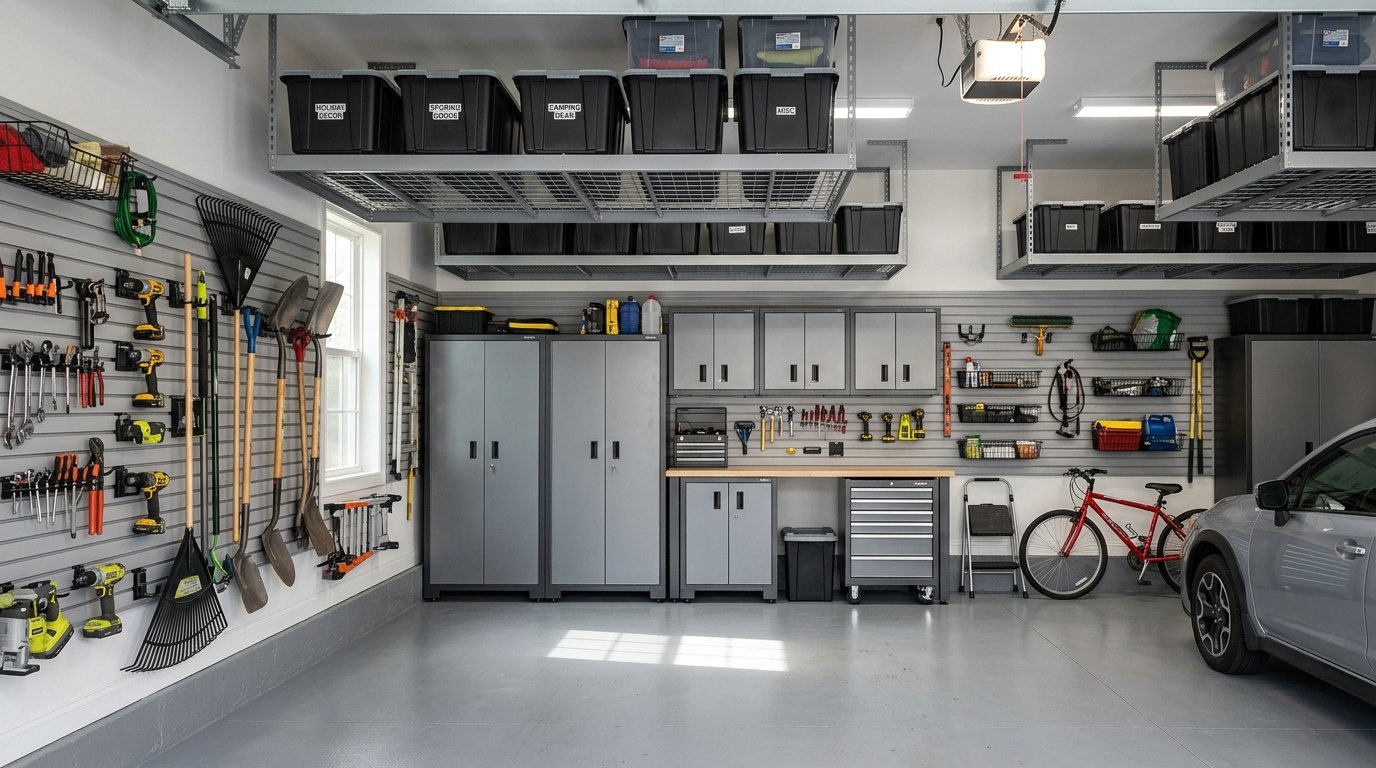
Slatwall panels use horizontal grooves that accept hooks, baskets, shelves, and holders. PVC panels are common because they’re light, easy to clean, and resistant to normal garage moisture. Steel and aluminum panels can support heavier loads, but you’ll need to check the product rating.
Slatwall works well for hand tools, garden tools, extension cords, hoses, helmets, and small sports equipment. Hooks can be moved as your needs change, so you won’t need to drill a new hole for every item. Install the panels into wall studs or use fasteners rated for the wall material.
Drywall anchors alone may fail when a loaded hook pulls away from the wall.
Pegboards for Light Tools
Pegboards are a low-cost choice for screwdrivers, pliers, tape measures, and small hand tools. They work best in a workbench area where you want tools visible. Standard hardboard pegboards aren’t made for very heavy items, so large power tools, full tool bags,.
And metal parts should go on a stronger rack or cabinet.
Use spacers behind a pegboard so hooks can pass through the holes. Arrange the most-used tools at chest and shoulder height. Keep sharp tools pointed down or stored in holders that prevent accidental contact.
Freestanding Garage Racks
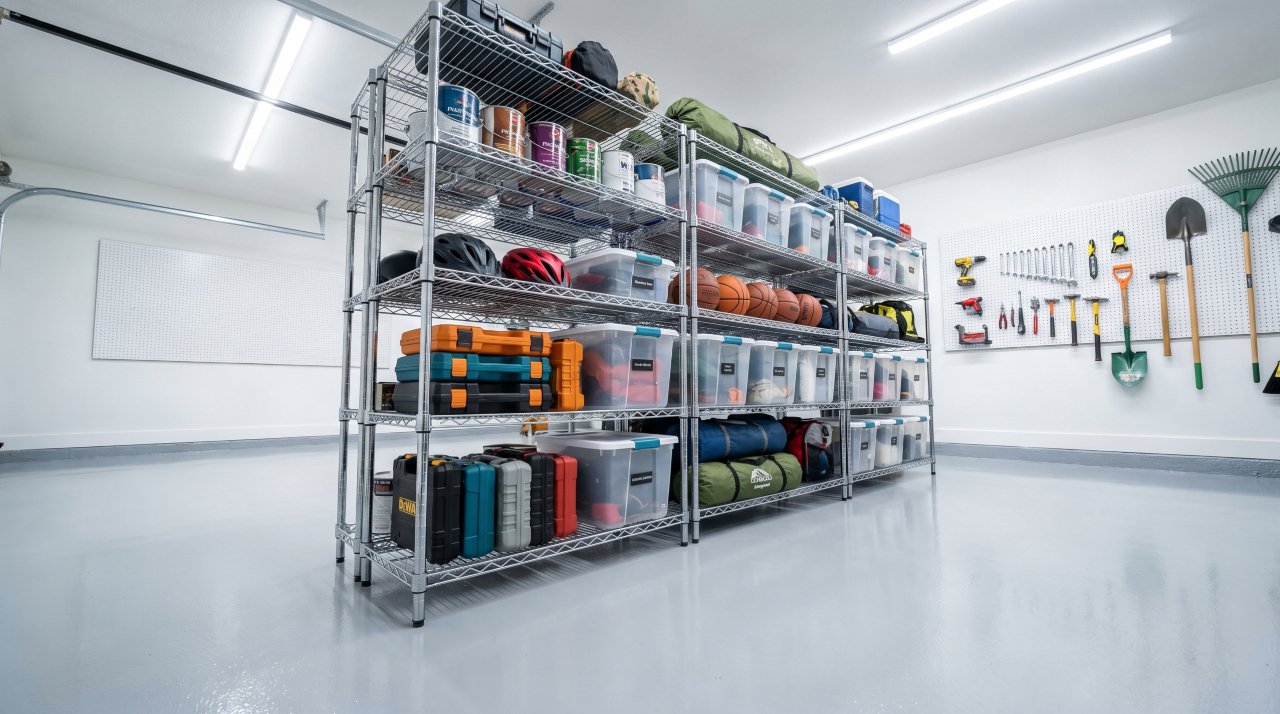
Freestanding racks give you deep shelf space for storage totes, paint supplies, car care products, compressors, and heavy equipment. Steel frames are a strong choice for garages because they can handle large loads and resist dents. Look for adjustable shelves, locking feet, and a stated load rating for each shelf.
Don’t judge a rack by its total capacity alone. A unit rated for 2,000 pounds may have a limit of 400 pounds per shelf. The floor must also support the load.
Spread heavy items across several shelves, with the heaviest containers at the bottom. Anchor tall racks to wall studs if children, pets, or frequent activity could cause the unit to tip.
Garage Cabinets
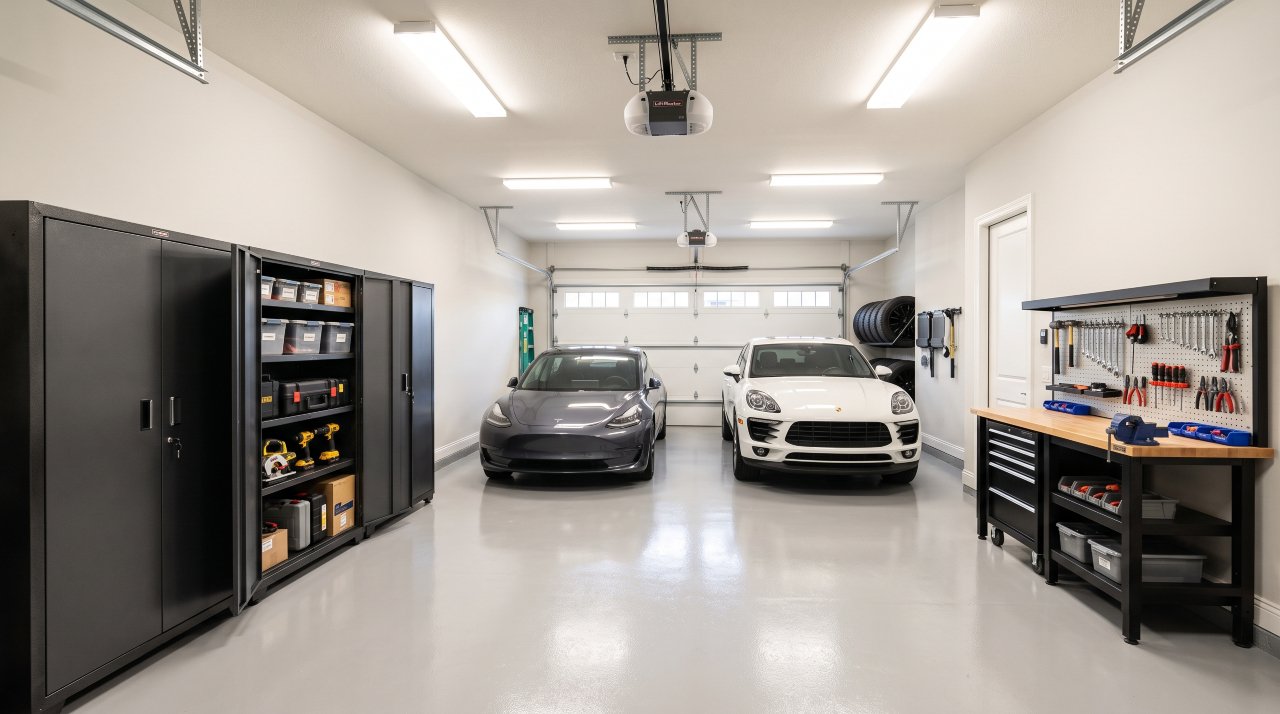
Cabinets hide clutter and protect items from dust. They also give the garage a cleaner appearance than open shelves. Metal cabinets suit workshops and can store hand tools, fasteners, lubricants, and electrical supplies.
Plastic cabinets resist rust and may work well in damp locations.
Choose cabinet depth based on the items inside. Deep cabinets hold large tools, but they can reduce walking space. Shallow cabinets work well for small parts and cleaning supplies.
Lockable doors add control when the garage contains chemicals, sharp tools, or equipment that children shouldn’t handle.
Overhead Storage
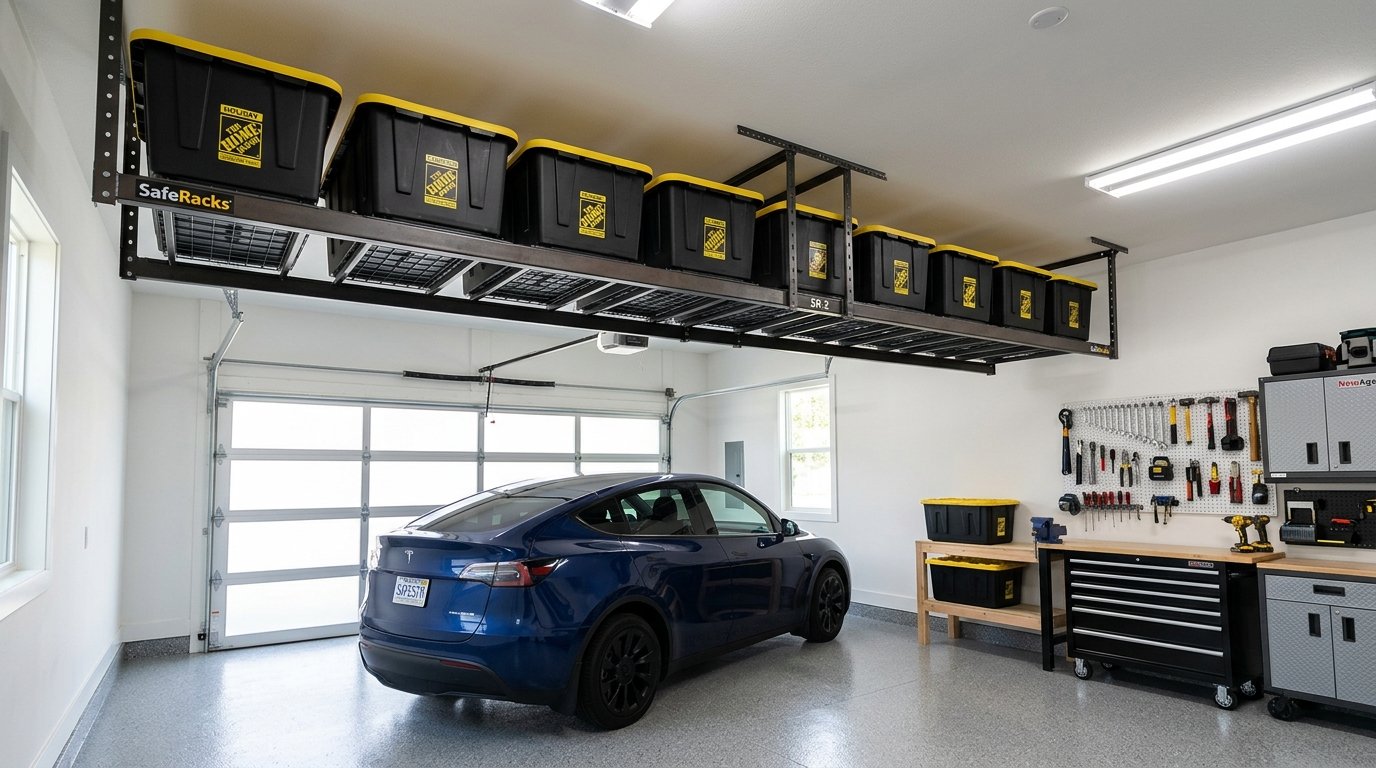
Ceiling racks and overhead tracks make use of space above vehicles and work areas. They’re useful for holiday decorations, camping gear, empty luggage, and other items you use a few times a year.
Measure the vehicle height before installation. Leave enough clearance for the garage door, roof racks, and hatchbacks. Attach the system to ceiling joists, not just drywall.
Check the fasteners after the first few weeks, since vibration from the garage door can expose a weak connection.
Garage System Comparison
Use this table as a starting point. Product ratings vary, so check the manufacturer’s instructions before loading any shelf, hook, or rail.
| System Type | Main Components | Weight Capacity | Best Use Case |
|---|---|---|---|
| Slatwall Panel | PVC slats and hooks | 50 to 75 lb per linear foot | Hanging hand tools, cords, and hoses |
| Overhead Tracks | Steel ceiling rails | 200 to 400 lb per unit | Out-of-way seasonal storage bins |
| Freestanding Rack | Steel frame and shelves | 400 to 2,000 lb per unit | Heavy totes, power tools, and parts |
How to Plan Your Garage Layout
Start With a Clear Inventory
Remove items from the floor and group similar things together. Make separate groups for tools, lawn equipment, sports gear, car supplies, seasonal items, recycling, and household overflow. Throw away broken items and set aside anything you haven’t used in years.
Count large items before you buy storage. Measure lawn mowers, bicycles, tool chests, coolers, and storage totes. Record the height, width, and depth of each item.
These measurements will guide the size of shelves and cabinets.
Set Up Storage Zones
Place each group near the area where you’ll use it. Store car cleaning products close to the vehicle parking area. Keep garden tools near the garage door that leads outside.
Put sports gear near the door used for outdoor activities. Store holiday bins on high shelves or overhead racks.
Keep a clear path from the main garage door to the house entry. A path of about 36 inches gives most people enough room to walk while carrying boxes. If your garage doubles as a workshop, leave extra space around the workbench so you can handle long boards.
And large equipment safely.
Use the Walls First
Wall storage usually gives easier access than ceiling storage. Put daily-use items between waist and shoulder height. Place medium-use items higher or lower.
Keep rarely used items in overhead bins or on the highest shelf.
Use vertical rails, slatwall, cabinets, and racks to take advantage of unused wall space. Don’t place shelves so close to a parked vehicle that doors, mirrors, or the trunk can’t open fully. Mark the parking position on the floor with tape before fixing wall units in place.
Reserve Ceiling Space for Light Items
Ceiling storage is useful, but it shouldn’t become a dumping area for heavy or hazardous materials. Store light plastic bins, empty bags, folding chairs, and seasonal decorations overhead. Keep paint, fuel, batteries, and dense metal parts at floor level or in a proper cabinet.
Use identical bins when possible. They stack better and make labels easier to read. Pick bins with strong lids and handles that won’t break when you pull them down from a raised rack.
Choosing Materials and Weight Ratings
Steel is a practical choice for heavy storage. Look for square tubing, welded joints, reinforced shelves, and a finish that resists rust. Powder-coated steel can handle regular garage use, but it still needs protection from standing water and salt.
Plastic works well for bins, small cabinets, and light-duty wall storage. It won’t rust, but it may crack in very cold conditions or bend under a heavy load. Check the base of each bin before stacking it.
A bowed bottom can cause a stack to shift.
Wood shelves can be strong and inexpensive when built with proper supports. A long shelf needs bracing to prevent sagging. Use thicker boards for heavy totes, and keep shelf spans within the limits of the material.
Screws should pass into studs or a solid frame.
Load ratings depend on more than the shelf material. The rating may assume an even load, a level floor, and proper installation. A concentrated load, such as an engine part placed in the middle of a.
Shelf, can stress the unit more than several lighter boxes spread across the surface.
For workplace storage, review these OSHA material handling standards. They cover safe storage, stable stacks, and clear aisles.
Installation Tips That Prevent Problems
Find Studs and Joists
Use a stud finder, then confirm the location with a small test hole. Mark the center of each stud with a pencil. For ceiling racks, locate the joists and use the fasteners listed by the manufacturer.
If the mounting holes don’t line up, add a properly secured wood mounting board rather than relying on weak anchors.
Keep Loads Balanced
Place heavy items low and near the center of a shelf. Avoid putting all the weight at one end of a rack. On wall hooks, position large items close to the mounting points.
A long handle or hose can create extra pulling force when it hangs far from the wall.
Anchor Tall Units
Any tall rack or cabinet can tip if a door opens into it,. A child climbs it, or a heavy item is pulled from the top shelf. Use the supplied anti-tip hardware, or select an anchor approved for the wall type.
Test the unit by applying light pressure before loading it.
Protect Floors and Walls
Rubber feet can protect concrete from scratches and help reduce sliding. Place a drip tray beneath vehicles, lawn equipment, or containers that may leak. Keep cardboard off damp floors because it absorbs water and attracts pests.
Don’t cover electrical panels, shutoff valves, vents, or water heaters with permanent storage. These areas need clear access for repairs and safety checks.
Labels and Access Rules
Labels make a storage system work after the first cleanup. Use large, readable labels on the front and top of bins. Name the contents by category, such as “sprinkler parts,” “winter decorations,” or “sanding supplies.” Avoid vague labels like “garage stuff.”
Keep a simple rule for putting items back. Every tool should return to its hook, drawer, or cabinet after use. If a shelf becomes hard to use, remove a few items instead of pushing more into the space.
Store dangerous products in their original containers. Keep fuels, solvents, pesticides, and cleaners away from heat sources. Don’t store chemicals beside food, pet supplies, or children’s items.
Check local disposal rules for old paint, oil, batteries, and other waste.
Common Garage Storage Mistakes
Buying Before Measuring
A rack that’s too deep can block a walkway. A cabinet that’s too tall can interfere with the garage door. Measure first, then compare those measurements with the product’s assembled size, not just the box size.
Ignoring the Floor
Concrete floors may slope toward a drain or contain cracks. An uneven rack can wobble and place extra stress on the frame. Use adjustable feet or approved shims, then check the unit with a level before adding weight.
Mixing Too Many Product Styles
A garage can become harder to manage when every wall uses a different hook, bin, and shelf size. Pick a small group of compatible products. For more product ideas, review these garage storage systems.
Filling Every Inch
Leave room for new tools, repairs, and temporary items. A storage system with no spare capacity will become crowded again. Keep a small empty section on a shelf and a few open hooks on the wall.
Building a Garage System on a Budget
Start with a cleanup, labels, and a few strong shelves. Reuse sound plastic bins, but don’t use damaged boxes for heavy or valuable items. Add a basic pegboard or rail for hand tools, then install a freestanding rack for large containers.
Buy storage in stages. Stage one should clear the floor and protect walkways. Stage two should improve tool access.
Stage three can add cabinets, overhead racks, and specialty holders. This approach helps you spend money on the storage that solves a real problem.
Compare shelf dimensions, steel thickness, fastener types, and load ratings instead of focusing only on the price. The Home Depot garage storage guide can help you compare common product categories.
Maintenance for Long-Term Use
Check wall hooks, rack bolts, cabinet hinges, and ceiling fasteners twice a year. Tighten loose hardware and replace cracked hooks or bent shelves. Look for rust around floor-level legs, especially in garages where snow, road salt, or water gets tracked inside.
Clean shelves before placing items back. Wipe up oil and chemical spills quickly. Check bins for broken lids and replace labels that have faded.
Review the contents each season and remove items that no longer serve a purpose.
Leave enough space for air movement around appliances, chargers, and heat-producing equipment. Keep vents and fans clear. Good storage should make the garage easier to use, not create new hazards.
Frequently Asked Questions
What are the best garage organization systems for a small garage?
Small garages usually benefit from wall-mounted rails, slatwall panels, shallow cabinets, and carefully placed overhead racks. Use vertical space for tools and bicycles, then reserve floor space for the vehicle and a clear walking path. Measure door swing and vehicle clearance before installing anything.
How do I choose between shelves and cabinets?
Choose open shelves when you need quick access to bins, totes, and large items. Choose cabinets when you want to hide clutter, protect supplies from dust, or secure sharp tools and chemicals. Many garages use both: open racks for daily items and cabinets for small parts or hazardous products.
Can I install garage storage on drywall?
You can install light-duty items on drywall with suitable anchors, but heavy racks and cabinets should connect to wall studs. Find the studs, use the correct screw length, and follow the product’s mounting instructions. When the wall has concrete or masonry, use fasteners rated for that surface.
How much weight can a garage storage rack hold?
The answer depends on the frame, shelf material, fasteners, and load placement. Check the stated rating for each shelf, not just the unit’s total rating. Keep heavy items low, spread the load evenly, and anchor tall units to help prevent tipping.
Final Setup Checklist
- Measure walls, ceiling height, doors, outlets, and garage door tracks.
- Sort items by use, size, weight, and hazard level.
- Clear a safe path from the garage door to the house.
- Use wall storage for tools and regular-use items.
- Use racks for heavy totes and large equipment.
- Use overhead storage for light, seasonal items.
- Anchor tall cabinets and racks.
- Keep heavy loads low and distribute them evenly.
- Label every bin, drawer, and shelf.
- Inspect the system twice a year and remove damaged parts.
A well-planned garage organization system doesn’t need to be costly or complicated. Measure first, store items by use, keep heavy loads low, and leave clear access around vehicles and equipment. With the right mix of wall storage, racks, cabinets,.
And overhead space, your garage can stay safer, cleaner, and easier to work in.

Callum Langham
Founder & Technical Storage Editor
Callum Langham is the founder and technical editor of Rack System. With over 12 years of hands-on field experience in warehouse logistics, garage organization, and industrial storage installations, Callum specializes in engineering safety standards, beam load calculations, and OSHA/RMI compliance. Every guide on Rack System is audited against verified steel gauge tolerances and municipal building codes.