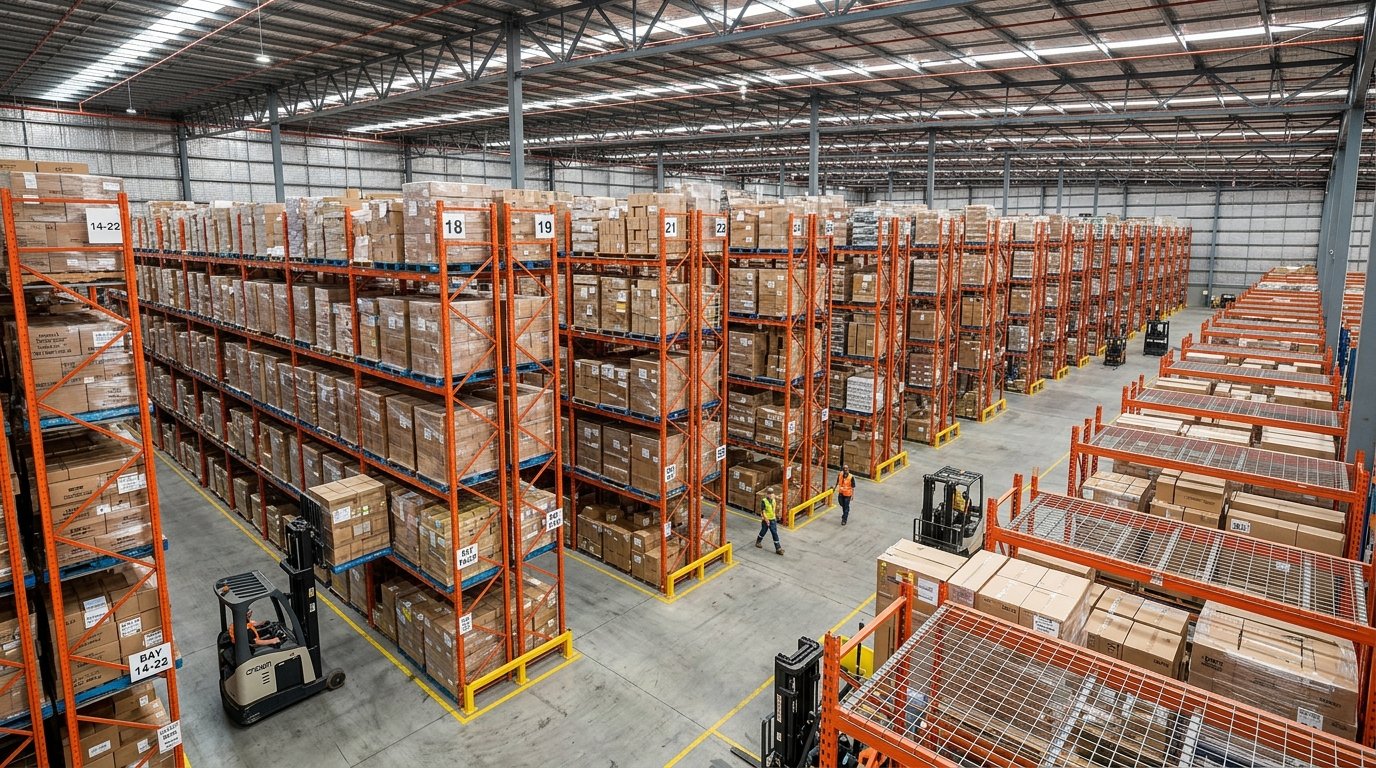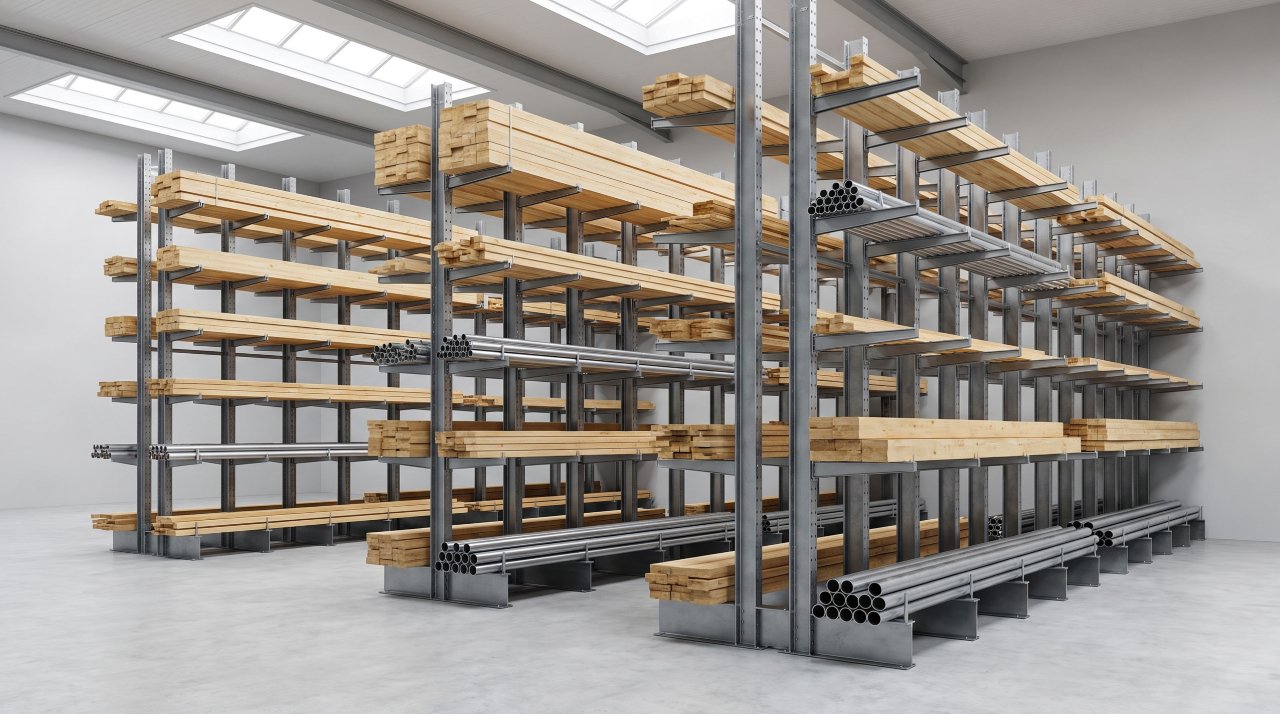
A pallet racking system is the backbone of modern warehouse logistics, letting facility managers store palleted inventory vertically instead of cluttering floor space. Choosing the wrong racking system leads to severe operational bottlenecks, damaged goods, or catastrophic structural collapses under heavy loads. If you are exploring broader storage options, our guide on what a heavy-duty racking system is covers core industrial design principles.
Most buyers make the mistake of choosing a racking system based solely on upfront cost per bay. They overlook upright frame depth, beam deflection limits, and forklift aisle clearance requirements. Understanding how different pallet racking systems distribute weight and handle inventory flow is essential before ordering.
This guide breaks down every major pallet racking system type, load rating calculation, and safety standard required to build a compliant warehouse storage setup.

1. Selective Pallet Racking Systems
Selective pallet racking is the most common and versatile racking system in use today. It provides direct, 100 percent access to every single pallet position without needing to move adjacent inventory. For specialized hand-pick needs, facilities often combine selective frames with heavy duty industrial shelving units.
Key Specifications and Dimensions
- Standard Upright Heights: 8 feet to 40 feet
- Upright Frame Depths: 36 inches, 42 inches (industry standard), and 48 inches
- Beam Lengths: 96 inches (8 feet for 2 standard pallets) and 108 inches (9 feet)
- Weight Capacity: 2,500 lbs to 6,000 lbs per beam pair
Ideal Use Cases
Selective racking fits facilities with high SKU counts, fast-moving inventory, and low-volume per SKU. It works with standard counterbalanced forklifts and reach trucks. Learn more about stocking accessories in our warehouse racking supplies guide.
2. Drive-In and Drive-Through Racking Systems
Drive-in racking provides high-density storage by allowing forklifts to drive directly into the racking lanes to load or retrieve pallets resting on continuous rails.
Understanding Load Capacity and Safety Ratings
Calculating weight capacity requires evaluating both beam capacity and upright frame capacity. According to official OSHA Materials Handling Standards and RMI / ANSI MH16.1 Design Specifications, maximum allowable beam deflection under full load cannot exceed vertical length divided by 180 (L/180).
Frequently Asked Questions
What is the standard height for a pallet racking system?
Standard warehouse upright frames range from 8 to 24 feet high, but high-bay automated warehouses can extend uprights up to 40 feet or higher.
How thick should concrete floors be for pallet racks?
Most standard pallet rack installations require a reinforced concrete slab at least 6 inches thick with a minimum compressive strength of 3,000 PSI.

Callum Langham
Founder & Technical Storage Editor
Callum Langham is the founder and technical editor of Rack System. With over 12 years of hands-on field experience in warehouse logistics, garage organization, and industrial storage installations, Callum specializes in engineering safety standards, beam load calculations, and OSHA/RMI compliance. Every guide on Rack System is audited against verified steel gauge tolerances and municipal building codes.