Quick Answer: How to Safely Buy Used Warehouse Racking
Buying used warehouse racking can save 30% to 50% compared to new steel, but every component must pass strict structural safety checks before purchase and installation. Inspect upright column legs for dents deeper than 1/2 inch, verify frame plumbness within 0.5 inches over 10 feet, and inspect baseplates for missing weld seams or sheared anchor holes. Beams must show zero permanent vertical or lateral sag, and connector claws must accept universal safety locking pins. Never install used racking without professional engineer (PE) stamped load capacity plaques to ensure OSHA and RMI ANSI MH16.1 compliance.
Key Takeaways
- Beam Deflection Limit (L/180): Loaded step beams must not deflect more than the beam length divided by 180 (0.53 inches on a standard 96-inch beam), and must rebound to zero deflection when unloaded.
- Upright Column Damage Threshold: Any dent exceeding 1/2 inch in the front column face or 3/4 inch in horizontal diagonal braces requires immediate frame replacement or engineered splice repair.
- Teardrop Compatibility Checks: While universal teardrop uprights accept most modern beam connector clips, older proprietary patterns (Slotted, Republic, Ridg-U-Rak) cannot be safely interchanged.
- Mandatory Concrete Anchoring: OSHA 1910.176 requires every pallet rack column footplate to be anchored to the floor slab with at least one 1/2-inch wedge anchor bolt.
The Economics and Structural Risks of Used Warehouse Racking
In modern logistics, warehousing, and 3PL fulfillment facilities, pallet storage infrastructure represents one of the largest capital expenditures. Procuring used warehouse racking offers substantial savings, typically reducing steel acquisition costs by 30% to 50% while bypassing extended manufacturer lead times. However, secondary market steel introduces unique structural risks that new equipment never presents.
Unlike brand-new pallet racking delivered with factory engineering certifications and material test reports, used racking carries an unknown operating history. Components may have suffered repeated forklift collisions, overloaded shelf levels, chemical exposure, or improper outdoor yard storage. Without a rigorous, engineering-backed physical audit, installing compromised used racking risks catastrophic collapse, product loss, worker injury, and severe regulatory citations.
Roll-Formed Teardrop vs. Structural C-Channel Racking
When evaluating used warehouse racking inventory, the first critical step is identifying whether the steel is roll-formed or structural channel. To review broader layout planning, explore our comprehensive selective pallet racking layout guide.
Roll-Formed Teardrop Pallet Racking
Roll-formed steel is manufactured by feeding continuous sheet coils (typically 12-gauge to 16-gauge steel) through a series of roll-forming dies that shape the column profile at ambient temperature.
- Connection Mechanism: Features the universal inverted teardrop punch pattern. Horizontal beam connector clips feature round button rivets that drop into the teardrop slots and seat firmly using gravity wedging.
- Primary Advantages: Fast toolless assembly, highly interchangeable across different manufacturers (Interlake, Mecalux, Speedrack, SpaceRak), and lower initial shipping weight.
- Vulnerability in Used Inventory: Roll-formed columns have thinner wall cross-sections (0.075 to 0.105 inches). Minor forklift impact easily creases or buckles the thin steel, reducing column axial capacity by up to 80%.
Structural C-Channel Pallet Racking
Structural racking is hot-rolled from structural steel C-channels with heavy, solid cross-sections (typically 3-inch or 4-inch structural channel with wall thicknesses exceeding 0.25 inches).
- Connection Mechanism: Employs heavy structural plates bolted directly through the upright column using two or four 1/2-inch Grade 5 structural hex bolts per joint.
- Primary Advantages: Exceptional impact resistance, high capacity for heavy manufacturing, die storage, and cold storage distribution centers where forklift collisions are frequent.
- Used Considerations: Heavy weight increases freight costs substantially, but structural steel rarely suffers the fatal creasing that ruins roll-formed frames.
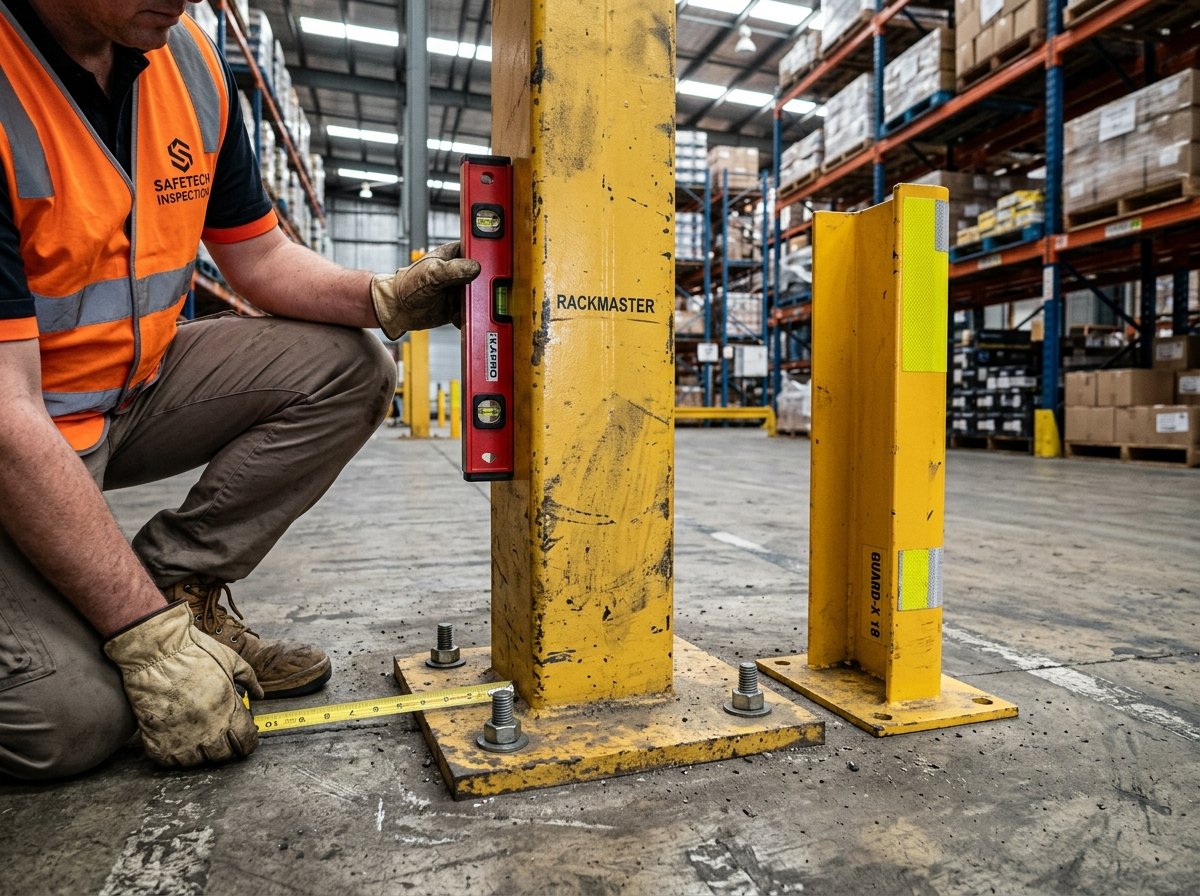
The 6-Point Physical Inspection Checklist for Used Racking
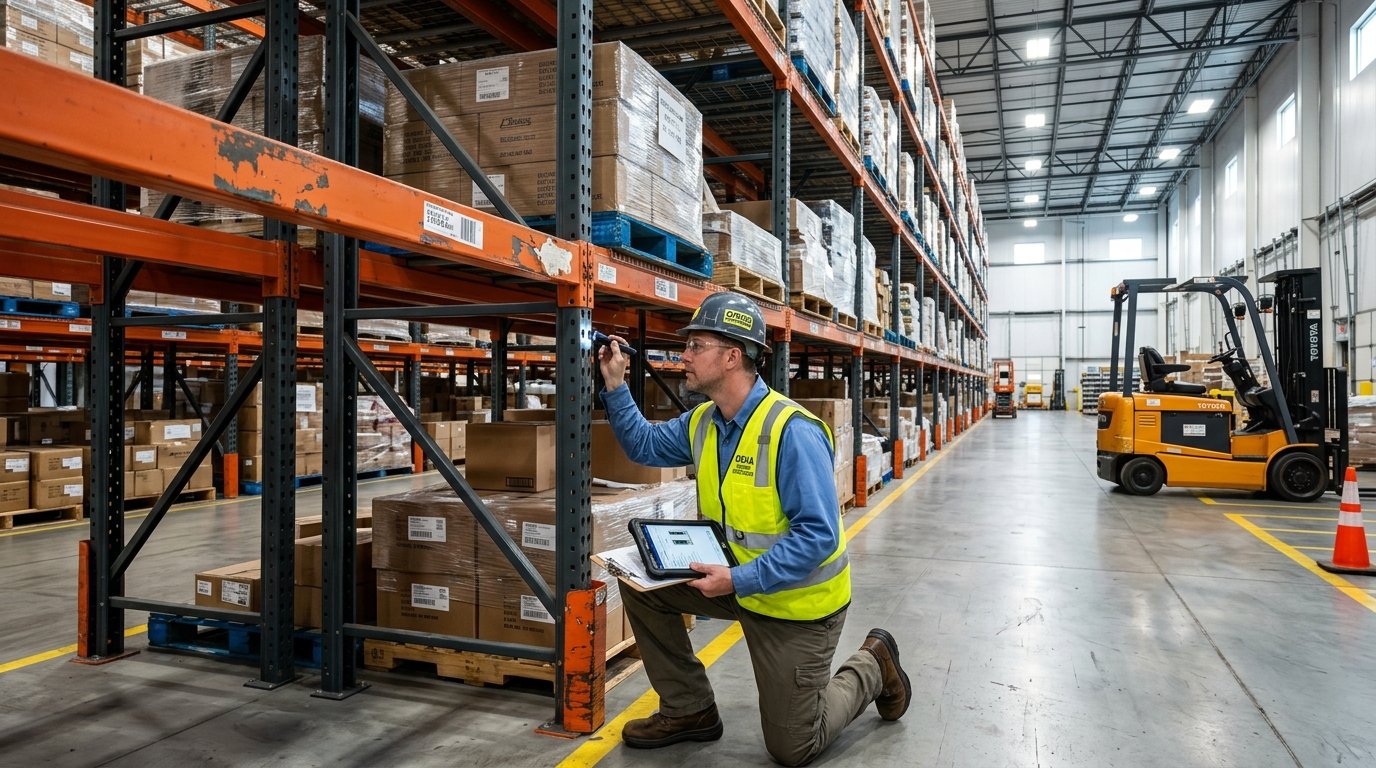
Never purchase used warehouse racking based solely on lot photos or seller descriptions. Conduct an on-site physical inspection using this six-point structural protocol.
1. Upright Column Denting and Buckling Limits
Inspect every column leg from the floor plate up to 6 feet (the primary forklift impact zone). Look down the column profile to identify any twist or bowed misalignment.
- Front-to-Back Column Dents: According to RMI guidelines, any dent deeper than 1/2 inch on the front column face permanently weakens the axial compression rating and requires frame replacement.
- Corners and Creases: Inspect the corner radii of the column. A rounded dent is far less hazardous than a sharp crease or metal tear. Sharp creases indicate localized metal yield failure.
- Diagonal and Horizontal Bracing: Examine the interior diagonal channel struts. If a strut is bent more than 3/4 inch out of plane, it cannot resist horizontal shear loads, causing the frame to twist during pallet placement.
2. Baseplate Integrity and Floor Anchoring
The baseplate transfers the entire vertical load of the rack frame onto the concrete slab. For general warehouse hardware requirements, refer to our warehouse racking supplies buyer guide.
- Baseplate Welds: Check the continuous fillet weld connecting the column to the baseplate. Look for cracked welds, hairline fractures, or bent baseplate corners caused by forklift forks catching the footplate.
- Anchor Hole Deformation: Inspect anchor holes for oval elongation or tearing. An elongated hole prevents anchor wedge nuts from clamping securely to the concrete slab.
- Shimming History: Ensure the baseplate is not warped from uneven past floor shimming.
3. Step Beam Deflection and Rebound Memory
Horizontal step beams carry the direct weight of pallets. Permanent deformation is the most common reason used beams fail safety inspections.
- Visual Sight Line Check: Sight down the length of the 96-inch or 108-inch beam. The top and front faces must be straight with zero permanent bow.
- Deflection Tolerances: While in service under full load, maximum allowable deflection is Length / 180 (0.53 inches for an 8-foot beam). When the load is removed, the beam must return completely to zero deflection. Any beam that retains a permanent bow when empty has exceeded its elastic yield limit and must be scrapped.
- Bottom Flange Tears: Inspect the bottom seam weld where the step profile is roll-formed or joined. Check for weld separation or stress cracks near the center point.
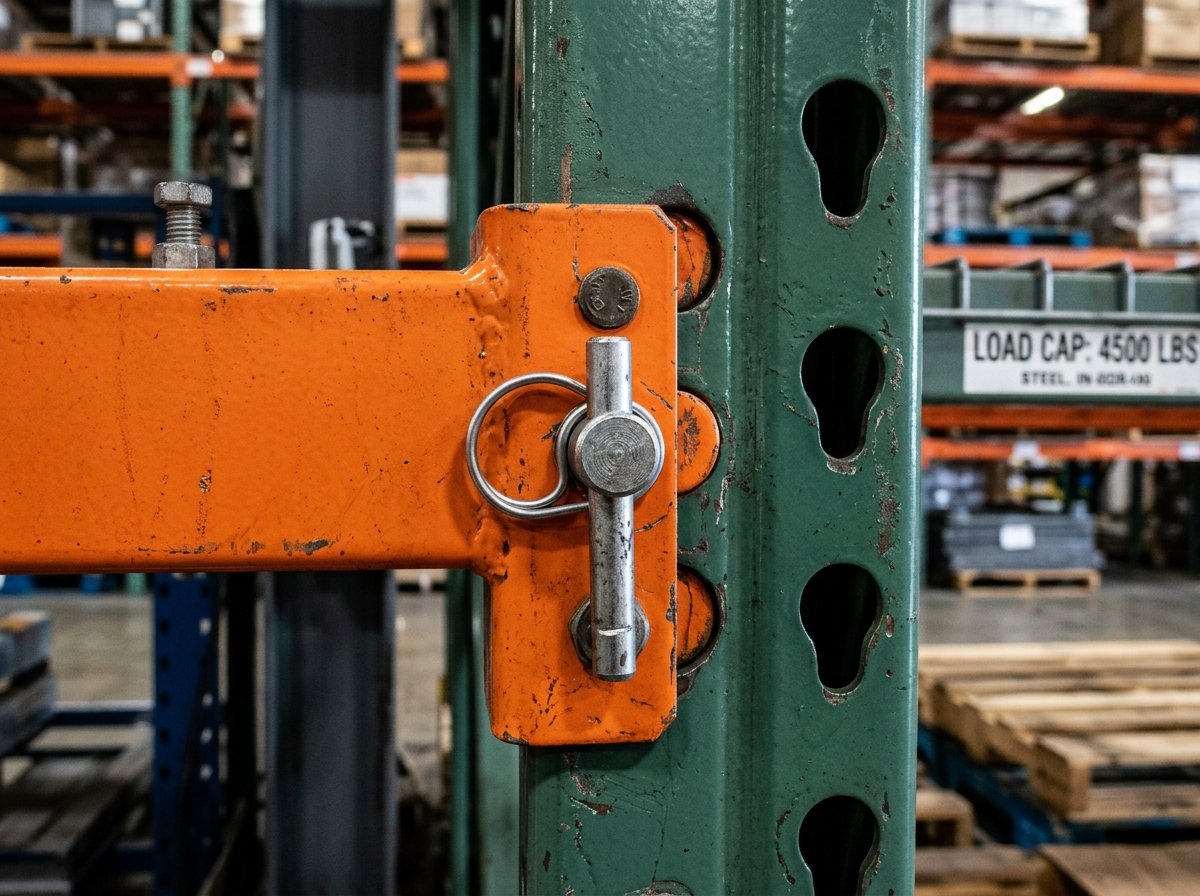
4. Beam End Connectors and Safety Locking Pins
The beam connector plate (the “ear” or “claw”) transfers horizontal beam load into the upright column punchings. For safety regulations and inspection routines, see our dedicated racking system safety tips and OSHA rules guide.
- Rivet and Lug Wear: Inspect the round button lugs on teardrop connector clips. Ensure they are not shaved, bent, or ground down from aggressive forklift disengagements.
- Safety Pin Holes: Ensure the connector claw has intact holes for safety locking pins. Never purchase beams missing locking pins. In an active warehouse, an upward forklift bump can instantly dislodge an unpinned beam, dropping tons of cargo into the aisle.
- Connector Plate Welds: Inspect the weld between the tubular beam profile and the end connector plate. Cracks in this weld seam are non-repairable and cause sudden shear failure under load.
5. Corrosion: Surface Rust vs. Structural Pitting
Used racking stored in damp warehouses, fertilizer facilities, or outdoor holding yards requires careful corrosion assessment.
- Light Surface Rust: Light surface oxidation on powder-coated steel can be wire-brushed, treated with rust-inhibiting primer, and top-coated without structural degradation.
- Heavy Pitting Corrosion: Deep pitting rust that flakes off in scale reduces the effective thickness of the steel. Pay close attention to the bottom 12 inches of upright columns, where corrosive floor scrubbing chemicals and standing water pool. If metal thickness is reduced by more than 10%, the component cannot be certified for commercial storage.
6. Welded Slices and Alterations
Be extremely wary of used racking that has been spliced, cut down, or field-welded by previous owners without engineering documentation.
- Uncertified Column Splices: Splicing damaged upright legs is permissible only if performed using pre-engineered, bolted splice sleeves designed by the original manufacturer or approved by a licensed Professional Engineer (PE). Hand-welded butt joints on columns are an immediate safety code violation.
- Re-Drilled Holes: Never accept frames or beams where previous tenants drilled field holes into column faces to mount pipes or conduit, as this compromises the engineered steel cross-section.
Used Racking Profiles & Inspection Tolerances
| Component | Standard Inspection Tolerance | Maximum Allowable Defect | Action Required Upon Failure |
|---|---|---|---|
| Upright Column Legs | Plumb within 0.5″ per 10 ft | Dents under 1/2″ with no metal tears | Replace frame or install engineered bolted splice kit |
| Step Beams (Under Load) | Max deflection L/180 (0.53″ on 8ft) | Zero permanent sag when unloaded | Immediately remove from service and scrap |
| Frame Diagonal Braces | Straight between panel nodes | Out-of-plane bow under 3/4″ | Bolt in replacement factory diagonal channel |
| Column Footplates | Flat, fully welded seam | Zero cracked welds; round anchor holes | Replace baseplate or entire upright frame |
| Wire Mesh Decking | Welded wire across support channels | Zero broken channel welds or warped wire | Replace deck panel to prevent pallet point punch-through |
OSHA and RMI Legal Compliance for Used Racking
Operating warehouse racking is governed by strict workplace safety regulations. Simply purchasing used steel does not exempt a facility from local municipal building codes or federal OSHA enforcement.
Engineering Capacity Plaques (RMI ANSI MH16.1)
Under Rack Manufacturers Institute (RMI) ANSI MH16.1 design standards and American National Standards Institute industrial safety guidelines, every pallet racking system must display visible load capacity plaques at the end of each rack row. These plaques must clearly state:
- Maximum allowable load per beam level (Uniformly Distributed Load – UDL).
- Maximum total load capacity per racking bay.
- Specific beam spacing configuration used to calculate bay capacity.
When buying used racking, the seller’s verbal claims or old plaques are legally invalid if you reconfigure beam heights. When the vertical distance between beam levels increases, the unbraced length of the upright column increases, significantly lowering the frame’s total load capacity. Always retain a qualified rack engineering firm or licensed Professional Engineer (PE) to generate stamped load calculations based on your specific layout.
OSHA Materials Handling Enforcement
Federal OSHA inspects warehouse racking under the General Duty Clause (Section 5(a)(1)) and OSHA General Industry materials handling and storage regulations. Common violations cited during used racking audits include:
- Missing Column Floor Anchors: Every column baseplate must be anchored to the concrete floor with approved concrete wedge expansion bolts. Unanchored frames can walk, shift, and collapse during forklift pallet placement.
- Missing Beam Locking Pins: Beams without locking pins or safety bolts represent an immediate serious citation hazard.
- Unaddressed Impact Damage: Operating with bent columns, dented braces, or twisted beams without an engineering evaluation or barrier protection.
- Missing Row Spacers: In back-to-back rack rows, steel row spacers must be installed at upright frame nodes to maintain flue space and tie double rows into a stable combined structural block.
Buyer’s Strategy: How to Purchase Used Racking Safely
Maximize your return on investment while eliminating safety liability by following this four-step procurement strategy. For additional inspection checklists, review our used pallet storage racks sizing and safety guide.
- Demand Consistent Manufacturer Lots: Avoid “Frankenstein” lots consisting of mixed parts from different manufacturers. Even if different beams clip into universal teardrop uprights, slight differences in steel gauge, locking pin alignment, and connector clip design compromise structural load sharing.
- Factor in Freight and Handling Costs: Used steel is heavy. A lot located 800 miles away might offer a great per-beam price, but flatbed freight costs can easily erase all savings compared to local distributors.
- Request Tear-Down Documentation: Verify how the racking was dismantled. Racking dropped forcefully during fast liquidation often suffers bent baseplates and twisted end connector claws.
- Budget for Accessories: Complete your used racking installation with new post protectors, heavy-duty row end guards, wire mesh decking, and engineered capacity labels to ensure a safe, fully compliant facility.
Frequently Asked Questions
Is it safe to buy used warehouse racking?
Yes, buying used warehouse racking is completely safe and standard industrial practice, provided every component passes a comprehensive physical inspection and is installed according to RMI ANSI MH16.1 standards. Frames must have zero creases or tears, beams must rebound to zero deflection when unloaded, and the entire system must be anchored to the concrete slab and certified with PE-stamped load capacity plaques.
How much does used warehouse pallet racking cost?
Used teardrop pallet racking typically costs between $15 and $25 per beam and $40 to $80 per upright frame, representing a 30% to 50% discount compared to new steel. High-capacity structural channel racking commands higher prices ($35 to $60 per beam). Prices vary based on steel gauge, overall condition, powder-coat finish, lot volume, and local market freight availability.
Can you mix different brands of teardrop pallet racking?
While most universal teardrop uprights accept beams from different manufacturers (such as Interlake, Mecalux, and SpaceRak), mixing brands across a single bay is not recommended. Minor variations in connector ear thickness, pin hole alignment, and steel yield strength can cause uneven load sharing between front and rear beams, complicating engineered load certification.
What causes pallet rack beams to sag permanently?
Pallet rack beams sag permanently when they are loaded beyond their steel yield strength or subjected to intense dynamic shock loads (such as a forklift driver dropping a heavy pallet suddenly onto the step beam). Once a steel beam passes its elastic limit, the metal undergoes plastic deformation and cannot return to its original straight profile. Any used beam with permanent visible sag must be scrapped immediately.

Callum Langham
Founder & Technical Storage Editor
Callum Langham is the founder and technical editor of Rack System. With over 12 years of hands-on field experience in warehouse logistics, garage organization, and industrial storage installations, Callum specializes in engineering safety standards, beam load calculations, and OSHA/RMI compliance. Every guide on Rack System is audited against verified steel gauge tolerances and municipal building codes.