Freestanding Shelving Units: The Complete Buying Guide
Freestanding shelving units are the most flexible and widely used storage solution across garages, warehouses, retail stockrooms, and commercial facilities. Unlike wall-mounted shelving that requires structural wall anchoring, freestanding shelving stands independently on its own frame, making it easy to reposition, expand, and relocate as storage needs change.
The buying challenge is real: thousands of freestanding shelving options span from flimsy consumer-grade wire racks rated for 100 lbs per shelf all the way to structural industrial steel units rated at 2,000 lbs per shelf. Buying on price without checking gauge specs leads to shelf bowing, frame collapse, or failed OSHA inspections within months.
This guide covers freestanding shelving unit types, steel gauge selection, footprint planning, assembly methods, and anchoring safety rules so you buy right the first time.
1. Types of Freestanding Shelving Units
Boltless Rivet Freestanding Shelving
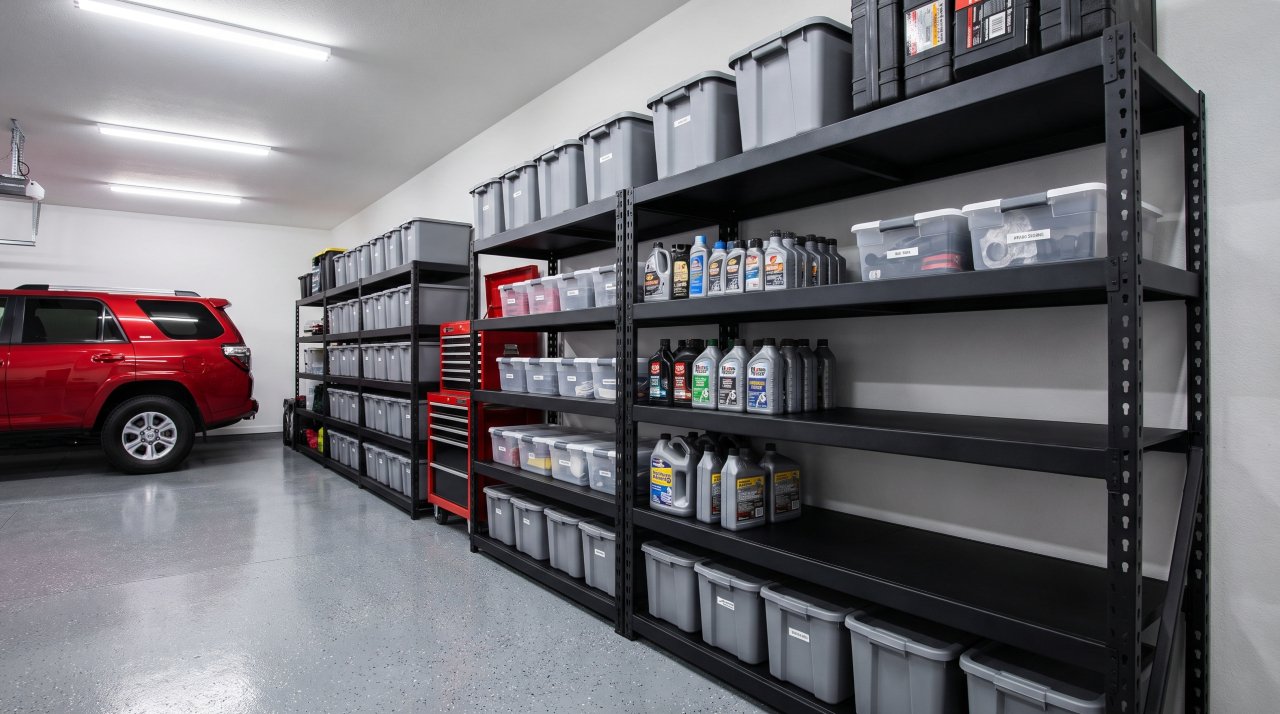
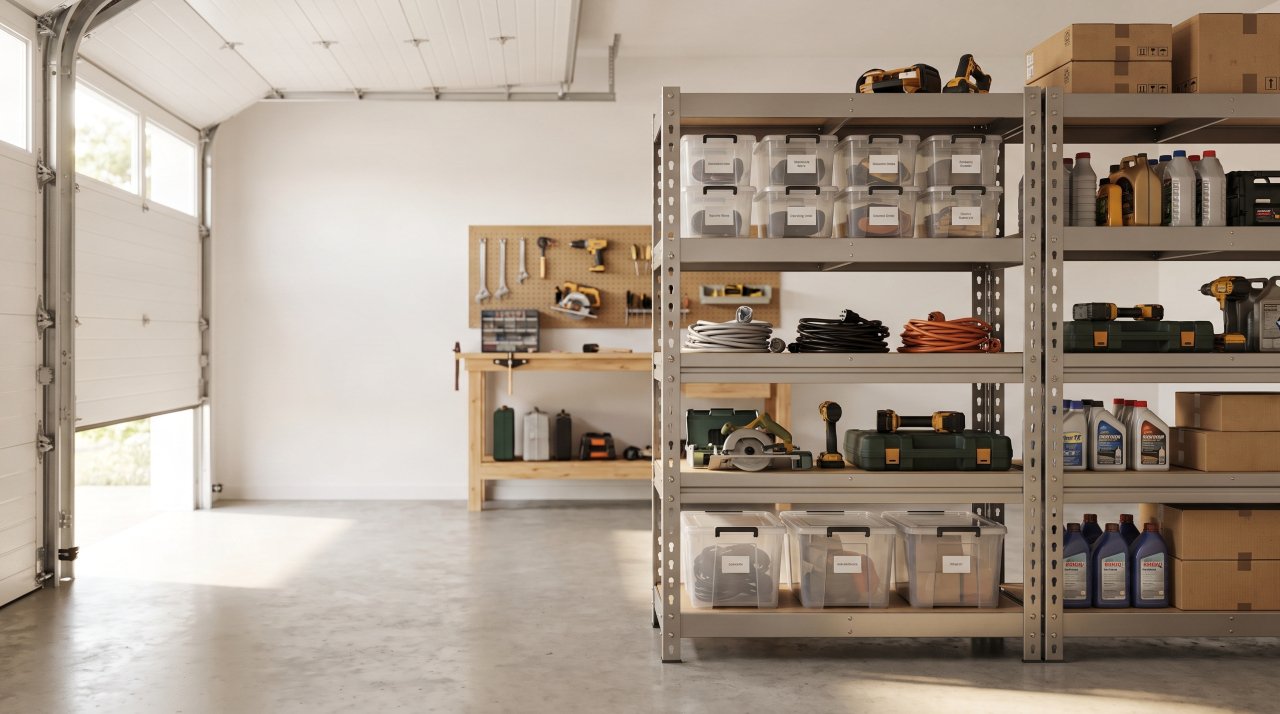
Boltless freestanding shelving is the fastest-assembling heavy-duty option. Steel angle posts feature stamped keyhole rivet slots at 1.5-inch vertical intervals. Horizontal shelf beams clip in with double-ended steel rivets that drop into keyhole slots and lock under shelf load. Assembly requires only a rubber mallet. Read complete rivet system specs in our guide to boltless shelving units.
Nut-and-Bolt Freestanding Shelving
Traditional bolted-corner freestanding shelving uses threaded corner bolts through gusset plates at each post junction. The primary advantage is an extremely rigid, zero-rocking frame that withstands moderate lateral impact forces from hand trucks or push carts.
Wire Post-Collar Freestanding Shelving
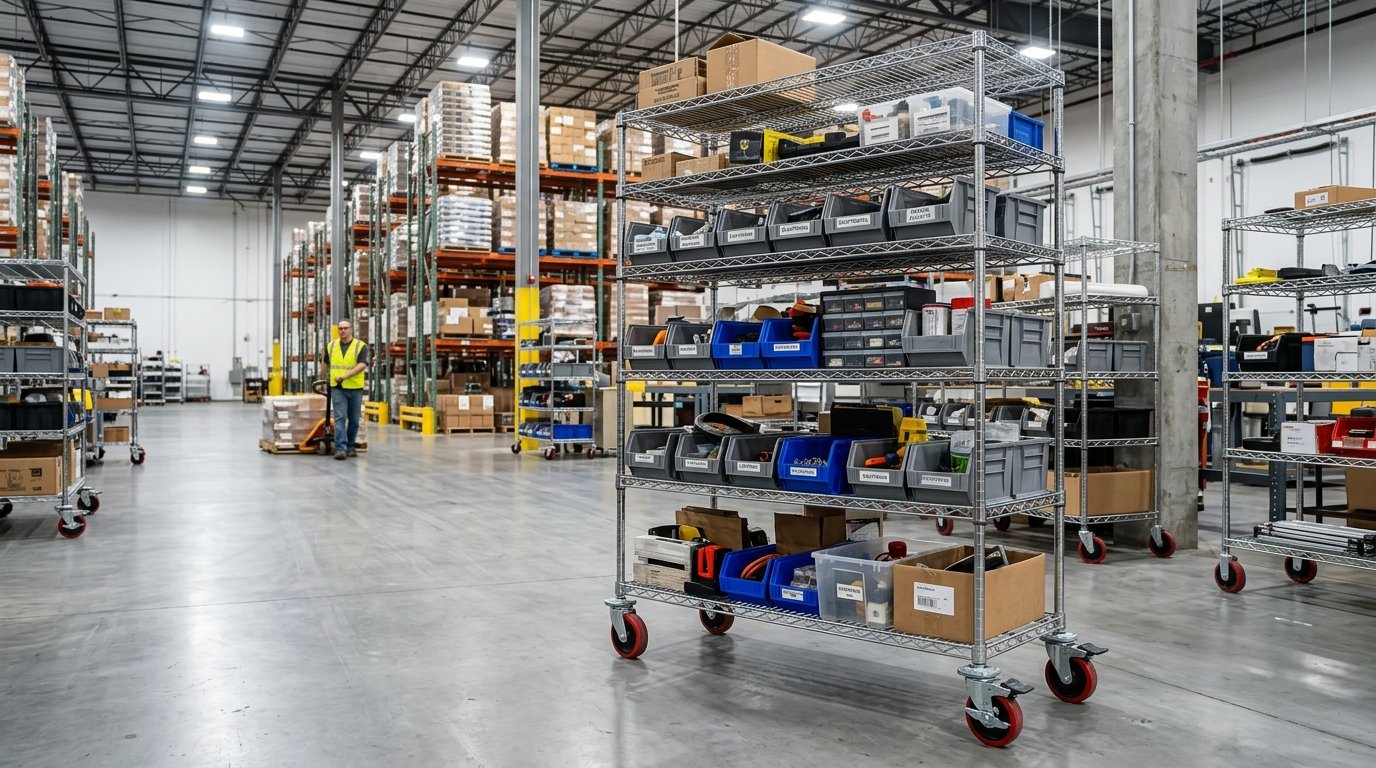
Chrome or epoxy wire shelving uses smooth steel post columns with plastic collar clips that snap onto posts at 1-inch intervals. Maximum load ratings are 300 to 800 lbs per shelf. See our complete heavy duty wire shelving guide.
2. Steel Gauge Selection for Freestanding Shelving
The most critical specification when buying freestanding shelving units is steel gauge thickness. Gauge numbers run inverse to thickness: lower gauge means thicker, stronger steel.
| Steel Gauge | Thickness (inch) | Shelf UDL Rating | Recommended Use |
|---|---|---|---|
| 20-gauge | 0.036 inch | 250–400 lbs | Light retail/office stockrooms |
| 18-gauge | 0.048 inch | 500–900 lbs | Commercial parts rooms |
| 16-gauge | 0.060 inch | 800–1,200 lbs | Heavy industrial stockrooms |
| 14-gauge | 0.075 inch | 1,200–2,000 lbs | Bulk material storage |
For garage freestanding units loaded with power tools, generator equipment, and hardware bins, specify 18-gauge minimum. See steel grade comparisons in our guide to steel shelving units.
3. Footprint Planning and Bay Sizing
Depth Selection
- 12-inch deep shelves: Tools, binders, small hardware bins
- 18-inch deep shelves: Standard file boxes, paint cans, auto chemicals
- 24-inch deep shelves: Commercial tote bins, master cartons, large tool cases
- 36-inch deep shelves: Industrial heavy-pack bins, wide boxed equipment
For garage vertical space planning, read our complete guide on best garage shelving ideas.
4. Assembly Tips and Common Mistakes
- Not squaring the frame: Measure diagonally corner to corner on the first shelf level before adding additional shelves. Both diagonal measurements must match within 1/4 inch.
- Over-tightening boltless rivets: Boltless rivet beams self-tighten under load. Hammering too hard during assembly can split the rivet slot in the post column.
- Skipping foot levelers: All freestanding shelving posts have adjustable foot leveler pads to bring posts to level on uneven concrete garage floors.
5. Anchoring and Safety Compliance
Every freestanding shelving unit taller than 72 inches must be anchored to prevent tip-over. Per OSHA General Industry Standard 1910.176, all storage structures must remain stable under all anticipated operating conditions. MHI Storage Equipment Standards require visible load capacity labels on every bay of commercial shelving.
Frequently Asked Questions
How much weight can a freestanding shelving unit hold?
This completely depends on steel gauge and shelf dimensions. Light consumer shelving holds 100 to 250 lbs per shelf. Industrial 14-gauge units hold 1,200 to 2,000 lbs per shelf. Always check the manufacturer’s UDL (Uniformly Distributed Load) rating before purchasing.
Do freestanding shelving units need to be bolted to the floor?
Any unit taller than 72 inches or loaded with more than 50 percent of capacity on upper shelves must be anchored to prevent tip-over. In home garages, use wall anchor straps. In commercial settings, use concrete wedge anchors at baseplates.
Can you add more shelves to a freestanding unit after purchase?
Yes, for boltless and wire post-collar systems. Additional shelves clip or rivet in at any height increment. Bolted systems require purchasing compatible shelf beam kits in the correct width from the original manufacturer.
What is the best freestanding shelving for a garage?
For most garages, 18-gauge boltless rivet shelving in 24-inch deep by 72-inch wide configurations delivers the best balance of load capacity, adjustability, and ease of assembly. Anchor the top rear post corners to wall studs using L-bracket anchor kits.
Getting Freestanding Shelving Right the First Time
Freestanding shelving units deliver maximum storage flexibility, but only if you match gauge to load, depth to inventory dimensions, and height to your ceiling clearance. Buy on spec, not on price. An 18-gauge boltless unit at $180 per bay lasts 15 to 20 years. A $60 consumer unit bows within 6 months and ends up costing more in replacements.

Callum Langham
Founder & Technical Storage Editor
Callum Langham is the founder and technical editor of Rack System. With over 12 years of hands-on field experience in warehouse logistics, garage organization, and industrial storage installations, Callum specializes in engineering safety standards, beam load calculations, and OSHA/RMI compliance. Every guide on Rack System is audited against verified steel gauge tolerances and municipal building codes.