A drive-in racking system provides maximum storage density by eliminating aisle spaces between rows. Forklifts drive directly into the racking lanes to deposit or retrieve pallets resting on continuous structural steel support rails. For a high-level view of alternative density systems, read our pallet racking system overview.
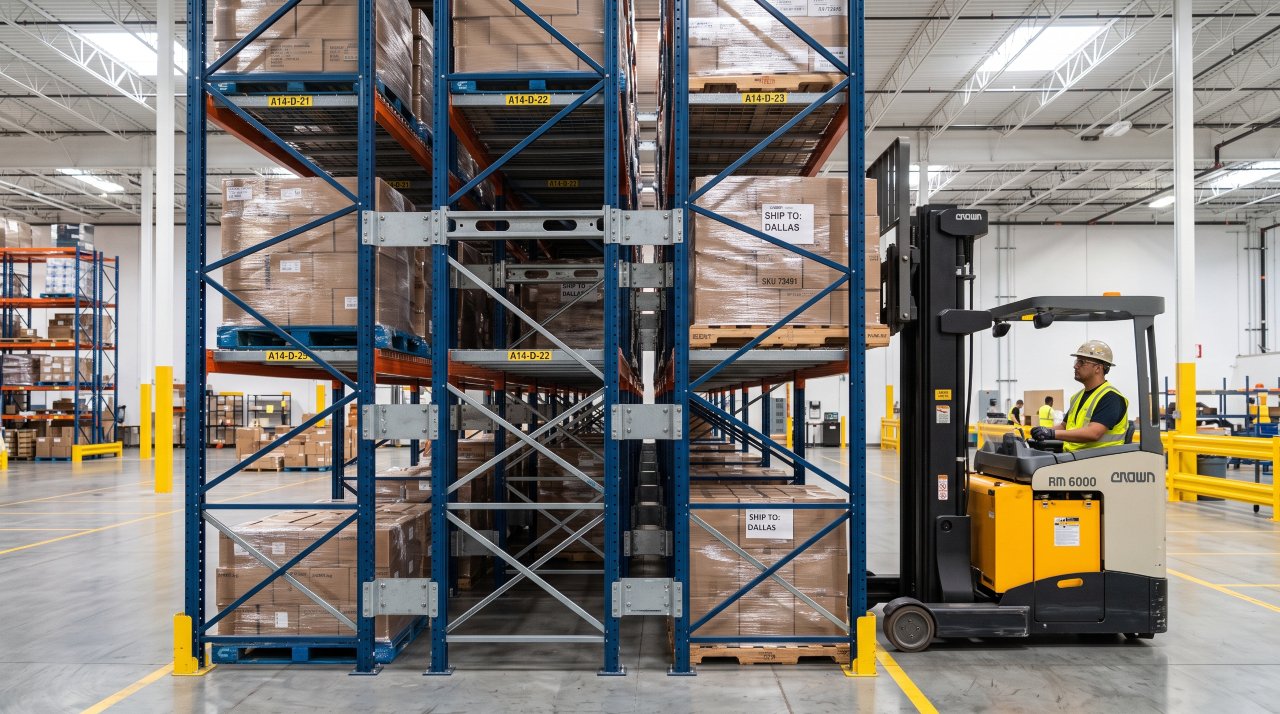
LIFO Operations and Clearance Rules
Drive-in systems operate on Last-In, First-Out (LIFO) inventory flow. Compare this with selective pallet racking or automated options in mobile racking systems.
Safety Compliance
Ensure structural rail integrity by adhering to RMI Drive-In Rack Structural Engineering Guidelines and enforcing OSHA Powered Industrial Truck Operation Rules.
Frequently Asked Questions
How deep can a drive-in racking lane be built?
Drive-in lanes are typically designed 5 to 10 pallets deep. Lanes deeper than 10 pallets increase loading cycle times and risk driver fatigue.

Callum Langham
Founder & Technical Storage Editor
Callum Langham is the founder and technical editor of Rack System. With over 12 years of hands-on field experience in warehouse logistics, garage organization, and industrial storage installations, Callum specializes in engineering safety standards, beam load calculations, and OSHA/RMI compliance. Every guide on Rack System is audited against verified steel gauge tolerances and municipal building codes.