Wire Shelving Units: Types, Weight Capacity & Best Uses
Wire shelving units are one of the most versatile and widely used storage systems across commercial kitchens, retail stockrooms, healthcare supply rooms, and industrial warehouses. Unlike solid steel or wood shelving, wire shelving uses a welded steel wire grid as the shelf surface, allowing complete air circulation, full fire sprinkler water flow, and easy visual inspection of inventory without pulling items off shelves.
Choosing the wrong wire shelving gauge or finish leads to shelf sagging under heavy inventory, chrome flaking in high-humidity environments, or costly food safety violations in commercial kitchen walk-ins. Buyers must understand wire diameter ratings, surface coatings, shelf adjustment systems, and maximum load capacity before purchasing.
This complete guide covers chrome wire shelving vs. epoxy-coated wire vs. galvanized wire units, load capacity calculations, NSF food service certification requirements, and setup tips for commercial stockrooms.
1. Chrome Wire Shelving Units
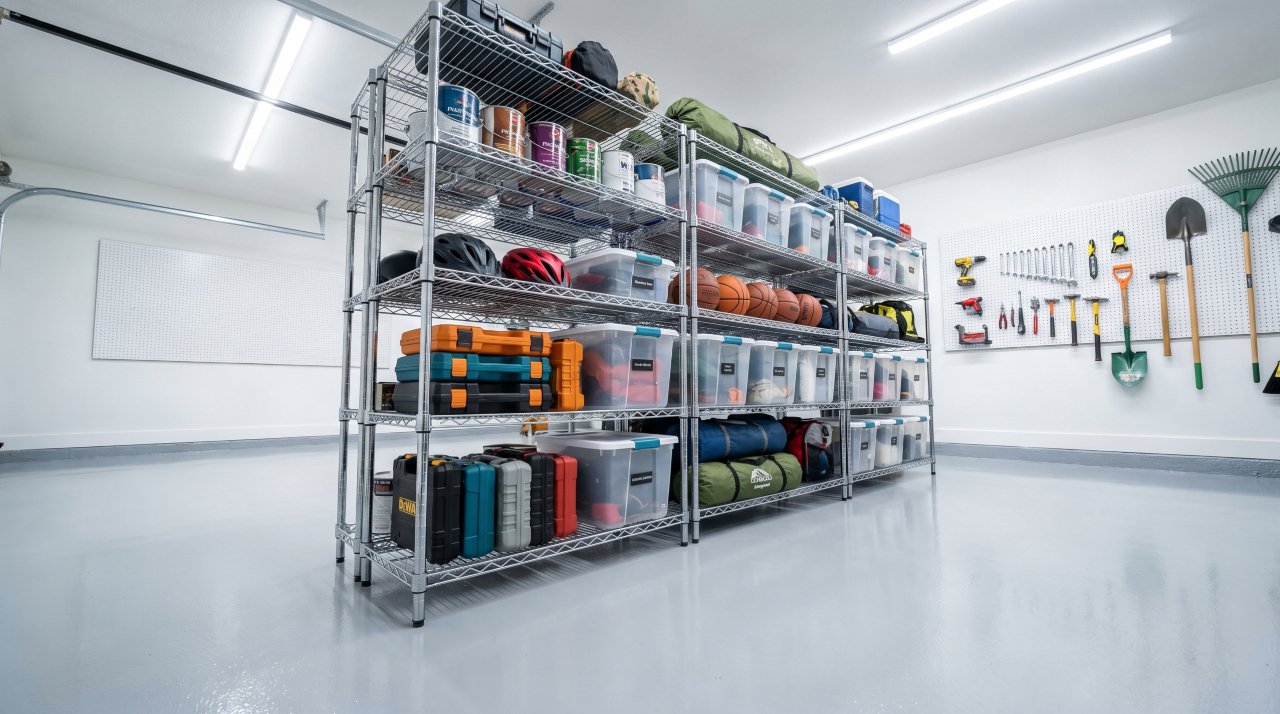
Chrome wire shelving is the most widely recognized commercial wire storage system. Shelves are constructed from welded steel wire grids electroplated with a polished chromium finish. It is the industry standard for restaurant walk-in coolers, hotel housekeeping rooms, and retail backrooms.
- Wire Diameter: Standard commercial grade uses 3/16-inch (4.8mm) diameter steel wires. Heavy-duty units use 1/4-inch (6.4mm) wires.
- Shelf Capacity: 3/16-inch chrome wire shelves support 300 to 500 lbs per shelf under Uniformly Distributed Loads (UDL).
- Post Collar Adjustment: Wire shelves clip onto chrome-plated posts using plastic donut collars that press in at 1-inch vertical increments without tools.
- NSF Certification: All chrome wire shelving used in food service environments must carry NSF/ANSI Standard 2 certification stamps on post collars.
Standard chrome plating shows rust spotting within 12 to 24 months in high-humidity environments above 85% relative humidity. For walk-in freezers, specify zinc-plated or galvanized wire shelving instead. Read full heavy duty wire specifications in our heavy duty wire shelving guide.
2. Epoxy-Coated Wire Shelving Units
Epoxy-coated wire shelving applies a thick polymer powder coat over the welded wire grid and steel post profiles. This finish provides significantly superior corrosion resistance compared to standard chrome plating, making it the preferred choice for high-humidity environments, chemical storage areas, and outdoor covered applications.
- Walk-In Freezers and Coolers: Epoxy-coated wire withstands continuous freeze-thaw temperature cycling without finish peeling or rust.
- Janitorial Storage Rooms: Resists chemical splash from cleaning agents, bleach solutions, and solvents.
- Healthcare Supply Rooms: Easy-wipe polymer surfaces meet hospital surface disinfection protocols.
Compare coating durability options alongside solid steel units in our steel shelving units guide, and review full commercial specs in our commercial shelving racks buyer guide.
3. Galvanized Wire Shelving Units
Hot-dip galvanized wire shelving is the most corrosion-resistant option for extreme environments. The hot-dip galvanization process coats every wire strand with a thick layer of zinc alloy that provides sacrificial cathodic corrosion protection for 10 to 15 years in standard industrial environments compared to 2 to 3 years for standard chrome plating.
Galvanized wire units are correct for: outdoor uncovered applications, salt air coastal environments, agricultural storage areas, car wash facilities, and seafood processing plants where brine misting is constant.
4. Wire Shelving Unit Weight Capacity Table
All wire shelf load ratings are measured as Uniformly Distributed Load (UDL) limits.
| Wire Diameter | Shelf Size | UDL Rating | Best Use |
|---|---|---|---|
| 3/16 inch | 18 x 36 inch | 300 lbs | Light commercial |
| 3/16 inch | 24 x 48 inch | 400 lbs | Food service walk-in |
| 1/4 inch | 24 x 48 inch | 600 lbs | Industrial stockroom |
| 1/4 inch | 24 x 60 inch | 800 lbs | Heavy commercial |
5. Safety and Anchoring Rules
All wire shelving posts exceeding a 4-to-1 height-to-depth ratio must be tied together using top-span cross-bar ties or wall-anchor kits to prevent tip-over. Per OSHA Materials Handling Standard 1910.176, all storage units must remain stable under normal operating conditions. NSF certification requirements for food service wire shelving are detailed in NSF/ANSI Standard 2 Food Equipment Guidelines.
Frequently Asked Questions
Can wire shelving units be used in a walk-in freezer?
Yes, but specify epoxy-coated or galvanized wire shelving rather than standard chrome plating. Chrome finish deteriorates quickly under repeated freeze-thaw cycles, showing rust spots within 12 to 24 months.
How do you adjust the height of wire shelving shelves?
Squeeze the plastic donut collar on each post corner, slide it to the desired 1-inch increment mark, and release. The collar locks under loaded shelf weight. The full height adjustment takes under 60 seconds per shelf with no tools.
Do wire shelving units need to be anchored to the wall?
Units taller than 63 inches or loaded beyond 50% of capacity on upper shelves should be anchored. Use wall anchor kits or inter-unit cross-bar ties to prevent tip-over in busy stockrooms.
What is the difference between NSF-certified and non-certified wire shelving?
NSF-certified shelving has been independently tested to confirm surface finishes will not contaminate food through leaching, chipping, or rust migration. Non-certified shelving is not approved for use in food preparation or storage environments by health code inspectors.
Choosing the Right Wire Shelving Unit for Your Environment
Matching wire shelving finish to your specific environment prevents premature corrosion, avoids costly replacements, and keeps your storage system compliant with health and safety codes. Chrome wire suits clean dry stockrooms, epoxy handles humidity and chemicals, and galvanized wire tackles the harshest outdoor and processing environments. Always verify NSF certification for food service applications and anchor tall units to wall framing for safety.

Callum Langham
Founder & Technical Storage Editor
Callum Langham is the founder and technical editor of Rack System. With over 12 years of hands-on field experience in warehouse logistics, garage organization, and industrial storage installations, Callum specializes in engineering safety standards, beam load calculations, and OSHA/RMI compliance. Every guide on Rack System is audited against verified steel gauge tolerances and municipal building codes.