A rack collapse injures roughly 20,000 US warehouse workers every year — and most incidents trace back to overloaded or incorrectly specified shelving. If you’re shopping for heavy duty industrial shelving racks and feeling overwhelmed by load ratings, steel gauges, and competing marketing claims, you’re not alone.
This guide cuts through the noise. You’ll learn exactly which specifications matter, what the numbers actually mean, how to tell true industrial-grade racking from garage-grade products dressed up in marketing language, and how to calculate the capacity you genuinely need. By the end, you won’t need to guess — you’ll know.
Why “Heavy Duty” Is a Marketing Term, Not a Standard
The phrase “heavy duty” has no official legal or industry definition in the US. Any manufacturer can print it on a box. That’s the first thing you need to accept before you open your wallet.
What does have defined standards is load rating — and that’s the number you should always demand to see before buying. The Rack Manufacturers Institute (RMI), part of MHI, sets the structural standards most reputable US rack manufacturers follow, published under ANSI MH16.1.
When a product carries an RMI-compliant load rating, it means the capacity was calculated under a recognized engineering standard. When it doesn’t, you’re trusting marketing copy instead of structural data.
Industrial vs. Garage-Grade vs. Warehouse Racking
This is the confusion that trips up most buyers — and no competitor guide explains it clearly. Here’s the honest breakdown.
Garage-grade shelving typically uses 18–22 gauge steel and holds 200–500 lbs per shelf. These units look sturdy in photos and cost less, but they’re designed for light residential or light commercial use. You’ll find them at big-box retailers under “heavy duty” labels.
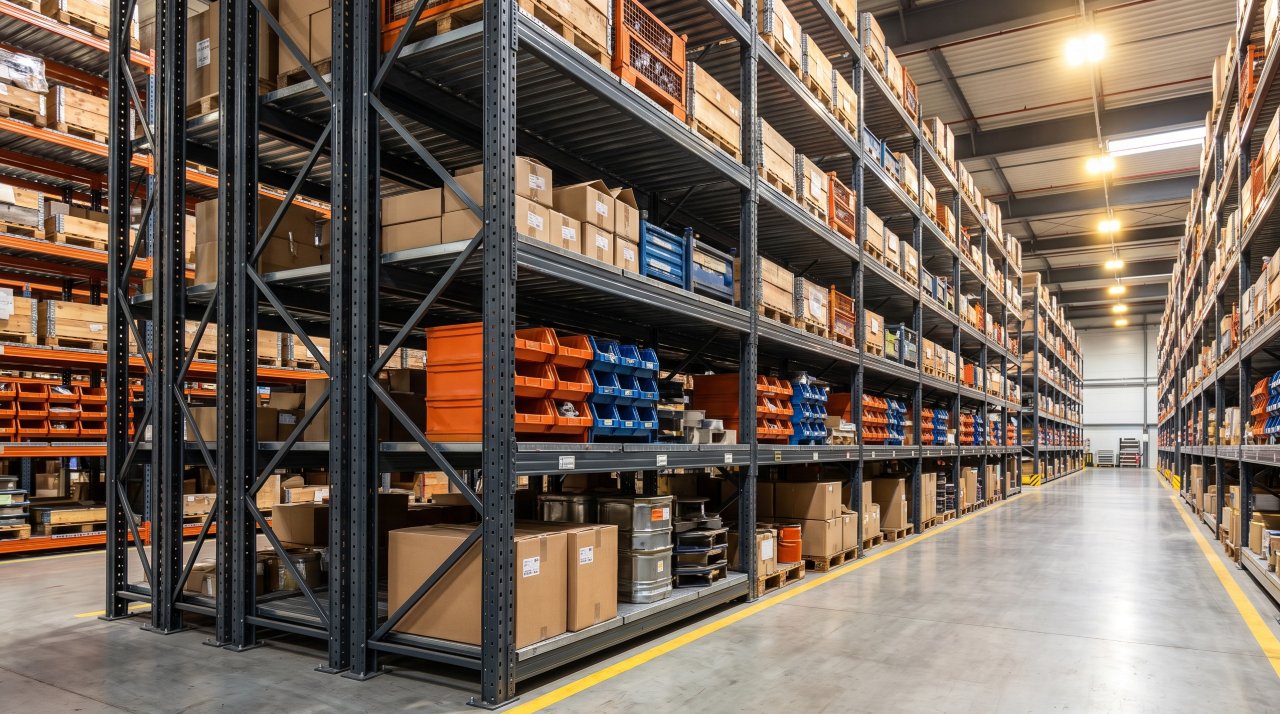
Industrial shelving racks use 12–16 gauge steel, bolt or clip together with engineered connections, and typically hold 800–3,000 lbs per shelf or more. These are designed for workshops, manufacturing floors, and distribution centers.
Pallet racking / warehouse racking is a separate category altogether — designed for forklift loading, with capacities measured in thousands of pounds per bay, not per shelf.
If you’re storing heavy equipment, parts, or materials in a commercial or industrial setting, garage-grade shelving is a liability, not an asset.
The Steel Gauge Number: What It Actually Means
Steel gauge confuses people because the scale runs backward. Lower gauge numbers mean thicker, stronger steel.
Here’s what you need to know for industrial shelving:
| Gauge | Thickness (inches) | Typical Use |
|---|---|---|
| 22 gauge | 0.030″ | Light residential / home garage |
| 18 gauge | 0.048″ | Light commercial, small parts |
| 16 gauge | 0.060″ | General industrial, moderate loads |
| 14 gauge | 0.075″ | Heavy industrial, high-capacity |
| 12 gauge | 0.105″ | Extreme loads, structural applications |
For true industrial use, you want 14 gauge or better on shelves and uprights. If a product listing doesn’t state the gauge, ask for it. If the seller can’t provide it, treat that as a red flag.
UDL vs. Point Load: The Rating Difference That Matters
Most beginners look at one number — the “weight capacity” — and stop there. But there are actually two distinct ratings you need to check, and mixing them up causes real-world failures.
UDL (Uniformly Distributed Load) means the rated capacity assumes weight is spread evenly across the entire shelf surface. A 2,000 lb UDL rating means 2,000 lbs distributed across every square inch of the shelf.
Point load is concentrated weight in one spot — like a single machine, a heavy drum, or a pallet jack wheel. Point loads stress a much smaller area of the shelf and can cause failure at far lower total weights than the UDL rating suggests.
Always check whether your stored items will distribute weight evenly or concentrate it. If you’re storing machinery, engines, or heavy containers, ask the manufacturer for the point load specification — not just the UDL.
To learn more about how these specs fit into the broader system design, read our guide on what is a heavy duty racking system.
How to Calculate the Load Capacity You Actually Need
Don’t buy to the limit — buy with a safety margin. This is the single most important purchasing principle for industrial racking, and almost no online guide tells you this directly.
The standard industry practice is to use a safety factor of at least 1.5x to 2x your actual maximum load. So if your heaviest shelf will hold 800 lbs, you should be shopping for shelving rated to at least 1,200–1,600 lbs per shelf.
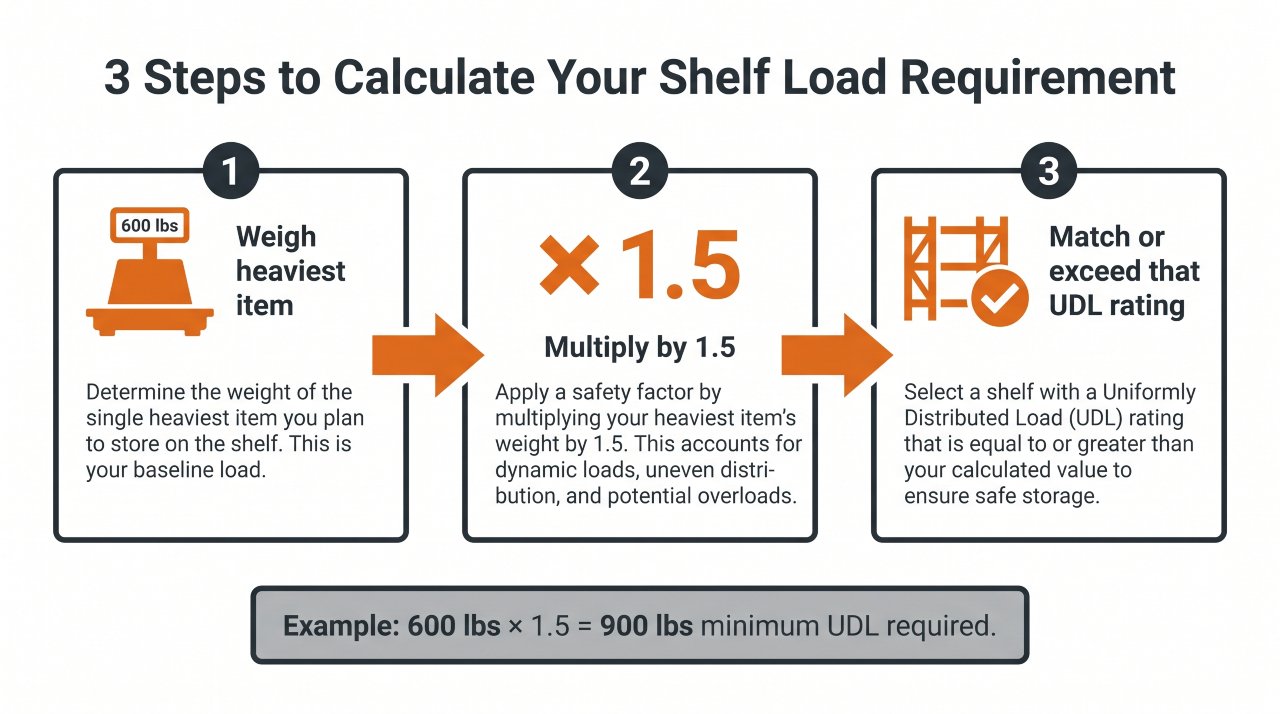
Here’s a simple three-step calculation you can do right now:
- Weigh your heaviest item (or estimate conservatively — always round up)
- Multiply by 1.5 to get your minimum shelf rating
- Check that the UDL rating meets or exceeds that number
For example: a parts bin weighing 600 lbs × 1.5 = you need shelving rated to at least 900 lbs UDL per shelf. Many “heavy duty” garage products cap at 800 lbs — which means they’d be operating at the limit before you account for dynamic loading from placing and removing items.
Key Specs to Check Before You Buy
Beyond gauge and load ratings, four more specifications directly affect safety and suitability for industrial use. Don’t skip these.
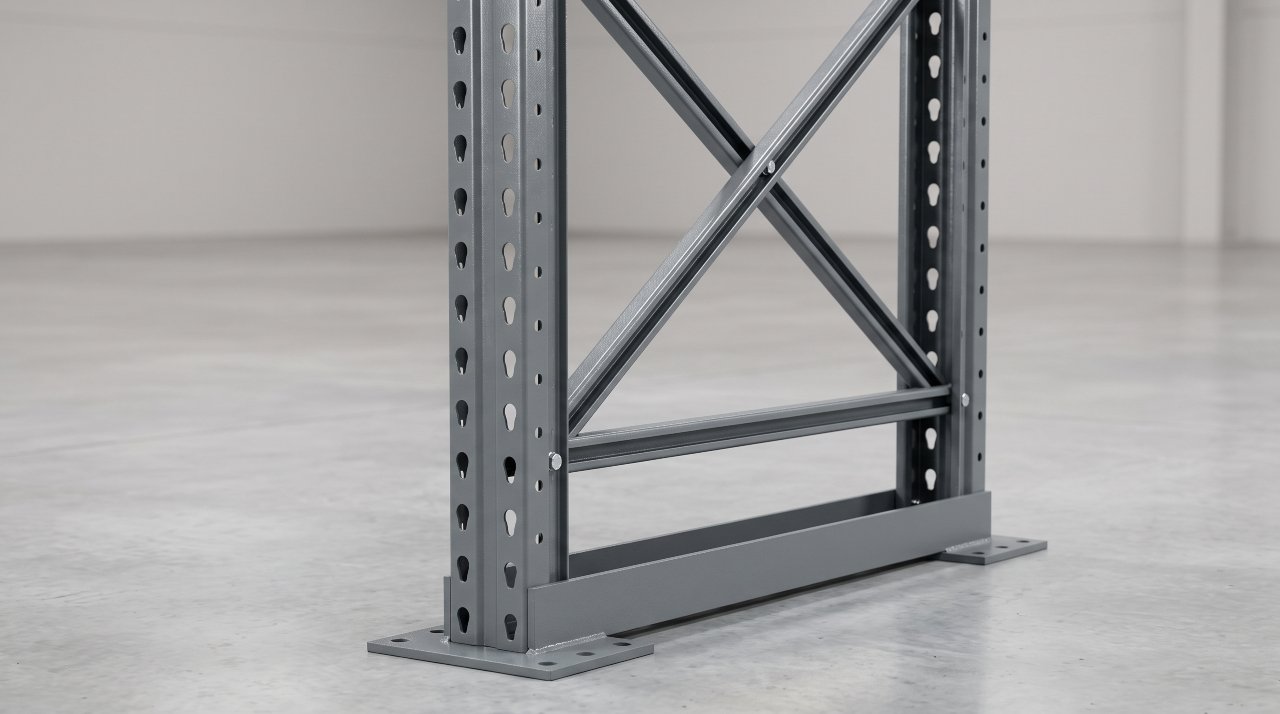
Upright height and column gauge. Taller units with thin uprights deflect under load. For shelving over 7 feet tall, uprights should be 14 gauge or heavier.
Shelf spacing adjustment. Industrial racking should allow you to adjust shelf height in 1.5″ or 2″ increments. Fixed-height shelving reduces your ability to optimize storage and often signals a lower-grade product.
Anchor requirements. OSHA and RMI standards require freestanding shelving units over a certain height to be anchored to the floor or wall. Always check the manufacturer’s anchoring requirements and follow them — unanchored units can tip.
Surface finish. For industrial environments, powder-coated or galvanized steel resists corrosion, chemicals, and cleaning agents far better than painted finishes. In food processing or wet environments, stainless steel or epoxy-coated wire shelving may be required.
According to OSHA’s materials handling guidelines, storage racks must be capable of supporting their maximum intended loads with adequate safety margins and must be inspected regularly for damage. This isn’t optional guidance — it’s a federal workplace safety requirement.
The Most Common Types of Heavy Duty Industrial Shelving
You’ll encounter several structural types when shopping. Each suits different applications.
Boltless (rivet) shelving uses a clip-and-beam design for fast assembly without tools. It’s widely used in industrial settings for its flexibility and 1,000–3,000 lb capacity range. Good for parts storage, tools, and medium-weight inventory.
Steel shelving with closed panels offers greater structural rigidity. The closed decking prevents items from falling between shelves and resists racking forces better than open-frame designs. Preferred in manufacturing environments.
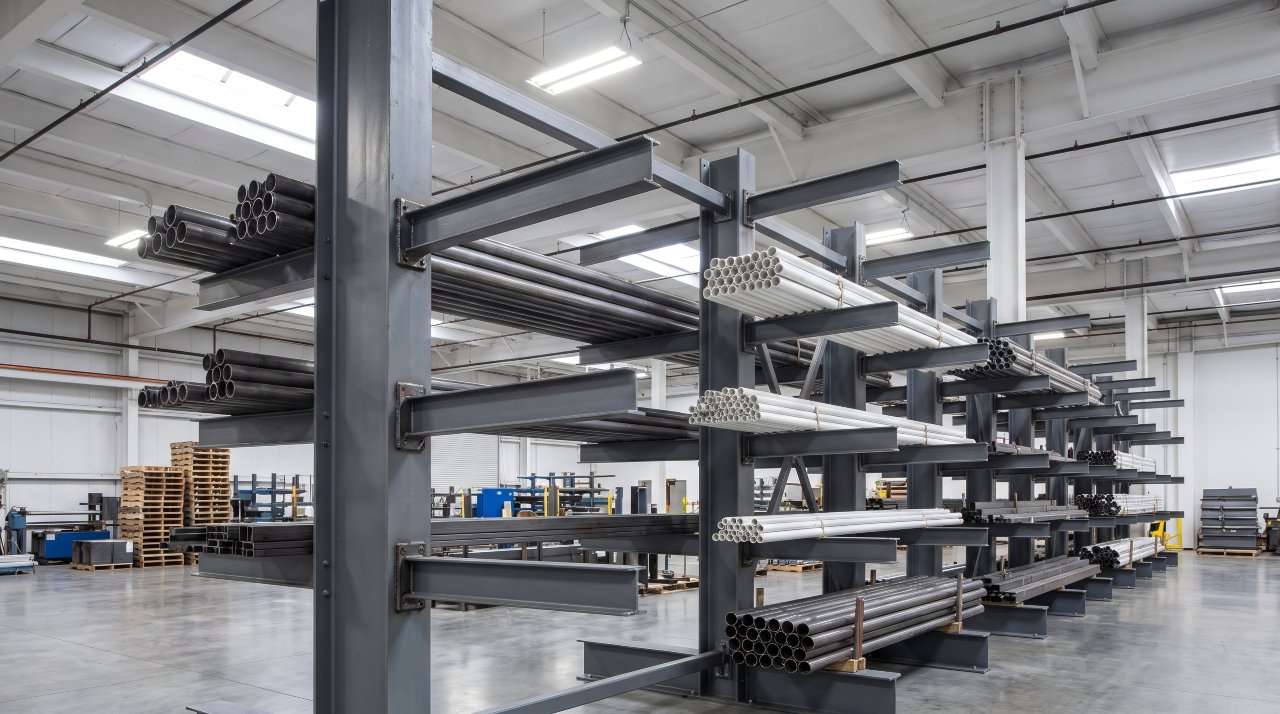
Cantilever racking is the right choice for storing long, awkward items — lumber, pipe, conduit, bar stock. It has no front uprights, so you can load items from the front without restriction.
Pallet racking (selective racking) suits warehouse environments where you’re storing palletized goods and using forklifts. This is a different product category from shelving racks, and it comes with its own engineering and installation requirements.
For a side-by-side look at what fits different environments — including garage workshops — check out our deep-dive on heavy duty storage racks for garages.
What Legitimate Industrial Shelving Should Include
When you’re evaluating a product or supplier, look for these signals of genuine industrial-grade quality.
A reputable manufacturer will provide a spec sheet with exact load ratings (both UDL and point load), steel gauge for uprights and shelves, and seismic zone compatibility where applicable. They’ll list their compliance with ANSI MH16.1 or similar standards. They’ll also specify anchoring requirements.
If a product page shows only a vague “up to X lbs” claim with no breakdown by component, treat that with skepticism. You deserve better data before committing to equipment your workers will stand under.
The American National Standards Institute (ANSI) maintains the standards framework that governs rack design and testing in the US. Products built to ANSI-approved standards have been tested and verified — not just claimed.
Honest Limitations to Know Before You Buy
No single shelving system is right for every application. Here’s what to watch for.
Even the best industrial shelving loses rated capacity if it’s damaged. A single forklift bump to an upright can compromise structural integrity across the entire bay. You need to inspect racking regularly and replace damaged components immediately — not “when you get around to it.”
Heavy industrial shelving also requires proper installation. Many buyers underestimate assembly time and anchor requirements. A 2,000 lb-rated unit that’s not anchored per the manufacturer’s specs is not a 2,000 lb-rated unit in practice.
Finally, second-hand racking is common in the US industrial market, and it can represent good value — but only if you can verify the load ratings and inspect every component for damage. Unknown-history racking is a risk you need to weigh honestly.
For help thinking through which rack system fits your specific environment, our guide on how to choose the right rack system walks through the decision step by step.
FAQ: Heavy Duty Industrial Shelving Racks
What is the weight limit for heavy duty industrial shelving?
True industrial shelving typically carries between 800 and 3,000+ lbs per shelf, depending on gauge, design, and span. Always check the manufacturer’s UDL rating — not just a general “capacity” claim — and apply a 1.5x safety margin to your actual load.
What is the difference between light duty and heavy duty shelving?
Light duty shelving uses thinner steel (18–22 gauge) and is rated for 200–500 lbs per shelf. Heavy duty industrial shelving uses 12–16 gauge steel and handles 800 lbs and above per shelf. The structural connections and anchoring requirements are also significantly different.
What gauge steel is best for heavy duty shelving?
For industrial applications, 14 gauge steel is the practical minimum for shelves and uprights. Twelve gauge offers greater rigidity for extreme loads or tall configurations. Anything above 16 gauge should be considered light to medium duty for industrial purposes.
How do I know if my shelving is actually heavy duty?
Request a spec sheet with the exact UDL load rating per shelf, steel gauge for uprights and shelves, and ANSI or RMI compliance documentation. If the manufacturer won’t provide these, the product is likely consumer-grade regardless of the marketing language used.
What is the strongest type of shelving?
For raw load capacity, structural steel pallet racking carries the highest loads — measured in thousands of pounds per bay. For shelf-based industrial storage without forklifts, closed-panel steel shelving with 12–14 gauge construction offers the highest capacity and rigidity.
Does OSHA regulate industrial shelving racks?
Yes. OSHA’s materials handling standards require that storage racks support their intended loads with adequate safety margins, that they’re inspected regularly, and that damaged components are removed from service immediately. Employers have a legal obligation to maintain safe racking systems under these standards.
Your Clear Path Forward
The single most important takeaway from this guide is this: the label “heavy duty” means nothing — the spec sheet means everything. Before you buy any industrial shelving rack, get the UDL load rating, the point load rating, and the steel gauge in writing.
Here’s your actionable next step: measure and weigh your heaviest stored items today, multiply that number by 1.5, and use that figure as your minimum shelf rating. Then request spec sheets from at least two suppliers and compare the numbers — not the marketing copy.
You now have the framework to make a safe, informed purchase. Use it.

Callum Langham
Founder & Technical Storage Editor
Callum Langham is the founder and technical editor of Rack System. With over 12 years of hands-on field experience in warehouse logistics, garage organization, and industrial storage installations, Callum specializes in engineering safety standards, beam load calculations, and OSHA/RMI compliance. Every guide on Rack System is audited against verified steel gauge tolerances and municipal building codes.