The average American garage holds $4,500 worth of stored items, yet 25% of homeowners with a two-car garage say they can’t fit even one car inside it. That’s not a space problem. That’s a storage system problem.
If you’re trying to find the best garage storage systems in 2026, you’ve probably already seen the same recycled product lists online. This guide does something different. You’ll learn which system types actually match real garages, what each one costs, how much weight they handle, and which red flags to avoid before you spend a dollar. By the end, you’ll know exactly which direction to go, no guesswork required.
What Makes a Garage Storage System “The Best”?
Not every storage system works in every garage. That’s the single most important thing to understand before you start shopping.
A wall-mounted slat wall system that looks incredible in a showroom might be useless in a garage with concrete block walls or limited stud spacing. A ceiling storage rack that holds 600 lbs sounds great until you measure your ceiling height and realize your SUV’s roof clears it by two inches.
The best system for your garage is the one that fits your space, holds your specific gear, and survives your climate. That’s the framework this entire guide uses.
Before you commit to any system, it helps to know how the underlying structure actually works. Shelving units, ceiling racks, and wall panels all rely on the same core engineering principles. Take five minutes to understand how rack systems work, that knowledge alone will help you spot weak products and ask better questions before you spend anything
The 6 Main Types of Garage Storage Systems
Understanding each system type gives you real power when comparing options. Here’s how the six main categories break down.
1. Wall-Mounted Shelving Systems
Wall-mounted shelving is the most popular starting point for most homeowners. You fix brackets or uprights directly into wall studs, then load horizontal shelves onto them.
Steel systems from brands like Gladiator and Rubbermaid FastTrack can handle anywhere from 50 to 200 lbs per shelf, depending on the bracket spacing and stud support. These systems work best when your walls have standard 16-inch on-center stud spacing.
The honest limitation here: if you have drywall-only walls without solid stud access, you’ll need toggle bolts or masonry anchors, and that cuts weight capacity significantly.
2. Overhead Ceiling Storage Racks
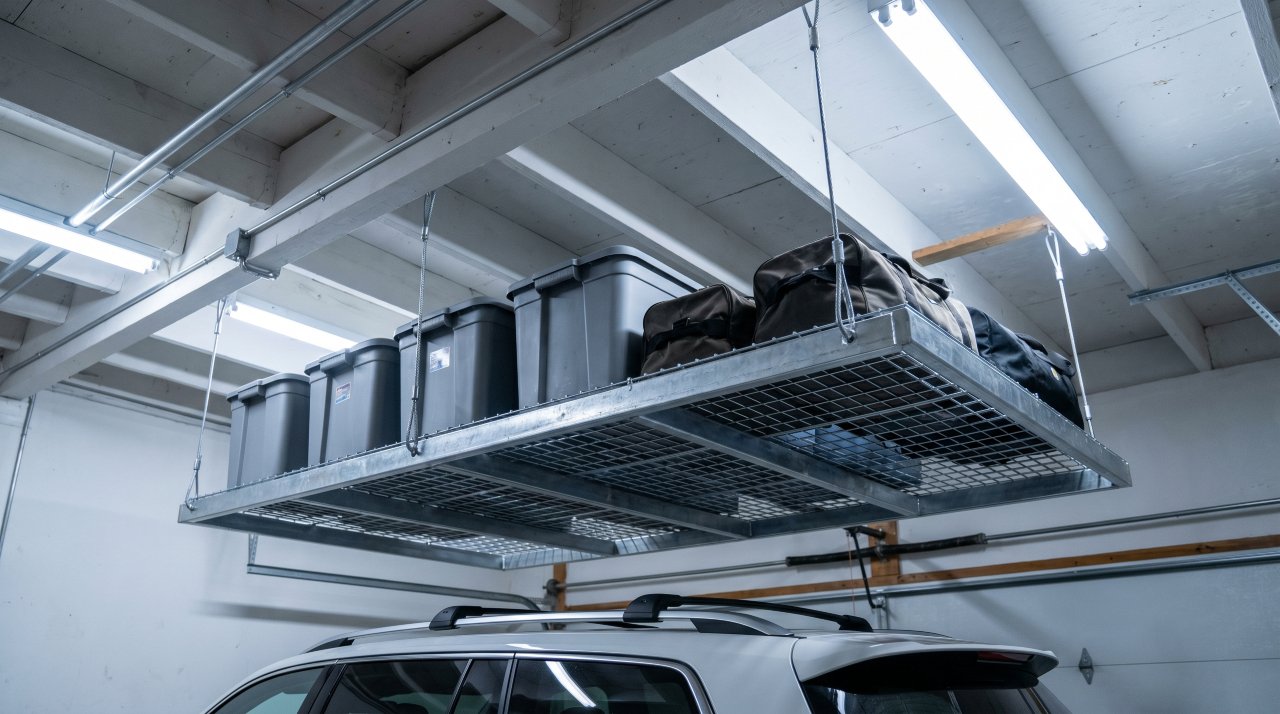
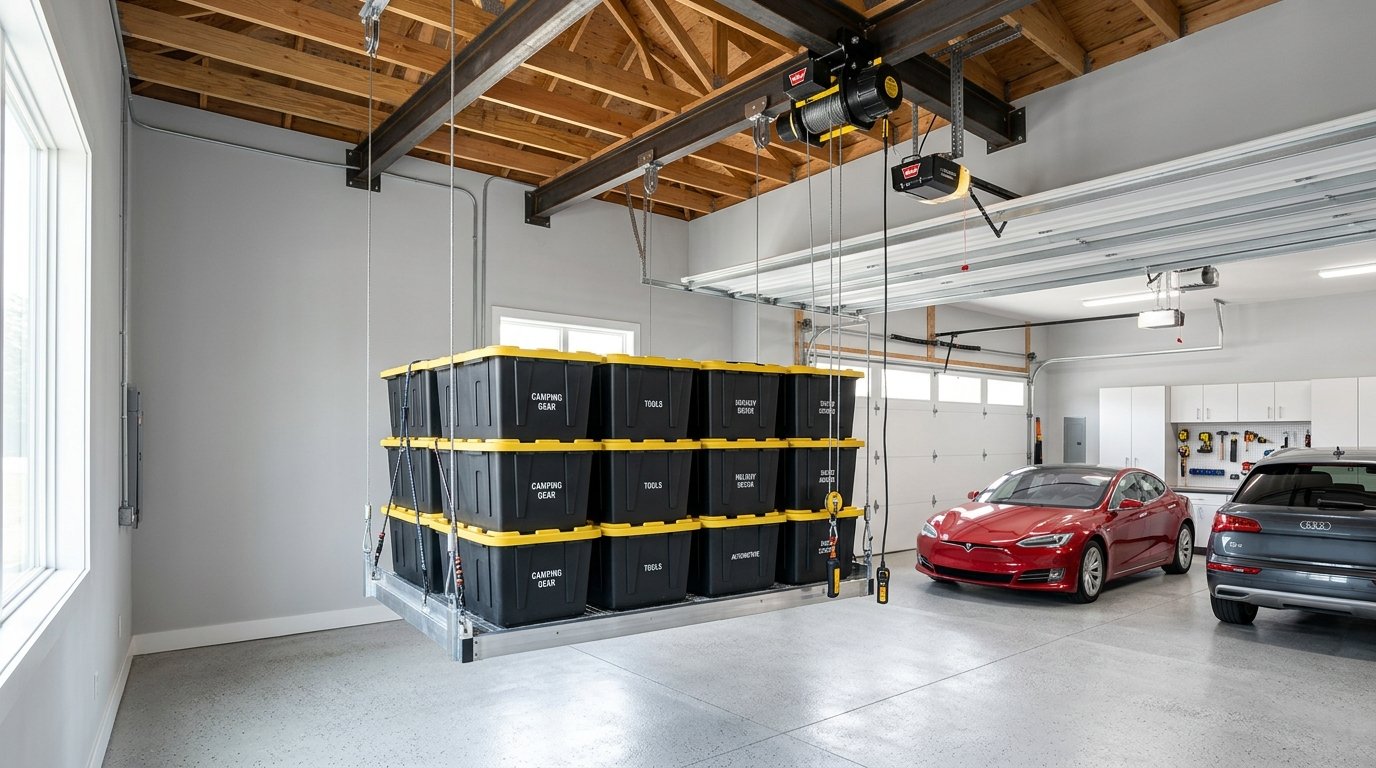
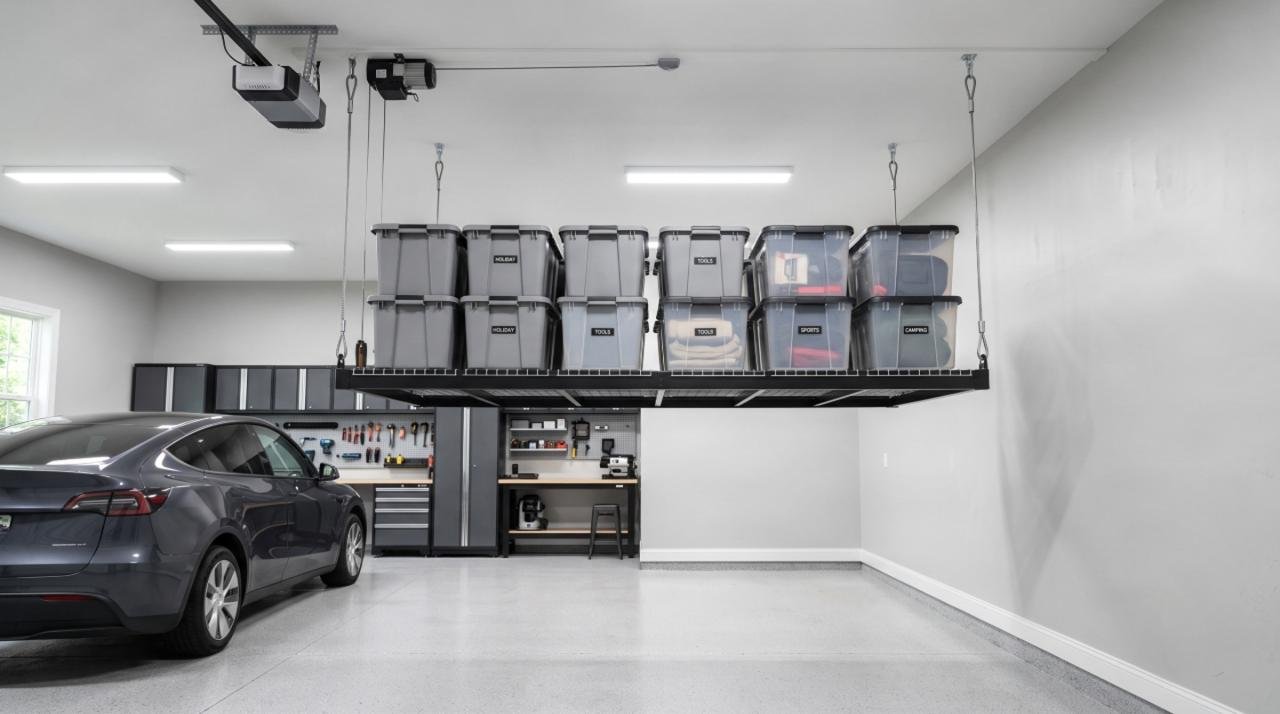
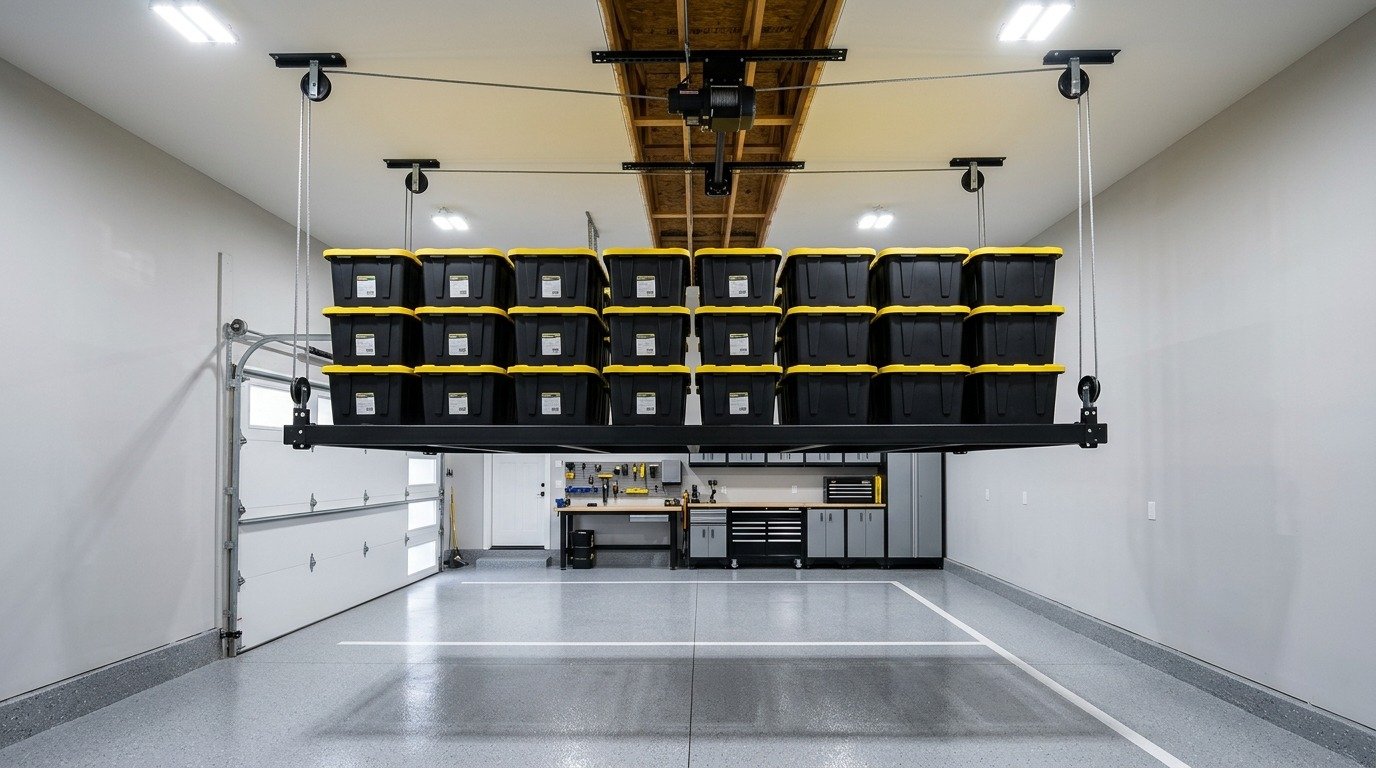
Ceiling racks let you use the space most homeowners completely ignore. A standard two-car garage has roughly 400 square feet of ceiling space, most of which sits empty.
Systems like the Fleximounts GR36 or Onrax ceiling racks mount to ceiling joists and can hold between 400 and 1,000 lbs when properly installed. You’ll want at least 24 inches of clearance between the rack’s lowest point and the roof of your tallest vehicle.
Wall-mounted shelving, ceiling racks, and freestanding units all fall under a broader category worth knowing before you buy. If you want the full picture on rack-based storage specifically, read our complete guide to garage storage rack systems, it covers load ratings, mounting methods, and the best configurations for different garage sizes.
3. Freestanding Shelving Units
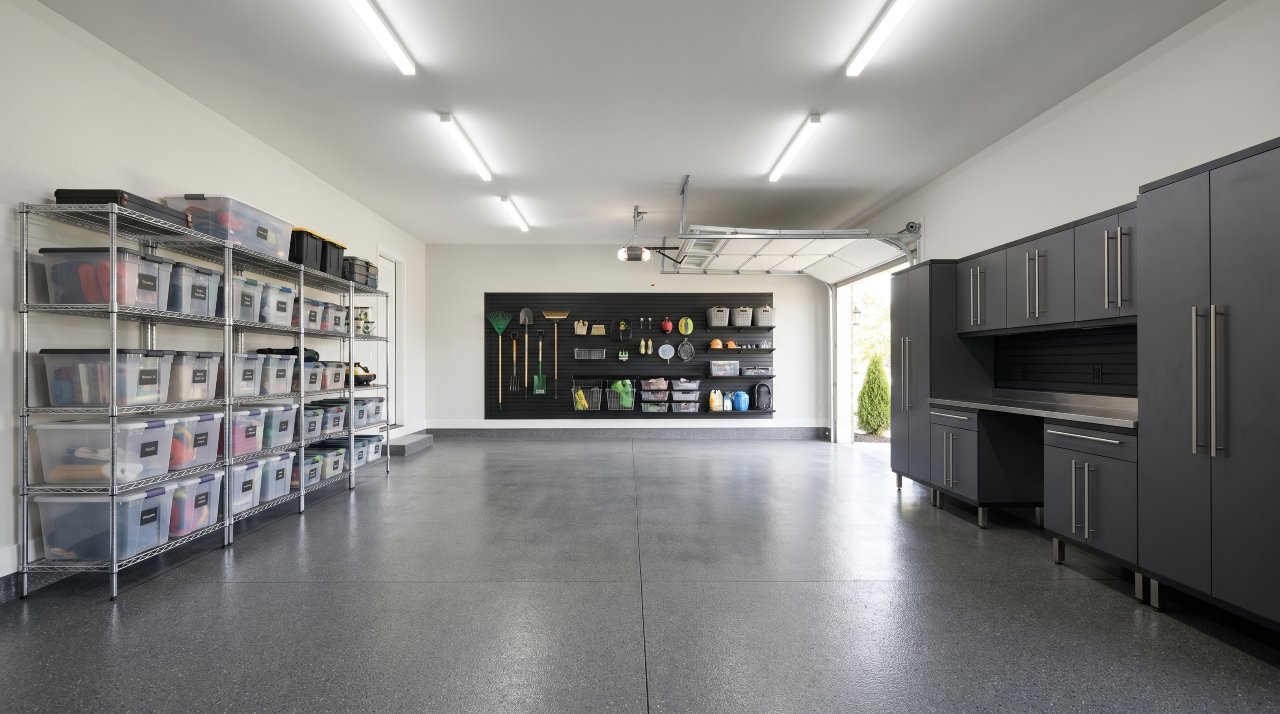
Freestanding units need no wall attachment, which makes them the easiest to install and reposition. Steel shelving units from brands like Edsal, Seville Classics, and WorkPro are common options in this category.
These units typically hold 1,000 to 4,000 lbs total, spread across four to six shelves. The weight is distributed to the floor, so you don’t need to locate studs or worry about anchor points.
The downside: they take up floor footprint. In a smaller garage or one-car space, freestanding shelving can feel like it swallows the room quickly.
4. Slatwall Panel Systems
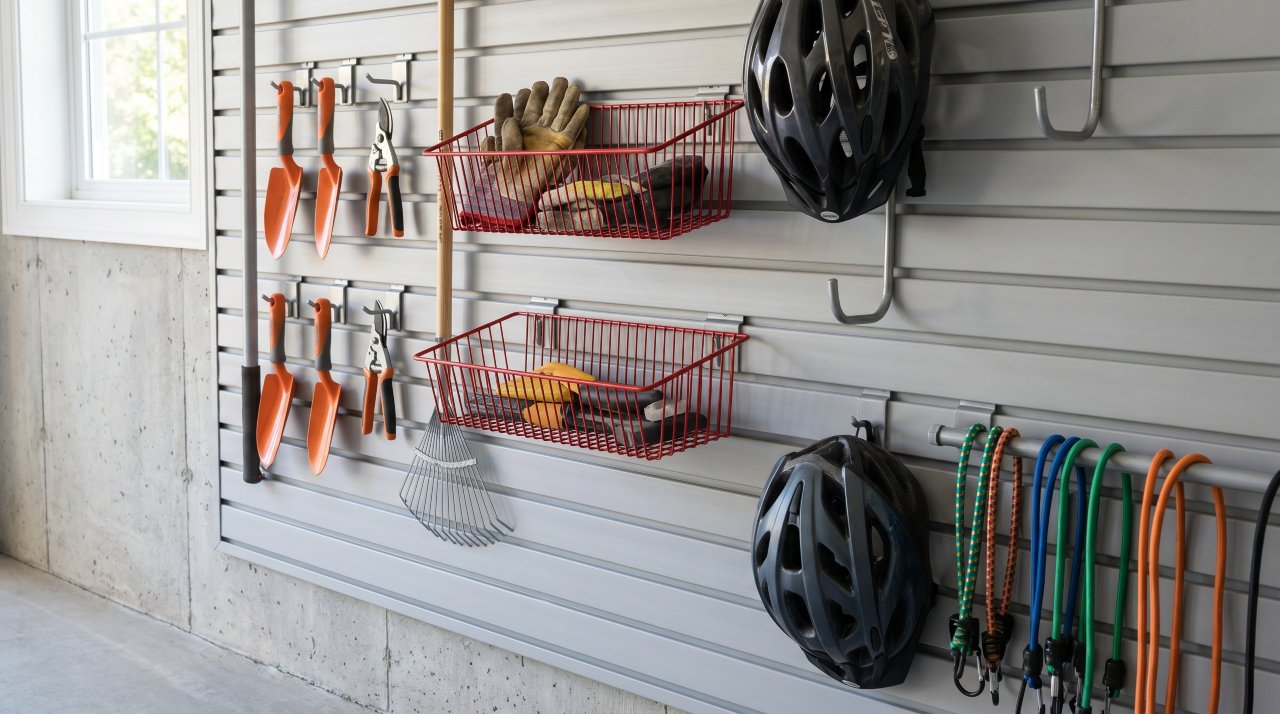
Slatwall systems turn an entire wall into a customizable grid of hooks, baskets, bins, and holders. You mount horizontal grooved panels to the wall, then slide any compatible accessory into them.
This system gives you maximum flexibility, you can reconfigure your layout as your storage needs change without drilling new holes. Brands like Wall Control, NewAge Products, and StoreWALL are well-regarded in this space.
The trade-off is cost. A full slatwall setup, panels plus accessories, can run $300 to $800+ for a single wall. That’s more than freestanding shelving for a similar footprint.
5. Modular Cabinet Systems
Modular garage cabinets give you the cleanest look and the best dust and moisture protection for tools and equipment. Systems from Gladiator, NewAge, and Kobalt are popular at the mid-range, while companies like Ulti-MATE and RaceDeck serve the premium market.
Cabinets work best when you want to protect expensive tools, keep a workspace tidy, or build a garage that looks finished rather than functional. They also anchor well to walls for safety.
Cost is the biggest barrier. A full modular cabinet setup for a two-car garage can cost $1,500 to $6,000+, not including installation.
6. Combination / Full-Wall Systems
Full-wall combination systems integrate cabinets, shelving, slatwall, and workbenches into a single connected unit. These give you the most organized and visually cohesive result.
Companies like NewAge Products garage storage systems and Husky (available at Home Depot) lead this category in the mid-tier price range. At the premium end, brands like Garage Living and Inspired Closets design custom systems that can cost $10,000 or more installed.
These systems make the most sense for homeowners treating the garage as a primary workspace, not just overflow storage.
Side-by-Side System Comparison
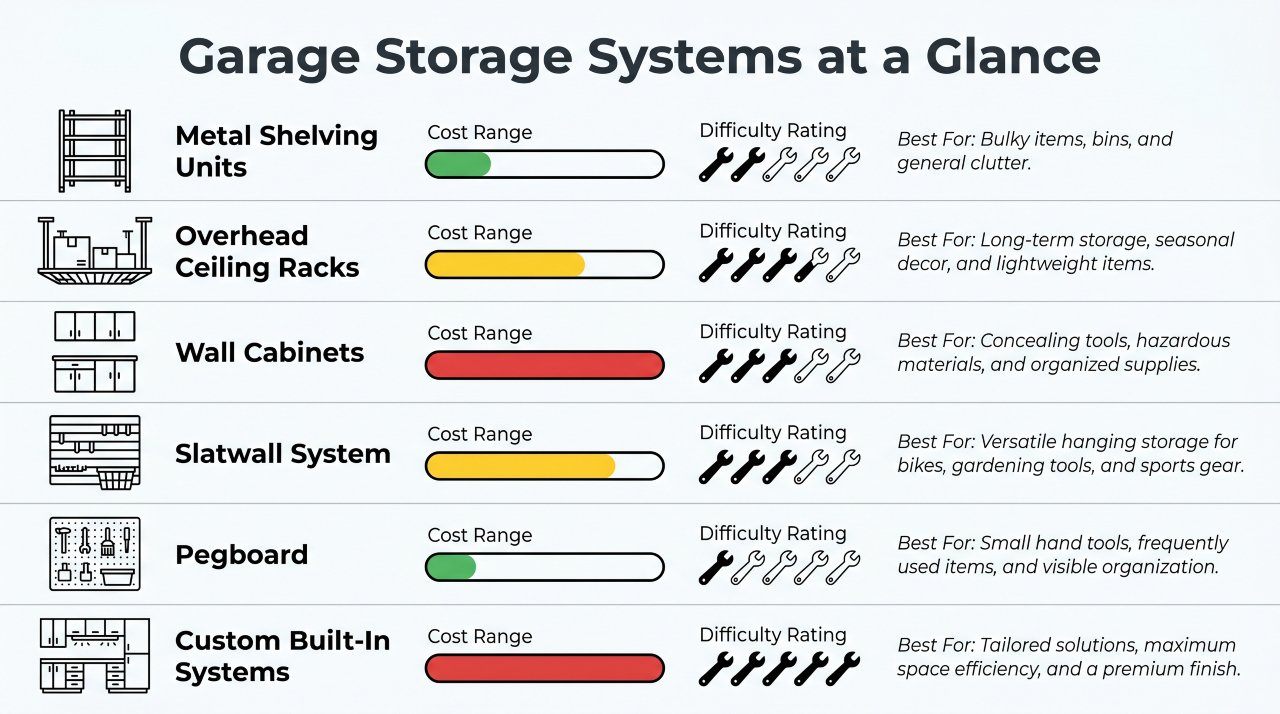
| System Type | Avg. Cost | Install Difficulty | Best For | Weight Capacity |
|---|---|---|---|---|
| Wall-Mounted Shelving | $100 to $400 | Easy | Tools, bins, sports gear | 50 to 200 lbs/shelf |
| Ceiling Racks | $80 to $350 | Moderate | Seasonal, bulky items | 400 to 1,000 lbs |
| Freestanding Shelving | $60 to $300 | Very Easy | Heavy items, flexible layout | 1,000 to 4,000 lbs |
| Slatwall Panels | $300 to $800+ | Moderate | Customizable, frequent access | 20 to 75 lbs/accessory |
| Modular Cabinets | $500 to $6,000+ | Hard | Tool protection, clean look | Varies by unit |
| Combination Systems | $1,500 to $10,000+ | Very Hard | Full garage transformation | System-dependent |
How to Choose the Right System for Your Garage
This is where most buyers go wrong, they pick a system based on how it looks in a photo rather than how it fits their actual space.
Start with three measurements before you buy anything: total wall linear footage, ceiling height, and floor area. A one-car garage averages 12×20 feet; a two-car garage averages 20×20 feet. Those 80 extra square feet change which systems make financial sense.
Next, list your items by category: tools, sports equipment, automotive supplies, seasonal items, and overflow household goods. According to the National Association of Home Builders, storage needs rank among the top five reasons homeowners renovate garages. Knowing what you’re storing tells you which system features actually matter to you.
Finally, be honest about your installation skills. Ceiling racks require drilling into joists with precision. Modular cabinets require leveling and anchoring. If you’re not confident with power tools, freestanding shelving and slatwall give you solid results without the risk of a costly mistake.
The Hidden Cost Most Buyers Miss
The sticker price of a storage system isn’t its real cost. You also need to factor in accessories, fasteners, and, most importantly, labor.
A wall-mounted steel shelving system listed at $150 often requires $30 to $50 in additional brackets, $15 in hardware, and two to four hours of your time. If you hire someone to install it, expect to add $75 to $150 per hour in labor costs in most US markets.
The Handyman Club of America notes that homeowners who budget 20 to 30% above the system’s list price consistently report higher satisfaction with the result. That buffer covers the accessories you didn’t know you needed until you started installing.
This isn’t a reason to avoid the investment. A properly installed storage system adds real value, according to Remodeling Magazine’s Cost vs. Value report, garage improvements regularly return 60 to 80% of their cost at resale.
What the Top Systems in 2026 Get Right
The storage systems that consistently rank highest in professional and consumer reviews share four traits. They use steel or powder-coated steel construction (not particleboard or thin wire). They offer modular components so you can add to the system later & they have clearly stated weight ratings, not vague language like “heavy duty.” And they come with all mounting hardware included.
Brands earning consistent top marks across review platforms in 2026 include Gladiator GarageWorks, Fleximounts, NewAge Products, and Seville Classics. Each serves a slightly different budget tier, which means one of them likely fits your project without compromise.
Mistakes to Avoid When Buying a Garage Storage System
Buying for appearance, not function. A sleek cabinet system looks great but serves you poorly if you need fast access to frequently used tools.
Ignoring weight ratings. Overloading shelving is one of the most common causes of system failure, and it can cause injury. Always stay 20% below the stated maximum.
Skipping the layout plan. Install first, regret later. Spend 30 minutes sketching your wall space, door swings, and vehicle clearance before purchasing anything.
Choosing the cheapest option. Budget systems often use thinner steel, weaker welds, and minimal hardware. A $60 shelving unit that fails after 18 months costs more than a $150 unit that lasts 10 years.
Forgetting ceiling height clearance. The International Residential Code requires a minimum 7-foot ceiling height in habitable spaces, but garages vary widely, and ceiling racks eat into that clearance quickly.
FAQ: Best Garage Storage Systems
What is the best garage storage system overall?
There’s no single “best” system for every situation. Wall-mounted steel shelving offers the best balance of cost, capacity, and ease of installation for most homeowners. If budget allows, a combination system that integrates shelving, slatwall, and a workbench gives you the most functional result long-term.
What type of storage works best in a garage?
Steel shelving and ceiling racks work best for maximizing capacity without losing floor space. Slatwall panels work best when you need frequent, easy access to tools and sports gear. Modular cabinets work best when protecting equipment and aesthetics matter most to you.
Is it worth getting a garage storage system?
Yes, for most homeowners, it’s worth it. A well-organized garage increases usable space, reduces time spent looking for items, and adds measurable value at resale. The key is choosing a system that matches your actual storage needs rather than buying the most impressive-looking option.
How much does a garage storage system cost?
Costs range from $60 for a basic freestanding shelf to $10,000+ for a full custom modular cabinet system. Most homeowners spend $300 to $1,500 on a mid-range setup that combines wall shelving, a ceiling rack, and a few slatwall panels. Budget an additional 20 to 30% above the listed price for hardware, accessories, and installation.
How do I organize a garage with a lot of stuff?
Start by sorting everything into three piles: keep, donate, and discard. Then categorize what you’re keeping by frequency of use. Items you reach for weekly go on accessible wall shelving or slatwall hooks. Items you use seasonally go on ceiling racks or high shelves & items you rarely use go into clearly labeled bins on freestanding shelves.
What’s the difference between a wall system and a modular cabinet system?
Wall systems (shelving and slatwall) are open storage, fast to access, easy to reconfigure, and lower in cost. Modular cabinet systems are enclosed storage, they protect contents from dust and moisture, look cleaner, and cost significantly more. Most practical garages benefit from a mix of both approaches.
The One Takeaway That Changes Everything
The best garage storage systems in 2026 aren’t the most expensive ones or the ones with the highest star ratings. They’re the ones that match your specific garage dimensions, your storage inventory, and your realistic budget.
Before you spend anything, measure your space, list what you’re storing, and set a budget that includes a 25% buffer for accessories and hardware. Then use the system comparison table in this guide to match your needs to the right category.
Start with one wall. Get it right. Then build from there. That single step, committing to one section before buying everything at once, is what separates garages that stay organized from ones that revert to chaos within six months.
Browse the NewAge Products garage storage lineup or visit your local Home Depot’s garage storage section with your measurements in hand. You’re more prepared than most people who walk through that door.

Callum Langham
Founder & Technical Storage Editor
Callum Langham is the founder and technical editor of Rack System. With over 12 years of hands-on field experience in warehouse logistics, garage organization, and industrial storage installations, Callum specializes in engineering safety standards, beam load calculations, and OSHA/RMI compliance. Every guide on Rack System is audited against verified steel gauge tolerances and municipal building codes.