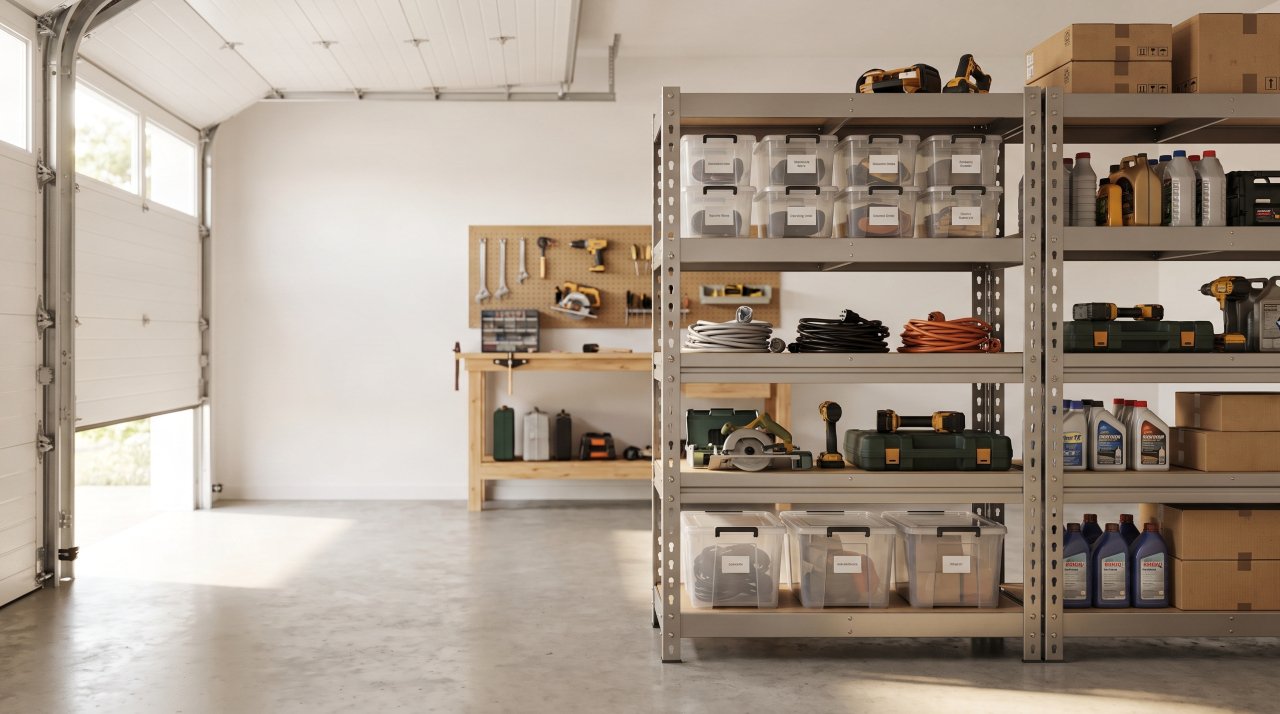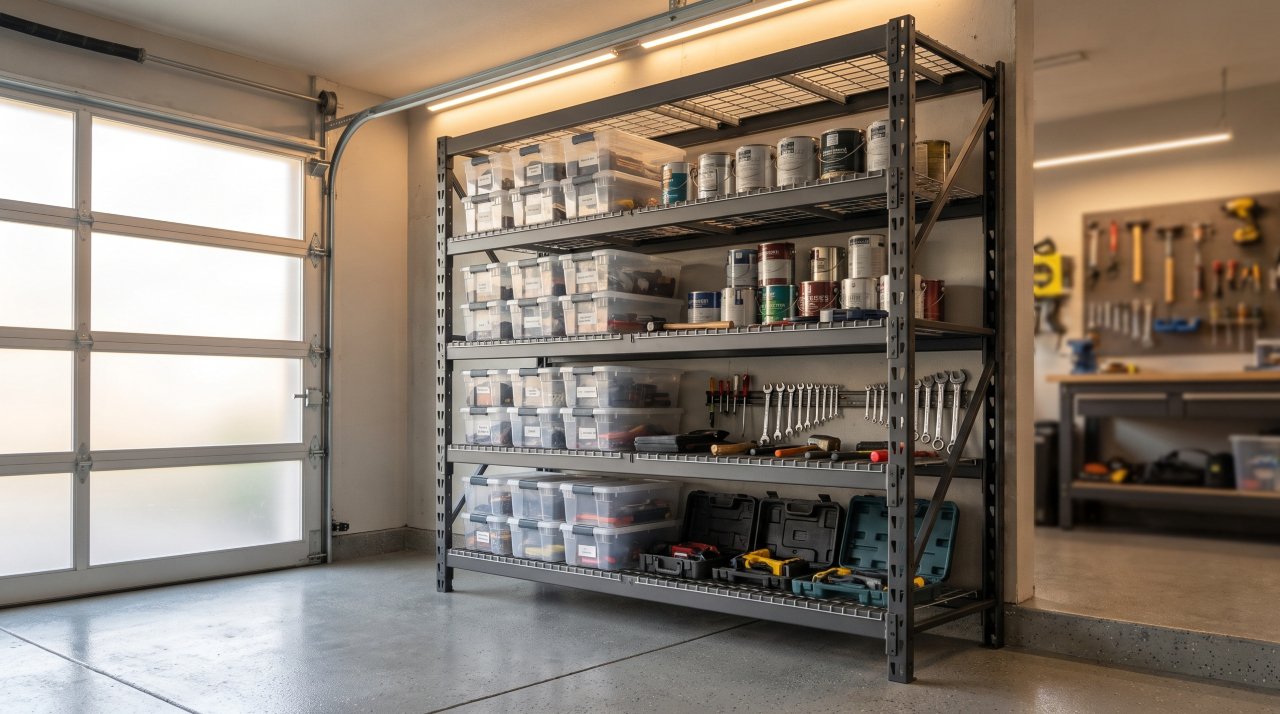

The average American garage holds over 300 pounds of stored items — yet most shelving units fail before the five-year mark. That’s not a coincidence. Most people buy wire shelving without knowing what the specs actually mean, and they pay for it with bent shelves, wobbly frames, or worse — collapsed storage that damages gear and risks injury.
If you’re trying to make sense of heavy duty wire shelving, you’re in the right place. By the time you finish reading this, you’ll know exactly what wire shelving is, how its weight limits actually work, which coating survives a garage environment, and how to set one up without making the mistakes most beginners make.
What Is Heavy Duty Wire Shelving?
Heavy duty wire shelving is a storage system made from steel wire rods welded into a grid pattern and mounted on vertical support poles. Unlike solid wood or particleboard shelves, the open wire design lets air circulate freely, keeps dust from collecting in solid layers, and lets you see exactly what’s stored on each level.
“Heavy duty” is a marketing term the industry uses loosely, but it generally refers to units rated for 600 pounds or more of total shelf load. Standard residential wire shelving typically handles 200–350 pounds per unit. True heavy duty models — the kind used in commercial kitchens, warehouses, and serious garage setups — start at 600 pounds and go up to 2,000 pounds for industrial-grade systems.
According to the National Safety Council’s storage safety guidelines, improperly rated shelving is one of the leading causes of preventable home storage accidents. Knowing the real specs before you buy isn’t optional — it’s a safety issue.
How Wire Shelving Weight Ratings Really Work
This is the section that most articles skip entirely, and it’s the most important thing you’ll read today.
Every wire shelving unit lists a weight capacity on the label. That number almost always refers to the total distributed load — meaning the weight spread evenly across the entire shelf surface. When weight concentrates in one spot (a point load), the actual safe capacity drops significantly, sometimes by 30–50%.
Think about a five-gallon bucket of joint compound sitting in the center of a shelf. That single point of pressure creates stress far greater than the same weight spread across the whole surface. Steel wire deflects under point loads in ways it won’t under distributed loads.
When you’re shopping for wire shelving for your garage, always look for two numbers: total load capacity and per-shelf capacity. A unit with 2,000 pounds total capacity but only 250 pounds per shelf won’t hold a single heavy toolbox safely on one level. Don’t let the total number fool you.
Wire Gauge: The Number That Actually Predicts Strength
Wire gauge determines how thick the steel rods are — and thickness drives strength more than almost any other factor. Wire gauge works on a counterintuitive scale: lower numbers mean thicker wire.
Here’s a quick breakdown you can use right now:
| Wire Gauge | Thickness (approx.) | Best For |
|---|---|---|
| 10 gauge | 0.135 inches | Industrial/warehouse use |
| 12 gauge | 0.105 inches | Heavy duty garage storage |
| 14 gauge | 0.080 inches | Standard home pantry/closet |
| 16 gauge | 0.065 inches | Light residential use only |
For a garage environment where you’re storing tools, equipment, and seasonal gear, 12 gauge is your minimum. If you’re storing automotive parts, heavy bins, or anything over 100 pounds per shelf, look for 10 gauge construction. That single number tells you more about real-world performance than any marketing label.
Chrome vs. Epoxy vs. Zinc: Which Coating Survives a Garage?
The wire itself is steel, but the coating on top determines how long it lasts in the real world. Garages are rough environments — they deal with temperature swings, humidity, grease, gasoline vapors, and sometimes standing water after rain.
Chrome wire shelving looks sharp and costs less upfront. Chrome resists rust reasonably well in dry indoor environments like pantries and closets. In a garage that sees moisture, temperature swings, or chemical exposure, chrome can pit and rust within two to three years.
Epoxy-coated wire shelving uses a thick powder-coat style finish that bonds directly to the steel. It resists moisture, chemicals, and physical impact far better than chrome. Most commercial kitchen wire shelving uses epoxy because it handles heat, steam, and cleaning chemicals — conditions not unlike a busy garage. Epoxy costs 15–25% more than chrome but lasts two to three times longer in harsh environments.
Zinc-coated or galvanized shelving offers the highest corrosion resistance and works well in extremely damp spaces like unheated garages in coastal or humid climates. It costs the most but makes sense if your garage sees regular moisture.
For most US garages, epoxy-coated heavy duty wire shelving hits the best balance of cost, durability, and performance. You’ll thank yourself in year three.
Freestanding vs. Wall-Mounted Wire Shelving
You have two main configuration options, and each suits different garage setups.
Freestanding wire shelving stands on its own four (or six) legs and requires no wall mounting. You can reposition it, expand it with additional shelving sections, and take it with you if you move. Most heavy duty wire shelving units you’ll find at warehouse stores and specialty retailers fall into this category. The tradeoff is floor space — a freestanding unit needs clear floor area for its footprint plus access space around it.
Wall-mounted wire shelving systems anchor directly to wall studs and keep your garage floor completely clear. They handle surprisingly high loads when properly anchored — systems like Gladiator GarageWorks and StoreWALL heavy duty wall panels can support 200–400 pounds per section. The downside is that installation takes more time, and you can’t reposition them without patching walls.
For most beginners building a garage storage system from scratch, a combination works best. Start with a large freestanding heavy duty wire shelving unit against the back wall, then add wall-mounted sections for smaller items as your system grows. Learn more about building a complete garage storage system to see how these two approaches work together.
5 Beginner Mistakes to Avoid
Most first-time buyers make at least one of these errors. Knowing them now saves you a return trip and a frustrating afternoon.
Mistake 1: Buying based on total capacity alone. Always check per-shelf capacity too, as we covered above. A 2,000-pound unit with five 400-pound shelves is very different from one with five 200-pound shelves.
Mistake 2: Skipping the wall anchor. Freestanding units can tip when heavily loaded on upper shelves. Most manufacturers include anti-tip wall anchors in the box — use them. This is non-negotiable if children access your garage.
Mistake 3: Choosing chrome for a garage. Chrome works in a climate-controlled pantry. Garages need epoxy or zinc. Don’t let the lower price on chrome units tempt you into a two-year replacement cycle.
Mistake 4: Ignoring shelf spacing adjustability. Fixed-height shelving frustrates you the moment you buy a container that’s two inches too tall. Look for shelves that adjust in 1-inch increments on standard poles.
Mistake 5: Underestimating actual weight. Weigh your heaviest items before you shop. Most people underestimate by 30–40%. A box of automotive tools, a car battery, and two containers of fluids together can easily hit 150 pounds — more than many “heavy duty” shelves handle safely.
How to Set Up Heavy Duty Wire Shelving the Right Way
Setting up a standard freestanding heavy duty wire shelving unit takes about 45–60 minutes for one person, or 20–30 minutes with a helper. Here’s the process in plain terms.
First, level your floor. Garages often have sloped concrete for drainage. Adjustable leveling feet on the shelf poles compensate for this — don’t skip adjusting them or your unit will rock under load.
Second, attach poles to the bottom shelf tier before adding upper shelves. Working bottom-up gives you a stable base to work from and prevents the whole structure from shifting mid-assembly.
Third, hand-tighten all pole clips before fully locking anything. This lets you adjust shelf heights before committing. Once you snap the clips fully, adjusting them later requires a rubber mallet and real effort.
Fourth, install the wall anchor strap before loading the unit with anything. Anchor it into a wall stud — not just drywall — using the included hardware or appropriate lag screws. The Family Handyman’s guide to finding wall studs walks you through stud-finding techniques if you’re unsure.
Finally, load the heaviest items on the lowest shelves. This keeps the center of gravity low, reduces tip risk, and reduces strain on upper shelf levels.
What Heavy Duty Wire Shelving Won’t Do Well
Being honest here builds trust — and helps you make the right call.
Wire shelving doesn’t work well for very small items that fall through the grid. You’ll want solid shelf liners (plastic or wire mesh inserts) for items like small hardware, loose screws, or anything under about two inches. Many manufacturers sell these liners as accessories, or you can cut shelf liner material to fit.
Wire shelving also isn’t ideal for finished spaces where appearance matters. The industrial look suits garages perfectly but feels out of place in a living room or home office. For those spaces, closed-back metal shelving or solid wood units serve you better.
Heavy loads on cantilever-style wire shelving can cause visible sagging over time, even within rated capacity. If you notice any sagging, add a center support pole to that shelf level.
FAQ: Heavy Duty Wire Shelving Questions Answered
What is the weight limit for heavy duty wire shelving?
True heavy duty wire shelving carries 600–2,000 pounds of total distributed load, depending on the unit. Per-shelf ratings typically range from 250–600 pounds. Always check both numbers — total unit capacity and individual shelf capacity — before buying.
Is wire shelving good for a garage?
Yes, wire shelving works very well in garages when you choose the right coating. Epoxy-coated or zinc-coated wire shelving handles garage humidity, temperature swings, and chemical exposure far better than chrome-finished units. The open wire design also resists mildew and lets you spot stored items without moving things around.
What gauge wire is best for heavy duty shelving?
For garage storage, 12 gauge wire is the practical minimum for heavy duty use. If you’re storing automotive parts, heavy bins, or anything over 100 pounds per shelf consistently, 10 gauge provides a meaningful safety margin. Lower gauge numbers always mean thicker, stronger wire.
How do you keep wire shelving from wobbling?
Wobbling usually comes from two sources: uneven floors and loose pole clips. Adjust the leveling feet on each pole until the unit sits flat, then make sure every clip is fully snapped — not just pressed. Installing the wall anti-tip anchor (included with most units) eliminates any remaining flex at the top of the unit.
What’s the difference between chrome and epoxy wire shelving?
Chrome plating is thinner and looks brighter but corrodes faster in moist or chemically active environments. Epoxy coating is thicker, more impact-resistant, and far more durable in garage conditions. Expect to pay 15–25% more for epoxy — but also expect it to last two to three times longer in a real garage setting.
Can you put heavy items on wire shelving?
Yes, provided you respect the per-shelf capacity rating and distribute weight evenly. Concentrate heavy items near the shelf supports rather than in the center of the span, and always load heavier items on lower shelves. Point loads — single heavy items sitting in one spot — stress the wire grid harder than the same weight spread across the surface.
The One Thing That Changes Everything
The single most important decision you’ll make when buying heavy duty wire shelving isn’t the brand or the price — it’s matching the per-shelf weight rating to your heaviest actual load before you spend a dollar.
Measure what you plan to store. Weigh the heaviest boxes or bins. Then add 20% as a safety buffer. That number tells you exactly what per-shelf rating you need. Get that right, choose epoxy coating for a garage, pick 12 gauge or better wire, and anchor the unit to the wall — and you’ll have a storage system that serves your garage for a decade or more.
Your next step is straightforward: write down the three heaviest items you plan to store, estimate their combined weight, and use that number to filter your shelving options. Don’t buy blind. Buy with data, and you’ll get it right the first time.

Callum Langham
Founder & Technical Storage Editor
Callum Langham is the founder and technical editor of Rack System. With over 12 years of hands-on field experience in warehouse logistics, garage organization, and industrial storage installations, Callum specializes in engineering safety standards, beam load calculations, and OSHA/RMI compliance. Every guide on Rack System is audited against verified steel gauge tolerances and municipal building codes.