Here’s something most people don’t realize until it’s too late: the average garage shelf collapse happens because the owner never checked the unit’s actual load rating before stacking hundreds of pounds on it. According to the U.S. Consumer Product Safety Commission, thousands of storage-related injuries occur in American homes every year — many from overloaded shelving units that simply weren’t built for the job.
You’re reading this because you want storage that actually works. This guide covers everything you need to know about heavy duty metal shelving — from steel gauge to weight limits, installation safety to garage-specific considerations. By the time you finish, you’ll know exactly how to choose the right unit, set it up correctly, and keep it performing for years.
What Is Heavy Duty Metal Shelving?
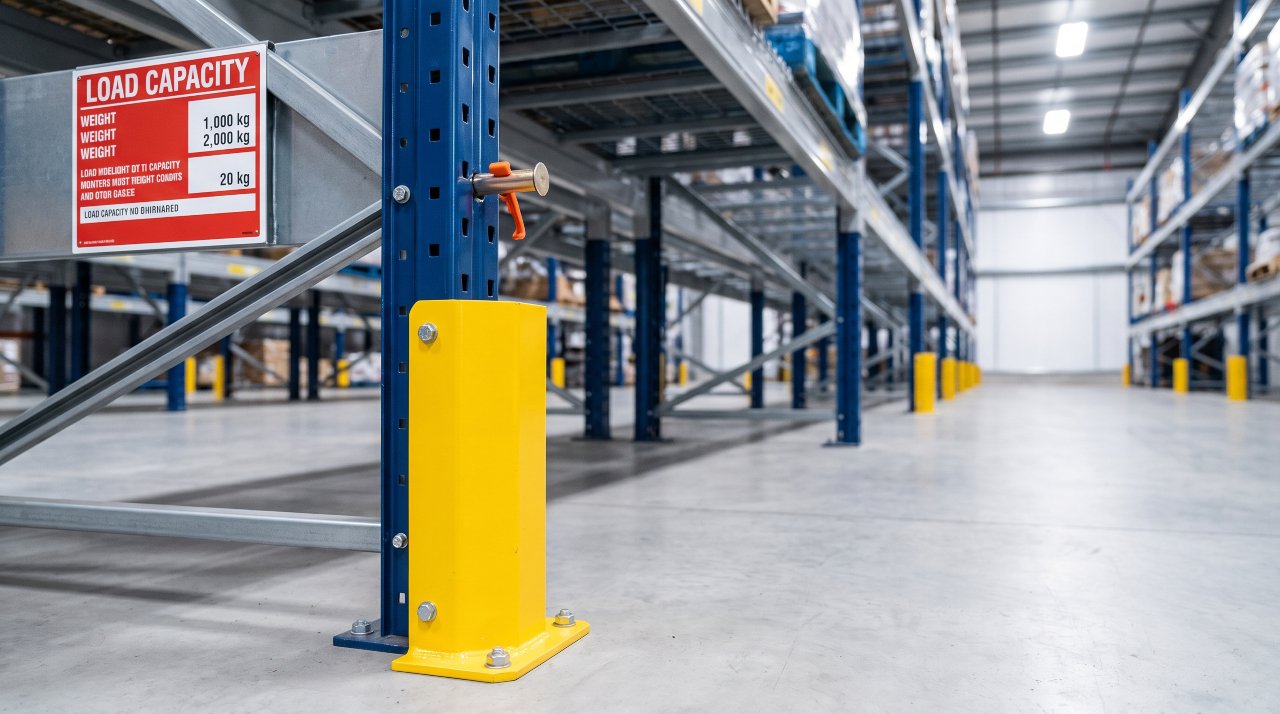
Heavy duty metal shelving refers to steel or steel-alloy storage units designed to hold significantly more weight than standard residential shelving. Most consumer-grade wood or plastic shelves max out around 100–200 lbs per shelf. Heavy duty metal shelving, by contrast, typically handles 500 lbs to 2,500+ lbs per shelf — and in industrial configurations, even more.
You’ll find these units in garages, warehouses, workshops, and commercial storage facilities across the US. They’re built with thicker steel uprights, stronger shelf decking, and structural cross-bracing that distributes weight across the entire frame. That structural design is what separates them from lighter alternatives.
The term “heavy duty” isn’t regulated, so manufacturers use it loosely. You need to look past the label and check the actual specifications — particularly steel gauge and rated load capacity — before you buy anything.
Steel Gauge: The Number That Actually Matters
Steel gauge is the single most important spec most beginners overlook. Here’s the counterintuitive part: a lower gauge number means thicker, stronger steel. A 12-gauge steel shelf is heavier and stronger than an 18-gauge shelf, not weaker.
For genuine heavy duty metal shelving in a garage or workshop, look for uprights between 12-gauge and 14-gauge steel. Shelf decking is typically 14-gauge to 18-gauge depending on the intended load. Anything above 20-gauge starts behaving more like light-duty shelving — fine for a pantry, not appropriate for engine blocks or tool chests.
You can verify steel gauge standards through the ASTM International database, which sets the technical benchmarks used across the US manufacturing industry. When a shelf listing doesn’t mention gauge at all, that’s a red flag worth taking seriously.
Types of Heavy Duty Metal Shelving
Not all metal shelving works the same way. You’ll encounter three main structural types when shopping, and each suits different situations.
Boltless shelving uses a rivet-style clip connection between uprights and beams. You assemble it without tools in most cases. It’s fast, adjustable, and very popular for garage use. Weight capacities run from 800 lbs to 4,000 lbs per unit depending on the configuration.
Bolted steel shelving uses nuts, bolts, and often welded components. Assembly takes longer, but the result is a more rigid structure. Industrial facilities and auto shops prefer this type for the heaviest loads.
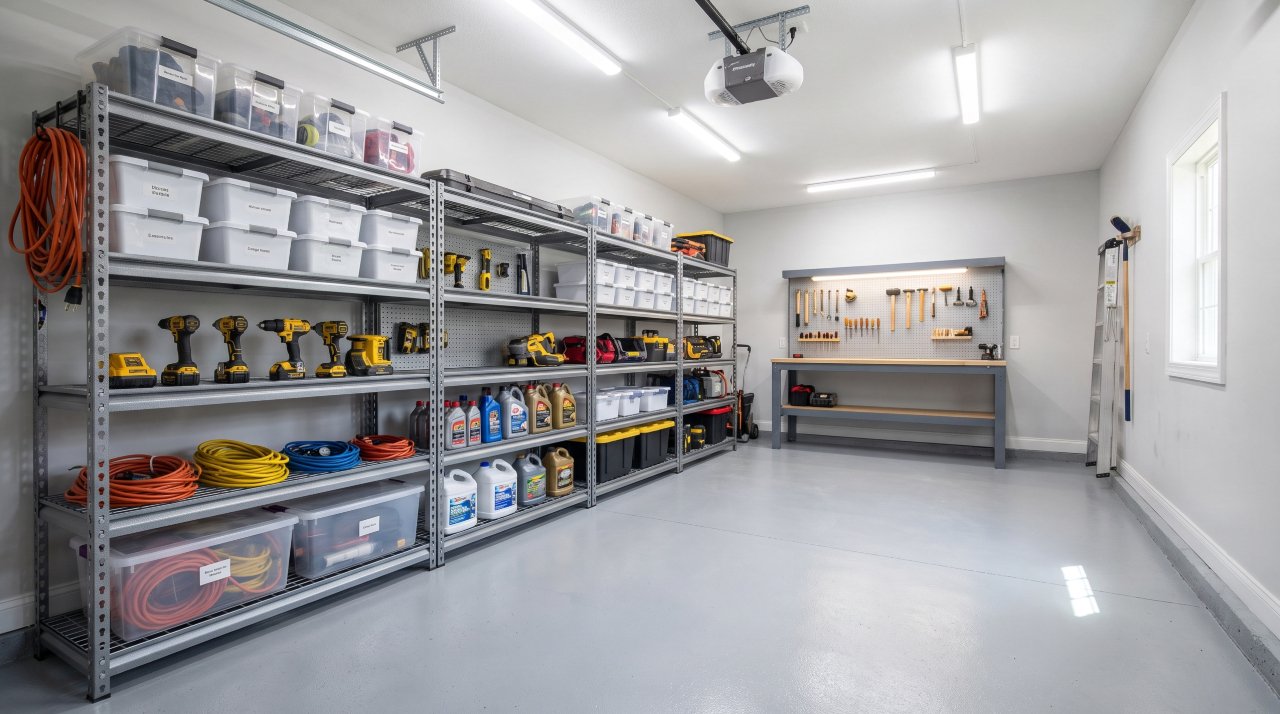
Wire deck shelving uses an open steel wire grid as the shelf surface instead of solid steel or particleboard. It allows airflow, makes it easy to spot items on lower shelves, and resists dust buildup. Many garage storage systems use wire decking for items like sports equipment and automotive parts.
For most homeowners setting up a garage storage system, boltless heavy duty shelving hits the best balance of capacity, ease, and cost.
How to Calculate the Weight Your Shelves Need to Hold
This step stops most beginners, but it doesn’t need to. You calculate load requirements before buying — not after.
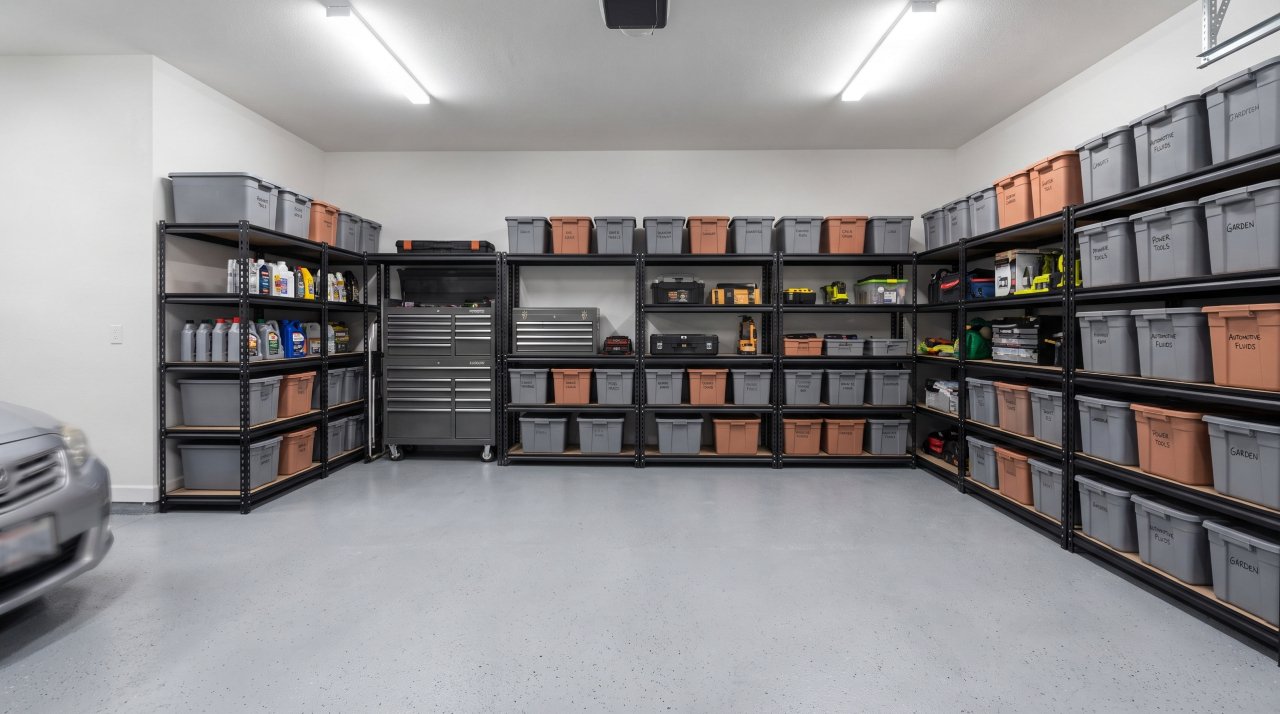
Walk through your garage and physically list every category of item you plan to store on your shelves. Common garage items and their approximate weights:
| Item Category | Approximate Weight |
|---|---|
| Full paint cans (box of 6) | 50–70 lbs |
| Car battery | 40–60 lbs |
| Power tool kit with case | 20–40 lbs |
| 5-gallon fluid containers (4) | 80–100 lbs |
| Storage tote (large, full) | 30–60 lbs |
| Engine parts/transmission | 100–400 lbs |
Add up your planned load per shelf — then add a 25% safety buffer. If you calculate 400 lbs of tools on one shelf, shop for a unit rated to at least 500 lbs per shelf. This buffer accounts for uneven weight distribution and shelf flex over time.
The Occupational Safety and Health Administration (OSHA) recommends always following manufacturer load ratings and applying safety margins in storage environments, even in non-commercial settings.
Garage-Specific Factors Nobody Talks About
Your garage creates conditions that don’t exist in a climate-controlled home. Temperature swings from below freezing in winter to 110°F in summer cause metal to expand and contract. High humidity from rain, car exhaust, and seasonal moisture promotes rust — even on powder-coated steel.
Here’s what that means practically: you need shelving with a quality powder coat finish, not bare painted steel or thin spray paint. Powder coating bonds to the steel surface at the molecular level and resists chipping, UV degradation, and moisture far better than standard paint.
You’ll also want to confirm the shelf feet have floor levelers or rubber pads. Concrete garage floors are rarely perfectly level, and an unlevel shelf creates uneven load distribution that reduces effective capacity and increases collapse risk over time.
Boltless vs. Bolted: Which One Should You Choose?
You’ll see this debate everywhere in shelving forums, and the honest answer depends on your situation — not on which type is “better.” Boltless shelving suits most homeowners because it’s adjustable, quick to assemble, and easy to reconfigure as your storage needs change. You don’t need mechanical experience to set it up.
Bolted shelving is the right call when you’re storing very heavy single items — think complete tire sets, a chest freezer, or heavy equipment. The rigid bolted connection resists lateral movement better under extreme or shifting loads. If you’re running a home auto shop, this is worth the extra assembly time.
One honest limitation of boltless shelving: the clip connections can loosen over years of heavy use. Check them annually and re-seat any connections that show movement. This takes about five minutes and prevents problems before they start.
For more options that work alongside shelving, explore our guide to wall-mounted garage storage solutions to maximize your full garage footprint.
How to Anchor Heavy Duty Metal Shelving Safely
Freestanding heavy duty shelving units feel solid on their own — until something bumps them, a child climbs them, or a seismic event occurs. Wall anchoring isn’t optional if you have kids in the home or live in an earthquake-prone region.
Most manufacturers include pre-drilled anchor holes in the top rear upright. You use these to drive lag bolts into wall studs. Find your studs with a magnetic or electronic stud finder before drilling. A single 3/8-inch lag bolt driven 2.5 inches into a wood stud provides significant resistance against tip-over.
If your garage has concrete or cinder block walls instead of drywall, you’ll use concrete anchors instead of lag bolts. Wedge anchors or sleeve anchors rated for the expected load work well in this application. If you’re unsure about your wall type or anchor selection, check our garage shelving guide for a step-by-step walkthrough.
Common Mistakes Beginners Make With Metal Shelving
Most shelving failures trace back to a handful of predictable errors. Knowing them in advance saves you money and keeps you safe.
Ignoring the per-shelf limit vs. the total unit limit. A unit rated for 4,000 lbs total doesn’t mean each shelf holds 4,000 lbs. That total load distributes across all shelves. Always read the per-shelf rating, not just the unit total.
Placing shelving on uneven floors without leveling. Even a half-inch of unlevel slope shifts weight to two legs instead of four, effectively cutting your safe load capacity in half on those corners.
Skipping the back brace. Many shelving units come with a diagonal wire or strap brace for the back panel. Some people skip installing it because it seems minor. Don’t — it prevents racking (side-to-side sway) under load and is a core part of the unit’s structural rating.
Overloading the top shelf. Heavy items belong at mid-height or floor level. Top-heavy units have a significantly higher tip-over risk, even when anchored to a wall.
What Is the Strongest Type of Metal Shelving?
Welded steel industrial shelving holds the title for raw strength. These units are fabricated with welded connections at every joint, eliminating the mechanical weak points found in boltless systems. Commercial warehouse shelving from brands like Edsal, Tennsco, or Lyon typically falls into this category.
For residential garage use, you don’t always need the strongest option available — you need the right capacity for your actual load. A quality boltless unit rated at 2,000 lbs total is more than sufficient for most homeowners and will outlast cheaper alternatives by many years with basic maintenance.
Maintenance and Long-Term Care
Heavy duty metal shelving doesn’t demand much attention, but ignoring it entirely leads to rust, weakened joints, and eventually failure. A brief annual inspection keeps your shelving performing at full capacity.
Check for surface rust each spring, especially in humid climates. Light surface rust on powder-coated shelves usually means the coating was chipped. Clean the spot with a wire brush, apply a rust-inhibiting primer, and touch up with matching spray paint. Left untreated, rust spreads and can compromise the structural integrity of uprights over several years.
Wipe shelf surfaces down with a dry cloth seasonally — oil residue, chemical spills, and moisture accelerate corrosion even on treated steel. Keeping shelving clean takes ten minutes and extends its functional life by years.
FAQs
What is the strongest type of metal shelving?
Welded steel industrial shelving is the strongest option available. It uses factory-welded joints at every connection point, making it structurally superior to boltless or bolted assemblies. For most garage applications, a quality boltless heavy duty unit with 14-gauge uprights delivers more than adequate strength without the higher cost of welded systems.
How much weight can heavy duty metal shelving hold?
Most consumer-grade heavy duty metal shelving holds between 800 lbs and 4,000 lbs total per unit, with individual shelf capacities ranging from 200 lbs to 1,000 lbs per shelf. Always check the per-shelf rating separately from the total unit rating, and apply a 25% safety buffer to your planned load.
What gauge steel is best for shelving?
For heavy duty garage shelving, look for 12-gauge to 14-gauge steel uprights. Shelf decking typically runs 14-gauge to 18-gauge depending on the load requirement. Lower gauge numbers indicate thicker, stronger steel — a detail that’s easy to misread if you’re new to metal specifications.
Is metal shelving better than wood for a garage?
Yes, for most garage applications. Metal shelving resists moisture, insects, mold, and warping — all of which affect wood shelving in garage environments. Metal units also carry significantly higher load ratings. The main trade-off is that metal shelving feels colder and more industrial, which matters if you use your garage as living space.
What is the difference between boltless and bolted metal shelving?
Boltless shelving uses rivet-style clips and assembles without tools in most cases. Bolted shelving uses threaded fasteners and provides a more rigid structure. Boltless units are easier to adjust and reconfigure. Bolted units handle extreme or shifting loads better. Most homeowners find boltless shelving fully adequate for garage storage needs.
How do you anchor heavy duty metal shelving to the wall?
Use the pre-drilled holes in the rear uprights to drive 3/8-inch lag bolts into wall studs, at least 2.5 inches deep. For concrete walls, use wedge anchors or sleeve anchors rated to your expected load. Always locate studs before drilling and use a level to confirm the unit sits plumb before anchoring.
Your Next Step
The one thing that determines whether your heavy duty metal shelving works well or becomes a safety problem is this: buying to your actual load requirement, not to a label. Measure what you need, calculate your weights, check the gauge, and anchor the unit properly.
Start by walking your garage today and listing the heaviest items you plan to store. Write down realistic weights for each category, total them up, add your 25% buffer, and shop for units that meet that number per shelf — not just in total. That single step puts you ahead of most buyers and sets you up for shelving that performs safely for a decade or more.

Callum Langham
Founder & Technical Storage Editor
Callum Langham is the founder and technical editor of Rack System. With over 12 years of hands-on field experience in warehouse logistics, garage organization, and industrial storage installations, Callum specializes in engineering safety standards, beam load calculations, and OSHA/RMI compliance. Every guide on Rack System is audited against verified steel gauge tolerances and municipal building codes.