A single overloaded rack can collapse and cause injuries worth millions in liability claims, yet most buyers never check a load rating before purchasing. If you’re looking at a heavy duty racking system for your warehouse, garage, or business storage space, you deserve more than a product listing. You deserve the full picture.
This guide covers what a heavy duty racking system actually is, the main types available in 2026, how load ratings work, what you’ll realistically spend, and the safety rules that protect you and anyone around your racks. By the time you finish reading, you’ll know exactly what to look for, what to avoid, and how to make a confident decision.
What Is a Heavy Duty Racking System?
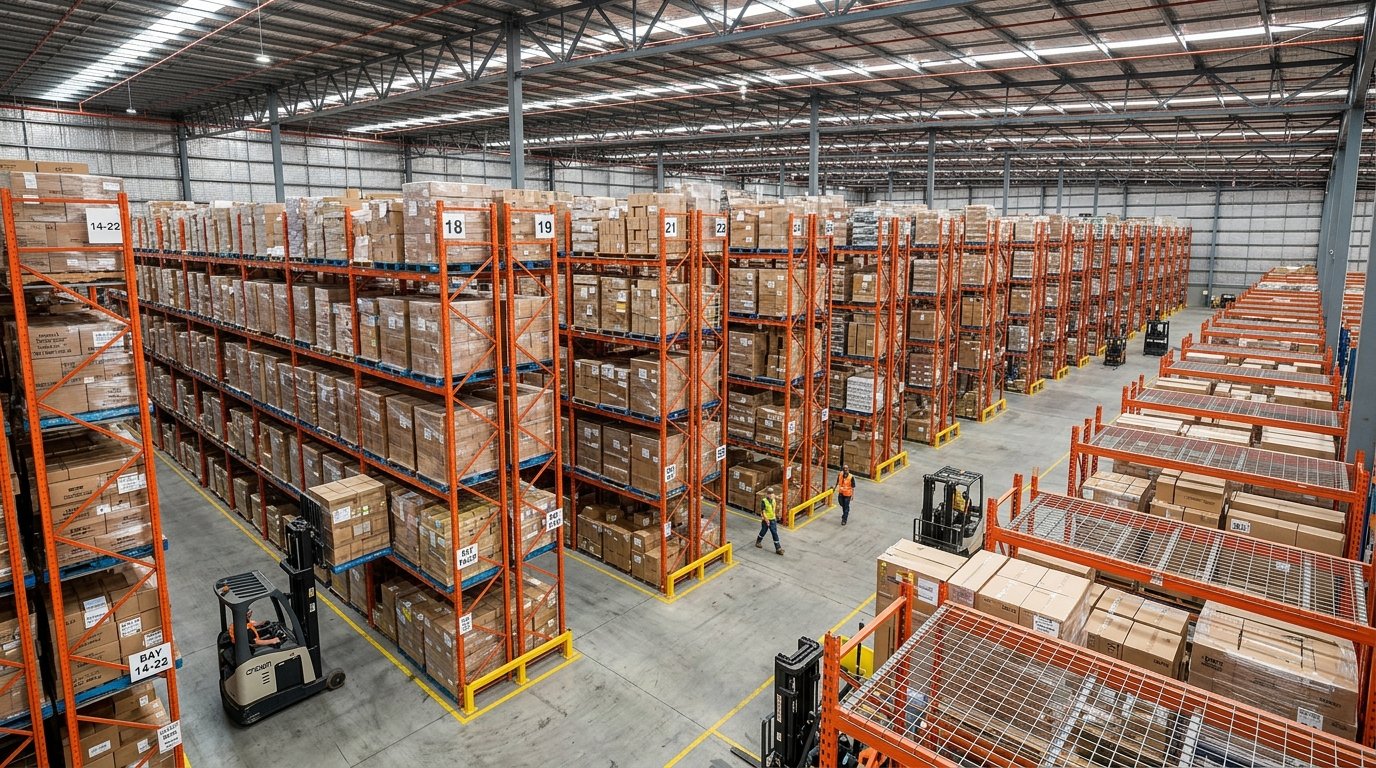
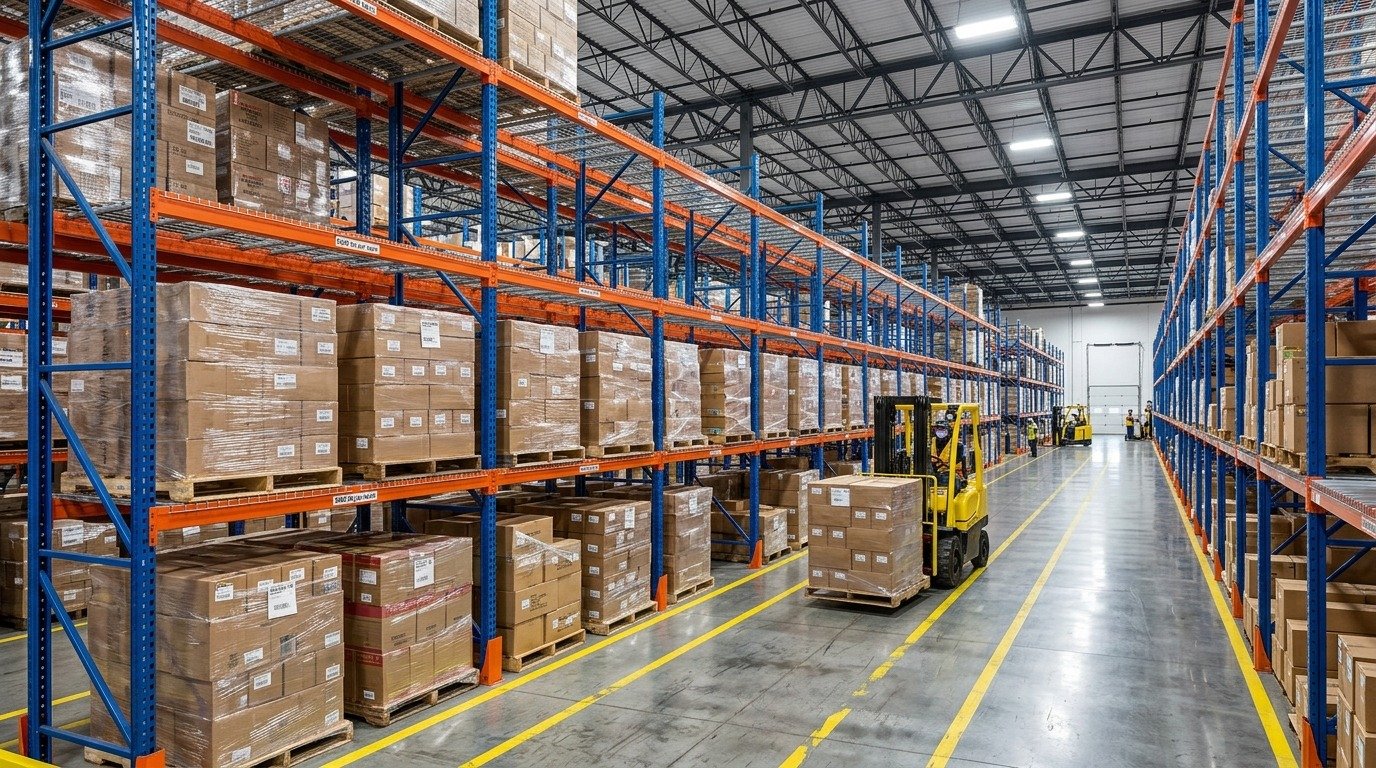
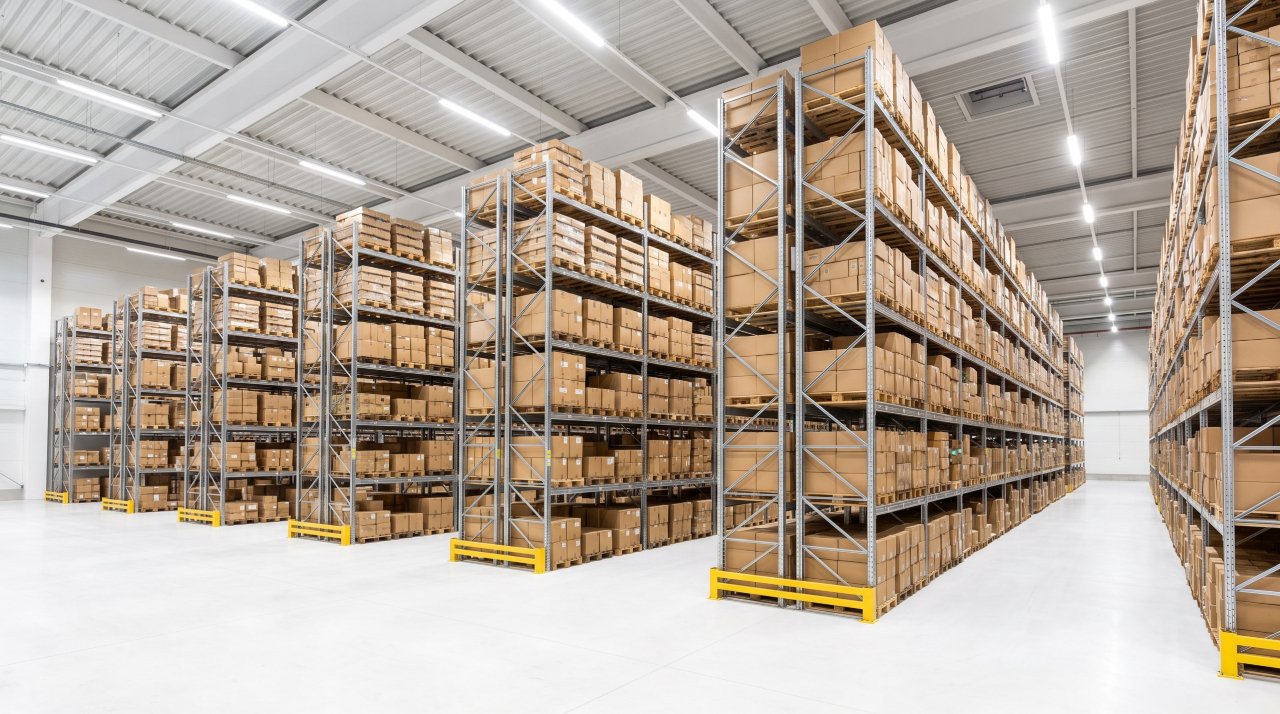
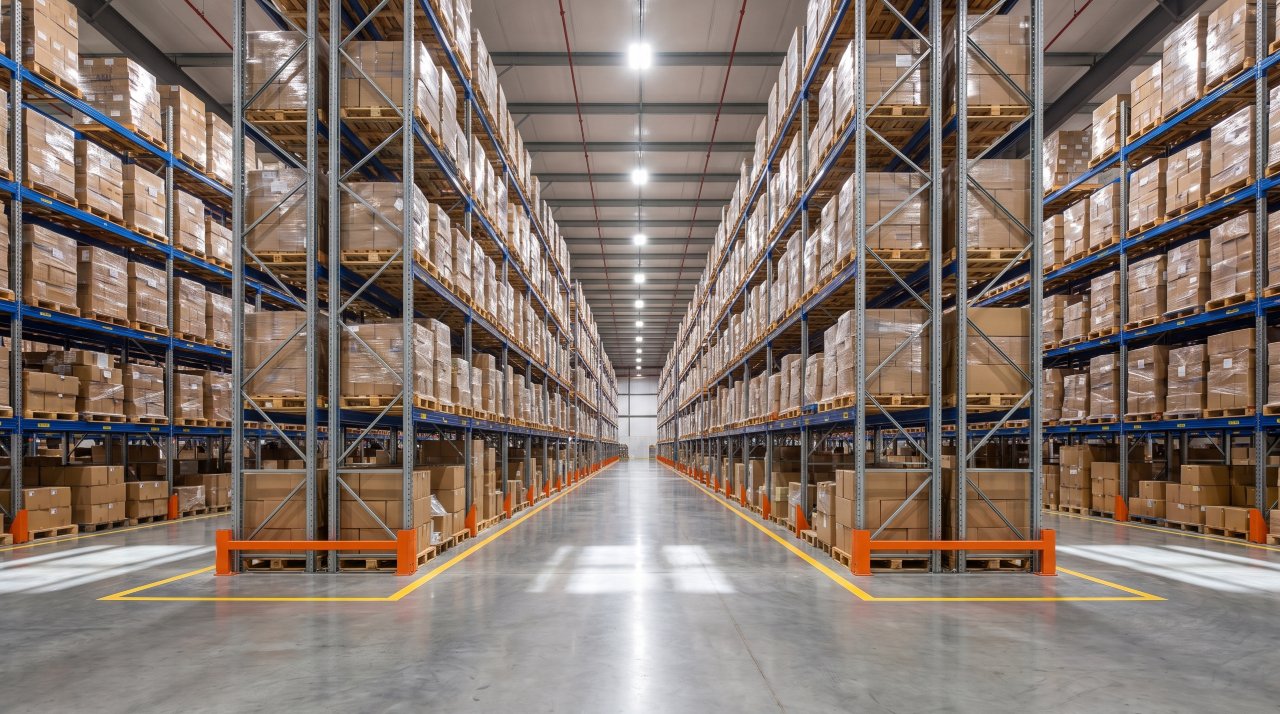
A heavy duty racking system is a structured metal storage framework designed to hold large, heavy loads, typically starting at 1,000 lbs per shelf level and often reaching 30,000 lbs or more per unit. These systems differ fundamentally from lightweight home shelving. They use thicker steel uprights, industrial-grade beams, and engineered connections built to meet specific load tolerances.
You’ll find heavy duty racks in warehouses, manufacturing facilities, distribution centers, retail stockrooms, and increasingly in residential garages. The global warehouse racking market was valued at approximately $12.5 billion and is projected to reach $18.3 billion by 2030, according to data from MarketsandMarkets , driven largely by e-commerce growth and rising demand for organized storage.
Understanding the difference between a rack and a shelf matters from the start. A shelf holds items on a flat surface. A rack uses a system of beams and uprights to create multiple load levels, often designed to store pallets, bins, or heavy equipment.
The 6 Main Types of Heavy Duty Racking Systems
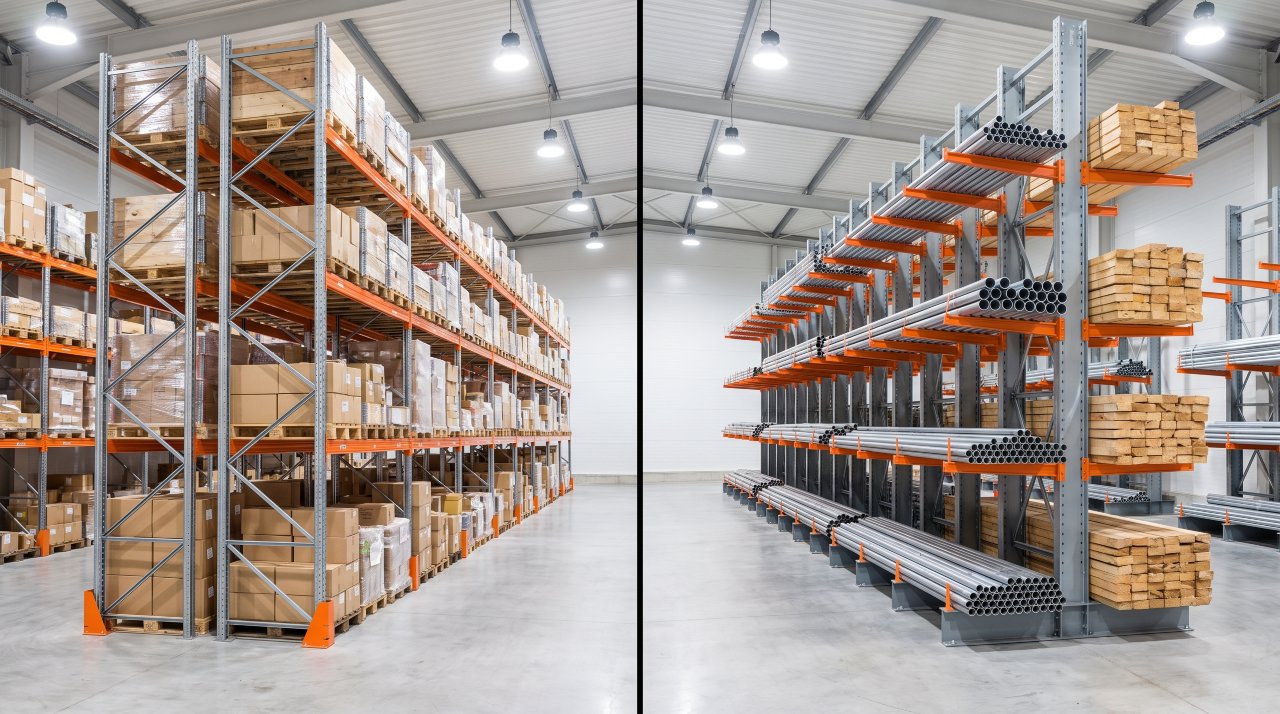
Not every heavy duty racking system works the same way. Each type suits different storage needs, space configurations, and load types. Here’s what you need to know about each one.
1. Selective Pallet Racking
This is the most common type used in warehouses across the US. You can access every pallet directly without moving others. It’s highly flexible, works with standard forklifts, and load capacities typically range from 2,000 to 8,000 lbs per beam level.
2. Drive-In / Drive-Through Racking
Forklifts drive directly into the rack structure to load and unload. It’s excellent for storing large quantities of the same product. Drive-in racks use a last-in, first-out (LIFO) system; drive-through racks allow first-in, first-out (FIFO) access.
3. Cantilever Racking
Cantilever racks have no front columns, making them perfect for storing long, bulky items like lumber, pipes, metal bars, and furniture. Arms extend outward from a central column. You’ll see these heavily used in lumber yards and steel distributors.
4. Push-Back Racking
Products sit on wheeled carts or rails that push back when you load a new item. When you remove the front item, the next one rolls forward automatically. This system holds two to six pallets deep per lane and suits high-density storage.
5. Pallet Flow Racking
Also called gravity flow racking, this system uses inclined rails with rollers. Pallets load at the high end and flow to the low end by gravity. It’s ideal for perishable goods, fresh food, or anything requiring strict FIFO rotation.
6. Mezzanine Racking
Mezzanine systems create an elevated platform above existing floor space. They effectively double or triple your usable storage area without expanding your building footprint. These are more complex to install and require professional structural assessment.
For a broader look at storage options beyond industrial systems, check out this garage storage rack overview that covers residential contexts in detail.
How Load Capacity Actually Works (What Most Guides Skip)
This is the section most articles ignore, and it’s the most important one you’ll read today.
Every heavy duty racking system has three load ratings you need to know:
| Rating Type | What It Measures | Example Value |
|---|---|---|
| Beam Capacity | Max weight per individual beam pair | 2,000 to 8,000 lbs |
| Bay Capacity | Max weight for a single bay section | 10,000 to 30,000 lbs |
| Floor Load | Max weight the floor beneath can bear | Varies by building |
Beam capacity tells you how much weight one horizontal level can hold between two upright frames. Bay capacity is the total load the entire bay can handle, this includes all beam levels stacked vertically. Floor load capacity is a building issue, not a rack issue, but it limits everything above it.
Here’s where people make expensive and dangerous mistakes: they buy a rack rated at 20,000 lbs per bay but put it on a floor rated at only 250 lbs per square foot. That mismatch puts everyone at risk. Always check your floor’s load rating before purchasing any heavy duty racking system. A structural engineer can assess this for $300 to $800, a small cost compared to a collapse.
One more critical point: rack load ratings assume evenly distributed weight. If you pile all your weight on one side of a shelf, you can exceed the effective capacity even if the total weight seems within limits.
Heavy Duty Racking vs. Consumer-Grade Shelving
You might wonder whether you actually need a heavy duty racking system or whether standard shelving handles the job. The answer depends on your load requirements and your risk tolerance.
Consumer-grade metal shelving, the kind you buy at big-box stores, typically handles 200 to 800 lbs per shelf. That sounds like a lot until you’re storing automotive parts, bulk inventory, or equipment. A single pallet of bottled water weighs around 2,800 lbs. Standard shelving won’t touch that.
Heavy duty industrial racks use steel with a yield strength often exceeding 50,000 psi, compared to thinner-gauge consumer shelving that may use steel half that strength. The column profiles on industrial uprights are also roll-formed in shapes, like C-channels and box sections, designed specifically to resist vertical compression and horizontal shear forces simultaneously.
If you’re storing items weighing more than 800 lbs per level, or if your storage space sees any forklift or pallet jack traffic, you need a genuine heavy duty racking system. For more on choosing the right option for home or semi-commercial use, explore these heavy duty garage options that break down the selection process clearly.
What Does a Heavy Duty Racking System Cost in 2026?
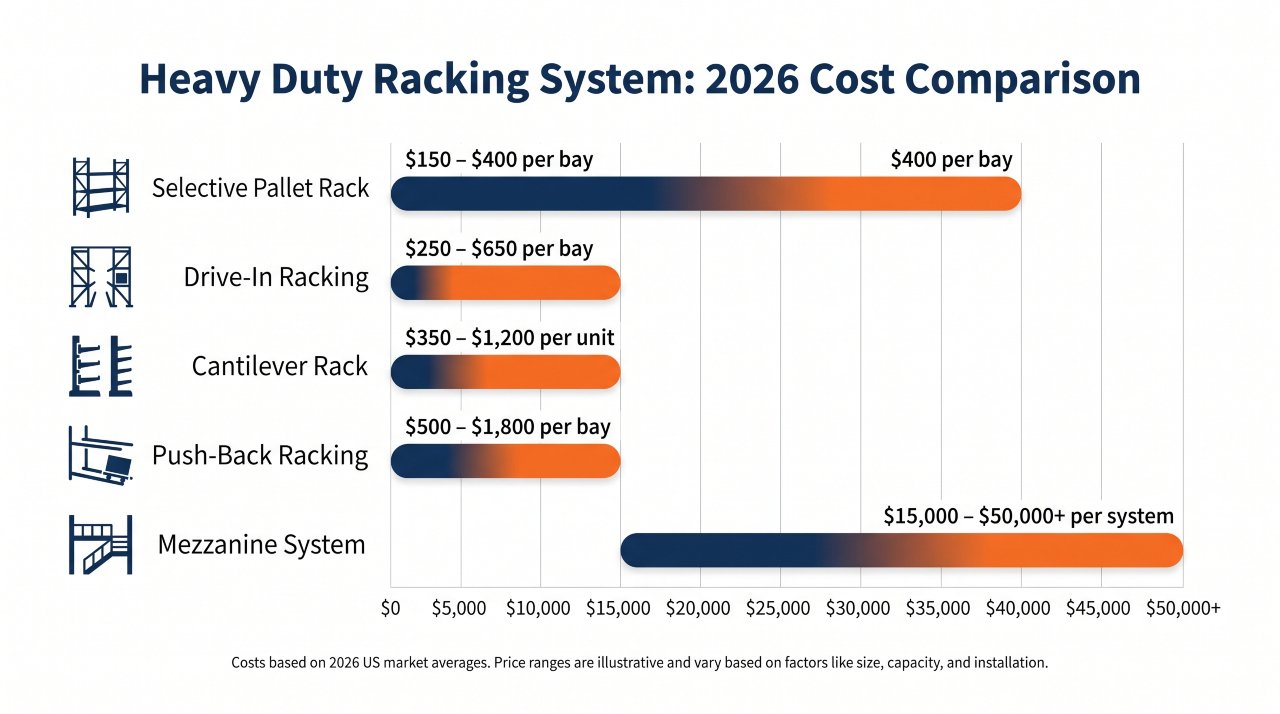
Cost varies widely depending on type, size, and configuration. Here’s a realistic breakdown based on current 2026 market pricing:
- Basic selective pallet rack (starter bay): $150 to $400 per bay, unassembled
- Complete selective rack system (10 to 20 bays): $2,500 to $8,000 installed
- Drive-in racking system: $400 to $700 per bay position
- Cantilever rack (single-sided, 10 ft): $350 to $650 per unit
- Mezzanine system (1,000 sq ft): $15,000 to $50,000+ installed
Installation labor adds 15 to 30% to equipment costs if you hire professionals. Many businesses choose professional installation not just for convenience, but because improper installation voids manufacturer warranties and can create serious liability exposure.
Don’t forget accessories. Wire decking, row spacers, column guards, and anchor kits add $50 to $200 per bay depending on the configuration. These aren’t optional extras, they’re safety equipment.
Safety Standards You Must Know
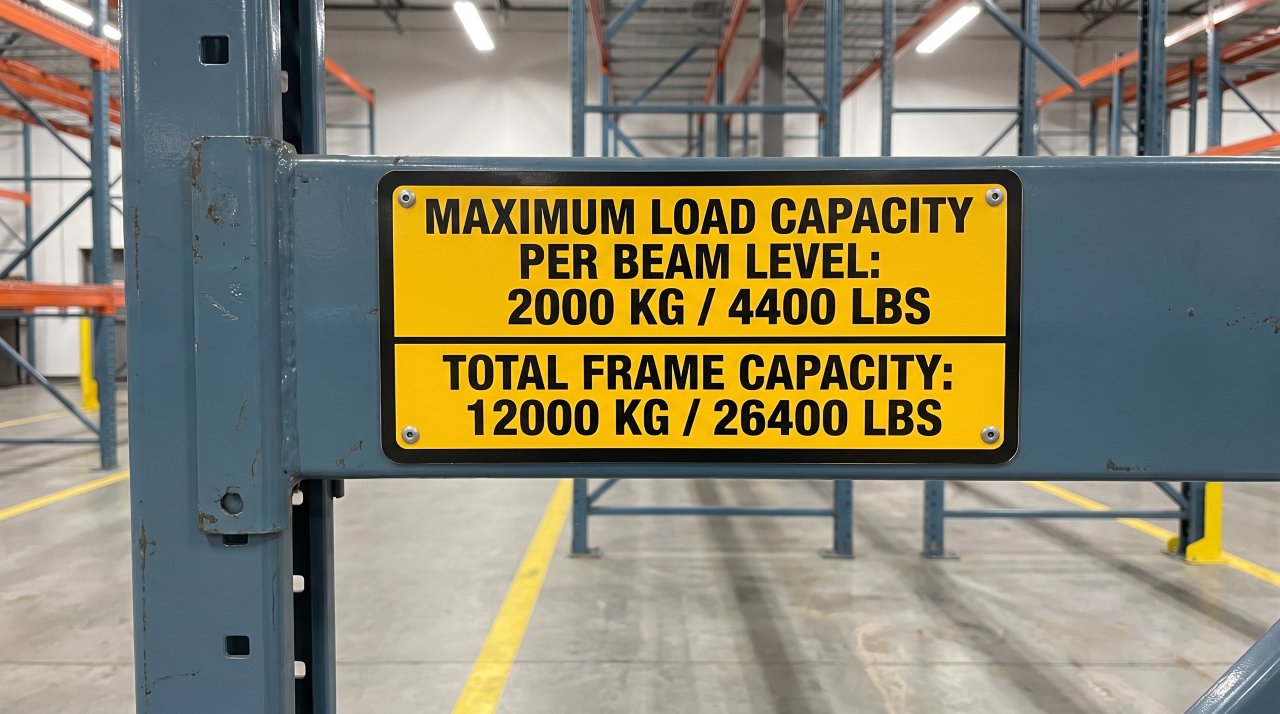
The American National Standards Institute (ANSI) and the Rack Manufacturers Institute (RMI) publish the primary safety standard for industrial steel storage racks in the US: ANSI MH16.1. This standard covers design, testing, and inspection requirements for rack systems.
OSHA doesn’t have a rack-specific standard, but its General Duty Clause (Section 5(a)(1)) requires employers to provide workplaces free from recognized hazards, which absolutely includes improperly installed or overloaded racks. According to OSHA’s storage guidelines, rack inspections should happen regularly and after any impact or incident.
Key safety practices every rack owner should follow:
- Post maximum load capacity ratings visibly on every rack bay
- Inspect racks monthly for bent uprights, damaged beams, or missing hardware
- Replace any damaged component immediately, never weld repairs on load-bearing members
- Install column guards at forklift aisle ends to protect upright frames from impact
- Anchor all racks to the floor using manufacturer-specified anchor bolts
The RMI estimates that 85% of rack collapses involve racks that were either overloaded or damaged , not racks that simply failed under rated conditions. This means the risk is almost entirely preventable.
For context on how heavy duty systems compare to lighter consumer options, this guide on consumer-grade storage systems gives you a clear reference point.
How to Choose the Right System for Your Needs
Choosing the right heavy duty racking system comes down to five key questions. Work through each one before you contact any supplier.
1. What are you storing?
Pallets need pallet racking. Long materials need cantilever racks. Cartons and bins may work on selective shelving. Your product type determines the rack type.
2. How much does it weigh?
Weigh your heaviest unit load before you spec anything. Add a 20% safety margin to that number when comparing rack capacities.
3. How will you access the racks?
Forklift access requires specific aisle widths and beam heights. Manual picking means different height and beam configurations. Clarify your material handling equipment first.
4. What’s your floor space and ceiling height?
Taller racks make better use of vertical space, but they also require taller forklifts and come with higher seismic risk in earthquake-prone areas. Check your local building codes, especially in California, Oregon, Washington, and other seismically active states.
5. What’s your budget for the full project?
Don’t budget just for the rack equipment. Factor in installation, accessories, potential floor reinforcement, permits if required, and annual inspection costs.
Honest Limitations of Heavy Duty Racking Systems
Heavy duty racks are excellent tools, but they come with real limitations worth acknowledging before you commit.
They’re not easy to reconfigure. Adjusting beam heights, moving bays, or changing layouts takes time, tools, and planning. This makes them less ideal for businesses with rapidly changing inventory.
They require dedicated floor space. Unlike mezzanine or vertical carousel systems, standard racking consumes significant floor area. In tight spaces, the aisle widths required for forklift access can eat up 40 to 50% of your total floor space.
Installation is not a weekend project for most people. A single-bay garage rack might take one person a few hours. A 20-bay warehouse system needs a professional installation crew, a plan review, and potentially a permit depending on your jurisdiction.
Older racks may not meet current ANSI standards. If you’re buying used racking, which can save 40 to 60% on costs, have a qualified rack inspector assess it before use. The RMI offers a list of certified rack inspectors through its website.
FAQ: People Also Ask
What is the weight limit of a heavy duty racking system?
Weight limits vary significantly by rack type and design. Most heavy duty pallet racks handle between 2,000 and 8,000 lbs per beam level, with total bay capacities often reaching 20,000 to 30,000 lbs. Always check both the beam capacity and the bay capacity, and never exceed either figure. Your floor’s load rating also sets an upper limit that no rack specification can override.
What is the difference between shelving and racking?
Shelving typically refers to lighter-duty storage units where items sit directly on a flat surface, usually accessed by hand. Racking refers to heavier structural systems designed for pallet storage, forklift access, and significantly higher load capacities. The distinction matters because racking systems must meet engineering and safety standards that consumer shelving does not.
How much does a heavy duty racking system cost?
In 2026, a basic selective pallet rack bay costs $150 to $400 for the equipment alone. A complete installed system for a small warehouse typically runs $2,500 to $8,000. Specialty systems like drive-in racks or mezzanines cost considerably more. Always get at least three quotes and confirm whether installation, accessories, and delivery are included in the price.
Is it hard to install heavy duty racking?
Small, single-bay systems designed for garage use aren’t too difficult for two people with basic tools. However, multi-bay warehouse systems require professional installation. Improper installation is one of the leading causes of rack failure, and it typically voids the manufacturer’s warranty. For any system holding more than 5,000 lbs, hire a professional installer.
What is the strongest type of racking system?
Drive-in and structural pallet racks are among the strongest available, with some structural systems using bolted connections (rather than roll-formed clips) capable of handling extremely high loads. Mezzanine systems are also built to very high structural standards. The “strongest” rack is always the one correctly matched to your specific load requirements and professionally installed.
What materials are heavy duty racks made from?
Most industrial heavy duty racking systems use cold-rolled or hot-rolled structural steel, often powder-coated for corrosion resistance. Upright frames typically use steel with a yield strength of 50,000 to 80,000 psi. Some specialty environments use stainless steel or galvanized steel for moisture or chemical resistance, though these cost significantly more than standard powder-coated systems.
The One Thing That Changes Everything
The most important thing you can take away from this guide is simple: load capacity is not just a number on a label, it’s a system-wide commitment. Your rack rating, your floor rating, your forklift capacity, and your load distribution all work together. Ignore any one of them and the others don’t protect you.
Start by measuring and weighing what you need to store. Then match that to the right rack type for your access method. Get professional installation for anything large, check ANSI MH16.1 compliance, and inspect your racks at least quarterly.
If you’re ready to take the next step, pull up your floor plan, calculate your heaviest unit load, and contact at least three qualified rack suppliers with those specs in hand. You’ll get better quotes, make a smarter choice, and build a storage system that serves you safely for years.

Callum Langham
Founder & Technical Storage Editor
Callum Langham is the founder and technical editor of Rack System. With over 12 years of hands-on field experience in warehouse logistics, garage organization, and industrial storage installations, Callum specializes in engineering safety standards, beam load calculations, and OSHA/RMI compliance. Every guide on Rack System is audited against verified steel gauge tolerances and municipal building codes.